Product gallery

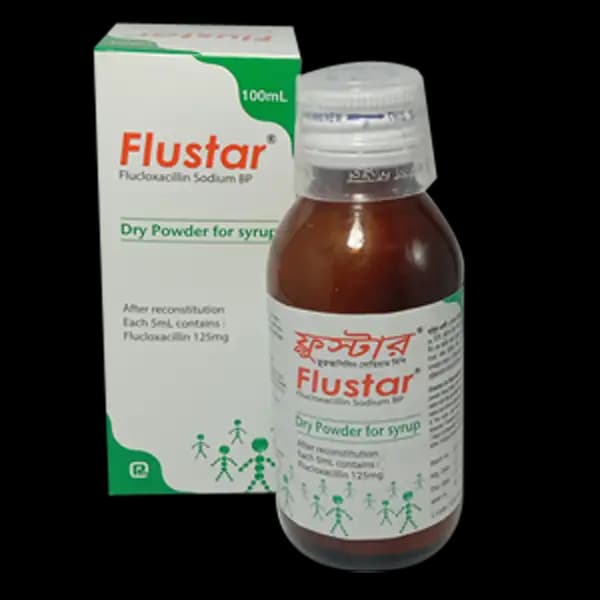
Flustar125 mg/5 ml

Powder for Suspension

Flucloxacillin Sodium

MRP 60.0010 % Off
Best PriceTk 54.00/100 ml bottle
1
Section

Medicine overview

Indications of Flustar 125 mg/5 ml

Flustar 125 mg/5 ml is a penicillinase-resistant, narrow-spectrum penicillin antibiotic indicated for the treatment of infections caused by Gram-positive organisms, with particular value against penicillinase-producing (beta-lactamase-producing) staphylococci — bacteria that are resistant to standard penicillin and ampicillin. It is the drug of choice for confirmed or suspected staphylococcal infections where beta-lactamase production is known or suspected.

Skin and Soft Tissue Infections

Flucloxacillin is a first-line antibiotic for a wide range of skin and soft tissue infections, including:

  • Boils (furuncles) and carbuncles — staphylococcal infections of hair follicles and surrounding tissue
  • Abscesses — localized collections of pus in skin or subcutaneous tissue
  • Cellulitis — spreading bacterial infection of the skin and subcutaneous tissue
  • Impetigo — superficial contagious bacterial skin infection common in children
  • Infected wounds and infected burns — secondary staphylococcal infection of traumatic or surgical wounds
  • Infected dermatological conditions — including infected eczema, acne, ulcers, and other secondarily infected skin conditions
  • Otitis externa — bacterial infection of the outer ear canal
  • Otitis media — bacterial middle ear infection

Respiratory Tract Infections

Flucloxacillin is indicated for staphylococcal respiratory tract infections, including:

  • Pneumonia — including staphylococcal pneumonia, which is often more severe than pneumococcal pneumonia
  • Lung abscess — pulmonary cavitation and abscess formation caused by staphylococci
  • Empyema — bacterial infection in the pleural space (space between the lung and chest wall)
  • Sinusitis — bacterial infection of the paranasal sinuses
  • Pharyngitis and tonsillitis — bacterial throat infections
  • Quinsy (peritonsillar abscess) — abscess adjacent to the tonsil

Bone and Joint Infections

Osteomyelitis — bacterial infection of bone — is one of the most important indications for Flucloxacillin. Staphylococcus aureus is the most common causative organism of acute and chronic osteomyelitis. Flucloxacillin is a cornerstone of treatment, typically requiring high doses and prolonged courses (4–6 weeks or longer). It is also used for septic arthritis caused by penicillinase-producing staphylococci.

Cardiovascular Infections

Endocarditis — infection of the heart valves or endocardium — caused by Staphylococcus aureus is a life-threatening condition that requires high-dose, prolonged Flucloxacillin therapy (typically 4–6 weeks), often in combination with gentamicin.

Other Serious Systemic Infections

  • Septicemia (bloodstream infection) — bacteremia and sepsis caused by Flucloxacillin-sensitive staphylococci
  • Meningitis — bacterial meningitis caused by staphylococci (rare but serious)
  • Urinary tract infections (UTIs) — caused by susceptible staphylococcal organisms
  • Enteritis — gastrointestinal infection caused by susceptible organisms

Surgical Prophylaxis

Flucloxacillin is used as a prophylactic antibiotic in major surgical procedures where staphylococcal contamination is a significant risk, particularly:

  • Cardiothoracic surgery — including open heart surgery, coronary artery bypass grafting (CABG), and cardiac valve procedures
  • Orthopedic surgery — including joint replacement (arthroplasty), internal fixation of fractures, and spinal surgery
  • Other major surgical procedures involving prosthetic implants or prolonged operative times

Theropeutic Class

Narrow Spectrum Penicillins (Penicillinase-Resistant Penicillins / Isoxazolyl Penicillins)

Pharmacology

Flustar 125 mg/5 ml is a semi-synthetic isoxazolyl penicillin belonging to the narrow-spectrum, penicillinase-resistant group of beta-lactam antibiotics. It was specifically developed to overcome the primary resistance mechanism of Staphylococcus aureus — the production of penicillinase (beta-lactamase) — which inactivates standard penicillins such as benzylpenicillin and ampicillin.

Mechanism of Action

Like all penicillins, Flucloxacillin exerts its antibacterial effect by inhibiting bacterial cell wall synthesis. It acts during the final stage of peptidoglycan synthesis — the structural polymer that provides mechanical strength and rigidity to the bacterial cell wall. Specifically:

  1. Flucloxacillin binds to and inhibits the transpeptidase enzyme (penicillin-binding protein, PBP) responsible for cross-linking the peptidoglycan chains.
  2. The final cross-linking step involves the terminal glycine residue of the pentaglycine bridge linking to the fourth residue (D-alanine) of the pentapeptide chain. Flucloxacillin blocks this transpeptidation reaction.
  3. Without proper cross-linking, peptidoglycan synthesis is incomplete and structurally defective — the bacterial cell wall becomes weakened.
  4. Unable to withstand osmotic pressure, the bacterial cell swells, lyses (ruptures), and dies — making Flucloxacillin a bactericidal antibiotic.

Penicillinase (Beta-Lactamase) Resistance

The key distinguishing feature of Flucloxacillin is its resistance to hydrolysis by staphylococcal penicillinase (beta-lactamase). This resistance is conferred by the bulky acyl side chain attached to the 6-aminopenicillanic acid nucleus, which creates steric hindrance that physically prevents the beta-lactamase enzyme from accessing and opening the beta-lactam ring. As a result, Flucloxacillin retains its structural integrity and antibacterial activity against beta-lactamase-producing staphylococci that would render standard penicillins ineffective.


Spectrum of Activity

  • Active against:
    • Staphylococcus aureus — including penicillinase-producing strains (MSSA — methicillin-susceptible S. aureus)
    • Staphylococcus epidermidis and other coagulase-negative staphylococci (susceptible strains)
    • Streptococcus pyogenes (Group A beta-hemolytic streptococcus)
    • Streptococcus pneumoniae
    • Streptococcus viridans
    • Clostridium spp.
  • Not active against:
    • Gram-negative bacilli (e.g., Escherichia coli, Klebsiella, Pseudomonas) — Flucloxacillin has negligible activity against Gram-negative organisms
    • Methicillin-resistant Staphylococcus aureus (MRSA) — resistance in MRSA is mediated by altered penicillin-binding proteins (PBP2a), not beta-lactamase, so Flucloxacillin is ineffective against MRSA
    • Anaerobes
    • Enterococci

Pharmacokinetics

  • Absorption: Well absorbed from the gastrointestinal tract following oral administration. However, food significantly reduces the rate and extent of absorption — oral bioavailability is approximately 50–70% when taken in the fasted state. Flucloxacillin must therefore be taken on an empty stomach (at least 30–60 minutes before meals) for optimal absorption.
  • Peak plasma concentration (Cmax): Reached within approximately 30–60 minutes after an oral dose.
  • Distribution: Widely distributed to most body tissues and fluids including the lungs, kidney, bone, bile, pleural fluid, synovial fluid, and skin. Penetration into the CSF is poor under normal conditions, but may improve with meningeal inflammation. Plasma protein binding is high — approximately 94–97%.
  • Metabolism: Partially metabolized in the liver to active and inactive metabolites.
  • Half-life: Approximately 0.75 to 1.5 hours in adults with normal renal function. Prolonged in neonates and patients with severe renal impairment.
  • Elimination: Excreted primarily in the urine via glomerular filtration and active tubular secretion, and partially in bile. Both unchanged drug and metabolites are found in the urine. Probenecid blocks tubular secretion, prolonging and increasing plasma Flucloxacillin levels.

Dosage of Flustar 125 mg/5 ml

The dose of Flustar 125 mg/5 ml is determined by the type, site, and severity of infection, and the patient's age and renal function. Always follow your registered physician's prescribed dose. Do not self-medicate.

Oral Administration — Adults

Indication Dose Frequency Notes
Mild to moderate infections (general) 250 mg Four times daily (every 6 hours) Standard dose for most community infections
Severe infections 500 mg Four times daily (every 6 hours) Dose doubled for severe infections
Osteomyelitis and Endocarditis Up to 8 g daily Divided into 6–8 hourly doses High-dose, prolonged therapy required (4–6 weeks)

Oral Administration — Children

Age Group Dose Frequency
Children 2–10 years Half the adult dose (125 mg) Four times daily
Children under 2 years Quarter of the adult dose (62.5 mg) Four times daily

Parenteral Administration — Adults and Elderly

Route Dose Frequency Notes
Intramuscular (IM) Injection 250 mg Four times daily Standard dose for moderate infections
Intravenous (IV) Injection or Infusion 250 mg–1 g Four times daily Administer by slow IV injection over 3–4 minutes or by IV infusion
Severe infections (IV) — Endocarditis / Osteomyelitis Up to 8 g daily Divided doses every 6 hours High-dose IV therapy in hospital; all systemic doses may be doubled in severe infections

Parenteral Administration — Children

Age Group Dose Frequency
Children 2–10 years Half the adult parenteral dose Four times daily
Children under 2 years Quarter of the adult parenteral dose Four times daily

Special Routes (Other Parenteral Uses)

  • Intraarticular injection: 250–500 mg daily, dissolved if necessary in 0.5% lignocaine hydrochloride solution, as an adjunct to systemic therapy in joint infections.
  • Intrapleural injection: 250 mg daily, as an adjunct to systemic therapy in pleural space infections (empyema).
  • Nebulized inhalation: 125–250 mg dissolved in 3 mL sterile water, inhaled by nebulizer four times daily, as an adjunct to systemic therapy in pulmonary infections.

Dosage in Renal Impairment

In patients with severe renal failure (creatinine clearance <10 mL/min), a reduction in dose or an extension of the dosing interval should be considered, as drug accumulation may occur. In mild to moderate renal impairment, no dose adjustment is generally required.

Duration of Therapy

Treatment should be continued for at least 2 to 3 days after clinical resolution of signs and symptoms. Typical durations:

  • Skin and soft tissue infections: 5–10 days
  • Respiratory tract infections: 5–14 days
  • Osteomyelitis: Minimum 4–6 weeks (often longer in chronic osteomyelitis)
  • Endocarditis: 4–6 weeks (depending on valve type and clinical response)
  • Septicemia: 10–14 days minimum

Administration of Flustar 125 mg/5 ml

Oral Capsules

  • Flustar 125 mg/5 ml oral capsules must be taken at least 30 to 60 minutes before meals (on an empty stomach). Food significantly reduces the rate and extent of gastrointestinal absorption — taking Flustar 125 mg/5 ml with or shortly after food can reduce plasma drug concentrations by as much as 50%.
  • Swallow capsules whole with a full glass of water. Do not open, crush, or chew the capsules.
  • Doses should be evenly spaced throughout the 24-hour period (approximately every 6 hours) to maintain consistent antibacterial drug levels in the blood.
  • Complete the full prescribed course even if symptoms improve early — incomplete antibiotic courses may lead to treatment failure, relapse, and the development of antibiotic resistance.

Oral Suspension

  • Oral suspension is the preferred formulation for infants, young children, and patients who cannot swallow capsules.
  • Reconstitute the dry powder by adding the specified volume of water (as indicated on the label), shake well until a uniform suspension forms.
  • Shake the bottle thoroughly before each use to ensure uniform drug distribution.
  • Measure each dose accurately using the measuring spoon or oral syringe provided. Do not use a regular household teaspoon.
  • Administer on an empty stomach — at least 30 to 60 minutes before meals.
  • Store reconstituted suspension in the refrigerator and use within the period stated on the label (typically 7–14 days).

Intramuscular (IM) Injection

  • Reconstitute Flustar 125 mg/5 ml 250 mg vial with 1.5 mL of Water for Injection, or the 500 mg vial with 2 mL of Water for Injection.
  • Administer by deep intramuscular injection into a large muscle mass (e.g., upper outer quadrant of the gluteus or the anterolateral thigh in children). Rotate injection sites if multiple doses are required.
  • IM injection may be painful — dissolving in lignocaine 0.5–1% solution (where clinically appropriate and no lidocaine allergy) may reduce injection site discomfort.
  • Use freshly reconstituted solution immediately. Discard any unused portion.

Intravenous (IV) Injection

  • Reconstitute Flustar 125 mg/5 ml vial with 5 mL of Water for Injection, and the 500 mg vial with 10 mL of Water for Injection.
  • Administer by slow intravenous injection over 3 to 4 minutes. Do not administer as a rapid bolus — this may cause cardiovascular adverse effects.
  • Inspect the reconstituted solution for particulate matter and discoloration before use. Discard if cloudy or discolored.
  • Use freshly reconstituted solution. If storage is necessary, reconstituted solution is stable for up to 24 hours at room temperature or 48 hours under refrigeration.

Intravenous (IV) Infusion

  • Dissolve Flustar 125 mg/5 ml 1–2 g in 50–100 mL of Normal Saline (0.9% NaCl) or 5% Dextrose in Water.
  • Infuse over 30 to 60 minutes.
  • Flustar 125 mg/5 ml is compatible with Normal Saline and 5% Dextrose for IV infusion. Do not mix with blood products, aminoglycosides (e.g., gentamicin), or alkaline solutions in the same infusion bag or syringe — chemical incompatibility may occur.
  • Reconstituted infusion solution is stable for up to 8 hours at room temperature.

Interaction of Flustar 125 mg/5 ml

Probenecid

Concurrent use of Flustar 125 mg/5 ml with Probenecid results in significantly increased and prolonged blood levels of Flucloxacillin. Probenecid competitively inhibits active tubular secretion of Flucloxacillin in the kidneys, reducing its renal clearance and thereby elevating and extending plasma concentrations. This interaction can be exploited intentionally to achieve higher or more sustained Flucloxacillin levels in certain severe infections, but must be managed carefully to avoid toxicity.

Oral Anticoagulants (Warfarin)

Flustar 125 mg/5 ml may occasionally enhance the anticoagulant effect of warfarin by reducing gut flora that produce vitamin K. INR should be monitored more frequently when Flustar 125 mg/5 ml is initiated or discontinued in patients on stable warfarin therapy.

Methotrexate

Penicillin antibiotics, including Flustar 125 mg/5 ml, may reduce the renal tubular secretion of methotrexate, potentially increasing methotrexate plasma concentrations and toxicity risk. Monitor patients receiving both drugs for signs of methotrexate toxicity (mucositis, myelosuppression, nephrotoxicity).

Bacteriostatic Antibiotics

Tetracyclines, macrolides (e.g., erythromycin, azithromycin), and chloramphenicol may reduce the bactericidal activity of Flucloxacillin by slowing bacterial growth — since beta-lactam antibiotics like Flucloxacillin work most effectively against actively dividing bacteria. Concomitant use should generally be avoided unless specifically indicated.

Combined Oral Contraceptives

Broad-spectrum antibiotics including Flucloxacillin may reduce the efficacy of combined oral contraceptives by altering gut flora and reducing enterohepatic recirculation of estrogen. Women of childbearing age should be advised to use additional contraceptive precautions during Flustar 125 mg/5 ml therapy and for 7 days after completing the course.

Live Bacterial Vaccines

Flustar 125 mg/5 ml, like other systemic antibiotics, may reduce the efficacy of live bacterial vaccines (e.g., oral typhoid vaccine, BCG). Live vaccines should not be administered during active Flucloxacillin therapy.

Contraindications

Flustar 125 mg/5 ml is contraindicated in the following situations:

  • Known hypersensitivity to Flucloxacillin, any other penicillin antibiotic, or any component of the formulation. This includes a history of penicillin-associated anaphylaxis, angioedema, urticaria, or any immediate-type hypersensitivity reaction.
  • Patients with a history of Flucloxacillin-associated cholestatic jaundice or hepatic dysfunction — this is a specific class-associated risk with isoxazolyl penicillins and constitutes an absolute contraindication to rechallenge with Flucloxacillin.
  • Patients with a history of severe immediate-type hypersensitivity to any beta-lactam antibiotic (including cephalosporins) due to potential cross-reactivity.

Side Effects of Flustar 125 mg/5 ml

Flustar 125 mg/5 ml is generally well tolerated. Most adverse effects are mild and resolve after completing or discontinuing therapy. The following adverse effects have been reported:

Gastrointestinal Effects (Most Common)

  • Nausea and vomiting
  • Diarrhea and loose stools
  • Dyspepsia (indigestion) and abdominal discomfort
  • Other minor gastrointestinal disturbances

Hypersensitivity and Skin Reactions

  • Skin rash — maculopapular or urticarial; most commonly due to hypersensitivity
  • Urticaria (hives) and pruritus (itching)
  • Purpura (small skin hemorrhages)
  • Drug fever — elevated temperature due to an immunological drug reaction
  • Rare: Anaphylaxis and anaphylactoid reactions — life-threatening systemic allergic reactions requiring immediate emergency treatment with epinephrine. Patients with a history of allergy, asthma, or prior penicillin sensitivity are at higher risk.

Hepatic Effects — Cholestatic Hepatitis (Important Warning)

Flucloxacillin is associated with a rare but serious risk of cholestatic jaundice and hepatitis. This is the most clinically significant adverse effect specific to Flucloxacillin and other isoxazolyl penicillins:

  • Cholestatic jaundice — yellowing of the skin and eyes due to impaired bile flow
  • Hepatitis — inflammation of the liver, which may present with jaundice, dark urine, pale stools, fatigue, and right upper quadrant pain
  • This hepatic reaction may occur during treatment or — more typically — up to 8 weeks after stopping Flucloxacillin. It is more common in elderly patients and those who receive Flucloxacillin for prolonged periods (>2 weeks).
  • The mechanism is thought to be immunologically mediated (idiosyncratic) rather than dose-dependent.
  • Patients who develop Flucloxacillin-associated hepatotoxicity should never be re-exposed to Flucloxacillin — rechallenge is absolutely contraindicated.
  • Physicians should advise patients to report any symptoms of liver problems (jaundice, dark urine, pale stools, fatigue, nausea, or abdominal pain) promptly, even after completing the course of treatment.

Renal Effects

  • Interstitial nephritis — an immune-mediated inflammatory reaction in the kidney tubules; presents with fever, rash, eosinophilia, and declining renal function. Requires prompt discontinuation of Flucloxacillin.

Hematological Effects (Rare)

  • Neutropenia and leukopenia (reduced white blood cell counts) — more common with prolonged high-dose therapy; reversible on discontinuation
  • Thrombocytopenia (reduced platelet count)
  • Hemolytic anemia — immune-mediated, rare
  • Positive Coombs' test — may occur without hemolysis
  • Eosinophilia

Neurological Effects (Rare — Usually at Very High IV Doses)

  • Convulsions and seizures — particularly in patients with renal impairment receiving very high IV doses, or in those with pre-existing neurological conditions or epilepsy

Superinfection

Prolonged use of Flustar 125 mg/5 ml may disturb normal flora and lead to superinfection with resistant organisms including Candida spp. (oral thrush, vaginal candidiasis) or Clostridioides difficile (pseudomembranous colitis). Patients developing severe or persistent diarrhea should be evaluated for C. difficile-associated disease.

Pregnancy & Lactation

Pregnancy

The US FDA Pregnancy Category for Flustar 125 mg/5 ml is Category B. There are no adequate and well-controlled studies in pregnant women. Animal reproduction studies have not demonstrated fetal harm; however, because animal reproductive studies are not always predictive of human response, Flucloxacillin should be used during pregnancy only if clearly necessary and when the clinical benefit justifies any potential risk to the fetus. The decision to use Flucloxacillin during pregnancy should be made on a case-by-case basis by the treating physician. It is considered one of the safer antibiotics for use in pregnancy when there is a clear clinical need — particularly for staphylococcal infections where no safer, equally effective alternative exists.

Lactation

Flustar 125 mg/5 ml is excreted into human breast milk in small amounts. Although plasma levels in breastfed infants are generally very low, the potential for adverse effects on the nursing infant — including sensitization to penicillin, alteration of infant gut flora, diarrhea, and oral candidiasis — cannot be excluded. Caution should be exercised when Flucloxacillin is administered to lactating mothers. If Flucloxacillin is considered essential for the mother and breastfeeding is continued, the infant should be monitored for any signs of gastrointestinal disturbance or hypersensitivity.

Precautions & Warnings

Hepatic Dysfunction — Critical Warning

Flustar 125 mg/5 ml should be used with caution in patients with pre-existing evidence of hepatic dysfunction. Flucloxacillin is specifically associated with a risk of cholestatic jaundice and hepatitis — a serious adverse reaction that can occur during treatment or up to 8 weeks after completion. Risk factors for Flucloxacillin-associated hepatotoxicity include:

  • Age over 55 years
  • Prolonged courses of therapy (more than 2 weeks)
  • High cumulative doses
  • Female sex

Patients should be informed to report promptly any symptoms suggestive of liver problems: jaundice (yellow skin or eyes), dark urine, pale stools, fatigue, or right upper quadrant abdominal pain — particularly if these develop in the weeks following completion of treatment. Liver function tests should be monitored in patients receiving prolonged or high-dose therapy. Patients who have previously experienced Flucloxacillin-associated hepatotoxicity must never be re-exposed to Flucloxacillin.

Penicillin Hypersensitivity and Cross-Reactivity

A careful patient history regarding previous hypersensitivity to penicillins, cephalosporins, or other allergens should be obtained before initiating Flucloxacillin therapy. As with all penicillins, serious and occasionally fatal anaphylactic reactions can occur. Cross-reactivity with cephalosporins is possible (estimated 1–2%). Flucloxacillin is absolutely contraindicated in patients with a history of anaphylaxis or immediate-type hypersensitivity to any penicillin or beta-lactam antibiotic.

Allergic Diathesis

Particular caution should be exercised in patients with an allergic diathesis — i.e., those with a personal or family history of allergic conditions such as asthma, hay fever, urticaria, or eczema — as these patients are at greater risk of hypersensitivity reactions to antibiotics.

Renal Impairment

In patients with severe renal failure (creatinine clearance <10 mL/min), drug accumulation may occur due to reduced renal elimination. A reduction in dose or extension of the dosing interval is recommended. Renal function should be monitored during prolonged therapy, particularly in elderly patients who may have occult renal impairment.

Prolonged Therapy — Hematological Monitoring

Prolonged high-dose Flucloxacillin therapy (as used in osteomyelitis or endocarditis) is associated with an increased risk of neutropenia (low neutrophil count) and other hematological abnormalities. Full blood count (CBC) should be monitored regularly during prolonged courses of Flucloxacillin therapy. If neutropenia is detected, the drug should be discontinued.

Superinfection

Prolonged antibiotic therapy with Flucloxacillin may suppress normal body flora and allow overgrowth of resistant organisms including Candida spp. or C. difficile. Monitor for signs of superinfection during extended courses.

Electrolyte Considerations (High-Dose IV Therapy)

Flucloxacillin is available as the sodium salt. Patients receiving very high-dose intravenous Flucloxacillin (e.g., 8 g/day for endocarditis) are exposed to a significant sodium load. This should be considered in patients with fluid restriction, hypertension, heart failure, or chronic kidney disease.

Overdose Effects of Flustar 125 mg/5 ml

There is no specific antidote for Flustar 125 mg/5 ml overdose. Flucloxacillin has a wide therapeutic index and serious systemic toxicity from accidental overdose is uncommon. Potential manifestations of overdose include:

  • Nausea, vomiting, diarrhea, and abdominal pain
  • Neurotoxicity: Agitation, confusion, and convulsions or seizures — particularly at very high IV doses or in patients with renal impairment where drug accumulation occurs. This is a class effect of penicillins at excessive plasma concentrations.
  • Electrolyte disturbances — excessive sodium load from high-dose IV Flustar 125 mg/5 ml can cause hypernatremia in susceptible patients

Management is symptomatic and supportive. Ensure adequate hydration and monitor renal function and electrolytes. Since Flucloxacillin is highly protein-bound (approximately 94–97%), it is not efficiently removed by hemodialysis or peritoneal dialysis. In the event of suspected overdose, contact a poison control center or seek emergency medical care immediately.

Storage Conditions

  • Store capsules and dry powder for oral suspension below 25°C–30°C, in a cool, dry place away from direct light, heat, and moisture.
  • Keep all formulations out of the reach of children.
  • Do not use any formulation after the expiry date printed on the packaging or label.
  • Reconstituted oral suspension: Store in the refrigerator (2°C–8°C) after preparation. Use within 7 to 14 days of reconstitution as directed on the product label. Do not freeze the reconstituted suspension. Discard any unused suspension after this period.
  • Injection vials (before reconstitution): Store below 25°C, protected from light. Do not freeze.
  • Reconstituted injection solution: Use immediately after preparation whenever possible. If storage is necessary, reconstituted IM/IV solution is stable for up to 24 hours at room temperature or 48 hours when refrigerated at 2°C–8°C. Discard any unused reconstituted solution after this period.
  • Store injection vials in their original carton until use to protect from light.

Use In Special Populations

Pediatric Patients

Flustar 125 mg/5 ml is safe and widely used in pediatric patients of all ages, including neonates. Weight-based and age-based dosing adjustments are required:

  • Children aged 2–10 years: Half the adult dose
  • Children under 2 years: Quarter of the adult dose

The oral suspension formulation is preferred for infants and young children. The dosing interval in neonates may need to be extended (every 8–12 hours) due to immature renal function and slower drug clearance in this age group.

Elderly Patients

No specific dose adjustment is required based on age alone for mild to moderate infections. However, elderly patients are at significantly higher risk of Flucloxacillin-associated hepatotoxicity (particularly cholestatic jaundice), especially with prolonged use. Additionally, age-related decline in renal function may require dose adjustment in elderly patients with creatinine clearance below 10 mL/min. Careful monitoring of liver and renal function is advised during therapy in elderly patients.

Patients with Renal Impairment

Flucloxacillin is primarily eliminated by the kidneys. In mild to moderate renal impairment, no dose adjustment is generally required. However, in severe renal failure (CrCl <10 mL/min), dose reduction or extension of the dosing interval is necessary to prevent drug accumulation and potential toxicity (including CNS effects such as seizures). Hemodialysis does not efficiently remove Flucloxacillin due to its high protein binding, so dose adjustment — rather than supplemental dialysis doses — is the appropriate management approach.

Patients with Hepatic Impairment

Flucloxacillin should be used with caution in patients with pre-existing hepatic dysfunction. Flucloxacillin is metabolized in the liver and excreted via bile. In significant hepatic impairment, drug metabolism and biliary excretion may be impaired, increasing drug exposure and the risk of hepatotoxicity. Liver function tests should be monitored regularly. Flucloxacillin is contraindicated in patients with a prior history of Flucloxacillin-associated cholestatic jaundice or hepatitis.

Neonates

Flucloxacillin is used in neonates for staphylococcal infections under specialist supervision. The half-life is significantly prolonged in neonates due to immature renal tubular secretion and hepatic function. Dosing intervals should be extended accordingly (every 8–12 hours in neonates). Careful monitoring of clinical response and renal function is essential.

Reconstitution

Oral Suspension

Add the volume of water specified on the product label to the dry powder in the bottle. Replace the cap and shake well until the powder is fully dispersed and a uniform suspension is formed. The reconstituted suspension should be stored in the refrigerator (2°C–8°C) and used within 7 to 14 days of preparation (as directed on the specific product label). Shake well before each use.

IM Injection

  • 250 mg vial: Add 1.5 mL of Water for Injection. Shake gently to dissolve.
  • 500 mg vial: Add 2 mL of Water for Injection. Shake gently to dissolve.

If required to reduce injection discomfort, the powder may be dissolved in 0.5% lignocaine hydrochloride instead of Water for Injection, provided there is no contraindication to lignocaine.

IV Injection

  • 250 mg vial: Add 5 mL of Water for Injection. Shake gently to dissolve completely.
  • 500 mg vial: Add 10 mL of Water for Injection. Shake gently to dissolve completely.

Administer by slow IV injection over 3 to 4 minutes.

IV Infusion

Dissolve 1–2 g Flucloxacillin in 50–100 mL of Normal Saline (0.9% NaCl) or 5% Dextrose in Water and infuse over 30 to 60 minutes. Reconstituted infusion solution is stable for approximately 8 hours at room temperature. Do not mix with aminoglycosides or alkaline solutions in the same infusion bag.

Intraarticular and Intrapleural Injection

Flucloxacillin has been used as an adjunct to systemic therapy via intraarticular and intrapleural routes:

  • Intraarticular: 250–500 mg daily, dissolved in 0.5% lignocaine hydrochloride solution if required for comfort.
  • Intrapleural: 250 mg daily, administered in conjunction with systemic antibiotic therapy.

Nebulized Inhalation

Flucloxacillin 125–250 mg has been dissolved in 3 mL of sterile water and inhaled by nebulizer four times daily as an adjunct to systemic therapy in pulmonary staphylococcal infections.

Drug Classes

Penicillinase-resistant penicillins

Mode Of Action

Flucloxacillin exhibits activity against Gram-positive organisms, including strains that produce penicillinase. Its efficacy against Gram-negative bacilli is limited. The mechanism of action involves the inhibition of bacterial cell wall formation. Flucloxacillin, classified as an isoxazolyl penicillin, possesses unique qualities such as resistance to hydrolysis by penicillinase, stability in gastric acid conditions, and effectiveness against Gram-positive bacteria.

This bactericidal antibiotic is particularly valuable in combatting penicillinase-producing staphylococci. Flucloxacillin disrupts bacterial cell wall synthesis, specifically interfering with peptidoglycan production. Peptidoglycan is a complex structure that provides mechanical stability to the cell wall. The final step in peptidoglycan synthesis, which involves cross-linking with the terminal glycine residue of the pentaglycin bridge connecting to the fourth residue of the pentapeptide (D-alanine), is hindered by Flucloxacillin. Consequently, the bacterial cell wall weakens, leading to cell swelling and eventual rupture. Flucloxacillin's resistance to bacterial penicillinase is likely attributed to steric hindrance caused by its acyl side chain, preventing the opening of the β-lactam ring.

Pregnancy

The US FDA Pregnancy Category for Flustar 125 mg/5 ml is B. There are no adequate and well-controlled studies conducted in pregnant women. Since animal reproduction studies may not always accurately predict human responses, it is advisable to use this medication during pregnancy only when it is clearly necessary. Flustar 125 mg/5 ml has been demonstrated to be excreted in human milk, so caution should be exercised when administering it to a lactating mother.

Pediatric Uses

In severe renal failure (creatinine clearance <10 ml/min), a reduction in dose or an extension of dose interval should be considered.

Frequently Asked Questions

What is Flustar 125 mg/5 ml used for?

Flustar 125 mg/5 ml is a penicillinase-resistant, narrow-spectrum penicillin antibiotic indicated for the treatment of infections caused by Gram-positive organisms, with particular value against penicillinase-producing (beta-lactamase-producing) staphylococci — bacteria that are resistant to standard penicillin and ampicillin. It is the drug of choice for confirmed or suspected staphylococcal infe…

What is the dosage of Flustar 125 mg/5 ml?

The dose of Flustar 125 mg/5 ml is determined by the type, site, and severity of infection, and the patient's age and renal function. Always follow your registered physician's prescribed dose. Do not self-medicate. Oral Administration — Adults Indication Dose Frequency Notes Mild to moderate infections (general) 250 mg Four times daily (every 6 hours) Standard dose for most community infections Se…

What are the side effects of Flustar 125 mg/5 ml?

Flustar 125 mg/5 ml is generally well tolerated. Most adverse effects are mild and resolve after completing or discontinuing therapy. The following adverse effects have been reported: Gastrointestinal Effects (Most Common) Nausea and vomiting Diarrhea and loose stools Dyspepsia (indigestion) and abdominal discomfort Other minor gastrointestinal disturbances Hypersensitivity and Skin Reactions Skin…

Who should not take Flustar 125 mg/5 ml?

Flustar 125 mg/5 ml is contraindicated in the following situations: Known hypersensitivity to Flucloxacillin , any other penicillin antibiotic, or any component of the formulation. This includes a history of penicillin-associated anaphylaxis, angioedema, urticaria, or any immediate-type hypersensitivity reaction. Patients with a history of Flucloxacillin-associated cholestatic jaundice or hepatic …

What precautions should be taken with Flustar 125 mg/5 ml?

Hepatic Dysfunction — Critical Warning Flustar 125 mg/5 ml should be used with caution in patients with pre-existing evidence of hepatic dysfunction . Flucloxacillin is specifically associated with a risk of cholestatic jaundice and hepatitis — a serious adverse reaction that can occur during treatment or up to 8 weeks after completion. Risk factors for Flucloxacillin-associated hepatotoxicity inc…

Is Flustar 125 mg/5 ml safe during pregnancy and breastfeeding?

Pregnancy The US FDA Pregnancy Category for Flustar 125 mg/5 ml is Category B . There are no adequate and well-controlled studies in pregnant women. Animal reproduction studies have not demonstrated fetal harm; however, because animal reproductive studies are not always predictive of human response, Flucloxacillin should be used during pregnancy only if clearly necessary and when the clinical bene…

Disclaimer

The information provided is accurate to our best practices, but it does not replace professional medical advice. We cannot guarantee its completeness or accuracy. The absence of specific information about a drug should not be seen as an endorsement. We are not responsible for any consequences resulting from this information, so consult a healthcare professional for any concerns or questions.