10% Off
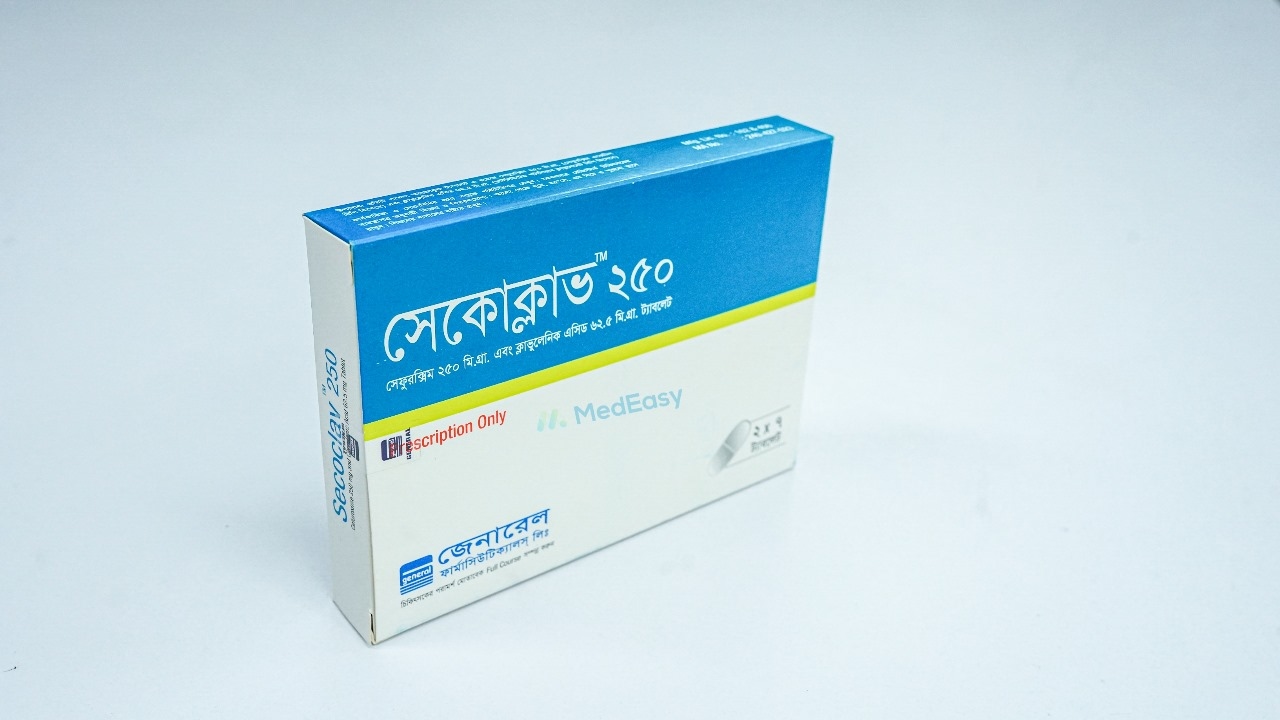
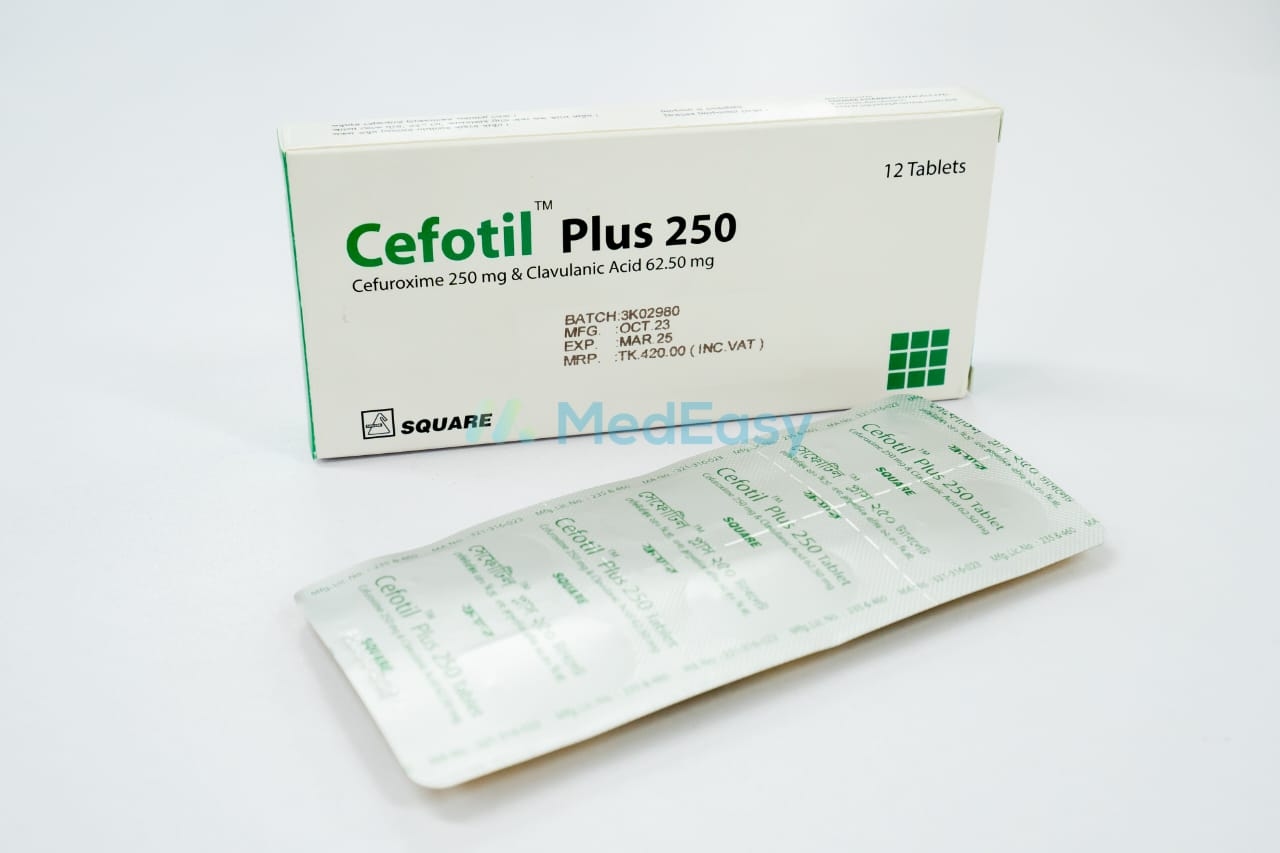
Cefotil Plus250 mg+62.
Square Pharmaceuticals PLC.
৳31.50
Add to cart


Fuxtil CV is a combination oral antibiotic used to treat bacterial infections caused by susceptible organisms, including many beta-lactamase-producing strains that would otherwise resist cefuroxime alone.
Fuxtil CV should be used only for infections proven or strongly suspected to be caused by susceptible bacteria, based on culture and sensitivity data or local resistance patterns, to reduce the development of drug-resistant bacteria. It is not effective against viral infections such as the common cold or flu.
Cefuroxime Axetil + Clavulanic Acid is available in Bangladesh as tablets containing cefuroxime axetil equivalent to 125 mg, 250 mg, or 500 mg of cefuroxime combined with 31.25 mg, 62.5 mg, or 125 mg of clavulanic acid (as potassium clavulanate) respectively, and as a powder for oral suspension providing cefuroxime 125 mg with clavulanic acid 31.25 mg per 5 mL after reconstitution. Cefuroxime axetil is the 1-acetoxyethyl ester (prodrug) of cefuroxime; clavulanic acid is derived from fermentation of Streptomyces clavuligerus.
Fuxtil CV is a fixed-dose combination antibiotic that pairs cefuroxime axetil, a semi-synthetic second-generation cephalosporin prodrug, with clavulanic acid, a beta-lactamase inhibitor. After oral absorption, cefuroxime axetil is hydrolyzed to release active cefuroxime, which is bactericidal against a broad range of Gram-positive and Gram-negative bacteria. Clavulanic acid itself has weak intrinsic antibacterial activity but irreversibly inactivates many bacterial beta-lactamase enzymes, protecting cefuroxime from degradation and extending its effective spectrum to include some beta-lactamase-producing organisms that would otherwise be resistant.
Fuxtil CV is used to treat respiratory tract infections, ear and sinus infections, urinary tract infections, and skin infections caused by organisms susceptible to this combination.
Fuxtil CV belongs to the second-generation cephalosporin class of beta-lactam antibiotics, combined with a beta-lactamase inhibitor.
Cefuroxime Axetil + Clavulanic Acid combines an orally-absorbed cephalosporin prodrug with a beta-lactamase inhibitor to achieve bactericidal activity against a broadened range of bacteria.
Cefuroxime axetil is hydrolyzed during and after absorption to cefuroxime, the pharmacologically active moiety, which binds to penicillin-binding proteins (PBPs) on the bacterial cell wall, inhibiting the final transpeptidation (cross-linking) step of peptidoglycan synthesis. This weakens the bacterial cell wall, causing cell lysis and death. Clavulanic acid has a beta-lactam ring structure similar to penicillins but only weak antibacterial activity on its own; instead, it binds irreversibly to and inactivates many bacterial beta-lactamase enzymes, preventing them from destroying cefuroxime and thereby restoring cefuroxime's activity against some beta-lactamase-producing resistant strains.
Cefuroxime Axetil + Clavulanic Acid is active against many Gram-positive organisms (e.g., Streptococcus pyogenes, Streptococcus pneumoniae, methicillin-susceptible Staphylococcus aureus) and Gram-negative organisms (e.g., Haemophilus influenzae, Moraxella catarrhalis, Escherichia coli, Klebsiella pneumoniae), including a number of beta-lactamase-producing strains that are resistant to cefuroxime alone.
Absorption of the cefuroxime axetil component of Cefuroxime Axetil + Clavulanic Acid is enhanced when taken with food; peak plasma concentrations occur approximately 2-3 hours after dosing. Cefuroxime is eliminated primarily unchanged by the kidneys via glomerular filtration and tubular secretion; clavulanic acid is also substantially renally eliminated.
The dose and duration of Fuxtil CV depend on the type and severity of infection. Tablet and oral suspension formulations of Fuxtil CV are not necessarily bioequivalent on a mg-to-mg basis and should not be interchanged without medical advice.
| Indication | Adult Dose | Pediatric Dose | Duration |
|---|---|---|---|
| Pharyngitis/tonsillitis | 250 mg (cefuroxime component) twice daily | 20 mg/kg/day of cefuroxime in 2 divided doses (max as per adult dose) | 5-10 days |
| Acute otitis media/sinusitis | 250 mg twice daily | 30 mg/kg/day of cefuroxime in 2 divided doses (max as per adult dose) | 10 days |
| Acute bronchitis exacerbation/lower respiratory tract infection | 250-500 mg twice daily | Individualized by physician; typically as above (age ≥3 months) | 5-14 days |
| Skin/skin-structure infection | 250-500 mg twice daily | Individualized by physician | 7-10 days |
| Uncomplicated urinary tract infection | 250 mg twice daily | Individualized by physician | 7-10 days |
Doses above refer to the cefuroxime component; the clavulanic acid component is proportioned automatically within each approved tablet/suspension strength and should not be dosed separately. Fuxtil CV tablets are best taken with food to improve absorption and reduce gastrointestinal upset; tablets should be swallowed whole and not crushed or chewed because of the bitter taste of the active drug. Patients who cannot swallow tablets should use the oral suspension formulation instead.
Antibiotic stewardship: Take Fuxtil CV exactly as prescribed by your physician; do not stop, extend, skip doses, or share this medicine with others without medical advice.
Dose or interval adjustment may be required in patients with significant renal impairment; see Use in Special Populations.
Fuxtil CV tablets should be swallowed whole with water and not crushed or chewed, as crushing exposes the bitter-tasting active drug. Fuxtil CV is best taken with food, which increases absorption of the cefuroxime component and helps reduce stomach upset. If the oral suspension formulation of Fuxtil CV is used, shake well before each dose and use the measuring device provided; tablets and suspension are not necessarily interchangeable on a milligram-for-milligram basis, so use the formulation and dose prescribed by the physician.
The following interactions with Fuxtil CV are clinically significant:
Cefuroxime Axetil + Clavulanic Acid is contraindicated in:
Fuxtil CV is generally well tolerated. Reported adverse effects include:
Patients should seek prompt medical attention for any severe rash, difficulty breathing, swelling, yellowing of the skin/eyes, or persistent diarrhea while taking Fuxtil CV.
Pregnancy: Fuxtil CV should be used during pregnancy only if clearly needed and if the potential benefit justifies the potential risk to the fetus. Available data on cephalosporins and clavulanic acid have not shown an increased risk of major birth defects, and this combination has been used later in pregnancy to treat urinary and other infections under medical supervision, but there are no adequate, well-controlled studies to confirm safety definitively. A physician should always be consulted before using Fuxtil CV during pregnancy.
Lactation: Small amounts of cefuroxime and clavulanic acid are excreted into human breast milk. Fuxtil CV should be used with caution in breastfeeding women, and only under medical advice, with the infant monitored for gastrointestinal effects such as diarrhea, rash, or oral thrush.
Hypersensitivity: Serious and occasionally fatal hypersensitivity (anaphylactic) reactions have been reported with cephalosporins; discontinue Fuxtil CV immediately if a reaction occurs. Use with caution in patients with a history of penicillin allergy due to possible cross-reactivity (see Contraindications).
Clostridioides difficile-associated diarrhea (CDAD): Fuxtil CV, like nearly all antibacterial agents, can cause CDAD ranging from mild diarrhea to fatal colitis. Evaluate patients who develop diarrhea during or after treatment.
Hepatic effects: Cholestatic jaundice and hepatitis have rarely been reported with beta-lactam/clavulanic acid combinations, usually reversible after stopping the drug; use with caution in patients with pre-existing liver disease and discontinue Fuxtil CV promptly if signs of hepatic dysfunction develop (see Contraindications).
Absorption and food: Absorption of the cefuroxime component of Fuxtil CV is enhanced by food; taking it with meals is recommended, particularly for higher doses.
Superinfection: Prolonged use of Fuxtil CV may result in overgrowth of non-susceptible organisms, including fungi.
Renal impairment: Dose or interval adjustment of Fuxtil CV may be required in patients with significant renal impairment.
Antibiotic stewardship: Take Fuxtil CV exactly as prescribed by your physician; do not stop, extend, skip doses, or share this medicine with others without medical advice, as inappropriate use promotes antibiotic resistance.
Laboratory interference: Fuxtil CV may cause false results in certain glucose and Coombs' tests (see Interactions).
Overdosage with Fuxtil CV may cause gastrointestinal disturbance (nausea, vomiting, diarrhea) and, particularly with the cefuroxime component in patients with renal impairment, central nervous system effects including increased cerebral irritability and seizures/convulsions. There is no specific antidote. If an overdose of Fuxtil CV is suspected, seek immediate medical attention or contact a poison control center; supportive care should be provided, and hemodialysis may help reduce serum concentrations of both components in severe cases. Do not attempt to manage a suspected overdose of Fuxtil CV at home without medical guidance.
Store Fuxtil CV tablets at room temperature (below 30°C), away from light and moisture. Keep out of reach of children. If using the reconstituted oral suspension of Fuxtil CV, store in a refrigerator and discard any unused portion after the period stated on the product label (commonly 7-10 days).
Pediatric use: Fuxtil CV may be used in children per approved weight-based dosing for specific indications; safety and efficacy have not been established in very young infants (consult the product label and a pediatrician). Tablets are not recommended for children unable to swallow them whole; use the oral suspension instead (see Pediatric Uses).
Geriatric use: No overall differences in safety or effectiveness have been observed with Fuxtil CV in elderly patients compared to younger adults, but elderly patients are more likely to have reduced renal function, requiring dose adjustment.
Renal impairment: The dose or dosing interval of Fuxtil CV should be adjusted in patients with significant renal impairment (e.g., creatinine clearance below 30 mL/min); consult a physician for individualized dosing.
Hepatic impairment: No formal dose adjustment of Fuxtil CV is established, but it should be used with caution and liver function monitored, given the rare association of the clavulanic acid component with hepatic effects (see Precautions and Warnings).
Pregnancy and lactation: See Pregnancy and Lactation section.
The duration of Fuxtil CV therapy depends on the infection being treated, generally ranging from 5 to 14 days for most common infections. Patients should complete the full prescribed course of Fuxtil CV even if symptoms improve early, to ensure eradication of the infection and reduce the risk of antibiotic resistance and relapse.
Fuxtil CV tablets do not require reconstitution. The Fuxtil CV powder for oral suspension must be reconstituted by adding the specified amount of water to the bottle as directed on the product label, then shaking well to form a uniform suspension (typically providing cefuroxime 125 mg with clavulanic acid 31.25 mg per 5 mL). The reconstituted suspension of Fuxtil CV should be shaken before each use, stored as directed on the label (commonly refrigerated), and any unused portion discarded after the period stated on the label (commonly 7-10 days).
Cephalosporins (second-generation); Beta-lactamase inhibitors; Beta-lactam antibiotic combinations.
Cefuroxime Axetil + Clavulanic Acid combines cefuroxime axetil, an inactive ester prodrug hydrolyzed during absorption to release active cefuroxime, with clavulanic acid, a beta-lactamase inhibitor. Cefuroxime exerts a bactericidal effect by binding to penicillin-binding proteins (PBPs) in the bacterial cell wall, inhibiting the transpeptidation step of peptidoglycan (cell wall) biosynthesis and causing bacterial cell lysis and death. Clavulanic acid irreversibly binds and inactivates many bacterial beta-lactamase enzymes that would otherwise destroy cefuroxime, thereby protecting cefuroxime and broadening its effective spectrum to include some beta-lactamase-producing resistant organisms.
B
Fuxtil CV is used in children for specific indications such as pharyngitis/tonsillitis and acute otitis media, using weight-based dosing of the cefuroxime component (typically around 20-30 mg/kg/day in two divided doses, not exceeding the adult dose), per the product label and physician guidance. Safety and efficacy in very young infants have not been established, and a pediatrician should confirm appropriateness before use in this age group. Because the tablet form has a bitter taste when crushed, children who cannot swallow tablets whole should receive the oral suspension formulation of Fuxtil CV rather than a crushed tablet. Tablets and oral suspension are not necessarily interchangeable on a milligram-per-milligram basis, so a physician's specific formulation and dose should be followed.
Q: What is Fuxtil CV 250 mg+62.50 mg Tablet used for?
A: Fuxtil CV 250 mg+62.50 mg Tablet is a combination antibiotic used to treat bacterial infections such as throat infections, ear infections, sinusitis, bronchitis, skin infections, and urinary tract infections caused by bacteria susceptible to it, including some strains that produce beta-lactamase enzymes and would resist cefuroxime alone.
Q: How should I take Fuxtil CV 250 mg+62.50 mg Tablet?
A: Take Fuxtil CV 250 mg+62.50 mg Tablet exactly as prescribed by your physician, usually twice daily. Swallow the tablet whole with water; do not crush or chew it. Taking Fuxtil CV 250 mg+62.50 mg Tablet with food improves absorption and reduces stomach upset. Complete the full course even if you feel better, and do not stop, extend, skip doses, or share this medicine with others without medical advice.
Q: Can I take Fuxtil CV 250 mg+62.50 mg Tablet if I am allergic to penicillin?
A: Fuxtil CV 250 mg+62.50 mg Tablet should be avoided if you have had a severe allergic reaction to penicillin, cephalosporins, or other beta-lactam antibiotics, because of the risk of cross-reactivity. Tell your doctor about any drug allergies before starting Fuxtil CV 250 mg+62.50 mg Tablet.
Q: Is Fuxtil CV 250 mg+62.50 mg Tablet safe during pregnancy or breastfeeding?
A: Fuxtil CV 250 mg+62.50 mg Tablet should be used during pregnancy only if clearly needed and the potential benefit justifies the potential risk, and with caution during breastfeeding, as small amounts pass into breast milk. Always consult a physician before using Fuxtil CV 250 mg+62.50 mg Tablet if you are pregnant or breastfeeding.
Q: What are the common side effects of Fuxtil CV 250 mg+62.50 mg Tablet?
A: Common side effects of Fuxtil CV 250 mg+62.50 mg Tablet include diarrhea, nausea, vomiting, abdominal discomfort, headache, and vaginal itching. Rarely, it can cause liver problems such as jaundice, mainly linked to the clavulanic acid component. Seek medical attention immediately for signs of a severe allergic reaction, yellowing of the skin/eyes, severe or persistent diarrhea, or unusual rash while taking Fuxtil CV 250 mg+62.50 mg Tablet.
Q: What should I do if I miss a dose or take too much Fuxtil CV 250 mg+62.50 mg Tablet?
A: If you miss a dose of Fuxtil CV 250 mg+62.50 mg Tablet, take it as soon as you remember unless it is almost time for the next dose; do not double the dose. If you suspect an overdose of Fuxtil CV 250 mg+62.50 mg Tablet, seek immediate medical attention or contact a poison control center right away.
Disclaimer
The information provided is accurate to the best of our knowledge, but it does not replace professional medical advice. We cannot guarantee its completeness or accuracy, and the absence of specific information about a drug should not be taken as an endorsement. We are not responsible for any consequences arising from this information, so please consult a healthcare professional for any concerns or questions.