8% Off
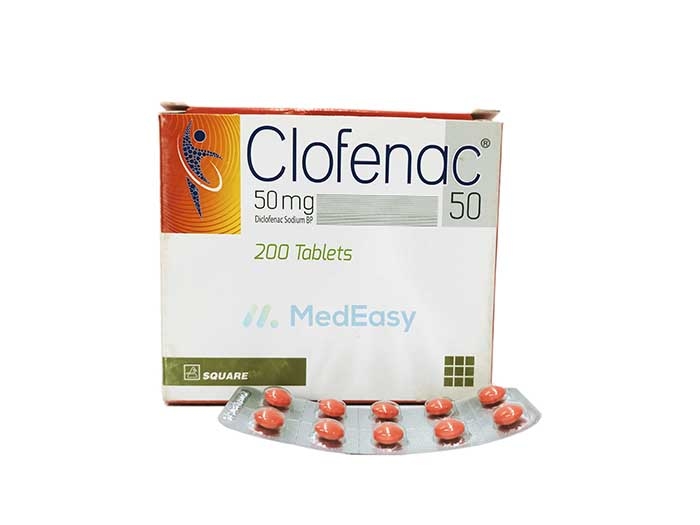
Clofenac50 mg
Square Pharmaceuticals PLC.
৳18.40
Add to cart


G-Diclofenac is a non-steroidal anti-inflammatory drug (NSAID) used for the relief of pain and inflammation in a range of musculoskeletal and gynecological conditions.
G-Diclofenac is not an antibiotic and has no role in treating infections.
Each formulation of Diclofenac Sodium contains diclofenac sodium as the active pharmaceutical ingredient. It is available in several dosage forms and strengths, including immediate-release and sustained/delayed-release tablets, injection ampoules, suppositories, topical gel, and ophthalmic drops, depending on local market availability.
Common strengths include 25 mg, 50 mg, 75 mg, and 100 mg (sustained-release) oral tablets, and 75 mg/3 mL injectable solution.
G-Diclofenac is a phenylacetic acid derivative belonging to the non-steroidal anti-inflammatory drug (NSAID) class. It is a non-selective inhibitor of cyclooxygenase (COX-1 and COX-2) enzymes, which are responsible for the synthesis of prostaglandins involved in pain, inflammation, and fever.
It is widely used for its analgesic, anti-inflammatory, and antipyretic properties in the management of chronic inflammatory joint disease and acute pain conditions. G-Diclofenac is available in oral, injectable, rectal, ophthalmic, and topical formulations, allowing flexible use depending on the clinical situation.
G-Diclofenac belongs to the therapeutic class of Non-Steroidal Anti-Inflammatory Drugs (NSAIDs), specifically the phenylacetic acid derivative group. It is a non-selective cyclooxygenase (COX-1 and COX-2) inhibitor, distinguishing it from selective COX-2 inhibitors (e.g., celecoxib).
Diclofenac Sodium works by non-selectively inhibiting the cyclooxygenase (COX-1 and COX-2) enzymes, which blocks the conversion of arachidonic acid to prostaglandins and thromboxanes. This reduces the mediators responsible for pain, inflammation, and fever at the site of tissue injury.
After oral administration, Diclofenac Sodium is well absorbed from the gastrointestinal tract, is highly protein-bound (>99%), undergoes extensive hepatic metabolism (primarily via CYP2C9), and is eliminated mainly via the kidneys and bile. Peak plasma concentrations are typically reached within 1-2 hours for immediate-release formulations.
| Indication | Typical Adult Dose |
|---|---|
| Osteoarthritis | 100-150 mg/day in 2-3 divided doses |
| Rheumatoid arthritis | 150-200 mg/day in 3-4 divided doses |
| Ankylosing spondylitis | 100-125 mg/day in divided doses |
| Acute musculoskeletal pain | 50 mg 2-3 times daily, short-term |
| Primary dysmenorrhea | 50-100 mg initially, then 50 mg every 8 hours as needed |
The lowest effective dose should be used for the shortest duration consistent with the treatment goal, due to cardiovascular and gastrointestinal risks (see Precautions and Warnings). Sustained-release/enteric-coated tablets should be swallowed whole, not crushed or chewed, and are best taken with food or milk to reduce gastric irritation.
For juvenile rheumatoid/idiopathic arthritis (where locally approved), doses of approximately 1-3 mg/kg/day in divided doses have been used under specialist supervision. Safety and efficacy of oral G-Diclofenac have not been established for general pediatric use in many markets; use only under pediatric specialist guidance.
Use the lowest effective dose with caution in patients with mild-to-moderate renal or hepatic impairment; avoid use in severe renal or hepatic impairment. Monitor renal and liver function during prolonged therapy.
G-Diclofenac tablets should be swallowed whole with a full glass of water, preferably with food or milk to minimize gastrointestinal upset. Enteric-coated and sustained-release tablets must not be crushed, split, or chewed. Injectable G-Diclofenac is administered by deep intramuscular injection into the gluteal muscle by a healthcare professional, generally not for more than 1-2 days. Topical gel is applied to intact, clean, dry skin over the affected area only.
G-Diclofenac has several clinically significant drug interactions:
Diclofenac Sodium is contraindicated in the following situations:
Most adverse effects of G-Diclofenac are mild and transient, but some can be serious. Common side effects include:
Less common but serious effects include gastrointestinal ulceration/bleeding/perforation, cardiovascular thrombotic events (myocardial infarction, stroke), hepatotoxicity, renal impairment, hypertension, anaphylactic reactions, and severe skin reactions (Stevens-Johnson syndrome, toxic epidermal necrolysis). See Precautions and Warnings for details.
Pregnancy: G-Diclofenac should be avoided during pregnancy unless clearly necessary. Use in the first and second trimesters should occur only if the potential benefit justifies the potential risk to the fetus, and only after consulting a physician. G-Diclofenac is contraindicated in the third trimester of pregnancy because NSAIDs can cause premature closure of the fetal ductus arteriosus and other fetal renal effects.
Lactation: G-Diclofenac passes into breast milk in small amounts. Use during breastfeeding should occur only if clearly needed and under medical supervision, weighing the benefit to the mother against potential risk to the infant.
G-Diclofenac carries important warnings that require caution:
Symptoms of G-Diclofenac overdose may include lethargy, drowsiness, nausea, vomiting, and epigastric pain, and in more severe cases gastrointestinal bleeding, hypertension, acute renal failure, respiratory depression, or coma. There is no specific antidote for G-Diclofenac overdose.
In case of suspected overdose, seek immediate medical attention or contact emergency services/a poison control center. Treatment is supportive and symptomatic; a physician may consider measures such as activated charcoal if the patient presents soon after ingestion. Do not attempt home treatment for a suspected overdose.
Store at room temperature (below 30°C), away from light and moisture. Keep out of reach of children.
Elderly: Elderly patients are at greater risk of serious GI, cardiovascular, and renal adverse effects with G-Diclofenac. The lowest effective dose should be used for the shortest possible duration, with closer clinical monitoring.
Renal impairment: Use with caution and at reduced doses in mild-to-moderate renal impairment; avoid in severe renal impairment. Monitor renal function.
Hepatic impairment: Use with caution in mild-to-moderate hepatic impairment; avoid in severe hepatic impairment. Monitor liver function periodically during prolonged use.
Pediatric patients: See Pediatric Uses.
Pregnancy and lactation: See Pregnancy and Lactation.
G-Diclofenac should be used for the shortest duration consistent with the individual treatment goal, due to dose- and duration-related cardiovascular and gastrointestinal risks. For acute pain or dysmenorrhea, short courses of a few days are typical. For chronic conditions such as osteoarthritis or rheumatoid arthritis, long-term use requires periodic clinical reassessment and monitoring of renal function, liver function, and blood pressure by a physician.
Non-Steroidal Anti-Inflammatory Drug (NSAID); Phenylacetic acid derivative; Non-selective COX-1/COX-2 inhibitor
Diclofenac Sodium exerts its therapeutic effect by non-selectively inhibiting the cyclooxygenase (COX-1 and COX-2) enzymes involved in the arachidonic acid pathway. This inhibition decreases the synthesis of prostaglandins and thromboxanes, mediators responsible for pain, inflammation, fever, and platelet aggregation, resulting in analgesic, anti-inflammatory, and antipyretic effects.
The safety and efficacy of oral G-Diclofenac have not been formally established for general pediatric use in most markets. For juvenile idiopathic (rheumatoid) arthritis, weight-based dosing (approximately 1-3 mg/kg/day in divided doses) has been used under the supervision of a pediatric rheumatology specialist in some settings. G-Diclofenac should not be used in children outside specialist guidance, and topical/rectal formulations are generally not recommended in young children.
Q: What is G-Diclofenac 50 mg Tablet used for?
A: G-Diclofenac 50 mg Tablet is a non-steroidal anti-inflammatory drug (NSAID) used to relieve pain and inflammation in conditions such as osteoarthritis, rheumatoid arthritis, ankylosing spondylitis, acute musculoskeletal injuries, and painful menstrual cramps (dysmenorrhea).
Q: Can I take G-Diclofenac 50 mg Tablet during pregnancy?
A: G-Diclofenac 50 mg Tablet should be avoided during pregnancy unless clearly needed, and it is contraindicated in the third trimester because it can cause premature closure of the fetal ductus arteriosus. If you are pregnant or planning pregnancy, consult your physician before using G-Diclofenac 50 mg Tablet.
Q: What are the serious risks of G-Diclofenac 50 mg Tablet?
A: G-Diclofenac 50 mg Tablet, like other NSAIDs, carries a risk of serious cardiovascular events (heart attack, stroke) and serious gastrointestinal events (bleeding, ulceration, perforation), which can occur without warning. It should be used at the lowest effective dose for the shortest necessary time, and you should seek medical attention if you notice chest pain, black stools, or severe stomach pain while taking it.
Q: Who should not take G-Diclofenac 50 mg Tablet?
A: G-Diclofenac 50 mg Tablet should not be taken by people with a known allergy to diclofenac or other NSAIDs/aspirin (including a history of asthma or hives triggered by these drugs), those with active stomach bleeding or ulcers, patients who have recently had coronary artery bypass graft (CABG) surgery, those with severe heart failure, and women in the third trimester of pregnancy.
Q: Can G-Diclofenac 50 mg Tablet be taken with other painkillers?
A: Combining G-Diclofenac 50 mg Tablet with aspirin or other NSAIDs is generally not recommended because it increases the risk of gastrointestinal bleeding without added benefit. Always tell your doctor about all medicines you are taking, especially blood thinners, before starting G-Diclofenac 50 mg Tablet.
Q: What should I do if I take too much G-Diclofenac 50 mg Tablet?
A: If an overdose of G-Diclofenac 50 mg Tablet is suspected, seek immediate medical attention or contact emergency services/a poison control center right away. Do not try to treat an overdose at home.
Disclaimer
The information provided is accurate to the best of our knowledge, but it does not replace professional medical advice. We cannot guarantee its completeness or accuracy, and the absence of specific information about a drug should not be taken as an endorsement. We are not responsible for any consequences arising from this information, so please consult a healthcare professional for any concerns or questions.