
Key facts
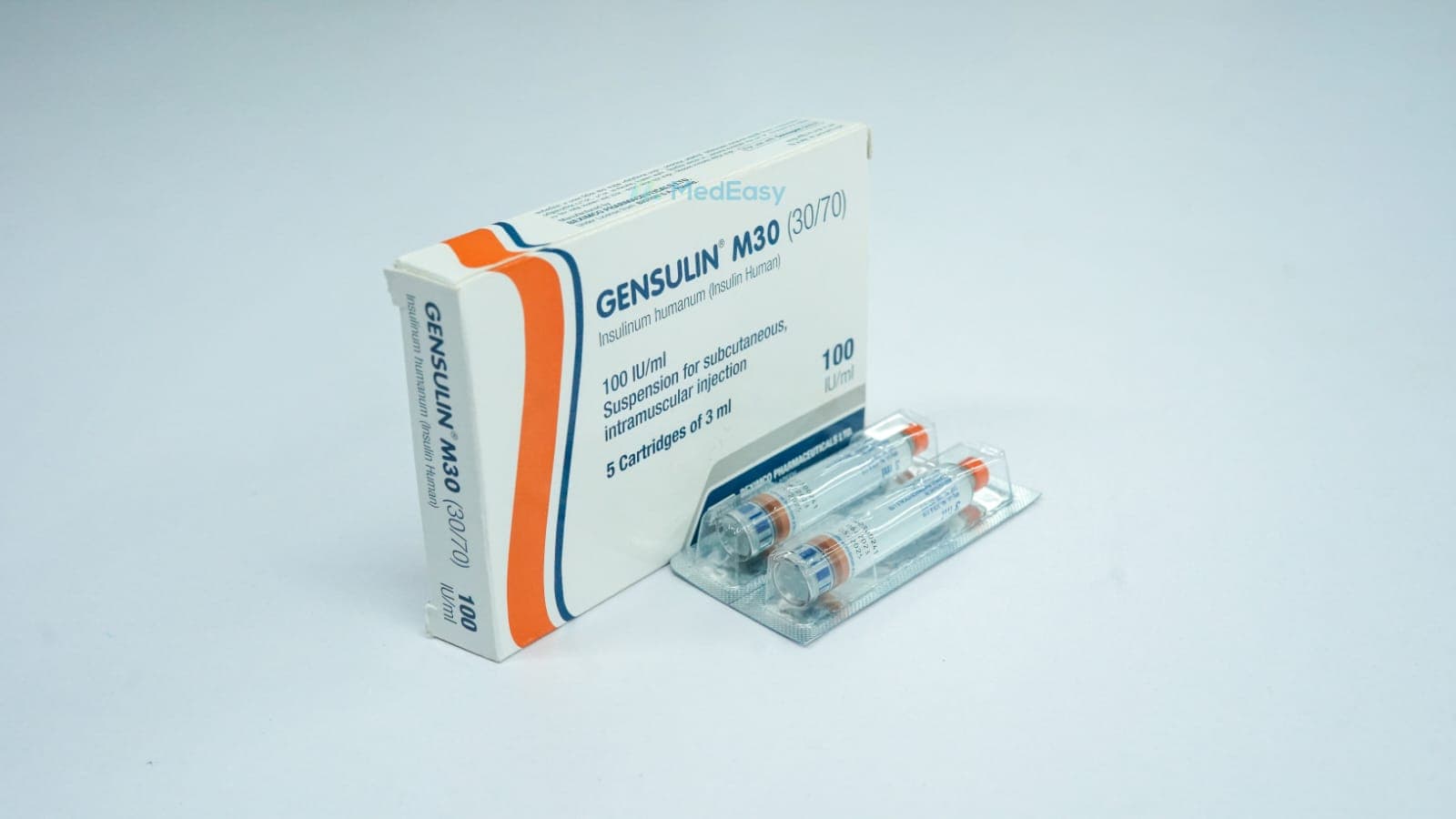
Gensulin M30 30/70 100IU/ml Penfill is available on MedEasy for ৳210.90 per 3ml Cartridge, with home delivery anywhere in Bangladesh. It is manufactured by Beximco Pharmaceuticals Ltd. Its generic name is Insulin Human.
- Pack sizes
- 3ml Cartridge, 5's Pack
- Prescription
- Required. Upload a valid doctor's prescription at checkout; a MedEasy pharmacist verifies it before dispatch.
- Delivery
- Home delivery across Bangladesh. Same-day delivery in Dhaka, Chattogram, Sylhet and Bogura city areas; 2-3 days elsewhere.
- Payment
- Cash on delivery, bKash, cards and mobile banking.
- Brand
- Gensulin M30
- Generic name
- Insulin Human
- Manufacturer
- Beximco Pharmaceuticals Ltd.
- Form & strength
- Penfill 30/70 100IU/ml
- Availability
- In stock
- Authenticity
- Sourced from licensed suppliers and the manufacturer's authorised distributors in Bangladesh.

Medicine overview
Indications of Gensulin M30
Type 1 Diabetes Mellitus
Gensulin M30 is an essential, life-sustaining treatment for type 1 diabetes mellitus. Because the pancreas produces little or no endogenous insulin in this condition, Gensulin M30 (given as short-acting Regular and/or intermediate-acting NPH formulations) is required for all patients to control blood glucose, prevent diabetic ketoacidosis, and sustain life.
Type 2 Diabetes Mellitus
Gensulin M30 is an established treatment for type 2 diabetes mellitus in patients whose blood glucose is not adequately controlled with diet, exercise, and oral antidiabetic agents alone, or in whom oral agents are contraindicated or no longer sufficient. Gensulin M30 may be used alone or in combination with oral antidiabetic medicines.
Gestational Diabetes Mellitus
Gensulin M30 is a guideline-supported option for gestational diabetes when diet and lifestyle measures do not achieve target glucose control, since it does not cross the placenta in clinically significant amounts.
Diabetic Ketoacidosis and Hyperglycemic Emergencies
Regular (short-acting) Gensulin M30, given intravenously under close medical supervision, is the established treatment for diabetic ketoacidosis and hyperglycemic hyperosmolar state, and is also used for glycemic control in hospitalized and perioperative patients.
Composition
Each mL of injectable solution/suspension contains Insulin Human 100 IU (recombinant DNA origin, structurally identical to endogenous human insulin), available as Regular (soluble, short-acting) Insulin Human and as Isophane/NPH (intermediate-acting) Insulin Human suspension, alone or as premixed combinations, depending on the marketed presentation.
Description
Gensulin M30 is a recombinant form of insulin that is structurally identical to the insulin naturally produced by the human pancreas. Gensulin M30 is manufactured using recombinant DNA technology and is available mainly as a short-acting (Regular/soluble) solution and an intermediate-acting (NPH/isophane) suspension. Gensulin M30 works by helping cells throughout the body take up glucose from the blood and by regulating how the liver produces and releases glucose, thereby lowering blood glucose levels in people with diabetes mellitus. Gensulin M30 is not effective by mouth and must be given by injection; it should be used exactly as prescribed by a qualified healthcare professional, with regular blood glucose monitoring.
Therapeutic Class
Antidiabetic agent — Gensulin M30 (short-acting/Regular and intermediate-acting/NPH forms)
Pharmacology
Insulin Human lowers blood glucose by binding to insulin receptors on muscle, fat, and liver cells. This binding stimulates translocation of glucose transporters to the cell surface, increasing peripheral uptake of glucose by skeletal muscle and adipose tissue, while simultaneously inhibiting hepatic glucose output (gluconeogenesis and glycogenolysis). Insulin Human also promotes glycogen synthesis, lipogenesis, and protein synthesis, and inhibits lipolysis and ketogenesis, which is why intravenous Regular Insulin Human is effective in reversing the ketoacidosis of diabetic ketoacidosis. Insulin Human additionally drives potassium into cells, which is the basis of its use (with glucose) to manage hyperkalemia in clinical emergencies, and the reason hypokalemia is a recognized risk during Insulin Human therapy.
The onset, peak, and duration of action of Insulin Human differ by formulation: Regular (soluble) Insulin Human given subcutaneously has an onset of action of approximately 30 minutes, peaks at 2–4 hours, and lasts about 5–8 hours; NPH (isophane) Insulin Human, a crystalline suspension that delays absorption, has an onset of approximately 1–2 hours, peaks at 4–12 hours, and has a duration of action of up to 18–24 hours. Intravenous Regular Insulin Human acts almost immediately and has a very short duration, which is why it is given as a continuous infusion in diabetic ketoacidosis.
Dosage & Administration of Gensulin M30
The dose of Gensulin M30 is highly individualized and must be determined and adjusted by a qualified healthcare professional based on blood glucose monitoring, target glycemic control, body weight, diet, activity level, and concurrent illness. There is no single fixed dose of Gensulin M30 that applies to all patients; the general regimens below are representative starting points only and are not a substitute for individualized medical supervision.
Administration of Gensulin M30
- Regular Gensulin M30 is a clear solution and may be given by subcutaneous injection, and, in hospital settings under medical supervision, by intravenous or intramuscular routes; NPH Gensulin M30 is a cloudy suspension intended for subcutaneous injection only and must never be given intravenously.
- Before drawing up NPH Gensulin M30, gently roll and invert the vial or pen (do not shake vigorously) until the suspension is uniformly cloudy; Regular Gensulin M30 does not require resuspension.
- Inject Gensulin M30 subcutaneously into the abdomen, thigh, upper arm, or buttock, rotating the injection site systematically to reduce the risk of lipodystrophy (lumps or dents under the skin).
- Check the appearance of Gensulin M30 before each use; do not use Regular Gensulin M30 if it looks cloudy, discolored, or contains particles, and do not use NPH Gensulin M30 if it appears clumped, frosted, or has particles that will not resuspend.
- Time doses of Gensulin M30 in relation to meals as advised by the prescriber, since mistimed dosing increases the risk of hypoglycemia or hyperglycemia.
- Never share Gensulin M30 pens, syringes, or needles between patients, even if the needle is changed.
- Do not mix different brands or types of insulin, including Gensulin M30, in the same syringe unless specifically instructed by a healthcare professional, as this can alter the expected action profile.
Interaction of Gensulin M30
- Other antidiabetic agents (sulfonylureas, meglitinides, GLP-1 agonists, etc.): combined use with Gensulin M30 increases the risk of hypoglycemia; dose adjustment and closer glucose monitoring are usually needed.
- Beta-blockers: can mask the warning symptoms of hypoglycemia (such as tremor and palpitations) in patients using Gensulin M30, delaying recognition of low blood glucose.
- Corticosteroids, thiazide diuretics, thyroid hormone, and some hormonal contraceptives: these can raise blood glucose and reduce the glucose-lowering effect of Gensulin M30, sometimes requiring a higher dose of Gensulin M30.
- ACE inhibitors, angiotensin receptor blockers, salicylates, MAO inhibitors, and alcohol: may enhance the blood-glucose-lowering effect of Gensulin M30 and increase the risk of hypoglycemia.
- Thiazolidinediones (e.g., pioglitazone): concurrent use with Gensulin M30 increases the risk of fluid retention and can precipitate or worsen congestive heart failure; combined use requires cardiac monitoring.
Contraindications
Insulin Human is contraindicated during episodes of hypoglycemia (low blood glucose), and in patients with known hypersensitivity to Insulin Human or to any of its excipients.
Side Effects of Gensulin M30
Common Side Effects
- Hypoglycemia (low blood glucose) — the most common and potentially serious effect of Gensulin M30
- Injection site reactions such as redness, swelling, itching, or mild pain
- Lipodystrophy (thickening, lumps, or pitting of fat) at repeatedly used injection sites
- Weight gain
- Mild, transient swelling (edema), especially when starting Gensulin M30 or intensifying therapy
Serious Side Effects (Seek Medical Attention)
- Severe hypoglycemia with confusion, seizures, or loss of consciousness
- Signs of a severe allergic reaction to Gensulin M30, such as generalized rash, swelling of the face/throat, difficulty breathing, or a sudden drop in blood pressure (anaphylaxis) — rare but medically urgent
- Symptoms of low potassium (hypokalemia), such as muscle weakness or abnormal heart rhythm, particularly with high doses or intravenous use of Gensulin M30
- New or worsening shortness of breath or swelling of the legs, which may indicate fluid retention, especially when Gensulin M30 is combined with a thiazolidinedione
Pregnancy & Lactation
Pregnancy
Gensulin M30 does not cross the placenta in clinically significant amounts and is considered a preferred pharmacologic option for achieving glycemic control in pregnancy — including pre-existing diabetes and gestational diabetes — when insulin therapy is needed. Good glycemic control with Gensulin M30 reduces the risk of maternal and fetal complications associated with poorly controlled diabetes. Gensulin M30 should be used only under close medical supervision, with the dose individualized and frequently reassessed as insulin requirements typically change throughout pregnancy.
Breastfeeding
Gensulin M30 is generally considered compatible with breastfeeding, as insulin is a normal endogenous protein that is broken down in the infant's digestive tract and is not expected to cause harm to a breastfed infant. Maternal insulin dose and diet may need adjustment during lactation, and mothers using Gensulin M30 while breastfeeding should be monitored by their healthcare provider for changes in glucose control.
Precautions & Warnings
- Hypoglycemia: the most common and potentially serious risk of Gensulin M30 therapy; patients and caregivers should be educated to recognize early symptoms (sweating, shakiness, hunger, confusion) and to treat promptly with fast-acting carbohydrate, and should always carry a source of sugar.
- Injection site rotation and lipodystrophy: repeated injection of Gensulin M30 at the same site can cause lipodystrophy, which may alter and unpredictably delay absorption; rotate injection sites systematically.
- Dose changes with illness, diet, and exercise: requirements for Gensulin M30 change with intercurrent illness, altered diet, physical activity, stress, and travel across time zones; dose adjustments should be made only under medical guidance, and blood glucose should be monitored more closely during these periods.
- Renal and hepatic impairment: insulin clearance may be reduced in significant kidney or liver disease, increasing the risk of hypoglycemia with usual doses of Gensulin M30; closer monitoring and dose reduction may be needed (see Use in Special Populations).
- Hypokalemia: Gensulin M30 shifts potassium into cells and can cause or worsen low blood potassium, particularly with intravenous use, in malnourished patients, or when combined with other potassium-lowering agents; potassium levels should be monitored where clinically indicated.
- Do not confuse insulin types: Regular and NPH Gensulin M30 have different onset and duration profiles and must not be interchanged or confused; always confirm the correct formulation and dose before injecting.
- Concurrent thiazolidinedione use: combining Gensulin M30 with a thiazolidinedione increases the risk of fluid retention and heart failure; monitor for signs of fluid overload.
Overdose Effects of Gensulin M30
Overdose of Gensulin M30 causes hypoglycemia, which can range from mild (hunger, sweating, tremor, palpitations, confusion) to severe (seizures, loss of consciousness). Mild hypoglycemia from Gensulin M30 can often be managed by immediately consuming a fast-acting source of sugar (such as glucose tablets or juice) followed by a longer-acting carbohydrate snack. Severe hypoglycemia — with confusion, seizures, or unconsciousness — is a medical emergency and requires immediate medical attention; it may need treatment with injectable glucagon or intravenous glucose administered by a healthcare provider. Anyone who experiences or witnesses severe hypoglycemia after Gensulin M30 use should contact emergency services immediately.
Storage Conditions
Store unopened Gensulin M30 in a refrigerator (2°C to 8°C); do not freeze, and do not use Gensulin M30 that has been frozen. Once a vial or pen of Gensulin M30 is in use, it may generally be kept at room temperature (below 30°C), away from direct heat and light, for a limited period (commonly up to about 28 days) as specified on the product label, after which any remaining Gensulin M30 should be discarded. Keep Gensulin M30 out of the reach and sight of children, and always check the appearance and expiry date of Gensulin M30 before use.
Use In Special Populations
Children
Gensulin M30 is an established and necessary treatment for children with type 1 diabetes mellitus. Dosing is individualized and weight-based, requires careful blood glucose monitoring, and typically involves close supervision by caregivers and a pediatric endocrinology team, since children can be especially vulnerable to the effects of hypoglycemia.
Elderly
Older adults using Gensulin M30 may be more sensitive to hypoglycemia and may have reduced ability to recognize or respond to warning symptoms; conservative dose titration, simplified regimens where possible, and closer monitoring are generally recommended.
Renal Impairment
Insulin clearance can be reduced in patients with significant renal impairment, increasing the risk of hypoglycemia; the dose of Gensulin M30 may need to be reduced and blood glucose monitored more closely in these patients.
Hepatic Impairment
Insulin requirements may be reduced in patients with significant hepatic impairment because of decreased capacity for gluconeogenesis and reduced insulin clearance; the dose of Gensulin M30 should be individualized with close glucose monitoring in this population.
Pregnant and Breastfeeding Women
See the Pregnancy and Lactation section above for detailed guidance on the use of Gensulin M30 in this population.
Duration Of Treatment
In type 1 diabetes mellitus, Gensulin M30 is required as lifelong replacement therapy. In type 2 diabetes mellitus and gestational diabetes, the duration of Gensulin M30 therapy depends on the individual's glycemic control and clinical course, and is reassessed regularly by the treating physician; therapy with Gensulin M30 may be adjusted, continued, or in some cases discontinued (for example, after delivery in gestational diabetes, if glucose control is later achieved with other measures) based on ongoing medical assessment. Intravenous Regular Gensulin M30 for diabetic ketoacidosis is used short-term in hospital until the acute crisis resolves, after which patients are transitioned to a maintenance subcutaneous Gensulin M30 regimen.
Drug Classes
Antidiabetic agent — Insulin Human (short-acting/Regular and intermediate-acting/NPH forms)
Mode Of Action
Insulin Human exerts its glucose-lowering effect by binding to the insulin receptor, a transmembrane receptor tyrosine kinase found on muscle, adipose, and liver cells. Receptor binding triggers autophosphorylation and activates intracellular signaling cascades (including the PI3K-Akt pathway), which promote translocation of GLUT4 glucose transporters to the cell membrane, increasing glucose uptake into skeletal muscle and fat. In the liver, Insulin Human suppresses gluconeogenesis and glycogenolysis while stimulating glycogen synthesis, reducing hepatic glucose output. Insulin Human also inhibits lipolysis and proteolysis and promotes lipogenesis and protein synthesis, and facilitates movement of potassium into cells. The overall effect is a lowering of blood glucose concentration toward normal levels.
Pregnancy
B
Pediatric Uses
Gensulin M30 is indicated and necessary for the management of type 1 diabetes mellitus in children, as endogenous insulin production is absent or severely deficient in this condition. Dosing of Gensulin M30 in children is individualized and weight-based, guided by frequent blood glucose monitoring, dietary intake, and physical activity, and requires close involvement of caregivers and a pediatric diabetes care team. Children and their caregivers should be specifically educated on recognizing and treating hypoglycemia, proper injection technique, and site rotation. Gensulin M30 may also be used in children with type 2 diabetes mellitus when other measures are insufficient, under specialist guidance.
Frequently Asked Questions
Q: What is Gensulin M30 30/70 100IU/ml Penfill used for?
A: Gensulin M30 30/70 100IU/ml Penfill is used to control blood glucose levels in people with diabetes mellitus. It is essential for all patients with type 1 diabetes and is also used in type 2 diabetes when diet, exercise, and oral medicines do not achieve adequate control, as well as in gestational diabetes and in hospital settings such as diabetic ketoacidosis.
Q: What is the difference between Regular and NPH Gensulin M30 30/70 100IU/ml Penfill?
A: Regular Gensulin M30 30/70 100IU/ml Penfill is a short-acting, clear solution that starts working within about 30–60 minutes and lasts around 5–8 hours, while NPH Gensulin M30 30/70 100IU/ml Penfill is an intermediate-acting, cloudy suspension that starts working more slowly (1–2 hours) but lasts longer (up to 18–24 hours). They are often used together to provide both mealtime and background glucose control.
Q: How is Gensulin M30 30/70 100IU/ml Penfill given?
A: Gensulin M30 30/70 100IU/ml Penfill is given by injection, most commonly subcutaneously into the abdomen, thigh, upper arm, or buttock, with the injection site rotated regularly. Regular Gensulin M30 30/70 100IU/ml Penfill can also be given intravenously in hospital for emergencies such as diabetic ketoacidosis, but NPH Gensulin M30 30/70 100IU/ml Penfill must never be given intravenously.
Q: What is the most important side effect of Gensulin M30 30/70 100IU/ml Penfill to watch for?
A: The most important side effect is hypoglycemia (low blood glucose), which can cause sweating, shakiness, hunger, confusion, and, if severe, seizures or loss of consciousness. Patients using Gensulin M30 30/70 100IU/ml Penfill should always carry a fast-acting source of sugar and know how to treat low blood glucose promptly.
Q: Is Gensulin M30 30/70 100IU/ml Penfill safe to use during pregnancy and breastfeeding?
A: Gensulin M30 30/70 100IU/ml Penfill is considered a preferred treatment for diabetes during pregnancy because it does not cross the placenta in significant amounts, and good glucose control with Gensulin M30 30/70 100IU/ml Penfill reduces risks to both mother and baby. Gensulin M30 30/70 100IU/ml Penfill is also generally considered compatible with breastfeeding. Use during pregnancy or lactation should always be supervised by a physician, with the dose adjusted as needed.
Q: How should Gensulin M30 30/70 100IU/ml Penfill be stored?
A: Unopened Gensulin M30 30/70 100IU/ml Penfill should be kept refrigerated (2°C to 8°C) and never frozen. Once in use, a vial or pen of Gensulin M30 30/70 100IU/ml Penfill can usually be kept at room temperature below 30°C, away from heat and light, for a limited time (commonly up to 28 days) before it should be discarded.
Disclaimer
The information provided is accurate to the best of our knowledge, but it does not replace professional medical advice. We cannot guarantee its completeness or accuracy, and the absence of specific information about a drug should not be taken as an endorsement. We are not responsible for any consequences arising from this information, so please consult a healthcare professional for any concerns or questions.