10% Off
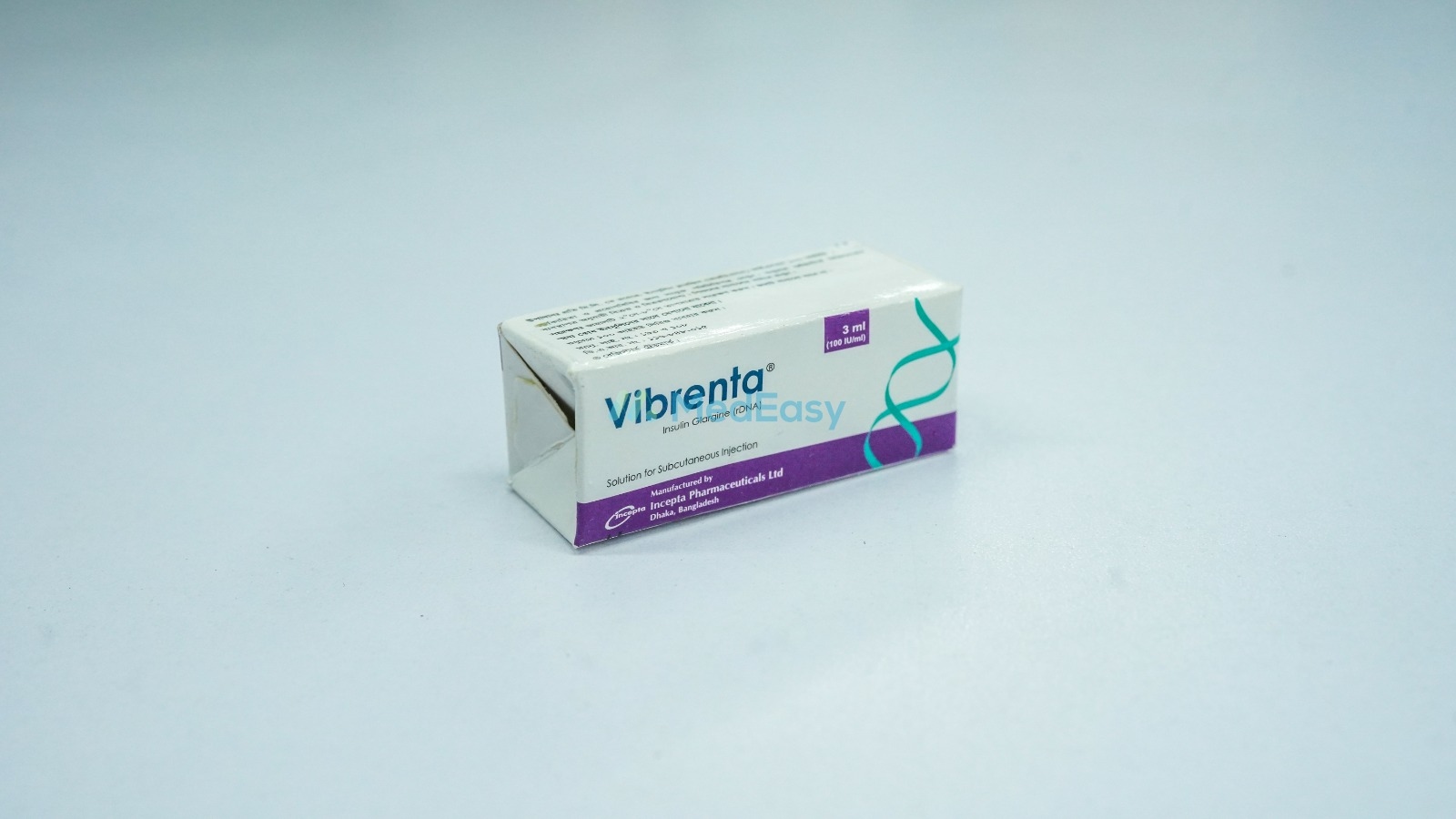
Vibrenta Vial100 IU/ml
Incepta Pharmaceuticals Ltd.
৳540.00
Add to cart
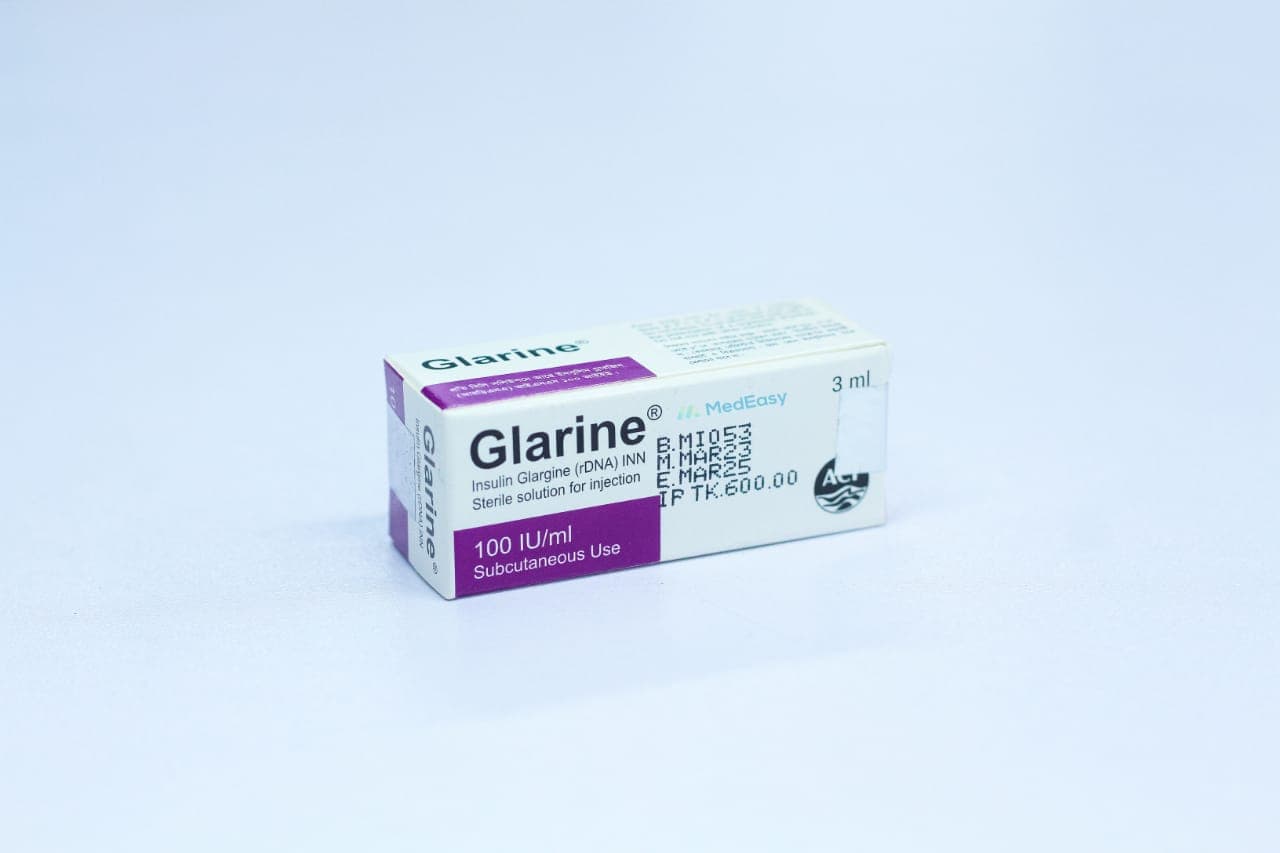

Glarine is a long-acting (basal) human insulin analog indicated to improve glycemic control in patients with diabetes mellitus. Its established uses, by strength of evidence, are:
Glarine is not recommended for the treatment of diabetic ketoacidosis; intravenous short-acting insulin is required in that setting.
Each mL of Insulin Glargine [rDNA] injection contains insulin glargine, a recombinant human insulin analog produced by recombinant DNA (rDNA) technology using a non-pathogenic laboratory strain of Escherichia coli. It is typically formulated as a sterile, clear, colourless-to-almost-colourless aqueous solution for subcutaneous injection, available in strengths such as 100 units/mL (U-100) and, for certain products, 300 units/mL (U-300).
Common excipients include zinc chloride, m-cresol, glycerol (glycerin), polysorbate 20 (in some formulations), hydrochloric acid and/or sodium hydroxide (for pH adjustment), and water for injection.
Glarine is a long-acting, recombinant human insulin analog. It differs from native human insulin by substitution of glycine for asparagine at position A21 and by the addition of two arginine residues to the C-terminus of the B-chain. These modifications shift the isoelectric point of the molecule, making it soluble at an acidic pH (in the injection vial/pen) but forming a microprecipitate in the neutral pH environment of subcutaneous tissue after injection.
This microprecipitate dissolves slowly, releasing small amounts of Glarine continuously, which gives it a relatively flat, peakless time-action profile lasting up to 24 hours with once-daily dosing.
Glarine belongs to the class of long-acting (basal) insulin analogs, a subclass of antidiabetic agents used for the treatment of diabetes mellitus.
The primary activity of Insulin Glargine [rDNA], like other insulins, is regulation of glucose metabolism. Insulin Glargine [rDNA] and its active metabolites lower blood glucose by stimulating peripheral glucose uptake, particularly by skeletal muscle and adipose tissue, and by inhibiting hepatic glucose production. Insulin also inhibits lipolysis and proteolysis while enhancing protein synthesis.
Insulin Glargine [rDNA] is designed to have low solubility at physiological pH. At the acidic pH of the injection formulation, it is fully soluble; after subcutaneous injection, the acidic solution is neutralized, forming microprecipitates from which small amounts of Insulin Glargine [rDNA] are slowly released. This produces a relatively constant, peakless concentration/time profile over 24 hours, allowing once-daily dosing in most patients.
Compared with NPH human insulin, Insulin Glargine [rDNA] has a slower, more prolonged absorption and a duration of action of approximately 24 hours, with no pronounced peak. Following subcutaneous injection, Insulin Glargine [rDNA] is rapidly metabolized at the carboxyl terminus of the B-chain to form two active metabolites, M1 and M2.
| Indication / Situation | Typical starting dose |
|---|---|
| Type 1 diabetes, insulin-naïve | Approximately one-third of the total daily insulin requirement, with the remainder given as rapid-/short-acting insulin at meals; dose then individualized. |
| Type 2 diabetes, insulin-naïve | Approximately 10 units (or 0.2 units/kg) once daily, subsequently titrated to the patient's needs. |
| Switching from once-daily NPH insulin | Same unit dose as the previous NPH dose, given once daily. |
| Switching from twice-daily NPH insulin | Initial Glarine dose reduced to about 80% of the total previous NPH daily dose, to reduce the risk of hypoglycemia; adjusted thereafter based on response. |
Full details of dose and administration are provided in the Dosage and Administration fields below.
Glarine is given as a subcutaneous injection once daily, at approximately the same time every day, into the abdominal wall, thigh, or deltoid region. Do not administer intravenously or intramuscularly, and do not use in an insulin infusion pump. Do not mix or dilute Glarine with any other insulin product or solution, as this can alter its time-action profile and reduce glucose control. Inspect the solution before use; it should be clear and colourless — do not use if it appears cloudy, particulate, or coloured. Rotate injection sites with each dose.
Many drugs can affect glucose metabolism and may require Glarine dose adjustment.
Other antidiabetic agents, ACE inhibitors, angiotensin receptor blockers, disopyramide, fibrates, fluoxetine, monoamine oxidase inhibitors (MAOIs), pentoxifylline, propoxyphene, salicylates, and sulfonamide antibiotics.
Corticosteroids, thiazide diuretics, niacin, danazol, protease inhibitors, sympathomimetic agents, atypical antipsychotics, and thyroid hormones — these may increase blood glucose and require dose adjustment of Glarine.
Beta-blockers (and other sympatholytic agents such as clonidine and guanethidine) can mask the warning signs of hypoglycemia (e.g. tremor, palpitations), making it harder to recognize.
Beta-blockers, clonidine, lithium salts, and alcohol may either potentiate or weaken the glucose-lowering effect of Glarine, with an unpredictable net effect on blood glucose.
Insulin Glargine [rDNA] is contraindicated in:
Hypoglycemia is the most common adverse reaction associated with Glarine and may be serious; symptoms can include sweating, tremor, palpitations, hunger, confusion, irritability, and, if severe, seizures, loss of consciousness, or coma.
Insulin, including Glarine, is generally the preferred approach for achieving glycemic control during pregnancy when pharmacologic therapy is needed, because good glycemic control is important for maternal and fetal outcomes. However, Glarine should be used during pregnancy only if clearly needed and if the potential benefit justifies the potential risk to the fetus; use only under close medical supervision. Insulin requirements often decrease in the first trimester, increase during the second and third trimesters, and decline rapidly after delivery — frequent monitoring and dose adjustment are essential. Consult a physician before use in pregnancy.
Insulin, including Glarine, is generally considered compatible with breastfeeding, as it is not expected to be orally bioavailable to the infant in clinically relevant amounts. Breastfeeding mothers with diabetes may need adjustments to insulin dose, diet, or both. Use only on the advice of a physician.
Do not dilute or mix Glarine with any other insulin or solution. Mixing or diluting can change its time-action profile in unpredictable ways, and mixing has been associated with a shift in the time-action profile. Glarine must also not be administered intravenously or via an insulin infusion pump, and must not be administered subcutaneously via an insulin pump, because severe hypoglycemia can occur.
Any change of insulin type, brand, or manufacturer, or any change in dose, should be made cautiously and only under medical supervision, as it may require a change in dosage.
As with all insulins, the timing of hypoglycemia may differ depending on the insulin regimen. Hypoglycemia may impair concentration and reaction time, which can be hazardous in situations such as driving or operating machinery. Signs of hypoglycemia may be reduced or absent in patients with long-standing diabetes, diabetic neuropathy, or those taking beta-blockers (see Interactions).
Severe, life-threatening, generalized allergic reactions, including anaphylaxis, can occur with any insulin, including Glarine. Discontinue and seek medical attention if a severe allergic reaction is suspected.
Patients with renal or hepatic impairment may require dose reduction and more frequent glucose monitoring, as insulin requirements may be diminished due to reduced insulin clearance/metabolism.
Glarine pens/pen devices must never be shared between patients, even if the needle is changed, due to the risk of transmission of blood-borne pathogens.
An excess of Glarine relative to food intake, energy expenditure, or concurrent glucose-lowering therapy can cause hypoglycemia, which may range from mild to severe and life-threatening.
Because of the prolonged action of Glarine, recovery from hypoglycemia may be delayed, and the patient should be monitored for an extended period following any overdose.
Unopened (unused) vials or pens: Store in a refrigerator at 2°C to 8°C (36°F to 46°F). Do not freeze; discard if the product has been frozen.
In-use (opened) vials or pens: May be kept at room temperature below 30°C for a limited period, generally up to 28 days per product labeling, then discarded even if some medicine remains. Keep away from direct heat and light. Do not store an in-use pen or cartridge in the refrigerator.
Keep out of reach of children. Do not use if the solution appears cloudy, coloured, or contains particles.
Safety and efficacy of Glarine have been established in children with type 1 diabetes mellitus within the age ranges specified in product labeling (generally 6 years and older); it has not been adequately studied in children under 6 years of age or in children with type 2 diabetes, so use with caution and only under specialist supervision in these groups.
Use Glarine with caution in elderly patients. Initiate with conservative dosing, as hypoglycemia may be more difficult to recognize in this population and can be associated with greater risk (e.g. falls, cardiovascular events).
Insulin requirements may be reduced due to decreased insulin clearance. Glarine is not recommended during periods of rapidly declining renal function because of the risk of prolonged hypoglycemia; dose reduction and close monitoring may be needed.
Insulin requirements may be reduced due to diminished capacity for gluconeogenesis and insulin metabolism. Glarine is not recommended during periods of rapidly declining hepatic function; dose reduction and close monitoring may be needed.
Glarine is generally used as long-term, ongoing basal insulin therapy for chronic management of type 1 or type 2 diabetes mellitus; there is no predefined treatment endpoint. Duration of therapy is determined by the prescribing physician based on ongoing glycemic control, disease progression, and clinical response, and treatment should not be stopped or altered without medical advice.
Insulin Glargine [rDNA] is classified under: Antidiabetic agents → Insulins → Long-acting (basal) insulin analogs.
Insulin Glargine [rDNA] binds to the insulin receptor on target cells (chiefly skeletal muscle and adipose tissue), triggering increased glucose uptake via translocation of GLUT4 glucose transporters, and suppresses hepatic glucose output by inhibiting gluconeogenesis and glycogenolysis. Its distinguishing pharmacologic feature is a delayed, prolonged subcutaneous absorption profile (due to microprecipitate formation at physiological pH) that provides a relatively flat, peakless action lasting approximately 24 hours, mimicking basal endogenous insulin secretion.
C
Glarine is approved for use in children with type 1 diabetes mellitus within the age range specified by the product labeling (typically 6 years and older), as part of a basal-bolus insulin regimen. Safety and efficacy in children younger than 6 years, and in children with type 2 diabetes, have not been established — use in these groups should occur only under close pediatric endocrinology supervision. Pediatric dosing is individualized based on weight, blood glucose monitoring, and metabolic needs, following the same principles as in adults, with cautious titration to reduce the risk of hypoglycemia.
Q: What is Glarine 100 IU/ml Vial used for?
A: Glarine 100 IU/ml Vial is a long-acting basal insulin used to control blood glucose levels in adults and children with type 1 diabetes mellitus, and in adults and children with type 2 diabetes mellitus who require insulin therapy. It provides steady, background insulin coverage over approximately 24 hours.
Q: How is Glarine 100 IU/ml Vial taken?
A: Glarine 100 IU/ml Vial is injected subcutaneously (under the skin) once daily, at about the same time each day, in the abdomen, thigh, or upper arm (deltoid), with injection sites rotated at each dose. It must never be given intravenously, through an insulin pump, or mixed/diluted with other insulins or solutions.
Q: Can I mix Glarine 100 IU/ml Vial with my other insulin in the same syringe?
A: No. Glarine 100 IU/ml Vial must never be diluted or mixed with any other insulin or solution. Doing so can change how quickly and how long Glarine 100 IU/ml Vial works, which can lead to poor blood sugar control or dangerous hypoglycemia. Always use a separate syringe/pen for Glarine 100 IU/ml Vial.
Q: What is the most common side effect of Glarine 100 IU/ml Vial?
A: The most common side effect is hypoglycemia (low blood sugar), which can cause sweating, shakiness, hunger, confusion, and, if severe, seizures or loss of consciousness. Other effects include injection site reactions, skin changes (lipodystrophy) at repeated injection sites, and weight gain.
Q: Is Glarine 100 IU/ml Vial safe during pregnancy or breastfeeding?
A: Insulin, including Glarine 100 IU/ml Vial, is generally the preferred treatment for diabetes during pregnancy when medication is needed, but it should be used only if clearly needed and under close medical supervision, since insulin requirements often change during pregnancy. It is generally considered compatible with breastfeeding, but dose adjustments may be needed — always consult a physician.
Q: What should I do if I think I have taken too much Glarine 100 IU/ml Vial?
A: Taking too much Glarine 100 IU/ml Vial can cause hypoglycemia. For mild symptoms, eat or drink a fast-acting source of sugar. For severe symptoms such as confusion, seizures, or loss of consciousness, seek immediate emergency medical attention, as this can be life-threatening.
Disclaimer
The information provided is accurate to the best of our knowledge, but it does not replace professional medical advice. We cannot guarantee its completeness or accuracy, and the absence of specific information about a drug should not be taken as an endorsement. We are not responsible for any consequences arising from this information, so please consult a healthcare professional for any concerns or questions.