
10% Off
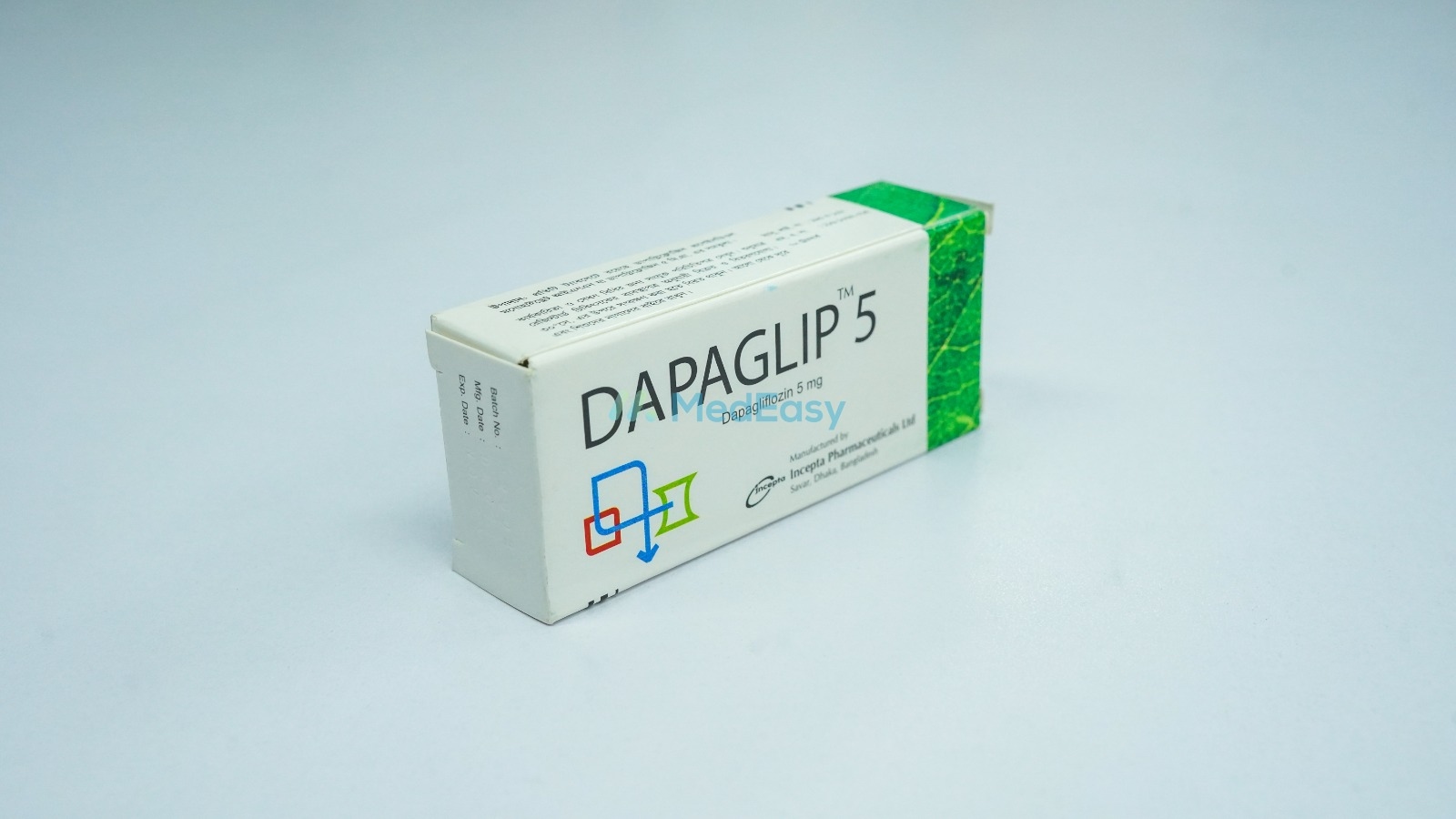
Dapaglip5 mg
Incepta Pharmaceuticals Ltd.
৳144.00
Add to cart
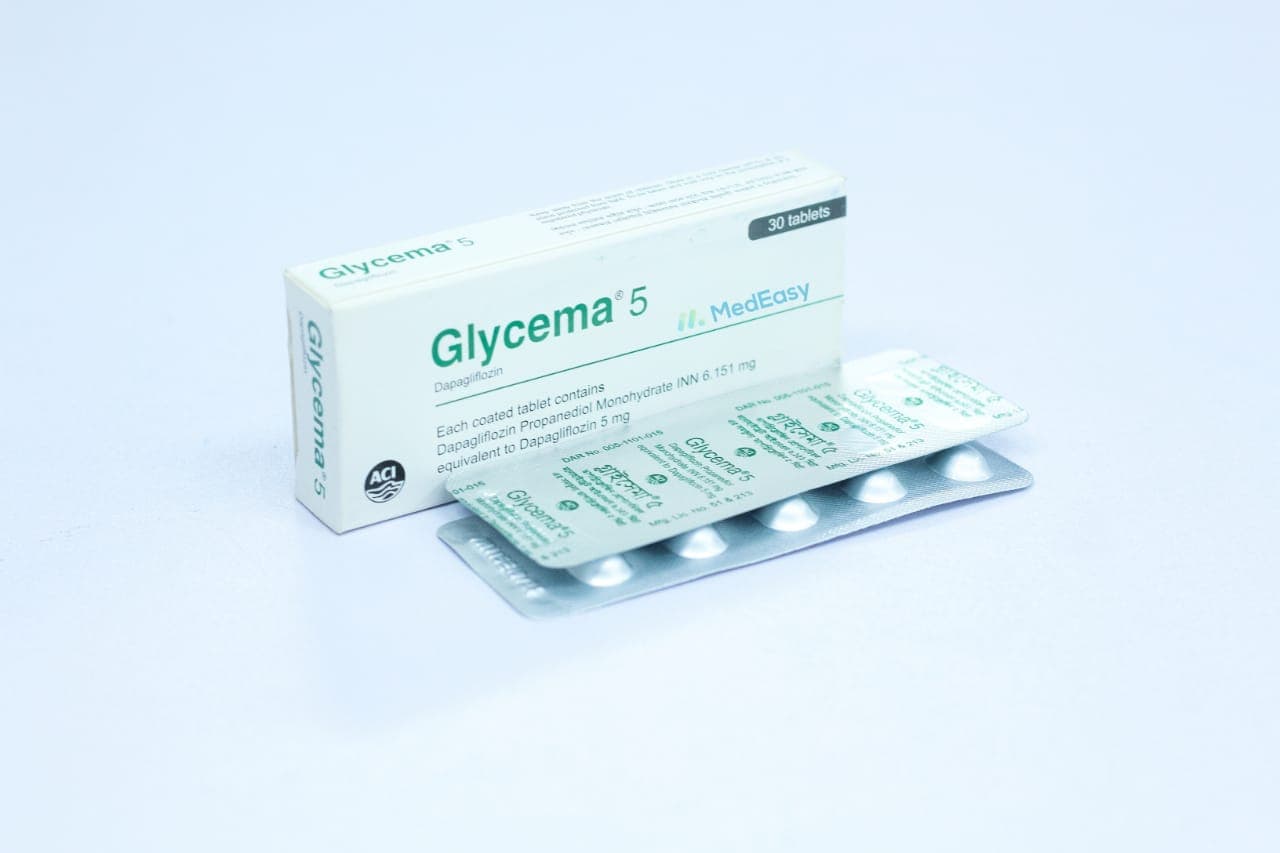
Glycema 5 mg Tablet is available on MedEasy for ৳184.00 per 10's Strip, with home delivery anywhere in Bangladesh. It is manufactured by ACI Limited. Its generic name is Dapagliflozin Propanediol.

Glycema is a sodium-glucose cotransporter-2 (SGLT2) inhibitor approved for the following uses:
Glycema is always used as part of a comprehensive treatment plan that includes diet, exercise, and, where relevant, other glucose-, blood-pressure-, or lipid-lowering therapies as advised by the treating physician.
Each tablet contains Dapagliflozin Propanediol (as Dapagliflozin Propanediol monohydrate), equivalent to dapagliflozin 5 mg or 10 mg, along with pharmaceutically acceptable excipients.
Glycema is an oral antidiabetic medicine belonging to the sodium-glucose cotransporter-2 (SGLT2) inhibitor class. It works in the kidney to lower blood glucose and also provides cardiovascular and renal protective effects that are independent of its glucose-lowering action.
Glycema is used in the long-term management of type 2 diabetes mellitus, heart failure, and chronic kidney disease, and is typically taken once daily by mouth, with or without food.
Glycema belongs to the therapeutic class of SGLT2 inhibitors (Sodium-Glucose Cotransporter-2 Inhibitors), also known as "gliflozins." It is classified as an antidiabetic agent with additional cardio-renal protective properties.
Dapagliflozin Propanediol inhibits sodium-glucose cotransporter-2 (SGLT2), the transporter responsible for the majority of glucose reabsorption in the proximal renal tubule. By blocking SGLT2, Dapagliflozin Propanediol reduces renal glucose reabsorption and increases urinary glucose excretion, thereby lowering plasma glucose in an insulin-independent manner.
Beyond its glycemic effect, Dapagliflozin Propanediol produces mild osmotic diuresis and natriuresis, reduces intraglomerular pressure, and lowers body weight and blood pressure modestly. These hemodynamic and metabolic effects are believed to underlie its demonstrated benefits in reducing heart failure hospitalizations and slowing progression of chronic kidney disease, independent of its effect on blood glucose.
| Indication | Recommended dose |
|---|---|
| Type 2 diabetes mellitus (glycemic control) | 5 mg once daily; may be increased to 10 mg once daily if additional glycemic control is needed and tolerated. |
| Heart failure | 10 mg once daily. |
| Chronic kidney disease | 10 mg once daily. |
| Children 10 years and older (type 2 diabetes) | 5 mg once daily; may be increased to 10 mg once daily if needed and tolerated. |
| eGFR | Adjustment |
|---|---|
| ≥45 mL/min/1.73m² | No dose adjustment needed. |
| 25–45 mL/min/1.73m² | May continue at 10 mg once daily for heart failure/CKD indications; not recommended for initiation of the glycemic-control indication at this eGFR. |
| <25 mL/min/1.73m², dialysis, or end-stage renal disease | Initiation not recommended; use only under close physician supervision if already established on therapy for heart failure/CKD, per current renal function. |
No dose adjustment is needed in mild-to-moderate hepatic impairment. Glycema has not been well studied in severe hepatic impairment; use with caution.
Glycema tablets should be swallowed whole with a glass of water, once daily in the morning, with or without food. If a dose is missed, it should be taken as soon as remembered on the same day; two doses should never be taken on the same day to make up for a missed dose. Always take Glycema exactly as prescribed by the physician.
Glycema is administered orally, once daily, preferably in the morning, with or without food. Tablets should be swallowed whole and not crushed or chewed. Consistent timing each day helps maintain steady blood levels and supports adherence to therapy.
The following clinically significant interactions should be considered when Glycema is co-administered with other medicines:
Dapagliflozin Propanediol is contraindicated in the following situations:
Dapagliflozin Propanediol is not indicated for treatment of type 1 diabetes mellitus or diabetic ketoacidosis (see Precautions and Warnings for the associated ketoacidosis risk).
Common and serious side effects reported with Glycema include:
Pregnancy: Glycema is not recommended for use during pregnancy, particularly during the second and third trimesters, based on animal data showing adverse effects on kidney development. Glycema should be used in pregnancy only if clearly needed and if the potential benefit justifies the potential risk to the fetus; a physician should be consulted before use, and alternative antidiabetic therapy is generally preferred if pregnancy is confirmed or planned.
Lactation: It is not known whether Glycema passes into human breast milk. Because of the potential for effects on renal development in a nursing infant, Glycema is not recommended during breastfeeding. A physician should be consulted to weigh the benefits of breastfeeding against the theoretical risk before use.
The following precautions should be observed with Glycema:
Glycema can cause ketoacidosis, sometimes with blood glucose levels that are only mildly elevated or near normal ("euglycemic diabetic ketoacidosis"). This is a serious, potentially life-threatening condition. Patients should seek immediate medical attention if they develop symptoms such as nausea, vomiting, abdominal pain, fatigue, or difficulty breathing. Glycema should be temporarily discontinued before scheduled surgery or during acute serious illness, prolonged fasting, or excessive alcohol intake, as instructed by the physician.
Rare but serious and life-threatening cases of necrotizing fasciitis of the perineum (Fournier's gangrene) have been reported with SGLT2 inhibitors, including Glycema. Patients should seek urgent medical care if they develop pain, tenderness, redness, or swelling of the genital or perineal area along with fever or malaise.
Glycema can cause intravascular volume contraction, leading to symptomatic hypotension, particularly in the elderly, in patients with renal impairment, low blood pressure, or those on diuretics. Volume status should be assessed and corrected before starting therapy.
Glycema increases the risk of genital mycotic infections and urinary tract infections, including serious infections such as urosepsis and pyelonephritis. Good genital hygiene and prompt reporting of symptoms is advised.
When Glycema is combined with insulin or an insulin secretagogue, the risk of hypoglycemia increases; a lower dose of the concomitant agent may be needed.
Renal function should be assessed before initiating Glycema and monitored periodically during treatment, as effectiveness and appropriate dosing depend on eGFR.
There is limited clinical experience with overdose of Glycema. In the event of a suspected overdose, appropriate supportive treatment should be initiated based on the patient's clinical condition, including monitoring of blood glucose, electrolytes, renal function, and volume status. Anyone who has taken more than the prescribed dose of Glycema should seek immediate medical attention or contact a poison control center; emergency services should be contacted for severe symptoms. Glycema is highly protein bound and is not expected to be significantly removed by hemodialysis.
Store at room temperature (below 30°C), away from light and moisture. Keep out of reach of children.
The glycemic benefit of Glycema is reduced in patients with impaired renal function and is expected to be absent in patients with end-stage renal disease. Dosing for the heart failure and CKD indications follows the eGFR-based schedule described in Dosage and Administration; Glycema is not recommended for patients on dialysis.
No dose adjustment is required for mild-to-moderate hepatic impairment. Use with caution in severe hepatic impairment as Glycema has not been well studied in this population.
Elderly patients are at greater risk of volume depletion and its associated hypotension; Glycema should be used with additional monitoring in this population, especially in those on diuretics or with reduced renal function.
Glycema is approved for glycemic control in children 10 years of age and older with type 2 diabetes mellitus. Safety and efficacy have not been established in children younger than 10 years, and the heart failure and chronic kidney disease indications have not been studied in the pediatric population.
Glycema is intended for long-term, chronic use. For type 2 diabetes mellitus, heart failure, and chronic kidney disease, treatment is typically continued indefinitely as part of ongoing disease management, with periodic clinical review of glycemic control, renal function, volume status, and tolerability. Duration of therapy should be determined by the treating physician based on the patient's response and clinical course; Glycema should not be stopped or the dose changed without medical advice.
SGLT2 Inhibitor (Sodium-Glucose Cotransporter-2 Inhibitor); Antidiabetic Agent; Cardio-Renal Protective Agent
Dapagliflozin Propanediol selectively and reversibly inhibits SGLT2 in the proximal renal tubule, reducing glucose reabsorption from the glomerular filtrate and increasing urinary glucose excretion. This insulin-independent mechanism lowers blood glucose while also producing mild diuresis, natriuresis, and reduced intraglomerular pressure, which together contribute to its observed cardiovascular and renal protective effects.
Glycema is approved for improving glycemic control, as an adjunct to diet and exercise, in children 10 years of age and older with type 2 diabetes mellitus. The recommended starting dose in this age group is 5 mg once daily, which may be increased to 10 mg once daily if additional glycemic control is required and the medicine is well tolerated.
Safety and efficacy of Glycema have not been established in children younger than 10 years of age, and its heart failure and chronic kidney disease indications have not been studied in pediatric patients. Glycema should not be used to treat type 1 diabetes mellitus in any age group.
Q: What is Glycema 5 mg Tablet used for?
A: Glycema 5 mg Tablet is used to improve blood glucose control in type 2 diabetes mellitus, to reduce the risk of cardiovascular death and hospitalization in heart failure, and to slow the progression of chronic kidney disease, as prescribed by a physician.
Q: How should I take Glycema 5 mg Tablet?
A: Glycema 5 mg Tablet is usually taken once daily by mouth, in the morning, with or without food. Swallow the tablet whole with water and take it exactly as prescribed by your physician; do not stop or change the dose without medical advice.
Q: Can Glycema 5 mg Tablet cause low blood sugar?
A: Glycema 5 mg Tablet alone has a low risk of causing hypoglycemia, but the risk increases when it is combined with insulin or sulfonylurea medicines. Your physician may adjust the dose of those medicines to reduce this risk.
Q: What are the warning signs I should watch for while taking Glycema 5 mg Tablet?
A: Seek urgent medical attention if you develop nausea, vomiting, abdominal pain, or unusual fatigue (possible signs of ketoacidosis), or pain, redness, swelling, or fever in the genital or perineal area (possible signs of a serious infection). Also report signs of dehydration or dizziness, especially on standing.
Q: Can Glycema 5 mg Tablet be used during pregnancy or breastfeeding?
A: Glycema 5 mg Tablet is not recommended during pregnancy, especially in the second and third trimesters, and is not recommended during breastfeeding, because of potential risks to the baby's kidney development. Consult your physician for a safer alternative if you are pregnant, planning pregnancy, or breastfeeding.
Q: Is Glycema 5 mg Tablet suitable for children?
A: Glycema 5 mg Tablet may be prescribed for children 10 years of age and older for type 2 diabetes mellitus, under close medical supervision. It has not been established as safe or effective in younger children.
Disclaimer
The information provided is accurate to the best of our knowledge, but it does not replace professional medical advice. We cannot guarantee its completeness or accuracy, and the absence of specific information about a drug should not be taken as an endorsement. We are not responsible for any consequences arising from this information, so please consult a healthcare professional for any concerns or questions.
