
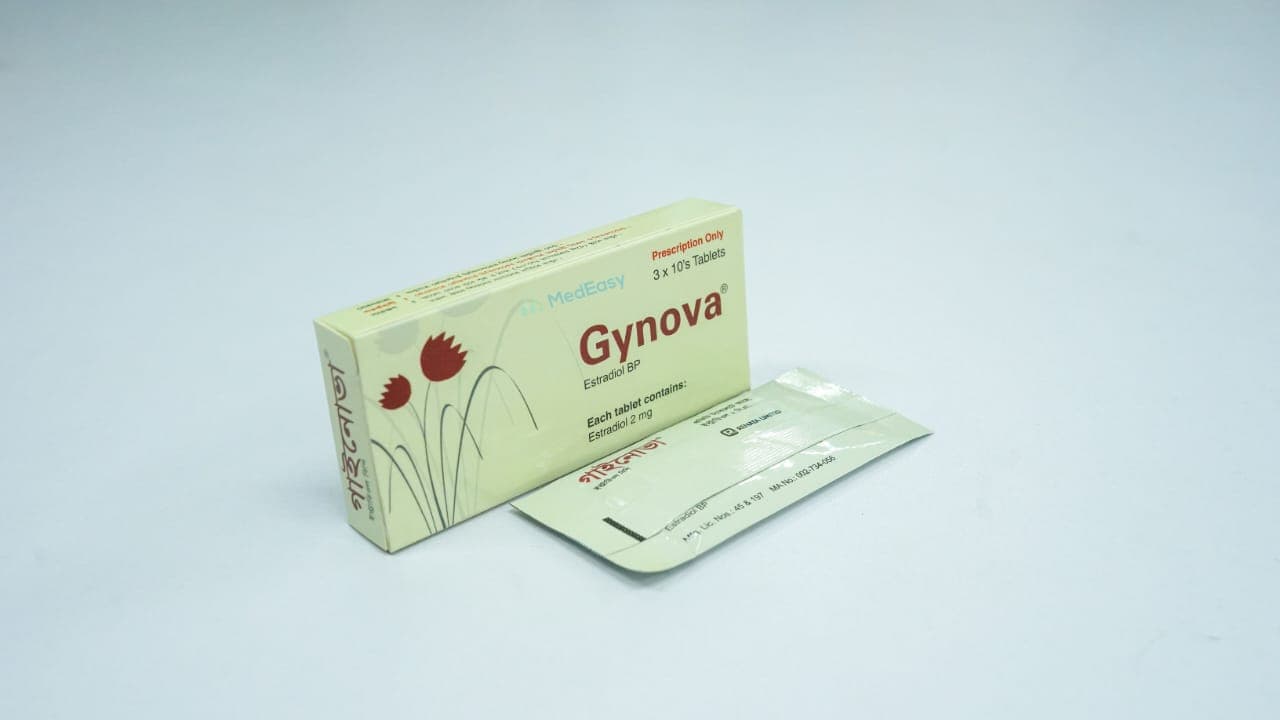

Medicine overview
Indications of Gynova
Established / FDA-Approved Uses
- Moderate-to-severe vasomotor symptoms of menopause (hot flashes/flushes) — systemic (oral, transdermal patch/gel/spray) Gynova.
- Moderate-to-severe symptoms of vulvovaginal atrophy due to menopause — low-dose vaginal Gynova (cream, tablet, or ring) is preferred when only atrophy symptoms are present, as systemic absorption is minimal.
- Hypoestrogenism due to hypogonadism, castration, or primary ovarian insufficiency — Gynova replacement to restore estrogen levels.
- Prevention of postmenopausal osteoporosis — systemic Gynova may be considered when a woman has significant risk of osteoporosis and non-estrogen therapies are not appropriate; not indicated for treatment of established osteoporosis.
Combination-Therapy Requirement
In a woman with an intact uterus, systemic Gynova must be combined with a progestin (or given on a cyclic regimen with a progestin) to reduce the risk of endometrial hyperplasia and cancer associated with unopposed estrogen. Women who have had a hysterectomy generally do not require added progestin.
Guideline-Supported / Off-Label Uses
Gynova is also used, based on specialist guidelines rather than a specific FDA indication, as part of feminizing hormone therapy for transgender and gender-diverse individuals, and as "add-back" therapy alongside GnRH agonists to offset hypoestrogenic side effects. These uses should be supervised by an appropriate specialist.
Composition
Each formulation contains Estradiol (as micronized 17β-estradiol, or as an ester such as estradiol valerate or estradiol cypionate that is hydrolyzed to estradiol in the body) as the active ingredient. Estradiol is marketed in multiple dosage forms and strengths, including oral tablets, transdermal patches, transdermal gel/spray, vaginal cream/tablet/insert, a vaginal ring, and intramuscular injectable esters; the exact strength and excipients vary by brand and route of administration.
Description
Gynova is the primary and most potent naturally occurring estrogen in the human body, produced mainly by the ovaries during the reproductive years. Pharmaceutical Gynova is chemically identical to endogenous Gynova and is manufactured in several dosage forms — oral, transdermal (patch, gel, spray), vaginal (cream, tablet, ring), and injectable — to replace estrogen that declines after menopause, surgical removal of the ovaries, or other causes of hypogonadism.
Gynova is used to relieve menopausal vasomotor symptoms and vulvovaginal atrophy, to treat hypoestrogenism from hypogonadism or ovarian failure, and, in select patients, to help prevent postmenopausal osteoporosis. Because systemic estrogen therapy carries important risks (see Precautions and Warnings), Gynova is generally prescribed at the lowest effective dose for the shortest duration needed to meet treatment goals.
Therapeutic Class
Estrogen (steroidal sex hormone); used in menopausal hormone therapy and estrogen replacement therapy.
Pharmacology
Pharmacodynamics
Estradiol binds to and activates nuclear estrogen receptors (ERα and ERβ) found throughout reproductive and non-reproductive tissue. The activated receptor complex binds specific DNA sequences (estrogen response elements), regulating transcription of genes that mediate growth and maturation of the female reproductive tract, mammary gland development, bone density maintenance, and effects on lipid metabolism and the cardiovascular and central nervous systems. Estrogen also participates in feedback regulation of gonadotropin (FSH/LH) secretion from the pituitary.
Pharmacokinetics
Absorption and bioavailability depend heavily on the route of administration: oral Estradiol undergoes extensive first-pass hepatic metabolism (low absolute bioavailability), while transdermal and vaginal routes bypass first-pass metabolism, giving more stable serum levels at lower total doses. Estradiol is extensively protein-bound (mainly to sex hormone-binding globulin and albumin), metabolized primarily in the liver (and gut wall for oral doses) to estrone and estriol and their conjugates, and excreted chiefly in urine as glucuronide/sulfate conjugates, with some biliary/fecal elimination and enterohepatic recirculation.
Dosage & Administration of Gynova
Dosing is individualized by indication, route, and formulation, using the lowest effective dose for the shortest duration consistent with treatment goals. Representative adult starting ranges are summarized below; refer to the specific product's prescribing information for exact strengths available.
| Indication | Common Route/Form | Typical Adult Starting Dose |
|---|---|---|
| Vasomotor symptoms of menopause | Oral tablet | 0.5–1 mg once daily, cyclic or continuous |
| Vasomotor symptoms of menopause | Transdermal patch | 0.025–0.05 mg/day, applied once or twice weekly depending on product |
| Vasomotor symptoms of menopause | Transdermal gel/spray | Lowest effective dose per product labeling, applied once daily |
| Vulvovaginal atrophy (atrophy symptoms only) | Vaginal cream/tablet/ring | Low-dose local therapy per product labeling; ring typically replaced every 90 days |
| Hypogonadism / primary ovarian insufficiency | Oral or transdermal | Individualized; often started at menopausal-range doses and adjusted to symptom control |
| Osteoporosis prevention | Oral or transdermal | Lowest dose shown effective for bone protection, per product labeling |
In women with an intact uterus receiving systemic Gynova, a progestin must be added (continuously or cyclically) to reduce endometrial cancer risk. Periodic attempts to taper or discontinue Gynova should be made at reasonable intervals.
Administration of Gynova
Take oral Gynova tablets by mouth, with or without food, at the same time each day. Apply transdermal patches to clean, dry, hairless skin on the lower abdomen (rotate sites; avoid the breasts and waistline) and leave in place for the labeled wear time before replacing. Apply transdermal gel/spray to intact skin as directed and allow to dry before dressing; avoid contact transfer to other people, especially children and pregnant women. Insert vaginal cream, tablets, or the vaginal ring as directed by the product instructions or prescriber. Injectable Gynova esters are administered by intramuscular injection by a healthcare professional. Do not stop or change how Gynova is taken without consulting a physician.
Interaction of Gynova
- CYP3A4 inducers (e.g., rifampin, carbamazepine, phenytoin, St. John's Wort) can lower Gynova serum concentrations and reduce efficacy.
- CYP3A4 inhibitors (e.g., certain azole antifungals, some macrolide antibiotics, grapefruit juice) can raise Gynova serum concentrations and increase the risk of estrogen-related adverse effects.
- Thyroid hormone replacement: estrogens increase thyroid-binding globulin, which may increase the required dose of thyroid hormone in women on replacement therapy.
- Corticosteroids: estrogens can increase corticosteroid-binding globulin, potentially prolonging corticosteroid effect/half-life and requiring dose adjustment.
- Tizanidine: estrogens can significantly increase tizanidine plasma concentrations, increasing the risk of hypotension and sedation; concurrent use is generally avoided.
- Lamotrigine: estrogen-containing therapy can lower lamotrigine levels, potentially reducing seizure control; dose adjustment of lamotrigine may be needed.
- Hepatic enzyme/lab test interference: Gynova can alter several laboratory tests (thyroid function tests, coagulation factors, lipids); inform the laboratory and physician about Gynova use before testing.
Contraindications
- Known hypersensitivity to Estradiol or any component of the formulation.
- Undiagnosed abnormal genital/uterine bleeding.
- Known, suspected, or history of breast cancer (except in appropriately selected patients being treated for metastatic disease).
- Known or suspected estrogen-dependent neoplasia.
- Active deep vein thrombosis, pulmonary embolism, or a history of these conditions.
- Active arterial thromboembolic disease (e.g., stroke, myocardial infarction) or a history of these conditions.
- Known thrombophilic disorder (e.g., protein C, protein S, or antithrombin deficiency).
- Known or suspected pregnancy.
- Hepatic impairment or active liver disease.
Side Effects of Gynova
Common
- Breast tenderness or enlargement
- Headache
- Nausea, bloating, abdominal cramping
- Irregular vaginal bleeding or spotting
- Fluid retention/mild edema
- Mood changes
Serious (Less Common)
- Signs of venous thromboembolism (leg swelling/pain, chest pain, sudden shortness of breath)
- Signs of stroke or myocardial infarction (sudden weakness, slurred speech, chest pain)
- Signs of gallbladder disease
- Severe headache/migraine or visual changes
- Signs of liver dysfunction (jaundice, dark urine)
See Precautions and Warnings for the boxed-warning risks (endometrial cancer, breast cancer, cardiovascular disease, and venous thromboembolism) associated with Gynova.
Pregnancy & Lactation
Pregnancy
Gynova is contraindicated in known or suspected pregnancy; there is no indication for Gynova during pregnancy, and estrogens have been associated with fetal harm in animal studies. If pregnancy occurs during treatment, Gynova should be discontinued immediately and the patient should consult her physician promptly.
Lactation
Estrogens, including Gynova, can reduce the quantity and quality of breast milk and are detectable in breast milk. Use during breastfeeding is generally not recommended; a nursing mother should use Gynova only if clearly needed and after discussing potential risks to milk supply and the infant with her physician.
Precautions & Warnings
Boxed Warnings
- Endometrial cancer: unopposed estrogen in a woman with an intact uterus increases the risk of endometrial hyperplasia/cancer; add a progestin unless the uterus has been removed.
- Cardiovascular disease: estrogen therapy (with or without a progestin) has been associated with increased risk of myocardial infarction, stroke, and deep vein thrombosis, particularly in older women and with prolonged use; Gynova is not approved for cardiovascular disease prevention.
- Breast cancer: estrogen (particularly combined with a progestin) is associated with increased risk of breast cancer with long-term use.
- Probable dementia: in women 65 years or older, estrogen therapy has been associated with an increased risk of probable dementia in some studies.
Other Precautions
- Use the lowest effective dose for the shortest duration consistent with treatment goals, with periodic reevaluation of the need for continued therapy (see Contraindications for absolute exclusions).
- May cause or worsen fluid retention; use caution in conditions worsened by fluid retention (e.g., certain cardiac or renal conditions).
- May elevate triglycerides, causing pancreatitis in patients with pre-existing hypertriglyceridemia.
- May worsen hereditary angioedema and existing conditions such as endometriosis, uterine leiomyomata (fibroids), or hepatic hemangiomas.
- Can cause hypercalcemia in patients with breast cancer and bone metastases.
- May increase risk of gallbladder disease requiring surgery.
- Can reduce glucose tolerance; monitor patients with diabetes.
- May cause visual disturbances associated with retinal vascular thrombosis; discontinue pending evaluation of sudden vision changes.
Overdose Effects of Gynova
Overdose with Gynova is not expected to be life-threatening; symptoms may include nausea, vomiting, breast tenderness or engorgement, bloating, and withdrawal bleeding in women. There is no specific antidote. Anyone who has taken more than the prescribed amount of Gynova should seek immediate medical attention or contact a poison control center/emergency services; treatment is supportive and symptomatic under medical supervision.
Storage Conditions
Store at room temperature (below 30°C), away from light and moisture. Keep transdermal patches sealed in their original pouch until ready to use, and dispose of used patches folded in half with the adhesive sides together, out of the reach of children and pets. Keep out of reach of children.
Use In Special Populations
Hepatic Impairment
Gynova is contraindicated in patients with hepatic impairment or active liver disease, as it is extensively metabolized by the liver.
Renal Impairment
No specific dose adjustment is established, but Gynova should be used with caution because of its fluid-retaining potential.
Elderly
Women 65 years and older on estrogen therapy have shown an increased risk of stroke and probable dementia in clinical trials; the lowest effective dose and shortest duration are especially important in this population.
Pediatric
See Pediatric Uses.
Duration Of Treatment
Gynova should be used at the lowest effective dose for the shortest duration consistent with the individual treatment goal. Periodic reevaluation (e.g., every 3–12 months, per physician judgment) is recommended to confirm continued need, reassess risks and benefits, and consider dose tapering or discontinuation of Gynova.
Drug Classes
Estrogens; Steroid hormones; Hormone replacement therapy (HRT) agents
Mode Of Action
Estradiol diffuses into target cells and binds intracellular estrogen receptors (ERα and ERβ). The hormone-receptor complex dimerizes, translocates to the nucleus, and binds estrogen response elements on DNA, modulating transcription of genes responsible for growth, differentiation, and function of estrogen-responsive tissues (endometrium, vaginal epithelium, breast, bone, and others), as well as effects on lipid profile and vascular tissue.
Pregnancy
X (contraindicated in pregnancy — legacy FDA pregnancy category)
Pediatric Uses
Safety and efficacy of Gynova for general use in children have not been established, and Gynova is not indicated for growth stimulation or routine use in children. Under specialist supervision, estrogen therapy including Gynova may be used off-label for induction of puberty in adolescent girls with hypogonadism (e.g., Turner syndrome) or in gender-affirming care, with careful monitoring of growth and bone age.
Frequently Asked Questions
Q: What is Gynova 2 mg Tablet used for?
A: Gynova 2 mg Tablet is used to relieve moderate-to-severe menopausal hot flashes and vaginal dryness/atrophy, to treat low estrogen levels caused by hypogonadism or ovarian failure, and, in some patients, to help prevent postmenopausal osteoporosis.
Q: Do I need to take a progestin with Gynova 2 mg Tablet?
A: If you still have your uterus, your physician will usually prescribe a progestin along with Gynova 2 mg Tablet, because using estrogen alone can increase the risk of endometrial (uterine lining) cancer. Women who have had a hysterectomy typically do not need added progestin.
Q: Can I use Gynova 2 mg Tablet during pregnancy or while breastfeeding?
A: No. Gynova 2 mg Tablet is contraindicated in known or suspected pregnancy and is generally not recommended while breastfeeding, since it can reduce milk supply and pass into breast milk. Discuss any pregnancy plans or breastfeeding with your physician before using Gynova 2 mg Tablet.
Q: What are the most serious risks of Gynova 2 mg Tablet?
A: Gynova 2 mg Tablet carries boxed warnings for increased risk of endometrial cancer (with unopposed use in women with a uterus), breast cancer, cardiovascular disease (heart attack and stroke), and blood clots (venous thromboembolism), particularly with long-term systemic use. Seek urgent care for chest pain, leg swelling/pain, sudden severe headache, or vision changes.
Q: How should I take or apply Gynova 2 mg Tablet?
A: Follow your prescriber's instructions exactly for your specific form of Gynova 2 mg Tablet — oral tablet, transdermal patch/gel/spray, vaginal product, or injection — and use the lowest dose that controls your symptoms for the shortest time needed. Do not change your Gynova 2 mg Tablet dose or stop treatment without medical advice.
Q: What should I do if I miss a dose or take too much Gynova 2 mg Tablet?
A: If you miss a dose, follow the guidance provided with your specific product or ask your pharmacist/physician. If you or someone else has taken more Gynova 2 mg Tablet than prescribed, seek immediate medical attention or contact emergency services/poison control, even though overdose is not usually life-threatening.
Disclaimer
The information provided is accurate to the best of our knowledge, but it does not replace professional medical advice. We cannot guarantee its completeness or accuracy, and the absence of specific information about a drug should not be taken as an endorsement. We are not responsible for any consequences arising from this information, so please consult a healthcare professional for any concerns or questions.
