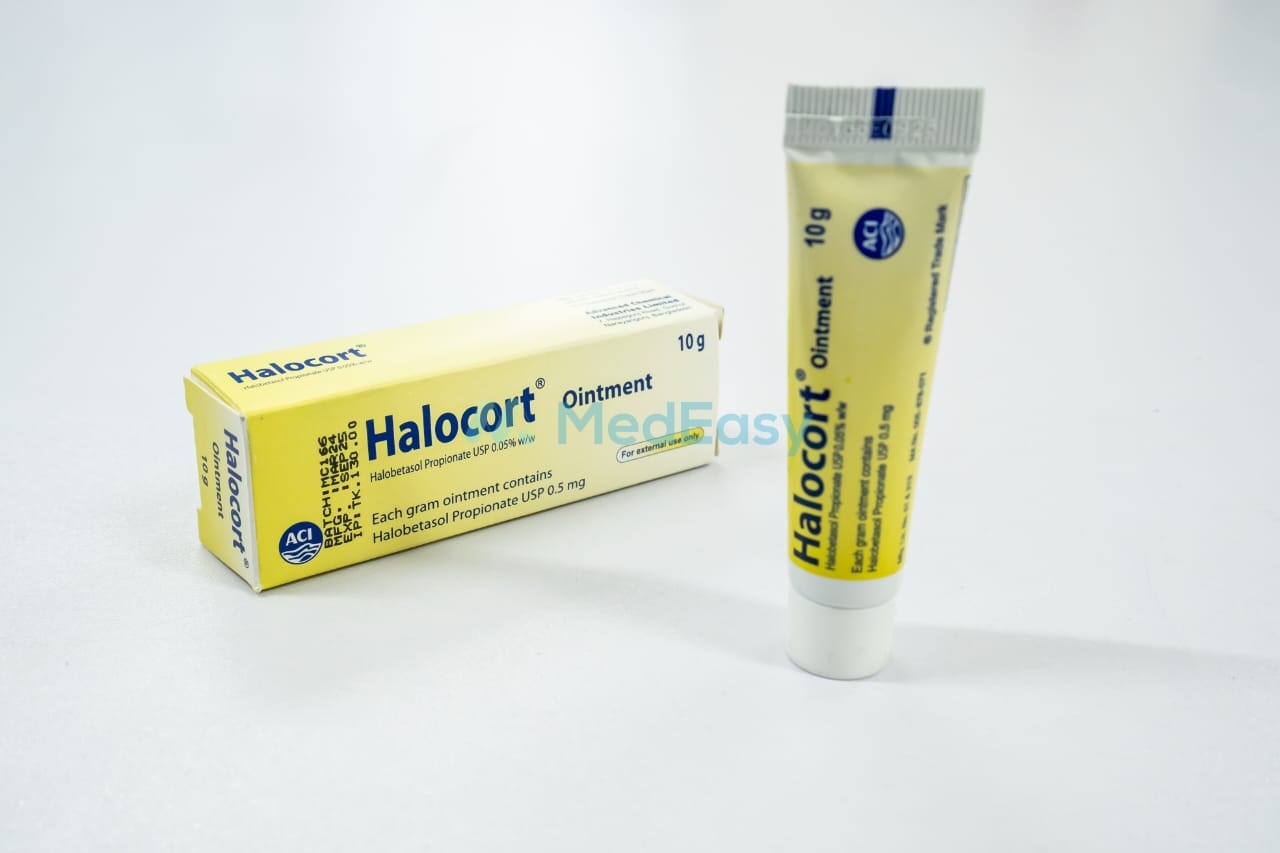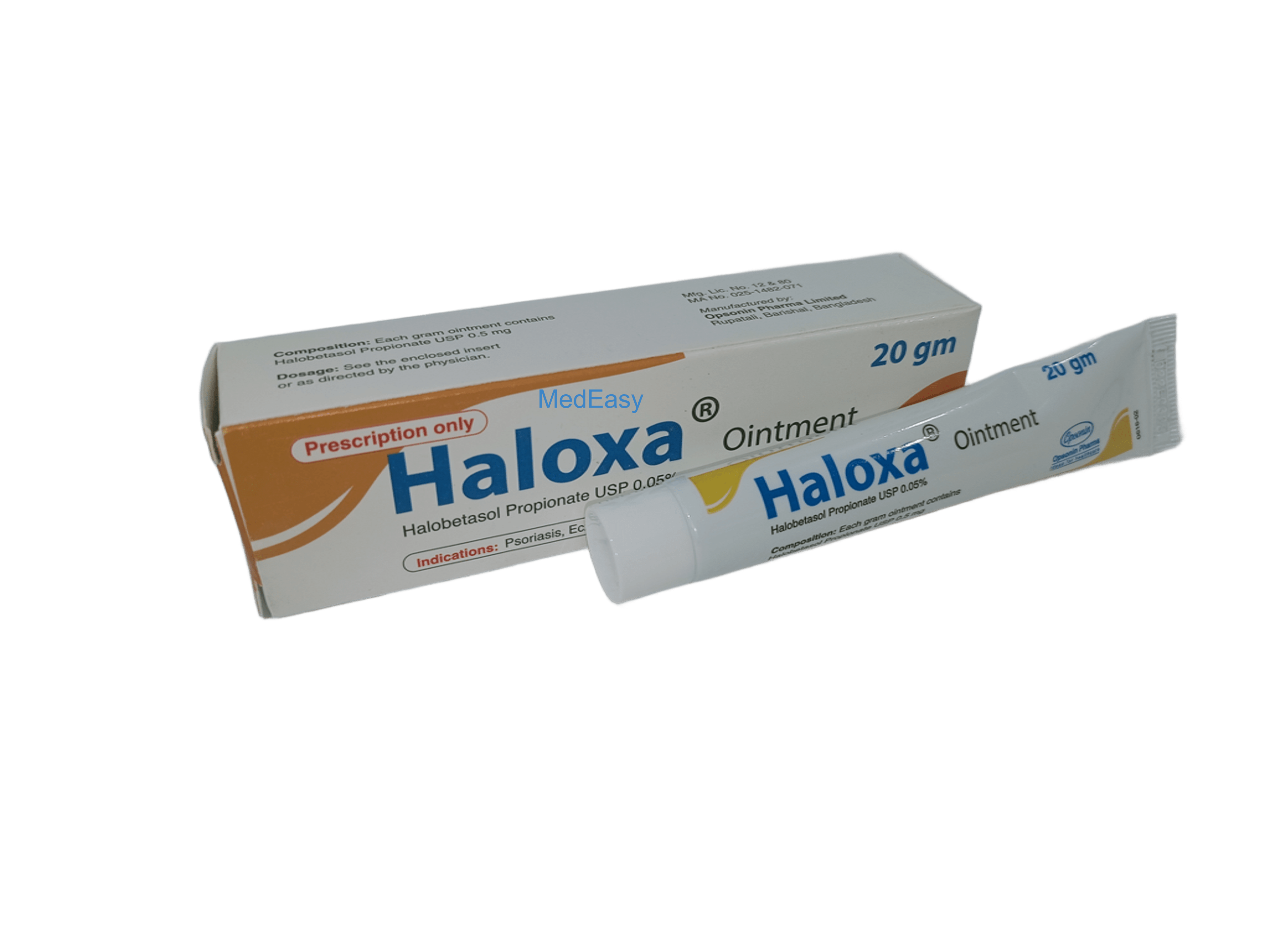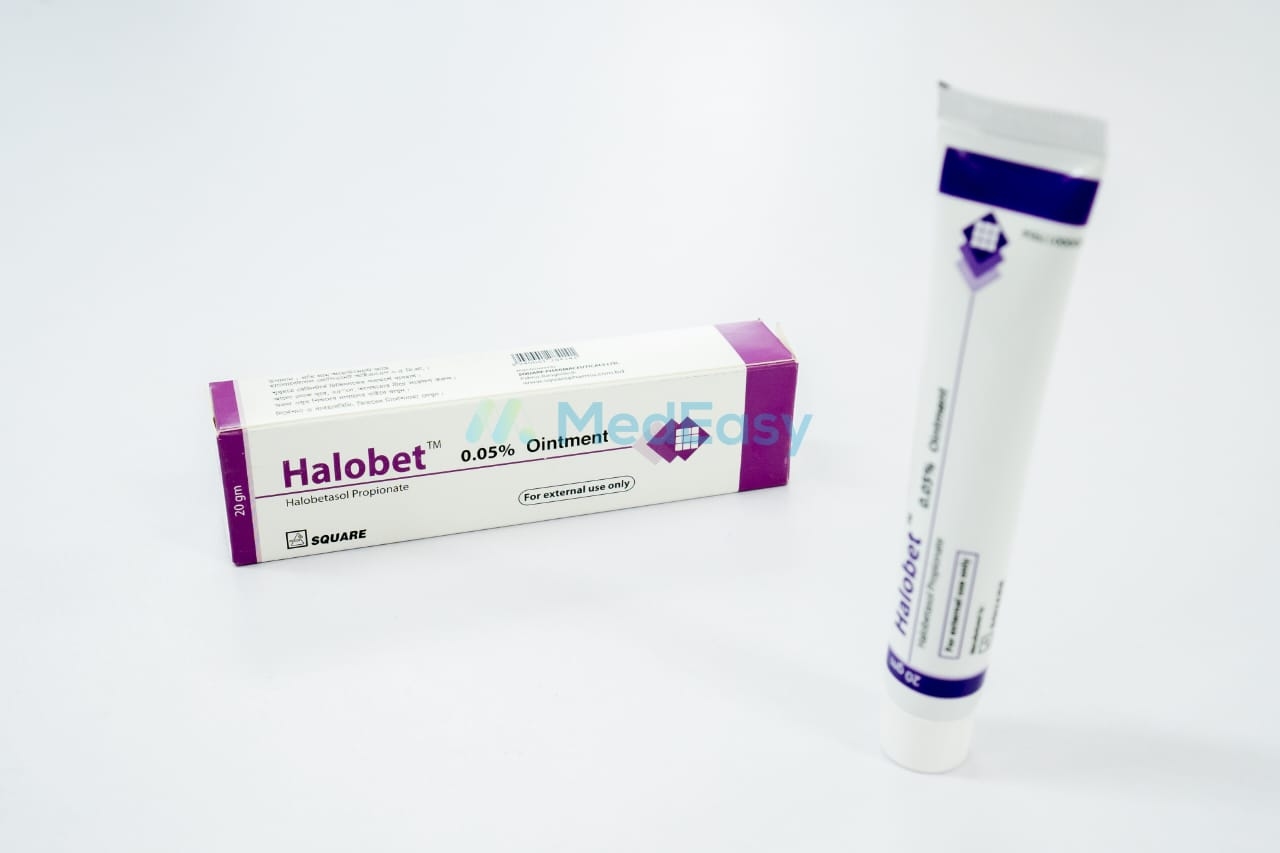
8% Off
Halobet0.05%
Square Pharmaceuticals PLC.
৳119.60
Add to cart

Habesol 0.05% Ointment is available on MedEasy for ৳81.00 per 10 gm tube, with home delivery anywhere in Bangladesh. It is manufactured by Pharmasia Limited. Its generic name is Halobetasol Propionate.

Habesol is not indicated for widespread plaque psoriasis, and is not a first-line agent for mild dermatoses.
Each gram of Halobetasol Propionate cream or ointment contains Halobetasol Propionate 0.5 mg (0.05% w/w) in a suitable cream, ointment, or lotion base. A separate, lower-strength lotion product containing Halobetasol Propionate 0.1 mg per gram (0.01% w/w) is also available under distinct labeling. Strength and available dosage forms may vary by manufacturer and market; the prescribing label of the specific product dispensed should always be consulted.
Habesol is a synthetic corticosteroid classified as a super-potent (Class I / Group I) topical corticosteroid, among the most potent topical steroids available. It is formulated as a cream, ointment, or lotion for dermatological use only and is not intended for ophthalmic, oral, or systemic use.
Because of its high potency, Habesol is reserved for short courses of treatment of moderate-to-severe corticosteroid-responsive skin conditions that have not responded adequately to lower-potency topical corticosteroids, under close medical supervision.
Super-potent (Class I) topical corticosteroid; Habesol belongs to the dermatological corticosteroid class of agents.
Like other topical corticosteroids, Halobetasol Propionate has anti-inflammatory, antipruritic, and vasoconstrictive properties. The precise mechanism of the anti-inflammatory activity of topical corticosteroids in general is unclear, but it is believed to involve induction of phospholipase A2 inhibitory proteins (lipocortins), which control the biosynthesis of potent inflammatory mediators such as prostaglandins and leukotrienes by inhibiting the release of their common precursor, arachidonic acid.
The extent of percutaneous absorption of Halobetasol Propionate depends on the vehicle used, the integrity of the skin barrier, and the use of occlusive dressings. Inflamed or denuded skin, application to a large body surface area, prolonged use, or occlusion increases systemic absorption. Once absorbed, Halobetasol Propionate is metabolized similarly to systemically administered corticosteroids and is excreted primarily by the kidneys, with some biliary excretion.
| Formulation | Application | Maximum Duration | Maximum Weekly Quantity |
|---|---|---|---|
| Cream / Ointment 0.05% | Apply a thin layer to the affected skin once or twice daily; rub in gently and completely | 2 consecutive weeks | Not to exceed 50 g/week |
| Lotion 0.05% | Apply a thin layer to the affected skin twice daily | 2 consecutive weeks | Not to exceed 50 g (or 50 mL)/week |
| Lotion 0.01% (lower-strength product) | Apply a thin film to the affected skin once daily | Per specific product labeling, generally up to 8 weeks under close supervision | Per specific product labeling |
Treatment should be discontinued when control is achieved. If no improvement is seen within 2 weeks, the diagnosis should be reassessed. The total treated body surface area should not exceed approximately 20% at any time. Habesol should not be used with occlusive dressings unless specifically directed by a physician.
Safety and efficacy of Habesol 0.05% products have not been established in patients younger than 18 years; use in this age group is not recommended. See Pediatric Uses for further detail.
No specific dosage adjustment of topical Habesol is established for renal or hepatic impairment, since systemic exposure from correctly used topical therapy is expected to be low; however, caution and closer monitoring for systemic corticosteroid effects are reasonable if impairment is significant, as clearance of any absorbed drug may be reduced.
Habesol is for topical (external, skin) use only. Wash and dry hands before and after application. Apply a thin film to the affected skin area only, and rub in gently until absorbed. Avoid application to the face, groin, axillae, and other skin-fold areas unless specifically directed by a physician, since these areas are thinner and more prone to steroid-induced atrophy. Do not cover the treated area with airtight (occlusive) dressings, bandages, or tight-fitting diapers/plastic pants unless a physician has specifically instructed occlusive use. Avoid contact with the eyes.
Because Habesol is applied topically at recommended doses, areas, and durations, clinically significant drug interactions are uncommon due to minimal systemic absorption. However, when used over large body surface areas, under occlusion, on broken/inflamed skin, or for longer than recommended, systemic absorption increases and could theoretically interact with other systemic corticosteroids or corticotropin (additive HPA-axis suppression and Cushingoid effects), and could affect glycemic control in patients using antidiabetic medicines (systemic corticosteroid effect can raise blood glucose). Concomitant use of other potent topical corticosteroids on overlapping skin areas should be avoided to prevent additive local and systemic corticosteroid effects.
Halobetasol Propionate is contraindicated in patients with known hypersensitivity to Halobetasol Propionate or to any other component of the specific cream, ointment, or lotion formulation being used.
Excessive or prolonged use of Habesol, especially over large areas or under occlusion, can lead to reversible hypothalamic-pituitary-adrenal (HPA)-axis suppression, manifestations of Cushing's syndrome, hyperglycemia, and glucosuria; these usually resolve upon discontinuation. See Precautions and Warnings.
Pregnancy: There are no adequate and well-controlled studies of Habesol in pregnant women. Topical corticosteroids can be absorbed systemically and may be associated with an increased risk of fetal growth restriction with prolonged or extensive use during pregnancy; some systemic corticosteroids have been shown to be teratogenic in animal studies when administered systemically at relevant doses. Habesol should be used during pregnancy only if the potential benefit justifies the potential risk to the fetus, at the lowest effective dose for the shortest possible duration, and only under medical supervision.
Lactation: It is not known whether topical administration of Habesol results in sufficient systemic absorption to produce detectable quantities in human breast milk. Caution should be exercised when Habesol is used by a breastfeeding woman; avoid application to the chest/nipple area to prevent direct infant exposure, and consult a physician before use.
Habesol is a super-potent (Class I) topical corticosteroid. Treatment should generally be limited to no more than 2 consecutive weeks, and the amount used should not exceed the maximum weekly quantity specified on the product label (commonly 50 g/week for 0.05% formulations). Treatment beyond these limits, use over large body surface areas, or use under occlusive dressings substantially increases the risk of hypothalamic-pituitary-adrenal (HPA)-axis suppression, skin atrophy, striae, and other systemic corticosteroid effects. If no improvement is observed within 2 weeks, the diagnosis should be reassessed.
Habesol should not be applied to the face, groin, axillae, or other skin-fold areas unless specifically directed by a physician, as these thin-skin areas are more prone to steroid-induced atrophy and adverse effects. It should not be used under occlusive dressings unless a physician has specifically directed occlusive therapy.
Habesol should not be applied to skin with untreated bacterial, fungal, or viral infections at the treatment site, since corticosteroids may mask or worsen the clinical picture of an underlying infection. Any concurrent skin infection should be treated with an appropriate antimicrobial agent; if infection persists despite treatment, Habesol should be discontinued until the infection is controlled.
Patients applying Habesol to large surface areas, for prolonged periods, or under occlusion should be periodically evaluated for evidence of HPA-axis suppression (e.g., via ACTH stimulation testing where clinically indicated). If suppression is documented, an attempt should be made to gradually withdraw the drug, reduce the frequency of application, or substitute a less potent corticosteroid.
Discontinue Habesol and consult a physician if irritation, signs of hypersensitivity, or signs of skin atrophy develop. Avoid contact with the eyes; if accidental eye contact occurs, rinse thoroughly with water.
Pediatric patients are at greater risk of HPA-axis suppression and other systemic corticosteroid adverse effects due to a larger skin-surface-area-to-body-mass ratio. See Pediatric Uses.
Topically applied Habesol used in excessive amounts, over prolonged periods, over large body surface areas, or under occlusion may be absorbed in sufficient quantity to produce systemic corticosteroid effects, including reversible HPA-axis suppression and Cushingoid features (see Precautions and Warnings). If accidental oral ingestion of Habesol occurs, or if signs of excessive systemic corticosteroid effect (such as unusual weight gain, moon face, marked fatigue, or high blood glucose) develop, seek immediate medical attention or contact a poison control center. Do not attempt to manage a suspected overdose at home without medical guidance.
Store at room temperature (below 30°C), away from light and moisture. Keep out of reach of children. Do not freeze.
No formal studies have evaluated Habesol in patients with renal impairment; because systemic absorption from correctly used topical therapy is expected to be minimal, routine dosage adjustment is not established, but caution is warranted if extensive or prolonged use is required.
No formal studies have evaluated Habesol in patients with hepatic impairment. As with renal impairment, systemic exposure is expected to be low with appropriate topical use, but caution and monitoring for systemic corticosteroid effects are reasonable with extensive or prolonged application.
Clinical studies of Habesol have not identified differences in response between elderly and younger patients; however, elderly patients may have thinner skin and should be monitored for local atrophy and other cutaneous adverse effects.
See Pediatric Uses for details; safety and efficacy of Habesol 0.05% products are not established in patients under 18 years of age.
Treatment with Habesol 0.05% cream, ointment, or lotion should generally not exceed 2 consecutive weeks, and the total quantity used should not exceed the maximum weekly amount stated on the specific product label (commonly 50 g/week). Some lower-strength (0.01%) lotion formulations of Habesol carry separate labeling permitting longer supervised use (e.g., up to 8 weeks) for plaque psoriasis; the specific product's labeling should always be followed. Continuous long-term use of Habesol is not recommended due to the risk of skin atrophy and HPA-axis suppression.
Halobetasol Propionate belongs to the topical corticosteroid class, specifically the super-potent (Class I / Group I) potency category of topical corticosteroids.
Halobetasol Propionate exerts anti-inflammatory, antipruritic, and vasoconstrictive effects on the skin. It is thought to act by inducing synthesis of lipocortins (phospholipase A2 inhibitory proteins), which suppress the release of arachidonic acid, thereby reducing the downstream production of inflammatory mediators such as prostaglandins and leukotrienes. This reduces the inflammation, redness, scaling, and itching seen in corticosteroid-responsive dermatoses such as plaque psoriasis.
C
The safety and efficacy of Habesol 0.05% cream, ointment, and lotion have not been established in pediatric patients under 18 years of age, and use in this age group is not recommended for these formulations. Because pediatric patients have a larger skin-surface-area-to-body-mass ratio than adults, they are at greater risk of HPA-axis suppression and other systemic adverse effects from topical corticosteroids, including Cushingoid features, linear growth retardation, and delayed weight gain, if such products are used inappropriately. If a physician determines that use of Habesol is necessary in a pediatric patient (e.g., for a specific lower-strength, age-labeled product), the minimum effective amount should be used for the shortest possible duration, occlusive dressings and diapers/plastic pants that could act as an occlusive barrier should be avoided, and the patient should be monitored closely for local and systemic adverse effects.
Q: What is Habesol 0.05% Ointment used for?
A: Habesol 0.05% Ointment is a super-potent (Class I) topical corticosteroid used for the short-term treatment of moderate-to-severe plaque psoriasis and other corticosteroid-responsive skin conditions that have not responded adequately to weaker steroid creams.
Q: How long can I use Habesol 0.05% Ointment?
A: Treatment with Habesol 0.05% Ointment should generally not exceed 2 consecutive weeks, and the amount used should not exceed the maximum weekly quantity stated on the product label (commonly 50 g/week for 0.05% products), because of the risk of skin thinning and suppression of your body's own adrenal hormone production with prolonged or excessive use. Always follow your physician's specific instructions.
Q: Can I use Habesol 0.05% Ointment on my face?
A: No, Habesol 0.05% Ointment should not be applied to the face, groin, armpits, or other skin-fold areas unless your physician has specifically told you to, because these areas have thinner skin that is more prone to steroid-related side effects such as thinning, stretch marks, and visible blood vessels.
Q: Can pregnant or breastfeeding women use Habesol 0.05% Ointment?
A: Habesol 0.05% Ointment should be used during pregnancy only if the potential benefit clearly justifies the potential risk to the baby, at the lowest effective amount for the shortest time, and only under medical supervision, since there are no adequate controlled studies in pregnant women and topical corticosteroids can be absorbed into the bloodstream. Breastfeeding women should use caution, avoid applying it to the chest/nipple area, and consult a physician before use.
Q: What are the main side effects of Habesol 0.05% Ointment?
A: Common side effects include burning, stinging, itching, dryness, and irritation at the application site. With prolonged or excessive use, Habesol 0.05% Ointment can cause skin thinning (atrophy), stretch marks, visible blood vessels, and, rarely, suppression of the body's own adrenal (cortisol) production or Cushingoid effects.
Q: Can Habesol 0.05% Ointment be used in children?
A: Safety and efficacy of Habesol 0.05% Ointment 0.05% products have not been established in patients under 18 years of age, and their use is generally not recommended in this age group because children are more susceptible to systemic side effects from topical steroids. Use in children should only occur under close physician supervision with a specifically labeled product.
Disclaimer
The information provided is accurate to the best of our knowledge, but it does not replace professional medical advice. We cannot guarantee its completeness or accuracy, and the absence of specific information about a drug should not be taken as an endorsement. We are not responsible for any consequences arising from this information, so please consult a healthcare professional for any concerns or questions.