
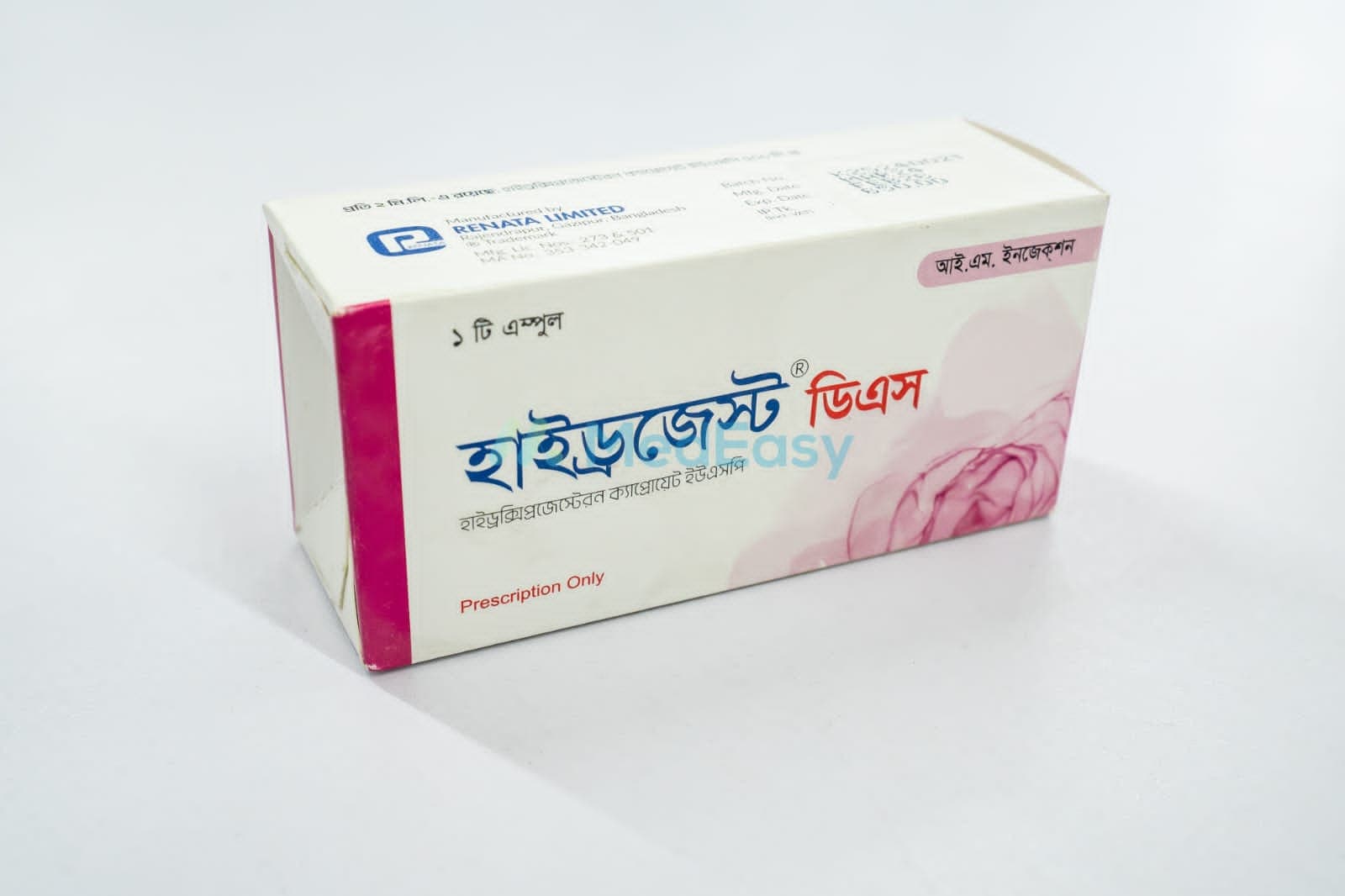

Medicine overview
Indications of Hydrogest DS
Approved Indication
Hydrogest DS injection is indicated to reduce the risk of preterm birth in women pregnant with a single baby (singleton gestation) who have a documented history of at least one prior spontaneous preterm birth. Its use is limited to this specific obstetric risk-reduction setting and must be initiated and supervised by a qualified physician.
Regulatory note: The approval of the branded intramuscular product for this indication was originally granted under an accelerated-approval pathway. A required confirmatory trial did not verify the expected clinical benefit, and regulatory status of branded Hydrogest DS products has been reconsidered in some markets, including voluntary market withdrawal of the branded U.S. injection in 2023. Where still available, Hydrogest DS should be used only under specialist obstetric guidance, and patients should discuss current local approval status and evidence with their physician.
Historical / Other Progestin-Responsive Uses
Hydrogest DS has historically also been used, less commonly and with weaker evidence, for other progestin-responsive gynecological indications. Such uses are not well-established by current major guidelines and should be considered only on individualized specialist advice; Hydrogest DS is not indicated for general use during pregnancy outside the specific preterm-birth-risk-reduction population described above.
Composition
Each single-dose vial/ampoule of the injectable formulation contains Hydroxyprogesterone Caproate (a synthetic ester of the naturally occurring hormone 17-alpha-hydroxyprogesterone) as the active ingredient, formulated in a castor oil-based vehicle with benzyl benzoate for intramuscular injection. Strength is typically expressed as Hydroxyprogesterone Caproate 250 mg/mL (intramuscular) in branded products; strength and vehicle composition can vary by manufacturer, and the product label/insert of the specific brand should always be checked.
Description
Hydrogest DS is a long-acting synthetic progestin — specifically the caproate (hexanoate) ester of 17-alpha-hydroxyprogesterone. Esterification prolongs its duration of action, allowing once-weekly intramuscular dosing. It is classified as a hormonal (progestogenic) agent and is used in obstetric practice specifically to reduce the risk of recurrent spontaneous preterm birth in appropriately selected pregnant women.
Hydrogest DS is not a treatment for an acute medical condition; rather, it is used prophylactically over a defined gestational window under close obstetric supervision.
Therapeutic Class
Hydrogest DS belongs to the progestin (progestogen) hormonal agents therapeutic class, specifically the synthetic 17-hydroxyprogesterone ester subgroup.
Pharmacology
Mechanism
Hydroxyprogesterone Caproate is a progestational (progestin) agent that binds to and activates progesterone receptors. The precise mechanism by which Hydroxyprogesterone Caproate reduces the risk of recurrent preterm birth is not fully established, but proposed effects include suppression of myometrial (uterine muscle) contractility, maintenance of cervical structural integrity, and modulation of local inflammatory pathways that contribute to cervical ripening and labor onset.
Pharmacokinetics
Following intramuscular injection, Hydroxyprogesterone Caproate is slowly absorbed from the oily depot, producing sustained plasma levels that support once-weekly dosing. It is extensively metabolized in the liver via hydrolysis and hydroxylation pathways and is excreted primarily in urine as metabolites, with a smaller fraction in feces. It is highly protein-bound in plasma.
Dosage & Administration of Hydrogest DS
Approved Obstetric Indication — Preterm Birth Risk Reduction
| Population | Dose | Schedule |
|---|---|---|
| Pregnant women, singleton gestation, prior spontaneous preterm birth | 250 mg (1 mL) by intramuscular injection | Once weekly, starting between 16 weeks 0 days and 20 weeks 6 days of gestation, and continuing weekly until 37 weeks 0 days of gestation or delivery, whichever occurs first |
If a scheduled dose is missed, the next dose should be administered as soon as possible, per physician instruction; a missed-dose window of more than 7 days should be discussed with the treating obstetrician before resuming.
Hydrogest DS must be initiated and monitored by an obstetric specialist; it is not intended for self-initiation or use outside this specific clinical protocol. See Contraindications and Precautions and Warnings before use.
Administration of Hydrogest DS
Hydrogest DS injection is for intramuscular (IM) use only and must be administered by a trained healthcare professional. It is typically given as a deep IM injection into the upper outer buttock (gluteal area), with the injection site rotated each week. The oily solution should be inspected visually for particulate matter or discoloration before use, and warming or shaking gently (without vigorous agitation) may aid administration per product-specific instructions. Hydrogest DS is not for intravenous, subcutaneous, or oral use unless a specific product labeling states otherwise for an approved alternate formulation.
Interaction of Hydrogest DS
Formal drug-interaction studies with Hydrogest DS are limited. As a hepatically metabolized steroid hormone, the following points are clinically relevant:
- Hepatic enzyme inducers (e.g., rifampicin, certain anticonvulsants such as phenytoin or carbamazepine, St. John's Wort): may theoretically accelerate metabolism of Hydrogest DS and reduce its effect; clinical significance is not well established, but concurrent use should be flagged to the treating obstetrician.
- Other hepatotoxic drugs: caution is advised when Hydrogest DS is co-administered with other agents that affect liver function, given its hepatic metabolism (see Precautions).
Patients should inform their physician of all concurrent prescription, over-the-counter, and herbal products before starting Hydrogest DS.
Contraindications
Hydroxyprogesterone Caproate is contraindicated in patients with any of the following:
- Current or past history of thrombotic or thromboembolic disorders (e.g., deep vein thrombosis, pulmonary embolism, stroke)
- Known or suspected breast cancer or other known or suspected hormone-sensitive (progestin-sensitive) cancer, currently or in the past
- Undiagnosed abnormal vaginal bleeding not related to the current pregnancy
- Cholestatic jaundice of pregnancy
- Liver tumors, benign or malignant, or active liver disease
- Uncontrolled hypertension
- Known hypersensitivity to Hydroxyprogesterone Caproate or any component of the formulation (including castor oil in the intramuscular vehicle)
- Missed abortion
Side Effects of Hydrogest DS
Common
- Injection-site reactions: pain, swelling, itching, bruising, or nodule/lump formation at the injection site (most frequently reported)
- Urticaria (hives) and pruritus (itching)
- Nausea
- Headache
Less Common / Serious
- Hypersensitivity reactions, including rare anaphylaxis (related to castor oil vehicle in the intramuscular formulation)
- Thromboembolic events (see Contraindications and Precautions and Warnings)
- Mood changes, including depression
- Fluid retention
- Reduced glucose tolerance
Patients should seek prompt medical attention for signs of a blood clot (leg pain/swelling, chest pain, shortness of breath), severe allergic reaction, or new/worsening mood changes while receiving Hydrogest DS.
Pregnancy & Lactation
Pregnancy
Hydrogest DS is used specifically during pregnancy for the approved indication of reducing the risk of recurrent spontaneous preterm birth in women with a singleton pregnancy and a prior singleton spontaneous preterm birth. It should be used only under the direct supervision of an obstetric specialist, only for this specific indication, and only if the potential benefit is judged by the treating physician to justify the potential risk — it is not intended for general or elective use during pregnancy. Hydrogest DS is contraindicated in missed abortion. Any decision to start, continue, or stop Hydrogest DS during pregnancy must be made together with the treating physician.
Lactation
Data on the presence of Hydrogest DS in human milk and its effects on the breastfed infant or on milk production are limited. Because Hydrogest DS is generally used during pregnancy prior to delivery, breastfeeding considerations typically arise only if use continues close to or after delivery; a physician should be consulted to weigh the benefits of breastfeeding against any theoretical risk in this circumstance.
Precautions & Warnings
- Thromboembolic risk: Hydrogest DS should be discontinued immediately and not restarted if a thrombotic or thromboembolic event occurs or is suspected (see Contraindications).
- Hypersensitivity to castor oil vehicle: the intramuscular formulation contains castor oil; patients should be monitored for allergic or anaphylactic reactions, particularly with early doses.
- Depression: use with caution in patients with a history of depression; monitor for worsening mood symptoms.
- Glucose tolerance: may reduce glucose tolerance; use with caution in patients with diabetes mellitus or risk factors for it, with appropriate glucose monitoring.
- Fluid retention: use with caution in conditions that may be influenced by fluid retention, such as epilepsy, migraine, asthma, or cardiac or renal dysfunction.
- Hepatic disease: avoid use in patients with active liver disease or liver tumors (see Contraindications); use caution in patients with a history of hepatic impairment.
- Injection-site monitoring: rotate injection sites and monitor for persistent nodules, pain, or signs of infection.
- Hydrogest DS does not treat an acute preterm labor episode and should not be relied upon to stop labor that has already begun; it is a risk-reduction therapy used earlier in pregnancy.
Overdose Effects of Hydrogest DS
Reports of acute overdose with Hydrogest DS are limited, and there is no specific antidote. In case of a suspected overdose, seek immediate medical attention or contact a poison control center / emergency services rather than attempting home treatment. Management is supportive and symptomatic, guided by a physician based on the amount and route involved and the patient's clinical status.
Storage Conditions
Store at room temperature (below 30°C), protected from light and moisture. Do not freeze. Keep the vial/ampoule in its original carton until the time of use. Keep out of reach of children. Discard any unused portion of a single-dose vial appropriately; do not reuse.
Use In Special Populations
Renal Impairment
No specific dose adjustment of Hydrogest DS is established for renal impairment; use with caution in patients with significant renal dysfunction due to potential fluid-retention effects (see Precautions).
Hepatic Impairment
Hydrogest DS is contraindicated in patients with active liver disease or liver tumors (see Contraindications). Use with caution and close monitoring in patients with a history of hepatic impairment, as Hydrogest DS is hepatically metabolized.
Elderly
Not applicable — Hydrogest DS is used exclusively in pregnant women of reproductive age for the approved obstetric indication.
Pediatric
Not applicable — see Pediatric Uses.
Duration Of Treatment
When used for the approved indication, Hydrogest DS is administered once weekly, beginning between 16 weeks 0 days and 20 weeks 6 days of gestation, and continuing weekly until 37 weeks 0 days of gestation or delivery — whichever occurs first. The treating obstetrician determines the exact start point and may stop Hydrogest DS earlier if delivery occurs, if a contraindication develops, or if continued use is no longer considered appropriate.
Drug Classes
Progestins; Hormonal agents (obstetric use)
Mode Of Action
Hydroxyprogesterone Caproate acts as a progesterone-receptor agonist; its proposed action in reducing recurrent preterm birth involves suppression of uterine (myometrial) contractility and support of cervical structural integrity during pregnancy, though the precise mechanism is not completely established.
Pregnancy
Category B (legacy FDA pregnancy category, applicable specifically to use for the approved obstetric preterm-birth-risk-reduction indication)
Pediatric Uses
Hydrogest DS is not indicated for use in children or adolescents outside of pregnancy. Safety and efficacy of Hydrogest DS in pediatric patients have not been established, as its only approved use is in pregnant adult women meeting specific obstetric risk criteria.
Frequently Asked Questions
Q: What is Hydrogest DS 500 mg / 2ml Injection used for?
A: Hydrogest DS 500 mg / 2ml Injection is used to reduce the risk of preterm (early) birth in women who are pregnant with one baby and who have previously had a spontaneous preterm birth. It is given as a weekly injection starting in the second trimester and continuing until around 37 weeks of pregnancy or delivery, whichever comes first, under the supervision of an obstetrician.
Q: How is Hydrogest DS 500 mg / 2ml Injection given?
A: Hydrogest DS 500 mg / 2ml Injection is given as a deep intramuscular (into the muscle) injection, usually in the buttock, once a week, by a trained healthcare professional. It is not a tablet or a self-administered oral medicine in its standard obstetric formulation.
Q: Is Hydrogest DS 500 mg / 2ml Injection safe to use during pregnancy?
A: Hydrogest DS 500 mg / 2ml Injection is specifically used during pregnancy for one approved indication — reducing the risk of recurrent preterm birth. It should be used only under close medical supervision and only if your physician judges that the potential benefit outweighs the potential risk for your specific situation. It is not intended for general or elective use in pregnancy, and it is contraindicated in a missed abortion. Always follow your physician's guidance regarding continuing or stopping Hydrogest DS 500 mg / 2ml Injection.
Q: Who should not use Hydrogest DS 500 mg / 2ml Injection?
A: Hydrogest DS 500 mg / 2ml Injection should not be used by anyone with a current or past history of blood clots, known or suspected breast cancer or other hormone-sensitive cancer, undiagnosed vaginal bleeding unrelated to the pregnancy, cholestatic jaundice of pregnancy, liver tumors or active liver disease, uncontrolled high blood pressure, a missed abortion, or a known allergy to Hydrogest DS 500 mg / 2ml Injection or its ingredients (including castor oil in the injectable form). Tell your doctor about your full medical history before starting Hydrogest DS 500 mg / 2ml Injection.
Q: What are the common side effects of Hydrogest DS 500 mg / 2ml Injection?
A: The most common side effects of Hydrogest DS 500 mg / 2ml Injection are reactions at the injection site, such as pain, swelling, itching, bruising, or a small lump. Hives, itching, nausea, and headache have also been reported. Seek urgent medical care for signs of a blood clot (leg swelling or pain, chest pain, shortness of breath), a severe allergic reaction, or worsening mood or depression while using Hydrogest DS 500 mg / 2ml Injection.
Q: What should I do if I miss a dose of Hydrogest DS 500 mg / 2ml Injection?
A: If you miss a scheduled dose of Hydrogest DS 500 mg / 2ml Injection, contact your obstetric care provider as soon as possible for guidance on when to receive the next dose; do not double a dose or restart on your own without medical advice.
Disclaimer
The information provided is accurate to the best of our knowledge, but it does not replace professional medical advice. We cannot guarantee its completeness or accuracy, and the absence of specific information about a drug should not be taken as an endorsement. We are not responsible for any consequences arising from this information, so please consult a healthcare professional for any concerns or questions.
