
10% Off
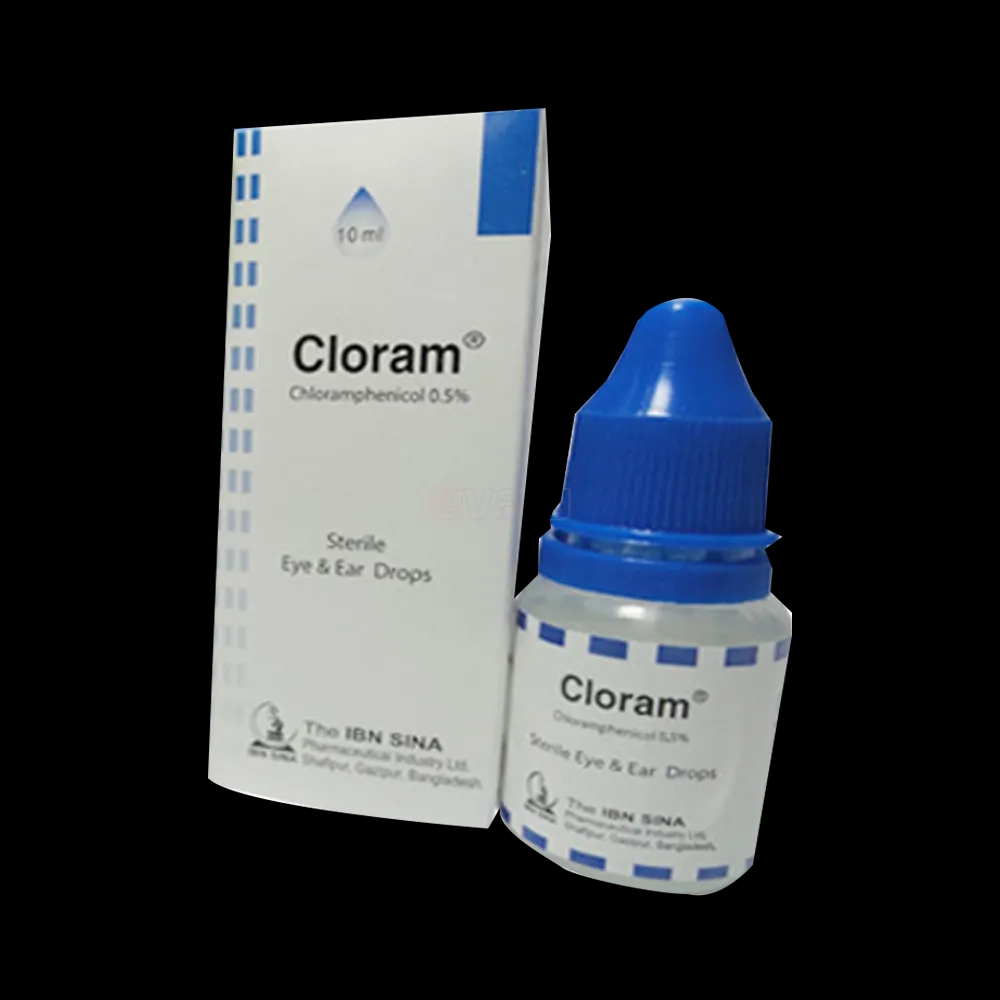
Cloram0.5%
Ibn-Sina Pharmaceuticals Ltd.
৳30.95
Add to cart


I-Guard eye drops (0.5%) and eye ointment (1%) are indicated for the treatment of superficial bacterial infections of the eye, including bacterial conjunctivitis and other infections of the conjunctiva and/or cornea caused by susceptible organisms such as Staphylococcus aureus, Streptococcus pneumoniae, Escherichia coli, Haemophilus influenzae, Klebsiella/Enterobacter species, Moraxella lacunata, and Neisseria species. This is an established, guideline-supported first-line topical use. I-Guard eye preparations should not be used for minor infections that would resolve on their own or purely for prophylaxis.
Oral I-Guard is reserved for serious, potentially life-threatening infections caused by organisms susceptible to I-Guard, specifically when safer or less hazardous antimicrobial agents are ineffective, contraindicated, or unavailable. Established/guideline-referenced serious indications include typhoid fever (Salmonella typhi and other Salmonella species), bacterial meningitis due to Haemophilus influenzae, and severe rickettsial infections. Oral I-Guard should never be used for trivial infections such as the common cold, viral influenza, or uncomplicated sore throat, and not used prophylactically. Because of the risk of fatal bone marrow toxicity (see Precautions and Warnings), oral I-Guard is used only under close medical and haematological supervision.
Each formulation contains Chloramphenicol as the sole active ingredient. In Bangladesh, Chloramphenicol is marketed as: Ophthalmic solution (eye drops) containing Chloramphenicol 0.5% w/v; Ophthalmic ointment containing Chloramphenicol 1% w/w; Oral capsule containing Chloramphenicol 250 mg; and Oral suspension containing Chloramphenicol 125 mg/5 mL.
I-Guard is a broad-spectrum antibiotic used in two very different ways depending on the formulation. As an eye drop or eye ointment, I-Guard is a common, generally well-tolerated treatment for bacterial conjunctivitis and other superficial eye infections. As an oral capsule or suspension, I-Guard is a powerful antibiotic reserved for serious infections, such as typhoid fever, when safer antibiotics cannot be used, because systemic I-Guard carries a rare but serious risk of fatal bone marrow toxicity (aplastic anemia) and, in newborns, a life-threatening reaction called Gray baby syndrome. For these reasons, oral I-Guard should only be used under close medical supervision, while topical/ophthalmic I-Guard continues to be widely used for eye infections.
Antibiotic (Amphenicol) — topical/ophthalmic and systemic antibacterial
Chloramphenicol is a broad-spectrum, predominantly bacteriostatic antibiotic. Chloramphenicol diffuses into bacterial cells and reversibly binds the 50S ribosomal subunit, blocking the peptidyl transferase reaction and preventing transfer of amino acids to growing peptide chains, thereby inhibiting bacterial protein synthesis. This action covers a broad range of gram-positive and gram-negative organisms, as well as rickettsiae and some anaerobes. After an oral dose, Chloramphenicol is well absorbed, achieving peak plasma concentrations of roughly 11 mcg/mL within 1–3 hours of a 1 g dose. Chloramphenicol distributes widely, including into the liver, kidney, and cerebrospinal fluid (crossing the blood–brain barrier even without meningeal inflammation), and is metabolised mainly in the liver by glucuronidation. Because hepatic glucuronidation capacity is immature in neonates and young infants, Chloramphenicol can accumulate to toxic levels in this age group (see Gray baby syndrome under Pediatric Uses). After ophthalmic application, systemic absorption is minimal, so systemic pharmacokinetic effects are not usually relevant to the topical/ophthalmic formulations.
Dosing and administration of I-Guard differ substantially by formulation and by indication, and must always be individualised by a qualified healthcare professional — the regimens below are general reference ranges, not a one-size-fits-all prescription. Ophthalmic I-Guard is used topically in the eye at fixed intervals for a limited course, while oral I-Guard is dosed by body weight and requires close monitoring because of the serious systemic risks of oral I-Guard.
Chloramphenicol should never be used for trivial infections (such as colds, viral influenza, or uncomplicated throat infections) or as a prophylactic antibiotic; while this is a strong clinical restriction rather than a hypersensitivity-based contraindication, it reflects Chloramphenicol's serious potential toxicity relative to Chloramphenicol's limited benefit in minor illness.
Common: Transient burning or stinging on application, eye redness (conjunctival hyperemia), itching, and mild irritation.
Serious — seek medical attention: Signs of allergic or hypersensitivity reaction (rash, swelling, vesicular or maculopapular dermatitis around the eye); with prolonged or repeated ophthalmic courses, rare blood dyscrasias have been reported (see Precautions and Warnings — bone marrow toxicity) — stop I-Guard and seek medical advice if unusual bruising, bleeding, or infection symptoms occur.
Common: Nausea, vomiting, diarrhea, and headache; mild skin rash.
Serious — seek medical attention immediately: Signs of bone marrow suppression or aplastic anemia such as unusual bruising or bleeding, sore throat, fever, or unusual tiredness (see Precautions and Warnings for the full explanation); optic neuritis (blurred or reduced vision) and peripheral neuropathy with prolonged therapy; signs of Gray baby syndrome in neonates and young infants — abdominal distension, vomiting, progressive grey-blue skin colour, low body temperature, and cardiovascular collapse (see Pediatric Uses); and signs of severe hypersensitivity/anaphylaxis (difficulty breathing, facial swelling, severe rash).
Data on I-Guard use in human pregnancy are limited; controlled studies have not established the safety of I-Guard, and animal reproduction data are not well characterised. I-Guard crosses the placenta. The most important documented concern is use late in pregnancy, close to delivery, which has been associated with adverse effects in the neonate resembling Gray baby syndrome due to the newborn's immature ability to metabolise I-Guard (see Pediatric Uses). Because of this, I-Guard, particularly the oral/systemic form, should be used in pregnancy only if the potential benefit is judged by a physician to justify the potential risk to the fetus/neonate, and avoided close to term whenever an alternative exists. Topical/ophthalmic use has much lower systemic absorption, but should still only be used in pregnancy on a physician's advice.
Oral/systemic I-Guard passes into breast milk in amounts that have caused adverse effects in nursing infants, including vomiting, excessive gas, and drowsiness at the breast; true Gray baby syndrome from breastfeeding alone is considered unlikely because milk concentrations are relatively low, but the idiosyncratic, non-dose-related risk of aplastic anemia cannot be excluded. Because of this, an alternative antibiotic is generally preferred during breastfeeding, especially for mothers of newborn or preterm infants; if oral I-Guard is unavoidable, the infant should be monitored closely and a physician consulted. Topical/ophthalmic I-Guard is not expected to reach the infant in clinically significant amounts, but should still be used only as advised by a physician.
No specific toxic-dose threshold for I-Guard has been firmly established, and overdose effects vary with the formulation, dose, and patient age. Reported effects of significant oral/systemic overdose include gastrointestinal upset (nausea, vomiting), and — particularly in neonates, infants, or with very high systemic exposure — features resembling Gray baby syndrome, such as abdominal distension, poor feeding, low body temperature, progressive grey-blue skin colour, metabolic acidosis, and cardiovascular collapse, which is a medical emergency. There is no specific antidote; management is supportive and is provided in a hospital setting. If an overdose of I-Guard (oral or, less likely, ophthalmic) is suspected, do not induce vomiting unless specifically directed to do so by a doctor or poison control service, and seek emergency medical attention or contact the national poison information/emergency service immediately, taking the I-Guard packaging with you.
Store I-Guard according to the instructions on the product label. As a general guide, keep oral capsules and suspension in a cool, dry place away from direct light and heat, and keep the suspension tightly closed; some I-Guard eye drop products should be refrigerated once opened and discarded after the period stated on the label (commonly within about 4 weeks of opening) — check the specific product's label, as storage requirements can differ between brands. Keep all I-Guard products out of the sight and reach of children, and do not use after the expiry date.
For ophthalmic I-Guard, dosing is generally the same in children as in adults, following the same drop/ointment instructions under a doctor's guidance. For oral/systemic I-Guard, dosing beyond the neonatal period is weight-based (see Dosage table), but this age group is at particular risk of Gray baby syndrome if metabolism is immature or dosing is excessive — see Pediatric Uses for the full explanation.
Specific dosing studies in the elderly are limited. Because bone marrow toxicity risk from systemic I-Guard is not clearly age-related but overall physiological reserve and organ function often decline with age, oral I-Guard should be used cautiously in elderly patients, with attention to hepatic and renal function and closer haematological monitoring.
Dose adjustment and more frequent monitoring are recommended for oral/systemic I-Guard in patients with renal impairment, individualised by the treating physician. Ophthalmic I-Guard is not expected to require adjustment given minimal systemic absorption.
Because I-Guard is cleared mainly by the liver, hepatic impairment can lead to drug accumulation and increased toxicity risk with the oral/systemic form; dose reduction and closer monitoring are recommended. Ophthalmic I-Guard is not expected to require adjustment given minimal systemic absorption.
Duration of I-Guard therapy is determined by the treating healthcare professional based on the specific infection and the patient's response, and is not the same for every use. For ophthalmic I-Guard, a typical course is about 7 days, and courses should not exceed roughly 3 weeks without medical re-evaluation. For oral/systemic I-Guard, treatment is generally kept as short as clinically effective given the serious risks of prolonged therapy, and repeated or extended courses should be avoided unless specifically directed by a physician monitoring blood counts.
Amphenicol antibiotics; broad-spectrum antibacterial agents.
Chloramphenicol diffuses into bacterial cells and binds reversibly to the 50S subunit of the bacterial ribosome, at a site close to the peptidyl transferase centre. This blocks the peptidyl transferase reaction, preventing the transfer of amino acids to the growing peptide chain and thereby inhibiting bacterial protein synthesis. This action is predominantly bacteriostatic across most susceptible organisms.
Gray baby syndrome (canonical explanation): Newborns, especially premature infants, and young infants have immature liver glucuronidation and kidney function, meaning they cannot clear I-Guard as efficiently as older children or adults. When systemic (oral or injectable) I-Guard accumulates in this age group — from high doses, prolonged therapy, or use in the neonatal period without appropriate dose reduction and monitoring — this accumulation of I-Guard can cause a toxic reaction known as Gray baby syndrome. This typically appears after about 3–4 days of high-dose therapy and is characterised by poor feeding, abdominal distension with or without vomiting, irritability, progressive pallid or grey-blue skin discolouration, low body temperature, and vasomotor/cardiovascular collapse, which can be fatal if not recognised and treated promptly; stopping I-Guard immediately may allow reversal if caught early. Because of this risk, systemic I-Guard in neonates and young infants must only be given under specialist (paediatric/neonatal) supervision, with dosing individualised to the infant's age and, where available, serum drug-level monitoring, and systemic I-Guard should be avoided altogether when a safer alternative antibiotic can be used.
Older infants and children: Beyond the neonatal period, oral I-Guard is dosed by body weight (see Dosage table) but remains reserved for serious infections where safer antibiotics are unsuitable, because of the same bone-marrow-toxicity risk that applies to adults (see Precautions and Warnings). Ophthalmic I-Guard eye drops/ointment are commonly used in children of all ages for bacterial conjunctivitis, following the same instructions as for adults, under a doctor's or pharmacist's guidance.
Q: What is I-Guard 0.5% Eye/Ear Drop used for?
A: I-Guard 0.5% Eye/Ear Drop is an antibiotic used in two main ways: as eye drops or eye ointment for bacterial conjunctivitis and other superficial eye infections, and as an oral capsule or suspension reserved for serious infections, such as typhoid fever, when safer antibiotics cannot be used.
Q: Is I-Guard 0.5% Eye/Ear Drop eye drops the same as oral I-Guard 0.5% Eye/Ear Drop?
A: No. Both contain the same active ingredient, I-Guard 0.5% Eye/Ear Drop, but the ophthalmic (eye drop/ointment) form acts locally on the eye with minimal absorption into the body, while the oral form is absorbed systemically and carries a rare but serious risk of bone marrow toxicity that the eye formulation does not carry in the same way.
Q: How is the dose of I-Guard 0.5% Eye/Ear Drop decided?
A: The dose, formulation, and duration of I-Guard 0.5% Eye/Ear Drop are decided by a qualified healthcare professional based on the type and severity of infection, the patient's age, weight, and organ function. There is no single dose of I-Guard 0.5% Eye/Ear Drop that applies to every patient or every infection — always follow your prescriber's specific instructions.
Q: Can I-Guard 0.5% Eye/Ear Drop be used during pregnancy?
A: I-Guard 0.5% Eye/Ear Drop, especially the oral/systemic form, should be used in pregnancy only if a doctor decides the benefit outweighs the risk, because use late in pregnancy has been linked to serious effects in the newborn resembling Gray baby syndrome. I-Guard 0.5% Eye/Ear Drop should generally be avoided close to delivery unless there is no safer alternative.
Q: Is I-Guard 0.5% Eye/Ear Drop safe for babies and young children?
A: Ophthalmic I-Guard 0.5% Eye/Ear Drop is commonly used in children of all ages for eye infections under medical guidance. Oral/systemic I-Guard 0.5% Eye/Ear Drop, however, carries a special risk in newborns and young infants called Gray baby syndrome, caused by their immature ability to clear I-Guard 0.5% Eye/Ear Drop, so I-Guard 0.5% Eye/Ear Drop is only given to this age group under close specialist supervision with careful dose control and monitoring.
Q: What are the most serious side effects of I-Guard 0.5% Eye/Ear Drop?
A: The most serious risk of oral/systemic I-Guard 0.5% Eye/Ear Drop is bone marrow toxicity, which can rarely cause fatal aplastic anemia; regular blood tests are used to monitor for this. In newborns, systemic I-Guard 0.5% Eye/Ear Drop can also cause Gray baby syndrome. Ophthalmic I-Guard 0.5% Eye/Ear Drop is generally well tolerated, though prolonged or repeated use has rarely been linked to blood disorders as well.
Q: Does I-Guard 0.5% Eye/Ear Drop interact with other medicines?
A: Yes. Oral I-Guard 0.5% Eye/Ear Drop can raise blood levels of drugs such as phenytoin and warfarin-type anticoagulants by slowing their breakdown in the liver, and I-Guard 0.5% Eye/Ear Drop should generally not be combined with other bone-marrow-suppressing medicines. Always tell your doctor or pharmacist about all medicines you are taking before starting I-Guard 0.5% Eye/Ear Drop.
Q: Can I stop I-Guard 0.5% Eye/Ear Drop as soon as I feel better?
A: No. Whether using I-Guard 0.5% Eye/Ear Drop eye drops, ointment, or oral capsules/suspension, the full course prescribed by your doctor should be completed unless your doctor tells you to stop, because stopping early can allow the infection to persist or return, and repeated short courses of I-Guard 0.5% Eye/Ear Drop increase cumulative risk.
Q: What should I do if I miss a dose of I-Guard 0.5% Eye/Ear Drop?
A: If you miss a dose of I-Guard 0.5% Eye/Ear Drop, take it as soon as you remember. If it is almost time for your next dose, skip the missed dose and continue with your regular schedule — do not take a double dose to make up for the missed one, unless your doctor advises otherwise.
Disclaimer
The information provided is accurate to the best of our knowledge, but it does not replace professional medical advice. We cannot guarantee its completeness or accuracy, and the absence of specific information about a drug should not be taken as an endorsement. We are not responsible for any consequences arising from this information, so please consult a healthcare professional for any concerns or questions.

