
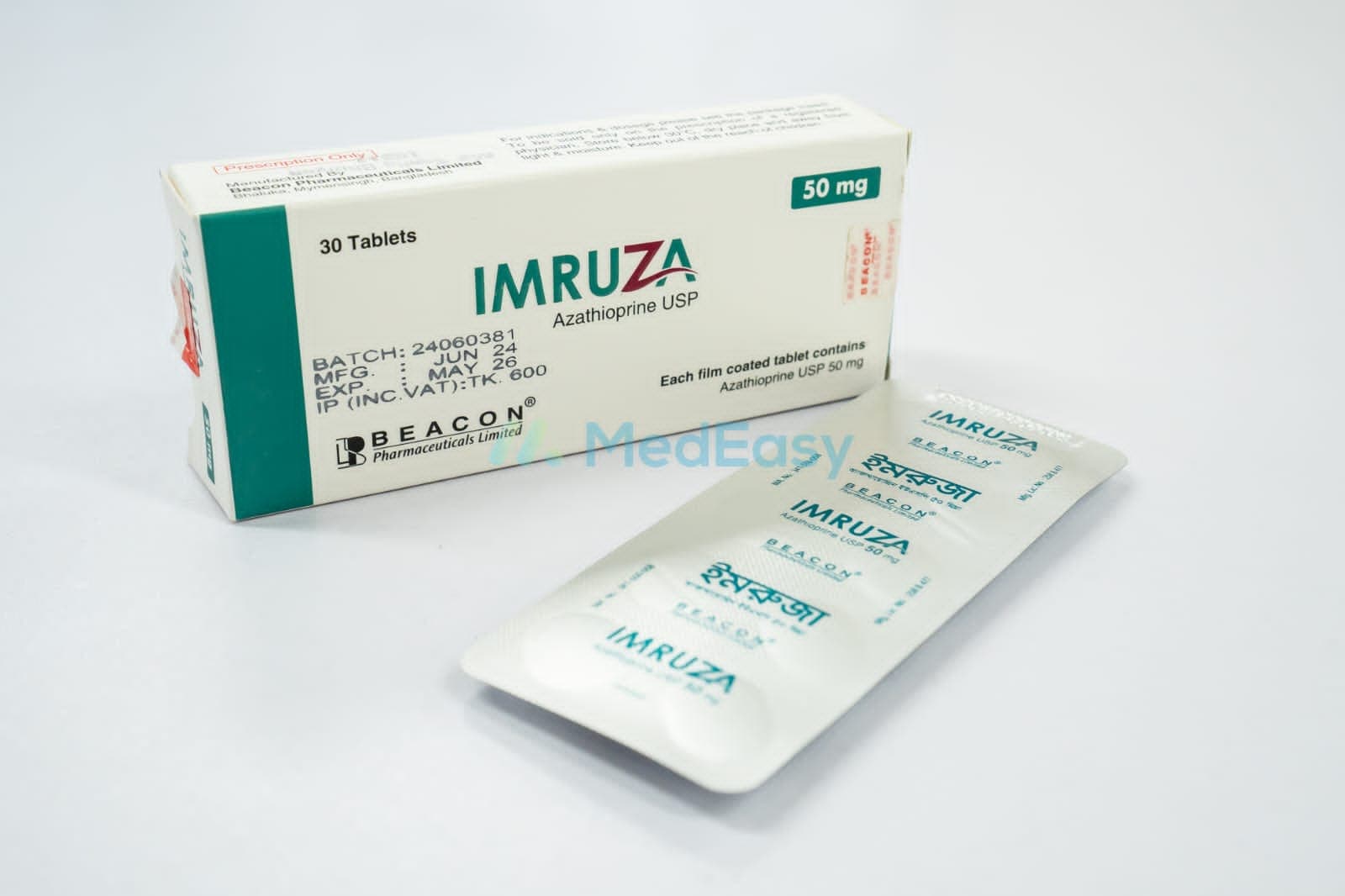

Medicine overview
Indications of Imruza
Imruza is an immunosuppressive antimetabolite with the following evidence-based uses:
Established / FDA-approved indications
- Prevention of kidney (renal) transplant rejection - used, usually in combination with corticosteroids and/or other immunosuppressants, to reduce the risk of the immune system rejecting a transplanted kidney.
- Rheumatoid arthritis (moderate to severe, active) - used in adults who have not responded adequately to conventional first-line disease-modifying antirheumatic drugs (DMARDs).
Guideline-supported / off-label uses
- Inflammatory bowel disease (Crohn's disease and ulcerative colitis) - used as a steroid-sparing maintenance agent, generally as part of combination management.
- Autoimmune hepatitis - used, typically combined with corticosteroids, to maintain remission.
- Systemic lupus erythematosus (SLE) and other autoimmune conditions such as autoimmune hemolytic anemia and myasthenia gravis - used off-label under specialist supervision when other therapies are inadequate.
Use of Imruza for any indication should be directed and monitored by a physician experienced in immunosuppressive therapy.
Composition
Each tablet contains Azathioprine as the active ingredient, commonly available in 25 mg and 50 mg strengths. Formulations may also include standard pharmaceutical excipients such as lactose, microcrystalline cellulose, povidone, and magnesium stearate. Refer to the specific product's package insert for exact excipient composition.
Description
Imruza is a purine analog and antimetabolite immunosuppressant. Chemically, it is an imidazolyl derivative of 6-mercaptopurine (6-MP), from which it is enzymatically converted in the body. It has been used for decades in solid organ transplantation and in the management of severe autoimmune and inflammatory disorders where suppression of an overactive immune response is required.
Imruza carries a boxed warning for increased risk of malignancy (including lymphoma and skin cancers) with chronic use, and for genotoxicity; genetic testing for thiopurine methyltransferase (TPMT) and NUDT15 enzyme activity is recommended before starting therapy because patients with reduced enzyme activity are at significantly higher risk of severe, potentially life-threatening bone marrow suppression at standard doses.
Therapeutic Class
Imruza belongs to the immunosuppressant therapeutic class, specifically the purine analog / antimetabolite subclass, and is also classified as a disease-modifying antirheumatic drug (DMARD) when used for rheumatoid arthritis.
Pharmacology
Mechanism of action
Azathioprine is metabolized in the body, largely via non-enzymatic and enzymatic pathways, to 6-mercaptopurine and subsequently to active thioguanine nucleotides (TGNs). These nucleotide metabolites are incorporated into cellular DNA and RNA, inhibiting purine synthesis and interfering with DNA replication and cell division. This selectively suppresses the proliferation of rapidly dividing lymphocytes (T- and B-cells), producing an overall immunosuppressive effect that reduces the activity of the immune system responsible for graft rejection and autoimmune tissue damage.
Pharmacokinetics
Azathioprine is well absorbed after oral administration, though bioavailability is variable between individuals. It is extensively metabolized in the liver and red blood cells via three competing pathways: thiopurine methyltransferase (TPMT), xanthine oxidase, and hypoxanthine-guanine phosphoribosyltransferase (the pathway leading to active TGNs). Metabolites are excreted mainly in urine. Individuals with genetically reduced TPMT or NUDT15 activity accumulate higher levels of active metabolites and are at markedly increased risk of toxicity.
Dosage & Administration of Imruza
Dosing of Imruza is individualized per indication, body weight, and clinical/laboratory response, and must be supervised by a physician experienced in immunosuppressive therapy.
| Indication | Adult Dose |
|---|---|
| Kidney transplant rejection prophylaxis | Initial dose up to 3-5 mg/kg/day, usually started at or shortly before transplantation; maintenance dose typically 1-3 mg/kg/day, adjusted to the lowest effective dose based on clinical response and blood counts. |
| Rheumatoid arthritis | Initial dose approximately 1 mg/kg/day (about 50-100 mg) given as a single dose or in two divided doses. If response is insufficient after 6-8 weeks, the dose may be increased by 0.5 mg/kg/day at 4-week intervals, up to a maximum of about 2.5 mg/kg/day. A therapeutic trial of at least 12 weeks is generally required before concluding a lack of benefit. |
| Inflammatory bowel disease / autoimmune hepatitis (guideline-supported use) | Typically 1-2.5 mg/kg/day, individualized, often combined with corticosteroids as a steroid-sparing maintenance strategy. |
Renal impairment
Lower doses are recommended in patients with reduced kidney function (including oliguric transplant recipients), as drug clearance may be delayed; dose should be adjusted based on close monitoring of blood counts and clinical response.
Hepatic impairment
Use with caution and closer monitoring, as Imruza and its metabolites are hepatically processed; dose reduction may be required in significant hepatic impairment.
Baseline and periodic monitoring of complete blood count (CBC) and liver function tests is required throughout treatment (see Precautions and Warnings).
Administration of Imruza
Imruza tablets are usually taken orally, once daily or in divided doses as directed by the physician. Taking it with food or immediately after a meal may help reduce nausea and stomach upset. Tablets should be swallowed whole with water; do not crush, split, or handle crushed/broken tablets unnecessarily, as Imruza is a cytotoxic agent. Pregnant or breastfeeding caregivers should avoid handling crushed or broken tablets. Take the medicine at the same time(s) each day and do not stop or adjust the dose without consulting the prescribing physician, even if feeling well, as abrupt discontinuation can affect transplant/disease control.
Interaction of Imruza
The following are well-established, clinically significant interactions with Imruza:
- Allopurinol (and other xanthine oxidase inhibitors, e.g., febuxostat): Xanthine oxidase inhibition markedly reduces the breakdown of Imruza, increasing active metabolite levels and the risk of severe, potentially life-threatening myelosuppression. If co-administration cannot be avoided, the dose of Imruza must be reduced to about one-quarter to one-third of the usual dose, with close blood count monitoring.
- ACE inhibitors: Concurrent use has been associated with severe leukopenia and anemia; monitor blood counts closely.
- Warfarin and other oral anticoagulants: Imruza may reduce anticoagulant effect; monitor INR/coagulation status more closely when starting, stopping, or changing the dose of Imruza.
- Ribavirin: Inhibits the enzyme pathway that inactivates Imruza metabolites, increasing the risk of severe pancytopenia; avoid combination where possible, or monitor blood counts (including weekly CBC) closely if used together.
- Other myelosuppressive drugs (e.g., co-trimoxazole, methotrexate) and other immunosuppressants: Additive bone marrow suppression and infection risk; requires closer monitoring.
- Vaccines: Immune response to vaccines may be reduced; live/live-attenuated vaccines should generally be avoided during Imruza therapy due to risk of disseminated infection.
Always inform the physician or pharmacist about all other medicines, supplements, and vaccines before starting or while taking Imruza.
Contraindications
Azathioprine is absolutely contraindicated in:
- Patients with known hypersensitivity to Azathioprine or to mercaptopurine (due to cross-reactivity), or to any excipient of the formulation.
- Pregnant patients being treated for rheumatoid arthritis (per approved labeling for this indication).
Patients previously treated with alkylating agents (e.g., cyclophosphamide, melphalan, chlorambucil) are at substantially increased risk of malignancy if given Azathioprine, and combination should be avoided unless no alternative exists and the decision is made by a specialist (see Precautions and Warnings for additional cautions such as myelosuppression risk and use in pregnancy for other indications).
Side Effects of Imruza
Side effects of Imruza are generally dose-related and reversible with dose reduction or discontinuation, but some are serious.
Common
- Nausea, vomiting, loss of appetite, abdominal discomfort
- Leukopenia (low white blood cell count)
- Increased susceptibility to infections
Less common but significant
- Thrombocytopenia and anemia
- Hepatotoxicity (elevated liver enzymes, cholestasis)
- Pancreatitis
- Hair thinning
Serious/rare
- Severe bone marrow suppression (agranulocytosis, pancytopenia), particularly in patients with reduced TPMT/NUDT15 enzyme activity
- Increased long-term risk of malignancy, including lymphoma and non-melanoma skin cancers (see boxed warning)
- Hypersensitivity reactions (fever, rash, myalgia, hypotension, malaise) - typically require immediate discontinuation
- Serious opportunistic infections due to immunosuppression
Patients should seek urgent medical attention for fever, unusual bruising/bleeding, signs of infection, jaundice, or severe abdominal pain while taking Imruza.
Pregnancy & Lactation
Imruza crosses the placenta and has been associated with fetal harm in animal and human data; it is classified under FDA pregnancy category D. It should not be used in pregnant patients being treated for rheumatoid arthritis. For other indications (e.g., transplant recipients, severe inflammatory bowel disease) where discontinuation poses a significant risk to the mother, Imruza may be continued only if a specialist judges that the potential benefit clearly justifies the potential risk to the fetus, with close monitoring; this decision should always be made in consultation with the treating physician and should not be self-initiated or self-discontinued.
Small amounts of Imruza metabolites pass into breast milk. Breastfeeding while on Imruza should only be undertaken after specialist evaluation of the risks and benefits, with monitoring of the infant. Adequate contraceptive precautions are advised for patients (and partners) of reproductive potential while receiving Imruza.
Precautions & Warnings
Boxed warning
Chronic immunosuppressive therapy with Imruza increases the risk of malignancy, including lymphoma (notably post-transplant lymphoproliferative disorder and hepatosplenic T-cell lymphoma in inflammatory bowel disease patients) and skin cancers. Imruza is also genotoxic.
TPMT and NUDT15 testing
Testing for thiopurine methyltransferase (TPMT) and NUDT15 enzyme activity/genotype is recommended before starting Imruza where available. Patients with reduced or absent enzyme activity are at significantly increased risk of severe, potentially fatal myelosuppression at standard doses and require substantial dose reduction or an alternative agent.
Myelosuppression
Regular complete blood count (CBC) monitoring is required, especially during the first months of therapy and after any dose change, and periodically thereafter, due to the risk of leukopenia, thrombocytopenia, and anemia.
Hepatotoxicity
Liver function should be monitored periodically; dose reduction or discontinuation may be needed if significant hepatotoxicity develops.
Infection risk
Immunosuppression increases susceptibility to bacterial, viral, fungal, and opportunistic infections, including reactivation of latent infections (e.g., tuberculosis, hepatitis B/C); screening prior to therapy is advisable.
Alkylating agent history
Prior treatment with alkylating agents increases carcinogenic risk when combined with Imruza (see Contraindications).
Allopurinol and other interacting drugs
Concurrent allopurinol significantly increases Imruza toxicity and requires major dose reduction (see Interactions).
Imruza must only be used under regular medical and laboratory supervision. Do not stop or change the dose without consulting your physician.
Overdose Effects of Imruza
Overdose of Imruza can cause profound bone marrow suppression (leukopenia, thrombocytopenia, anemia), infection, bleeding, and gastrointestinal upset (nausea, vomiting, diarrhea), with effects sometimes delayed. There is no specific antidote. In case of suspected overdose, seek immediate medical attention or contact a poison control center/emergency services; do not attempt to manage overdose at home. Management in a medical facility typically involves close monitoring of blood counts for an extended period, supportive care, and treatment of any resulting infection or bleeding as needed.
Storage Conditions
Store at room temperature, below 30°C, protected from light and moisture. Keep the container tightly closed and out of the reach and sight of children.
Use In Special Populations
Renal impairment
Use lower doses with caution, as clearance of Imruza and its metabolites may be reduced; monitor closely.
Hepatic impairment
Use with caution and enhanced monitoring; dose reduction may be required.
Elderly
May be more susceptible to infections and bone marrow suppression; use the lowest effective dose with close monitoring.
Pediatric
Used off-label in pediatric transplant recipients and select severe autoimmune/inflammatory conditions under specialist supervision, generally using weight-based dosing; safety and efficacy for rheumatoid arthritis have not been established in children (see Pediatric Uses).
TPMT/NUDT15-deficient patients
Require substantial dose reduction and close monitoring, or consideration of an alternative agent, due to markedly increased risk of severe myelosuppression.
Duration Of Treatment
Duration of treatment with Imruza depends on the indication: in transplant recipients it is typically continued long-term (often indefinitely) as part of maintenance immunosuppression to prevent graft rejection. For rheumatoid arthritis, a therapeutic trial of at least 12 weeks is generally required to assess benefit, and if effective and tolerated, treatment is usually continued long-term at the lowest effective dose. For inflammatory bowel disease and other guideline-supported uses, duration is individualized by the treating specialist based on disease control and tolerability. Treatment should never be stopped or extended without medical advice.
Drug Classes
Azathioprine: Immunosuppressant; Purine analog / Antimetabolite; Disease-modifying antirheumatic drug (DMARD).
Mode Of Action
Azathioprine is converted in the body to 6-mercaptopurine and then to active thioguanine nucleotides, which are incorporated into DNA and RNA, inhibiting purine synthesis and blocking replication of rapidly dividing lymphocytes. This suppresses T- and B-lymphocyte proliferation, reducing the immune-mediated processes responsible for transplant rejection and autoimmune inflammation.
Pregnancy
D
Pediatric Uses
Safety and efficacy of Imruza for rheumatoid arthritis have not been formally established in pediatric patients. Imruza is used off-label in pediatric solid organ transplant recipients (as part of standard pediatric transplant immunosuppression protocols) and in selected severe pediatric autoimmune/inflammatory conditions (e.g., inflammatory bowel disease, autoimmune hepatitis) under the supervision of a pediatric specialist, generally using weight-based dosing analogous to adult regimens with close monitoring of blood counts and growth/development. Use in children should always be directed by a pediatric specialist.
Frequently Asked Questions
Q: What is Imruza 50 mg Tablet used for?
A: Imruza 50 mg Tablet is an immunosuppressant medicine used mainly to help prevent rejection of a transplanted kidney and to treat moderate-to-severe rheumatoid arthritis that has not responded to other treatments. It is also used, under specialist guidance, for certain other autoimmune conditions such as inflammatory bowel disease and autoimmune hepatitis.
Q: Do I need any tests before starting Imruza 50 mg Tablet?
A: Yes. Testing for the enzymes TPMT and NUDT15 is recommended before starting Imruza 50 mg Tablet, because people with low activity of these enzymes are at much higher risk of severe, potentially life-threatening drops in blood cell counts at standard doses. Your doctor will also check baseline blood counts and liver function.
Q: Can I take allopurinol with Imruza 50 mg Tablet?
A: Allopurinol significantly increases the levels and toxicity of Imruza 50 mg Tablet by blocking the enzyme that breaks it down. If your doctor decides both medicines are needed together, the dose of Imruza 50 mg Tablet must be reduced substantially (to about one-quarter to one-third of the usual dose) and your blood counts monitored closely. Never combine them without your doctor adjusting the dose.
Q: Is Imruza 50 mg Tablet safe during pregnancy or breastfeeding?
A: Imruza 50 mg Tablet crosses the placenta and is classified as pregnancy category D; it should not be used in pregnant women being treated for rheumatoid arthritis. In other situations, such as transplant recipients, it may sometimes be continued in pregnancy only if a specialist decides the benefit clearly outweighs the risk, with close monitoring. Breastfeeding should only be done after your doctor has weighed the risks and benefits, since small amounts pass into breast milk. Always consult your physician before making any decision.
Q: What side effects should prompt me to contact my doctor immediately?
A: Contact your doctor right away if you develop fever, unusual bruising or bleeding, signs of infection (sore throat, chills), yellowing of the skin or eyes, or severe abdominal pain while taking Imruza 50 mg Tablet, as these may indicate serious bone marrow suppression, infection, or liver problems.
Q: What happens if I miss a dose or take too much Imruza 50 mg Tablet?
A: If you miss a dose, take it as soon as you remember unless it is almost time for the next dose; do not double the dose. If you or someone else has taken too much Imruza 50 mg Tablet, seek immediate medical attention or contact emergency services/poison control, as overdose can cause severe suppression of blood cell production and other serious effects that require monitoring in a medical facility.
Disclaimer
The information provided is accurate to the best of our knowledge, but it does not replace professional medical advice. We cannot guarantee its completeness or accuracy, and the absence of specific information about a drug should not be taken as an endorsement. We are not responsible for any consequences arising from this information, so please consult a healthcare professional for any concerns or questions.
