10% Off
Ansulin N100 IU/ml
Square Pharmaceuticals PLC.
৳373.50
Add to cart
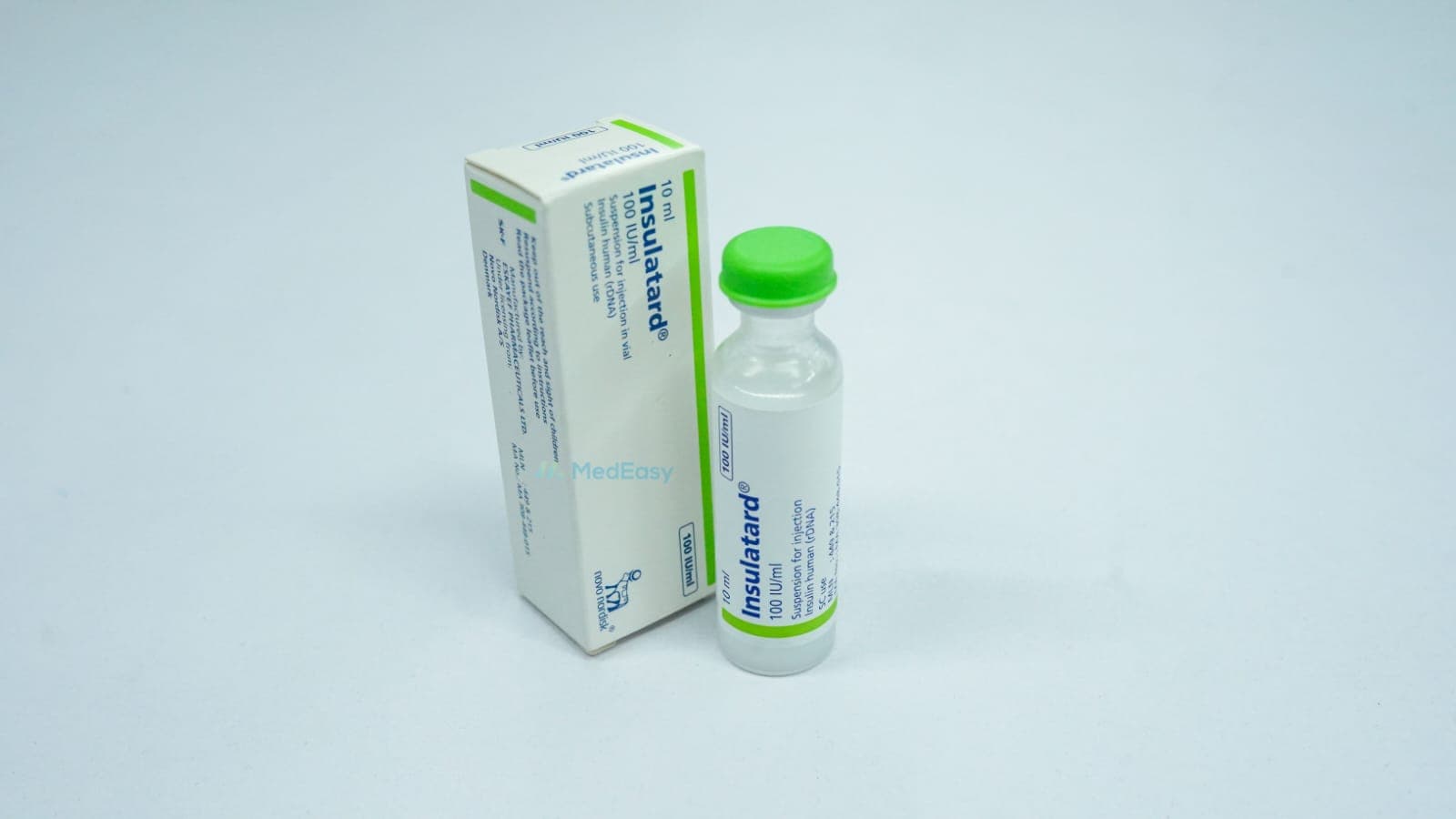

Insulatard is a biosynthetic (recombinant DNA-derived) human insulin formulated to provide a slow, prolonged (long-acting/basal) glucose-lowering effect. It is indicated for the treatment of diabetes mellitus as part of a regimen that provides background (basal) insulin coverage.
Insulatard is not intended for the treatment of diabetic ketoacidosis or acute severe hyperglycemia; a rapid- or short-acting insulin given intravenously under medical supervision is required for those emergencies, because Insulatard has a slow onset and is given only by subcutaneous injection.
Each mL contains biosynthetic human insulin (produced by recombinant DNA technology) formulated as a long-acting suspension, typically at a strength of 100 IU/mL (U-100), for subcutaneous injection. Insulin Human [Long-Acting] contains zinc and other suspending/stabilizing excipients that slow its absorption from the injection site.
Insulatard is a sterile, long-acting suspension of purified human insulin manufactured using recombinant DNA technology, structurally identical to insulin produced by the human pancreas. Unlike rapid- or short-acting insulins, Insulatard is formulated (as an extended zinc-insulin suspension) to dissolve slowly after subcutaneous injection, giving it a delayed onset and a prolonged, relatively flat duration of action suited to providing steady background (basal) insulin levels rather than covering the rise in blood glucose after meals.
Insulatard belongs to the class of long-acting (basal) human insulins, a subclass of antidiabetic agents/insulins used for glycemic control in diabetes mellitus.
Like all insulins, Insulin Human [Long-Acting] lowers blood glucose by binding to insulin receptors on muscle, fat, and liver cells. This stimulates peripheral glucose uptake (particularly into skeletal muscle and adipose tissue), suppresses hepatic glucose production and release, and inhibits lipolysis and proteolysis, while promoting protein synthesis.
Insulin Human [Long-Acting] is distinguished from rapid- and short-acting insulins by its pharmacokinetic profile: after subcutaneous injection it forms a depot that dissolves slowly, giving a delayed onset of action (approximately 4-6 hours), a broad and relatively low peak effect (roughly 8-20 hours), and a prolonged duration of action (approximately 24-36 hours). This flatter, longer profile makes Insulin Human [Long-Acting] suitable for providing steady, background (basal) insulin coverage between meals and overnight, rather than for controlling the glucose rise that follows a meal, which requires a rapid- or short-acting insulin instead.
The dose of Insulatard must be individualized by the treating physician based on blood glucose monitoring results, metabolic needs, body weight, and the overall treatment regimen. Patients should never adjust their own dose without medical guidance.
| Population | General dosing guidance |
|---|---|
| Adults | Starting basal dose and subsequent titration are determined individually by the physician, typically starting at a conservative dose and adjusted gradually according to fasting and pre-meal blood glucose readings. |
| Type 1 diabetes | Used as the basal component alongside a rapid- or short-acting mealtime insulin; total daily insulin requirement and the basal share are set by the physician. |
| Type 2 diabetes | May be added once daily to existing oral antidiabetic therapy, or used alone, with dose titrated to target fasting glucose. |
| Pediatric patients | Dosing is individualized and weight-based under specialist supervision; see Use in Special Populations. |
| Renal/hepatic impairment | Insulin requirements are often reduced because clearance is slower; closer glucose monitoring and dose reduction may be needed (see Precautions). |
Insulatard is administered by subcutaneous injection only, with rotation of injection sites (abdomen, thigh, buttock, or upper arm). It must never be given intravenously or intramuscularly. See Dosage and Administration for full technique.
Many medicines can affect blood glucose control and change the insulin dose needed when taking Insulatard. Report all medicines to the prescribing physician.
Insulin Human [Long-Acting] is contraindicated in:
The most common and most important adverse effect of Insulatard is hypoglycemia, which can range from mild (sweating, tremor, hunger, palpitations, confusion) to severe (seizures, loss of consciousness) and requires prompt treatment.
Good glycemic control before conception and throughout pregnancy is important for both mother and baby, and insulin (including Insulatard) is a standard treatment option for diabetes during pregnancy. However, Insulatard should be used in pregnancy only under close physician supervision, as insulin requirements typically change during each trimester and around delivery, and doses must be adjusted based on frequent blood glucose monitoring. Use only if clearly needed and if the potential benefit justifies the potential risk; always consult a physician before starting or continuing Insulatard during pregnancy.
Insulin needs may also change during breastfeeding. Insulatard is generally considered compatible with breastfeeding because insulin is a naturally occurring hormone broken down in the infant's digestive tract, but a physician should monitor and may need to adjust the dose and diet in nursing mothers.
Hypoglycemia is the most common and most serious risk with Insulatard. Risk increases with dose changes, skipped or delayed meals, unusual physical exertion, alcohol intake, and intercurrent illness. Patients and caregivers should be trained to recognize and treat early warning signs and should carry a fast-acting source of glucose at all times.
Never switch between Insulatard and any other insulin product, brand, type, or concentration without a physician's explicit instruction and dose adjustment, as this can significantly change glucose control.
Never self-adjust the dose of Insulatard. Dose must be individualized and titrated by the treating physician based on regular blood glucose monitoring.
Rotate injection sites systematically to reduce the risk of lipodystrophy, which can affect insulin absorption.
Insulatard can lower serum potassium; use with caution in patients at risk of hypokalemia or taking other potassium-lowering medicines, with monitoring where appropriate.
Illness (especially with vomiting/reduced intake), unaccustomed exercise, and alcohol use can all change insulin requirements with Insulatard; patients should discuss a sick-day and exercise plan with their physician and monitor blood glucose more frequently in these situations.
Insulin requirements may be reduced in significant renal or hepatic impairment due to slower insulin clearance; closer monitoring is advised.
Overdose of Insulatard causes hypoglycemia, which may be mild (sweating, shakiness, hunger, palpitations, confusion) or severe (seizures, unconsciousness). Mild hypoglycemia can often be managed by taking a fast-acting source of sugar (such as glucose tablets or juice) followed by a longer-acting carbohydrate snack. For severe or worsening hypoglycemia, or if the person is unable to swallow safely or is unconscious, seek immediate emergency medical attention or contact emergency services/poison control; glucagon injection or intravenous glucose administered by trained personnel may be required. Do not attempt to manage severe hypoglycemia at home without professional guidance.
Store unopened vials/pens/cartridges of Insulatard in a refrigerator (2-8°C); do not freeze, and discard if it has been frozen. Once in use, the vial/pen currently being used may be kept at room temperature (below 30°C), away from direct heat and light, and should be discarded after the period stated on the product label (commonly around 4-6 weeks), even if some solution remains. Keep out of reach of children.
Insulatard may be used in children with diabetes mellitus requiring insulin therapy under the supervision of a physician experienced in pediatric diabetes care; dosing is individualized and weight-based, with careful attention to hypoglycemia risk given children's variable eating and activity patterns.
Older adults may be more susceptible to hypoglycemia and its consequences; a more conservative starting dose and more frequent glucose monitoring are recommended.
Reduced insulin clearance may lower dose requirements; monitor glucose closely and adjust dose as needed.
Reduced gluconeogenesis and insulin metabolism may lower dose requirements; monitor glucose closely.
Insulatard is generally used long-term/lifelong as part of ongoing diabetes management, since diabetes mellitus is a chronic condition. The dose and regimen are reviewed and adjusted periodically by the physician based on glycemic control (e.g., HbA1c and self-monitored glucose), and treatment should never be stopped or changed abruptly without medical advice.
Insulin Human [Long-Acting] belongs to the antidiabetic agent class, specifically long-acting (basal) human insulins.
Insulin Human [Long-Acting] acts by binding to insulin receptors on target cells (muscle, adipose tissue, and liver), triggering intracellular signaling that increases glucose uptake into muscle and fat, suppresses hepatic glucose output, and inhibits lipolysis and proteolysis while promoting glycogen, lipid, and protein synthesis. Its long-acting formulation delays absorption from the subcutaneous depot, producing a slow onset and prolonged, relatively flat basal insulin effect rather than a sharp mealtime peak.
B
Insulatard can be used in pediatric patients with diabetes mellitus requiring basal insulin therapy, under specialist supervision, with individualized weight-based dosing and careful monitoring for hypoglycemia; safety and efficacy in very young children should be assessed by the treating pediatric endocrinologist. See Use in Special Populations for further detail.
Q: What is Insulatard 100 IU/ml Vial used for?
A: Insulatard 100 IU/ml Vial is used to control blood glucose in people with type 1 or type 2 diabetes mellitus. It provides slow, steady background (basal) insulin coverage and is usually combined with a rapid- or short-acting insulin at mealtimes in type 1 diabetes, or added to oral medicines in type 2 diabetes.
Q: How is Insulatard 100 IU/ml Vial different from fast-acting insulin?
A: Insulatard 100 IU/ml Vial has a delayed onset (around 4-6 hours) and a long, relatively flat duration of action (about 24-36 hours), making it suited to basal (background) glucose control rather than covering the blood glucose rise after meals, which needs a rapid- or short-acting insulin instead.
Q: Can I change the brand or type of insulin on my own?
A: No. Never switch between Insulatard 100 IU/ml Vial and any other insulin product, brand, type, or concentration without your physician's explicit instruction, because this can change how your body responds and may require a dose adjustment.
Q: What is the biggest risk with Insulatard 100 IU/ml Vial?
A: The main risk is hypoglycemia (low blood sugar), which can cause sweating, shakiness, confusion, and in severe cases seizures or loss of consciousness. Always carry a fast-acting sugar source, and seek emergency care for severe symptoms.
Q: Is Insulatard 100 IU/ml Vial safe during pregnancy and breastfeeding?
A: Insulin, including Insulatard 100 IU/ml Vial, is a standard treatment for diabetes in pregnancy, but it should be used only under close physician supervision because dose needs change through pregnancy. It is generally considered compatible with breastfeeding, but your physician should monitor and adjust your dose.
Q: How should I store Insulatard 100 IU/ml Vial?
A: Store unopened Insulatard 100 IU/ml Vial in a refrigerator (2-8°C) and never freeze it. Once opened/in use, it can usually be kept below 30°C away from heat and light for the period stated on the label, then discarded. Keep it out of reach of children.
Disclaimer
The information provided is accurate to the best of our knowledge, but it does not replace professional medical advice. We cannot guarantee its completeness or accuracy, and the absence of specific information about a drug should not be taken as an endorsement. We are not responsible for any consequences arising from this information, so please consult a healthcare professional for any concerns or questions.