10% Off
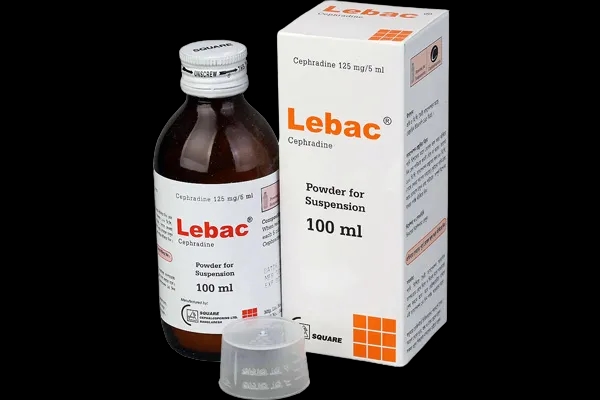
Lebac100 ml
Square Pharmaceuticals PLC.
৳85.50
Add to cart


Intracef 100 ml is indicated for the treatment of bacterial infections caused by susceptible Gram-positive and Gram-negative microorganisms. It is effective across a broad range of infection types, including respiratory, urinary, and skin-related conditions.
Upper Respiratory Tract Infections (URTI)
Lower Respiratory Tract Infections (LRTI)
Urinary Tract Infections (UTI)
Skin & Soft Tissue Infections (SSTI)
Susceptible Microorganisms
The following organisms are susceptible to Intracef 100 ml in vitro:
Gram-positive: Staphylococci (including penicillin-sensitive, resistant, and penicillinase-producing strains), Streptococci, Streptococcus pyogenes (beta-haemolytic), Streptococcus pneumoniae.
Gram-negative: Escherichia coli, Klebsiella spp., Proteus mirabilis, Haemophilus influenzae, Shigella spp., Salmonella spp. (including Salmonella typhi), Neisseria spp.
Note: Many strains of E. coli and Staphylococcus aureus that produce penicillinase — and are therefore ampicillin-resistant — remain susceptible to Intracef 100 ml, as the drug is unaffected by this enzyme.
First-Generation Cephalosporins
Intracef 100 ml is a semisynthetic, broad-spectrum bactericidal antibiotic belonging to the first-generation cephalosporin class. It is active against both Gram-positive and Gram-negative bacteria, including penicillinase-producing and non-producing staphylococci.
Mechanism of Action
The primary site of action of Intracef 100 ml is the bacterial cell wall. The cell walls of susceptible organisms contain a structural polymer called peptidoglycan. Intracef 100 ml inhibits the cross-linking (transpeptidation) process required for peptidoglycan synthesis. As a result, a structurally defective, porous cell wall is formed. The bacterium subsequently undergoes lysis (cell rupture) due to external osmotic pressure, leading to bacterial cell death.
Key Pharmacological Properties
Intracef 100 ml is available for both oral and injectable (IM/IV) administration. Doses should be individualized based on the type, site, and severity of infection. Always follow the prescription of a registered physician.
Oral Administration
Adults:
| Indication | Recommended Dose |
|---|---|
| Urinary Tract Infections | 500 mg four times daily (QID) or 1 g twice daily (BID). Higher doses may be required for severe, chronic cases, or complications such as prostatitis and epididymitis. |
| Respiratory Tract Infections | 250–500 mg QID or 500 mg–1 g BID, depending on the site and severity of infection. |
| Skin & Soft Tissue Infections | 250–500 mg QID or 500 mg–1 g BID, depending on the site and severity of infection. |
Children:
Elderly: The standard adult dose is appropriate. Patients with impaired renal or hepatic function should be monitored closely during treatment.
Injectable Administration (IM/IV)
Adults: 2–4 g/day in four equally divided doses; up to 8 g/day may be administered in severe infections. For surgical prophylaxis, a single pre-operative dose of 1–2 g IM or IV is recommended.
Children: 50–100 mg/kg/day in four equally divided doses; up to 300 mg/kg/day in severe infections.
Duration of Treatment
The following drug combinations with Intracef 100 ml require careful clinical monitoring due to the risk of additive or enhanced toxicity:
Aminoglycosides (e.g., gentamicin, amikacin): Concurrent use may increase the risk of nephrotoxicity (kidney damage). Renal function should be monitored closely if co-administration is necessary.
Loop Diuretics (e.g., furosemide, ethacrynic acid): Concomitant use enhances the possibility of renal toxicity. Use with caution and monitor kidney function.
Probenecid: Reduces the renal tubular secretion of Intracef 100 ml, leading to elevated serum drug levels and an increased risk of renal toxicity. Avoid concurrent use where possible.
Intracef 100 ml is contraindicated in the following situations:
Adverse reactions to Intracef 100 ml are generally limited to gastrointestinal disturbances and occasional hypersensitivity phenomena. Individuals with a prior history of allergy, asthma, hay fever, or urticaria are at greater risk of hypersensitivity reactions.
Common / General
Skin & Hypersensitivity Reactions
Blood & Lymphatic System Disorders (frequency unknown)
Psychiatric Disorders (frequency unknown)
Nervous System Disorders (frequency unknown / rare)
Hepatobiliary Disorders (frequency unknown)
Renal & Urinary Disorders (frequency unknown)
Laboratory / Investigations (frequency unknown)
Pregnancy: Although animal studies have not demonstrated any teratogenic effects, the safety of Intracef 100 ml in human pregnancy has not been formally established. It should only be used during pregnancy when the potential benefit clearly justifies the potential risk to the fetus. Physician supervision is essential.
Lactation: Intracef 100 ml is excreted in breast milk and should be used with caution in breastfeeding (lactating) mothers. The potential risk to the nursing infant should be carefully considered before prescribing.
Effect on Ability to Drive: Since Intracef 100 ml may cause dizziness, patients should be advised to exercise caution when operating hazardous machinery or driving motor vehicles during treatment.
Symptoms of Intracef 100 ml overdose are non-specific and primarily gastrointestinal, including nausea, vomiting, diarrhoea, and general gastric upset.
Management: Treatment is mainly supportive and symptomatic. Gastric lavage should be performed if a large amount has been ingested. Adequate hydration should be maintained and renal function monitored. Seek medical attention immediately in cases of suspected overdose.
| Dosage Form | Storage Instructions |
|---|---|
| Oral Suspension (Reconstituted) | Freshly prepared. Use within 7 days at room temperature or within 14 days if refrigerated. |
| Injection Solution | Use within 2 hours at room temperature. Retains potency for 12 hours when stored at 5°C. |
| Injection Colour | Solutions may vary from light to straw yellow — this does not affect potency or efficacy. |
| General | Do not use after the expiry date. Keep all medicines out of reach of children. To be dispensed only on the prescription of a registered physician. |
Renal Impairment — Dose Adjustment
The following doses are recommended for patients not on haemodialysis (based on a standard 500 mg every 6 hours regimen):
| Creatinine Clearance (CrCl) | Recommended Dose |
|---|---|
| > 20 mL/min | 500 mg every 6 hours |
| 5–20 mL/min | 250 mg every 6 hours |
| < 5 mL/min | 250 mg every 50–70 hours |
Patients on Chronic Intermittent Haemodialysis:
Additional Notes for All Patients:
First generation Cephalosporins
Intracef 100 ml is a semisynthetic broad spectrum bactericidal antibiotic, it is active against infections caused by both gram-positive and gram-negative microorganisms. Both penicillinase producing and nonproducing staphylococci are sensitive to Intracef 100 ml. The main site of action of Intracef 100 ml is the cell wall of bacteria. Cell wall of sensitive organism contains peptidoglycan. Intracef 100 ml inhibits cross-linking process and as a result cell wall with many pores are formed, thus lysis of bacteria occur due to external osmotic pressure.
Renal Impairment: The following doses are recommended (based on 500 mg every 6 hours) for patients not on haemodialysis: CrCl: >20 ml/min: 500 mg every 6 hours CrCl: 5-20 ml/min: 250 mg every 6 hours CrCl: <5 ml/min: 250 mg every 50-70 hours. Recommendations for patients on chronic, intermittent haemodialysis: 250 mg at the start of haemodialysis 250 mg 6 to 12 hours after the start 250 mg 36 to 48 hours after the start 250 mg at the start of the next haemodialysis session if more than 30 hours have elapsed since the last dose. Additional Information for all patients Regardless of patient age or weight, higher doses of up to 1 gm four times daily may be required for infections which are chronic or severe. Treatment should continue for at least 2 to 3 days after symptoms have resolved or bacteria have been eradicated. To reduce the possibility of rheumatic fever or glomerulonephritis resulting from infections with haemolytic streptococci, treatment should be continued for at least 10 days. Throughout treatment of chronic urinary tract infections and for several months thereafter, regular bacteriological and clinical monitoring is required. Doses below those recommended above should not be prescribed. Paediatric dosages should not exceed those specified for adults, regardless of severity of infection. It may be necessary to continue Intracef 100 ml therapy for several weeks in persistent infections. Patients may be transferred from intramuscular/intravenous Intracef 100 ml therapy to oral treatment at the same dosage level.
What is Intracef 100 ml used for?
Intracef 100 ml is indicated for the treatment of bacterial infections caused by susceptible Gram-positive and Gram-negative microorganisms. It is effective across a broad range of infection types, including respiratory, urinary, and skin-related conditions. Upper Respiratory Tract Infections (URTI) Sinusitis Pharyngitis Tonsillitis Laryngo-tracheo-bronchitis Otitis media (middle ear infection) Lo…
What is the dosage of Intracef 100 ml?
Intracef 100 ml is available for both oral and injectable (IM/IV) administration. Doses should be individualized based on the type, site, and severity of infection. Always follow the prescription of a registered physician. Oral Administration Adults: Indication Recommended Dose Urinary Tract Infections 500 mg four times daily (QID) or 1 g twice daily (BID). Higher doses may be required for severe,…
What are the side effects of Intracef 100 ml?
Adverse reactions to Intracef 100 ml are generally limited to gastrointestinal disturbances and occasional hypersensitivity phenomena. Individuals with a prior history of allergy, asthma, hay fever, or urticaria are at greater risk of hypersensitivity reactions. Common / General Nausea, vomiting, diarrhoea, abdominal pain, heartburn, glossitis Dizziness, tightness in the chest Vaginitis, Candida o…
Who should not take Intracef 100 ml?
Intracef 100 ml is contraindicated in the following situations: Cephalosporin hypersensitivity: Intracef 100 ml must not be used in patients with a known or suspected allergy to cephalosporin antibiotics. Penicillin cross-sensitivity: Due to the risk of cross-reactivity between beta-lactam antibiotics, Intracef 100 ml should be administered with caution in patients with a known hypersensitivity to…
What precautions should be taken with Intracef 100 ml?
Superinfection: Prolonged use of Intracef 100 ml may result in overgrowth of non-susceptible organisms (e.g., Candida spp.), leading to secondary (superimposed) infections. Monitor patients accordingly. Cross-sensitivity with Penicillins: Administer with care in patients with known penicillin hypersensitivity, due to the risk of cross-reactivity between beta-lactam antibiotics. Coombs Test Interfe…
Is Intracef 100 ml safe during pregnancy and breastfeeding?
Pregnancy: Although animal studies have not demonstrated any teratogenic effects, the safety of Intracef 100 ml in human pregnancy has not been formally established. It should only be used during pregnancy when the potential benefit clearly justifies the potential risk to the fetus. Physician supervision is essential. Lactation: Intracef 100 ml is excreted in breast milk and should be used with ca…
The information provided is accurate to our best practices, but it does not replace professional medical advice. We cannot guarantee its completeness or accuracy. The absence of specific information about a drug should not be seen as an endorsement. We are not responsible for any consequences resulting from this information, so consult a healthcare professional for any concerns or questions.