10% Off
Citazar250 mg
ACI Limited
৳135.99
Add to cart
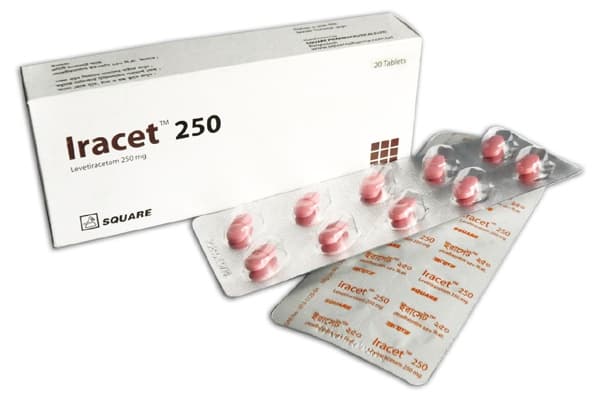
Iracet 250 mg Tablet is available on MedEasy for ৳147.20 per 10's Strip, with home delivery anywhere in Bangladesh. It is manufactured by Square Pharmaceuticals PLC. Its generic name is Levetiracetam.

Iracet is a broad-spectrum antiepileptic drug used in the treatment of several seizure types, either alone or together with other antiseizure medicines. Indications are classified below by strength of evidence.
The decision to use Iracet for a particular seizure type should be individualized by a treating physician based on seizure classification and patient factors.
Levetiracetam is available as immediate-release tablets (250 mg, 500 mg, 750 mg, 1000 mg), extended-release tablets, an oral solution (100 mg/mL), and a sterile solution for intravenous infusion (100 mg/mL) for patients temporarily unable to take oral therapy.
Iracet is a pyrrolidone-derivative antiepileptic drug (AED) chemically unrelated to older anticonvulsants. It is used to control certain types of seizures in people with epilepsy and works through a mechanism distinct from most other antiseizure drugs, binding to a synaptic vesicle protein involved in neurotransmitter release.
Antiepileptic drug (AED) / Anticonvulsant - pyrrolidone derivative class.
The precise mechanism by which Levetiracetam exerts its antiepileptic effect is not completely understood. It binds to synaptic vesicle protein 2A (SV2A) in the brain, which is thought to modulate synaptic neurotransmitter vesicle release and contribute to its antiseizure activity. Unlike many older AEDs, it does not significantly affect voltage-gated sodium channels or GABAergic transmission.
| Indication | Population | Dosing |
|---|---|---|
| Partial-onset seizures (monotherapy) | Adults & adolescents ≥16 years | Start 500 mg twice daily; may increase every 2 weeks by 500 mg twice daily to a maximum of 1500 mg twice daily |
| Partial-onset seizures (adjunctive) | Adults | Start 500 mg twice daily; increase by 500 mg twice daily every 2 weeks as needed, maximum 1500 mg twice daily |
| Partial-onset seizures (adjunctive) | Children 1 month - <16 years | Weight-based dosing starting at 7-10 mg/kg twice daily, titrated gradually to a maximum of 21-30 mg/kg twice daily depending on age; a physician/pediatric neurologist must individualize this |
| Myoclonic seizures (adjunctive) | Patients ≥12 years | Start 500 mg twice daily; may increase by 500 mg twice daily every 2 weeks up to 1500 mg twice daily |
| Primary generalized tonic-clonic seizures (adjunctive) | Patients ≥6 years (weight-based in children) | Similar titration schedule as above, individualized by weight in children |
| Creatinine Clearance | Dose |
|---|---|
| >80 mL/min | 500-1500 mg every 12 hours |
| 50-79 mL/min | 500-1000 mg every 12 hours |
| 30-49 mL/min | 250-750 mg every 12 hours |
| <30 mL/min | 250-500 mg every 12 hours |
| Hemodialysis patients | 500-1000 mg once daily, plus a supplemental dose of 250-500 mg after each dialysis session |
Iracet must never be stopped abruptly (see Precautions). All doses above should be adjusted or confirmed by the prescribing physician.
Tablets and extended-release tablets should be swallowed whole with water and not crushed or chewed (for extended-release forms); may be taken with or without food. The oral solution can be measured with an appropriate dosing device. The intravenous formulation is administered as a diluted infusion over approximately 15 minutes by a healthcare professional, typically as a temporary alternative when oral intake is not possible, at the same total daily dose. If a dose is missed, it should be taken as soon as remembered unless it is nearly time for the next dose; doses should not be doubled.
Iracet has a low potential for drug interactions because it is not significantly metabolized by, nor does it inhibit or induce, cytochrome P450 hepatic enzymes. Clinically significant interactions are uncommon, but the following are noted:
No clinically significant interactions have been demonstrated with oral contraceptives, warfarin, digoxin, phenytoin, valproate, or other commonly co-administered drugs.
Levetiracetam is contraindicated in patients with known hypersensitivity to levetiracetam, to other pyrrolidone derivatives, or to any excipient in the formulation. Hypersensitivity reactions including anaphylaxis and angioedema have been reported.
| Population | Common Adverse Effects |
|---|---|
| Adults | Somnolence, asthenia (weakness/fatigue), infection, dizziness, headache, irritability |
| Children | Fatigue, aggression, nasal congestion, decreased appetite, irritability, behavioral changes |
Patients should seek prompt medical attention for any rash, swelling, breathing difficulty, or unusual bleeding/bruising.
Iracet should be used during pregnancy only if clearly needed and if the potential benefit to the mother justifies the potential risk to the fetus - this decision should always be made in consultation with a physician. Animal reproduction studies have shown adverse fetal effects at doses relevant to human use, and adequate, well-controlled human studies are limited. However, published pregnancy registry and cohort data on more than a thousand first-trimester exposures with Iracet monotherapy have not shown a substantially increased risk of major birth defects compared with the general population, and it is among the more commonly used antiepileptic drugs during pregnancy - though a teratogenic risk cannot be completely excluded. Uncontrolled seizures during pregnancy also carry risks to mother and fetus, so antiepileptic therapy is generally not stopped without medical advice. Plasma levels of Iracet may decrease during pregnancy, and dose/monitoring adjustments may be needed by the treating physician.
Iracet is excreted into breast milk. A decision on breastfeeding should weigh the benefits of breastfeeding against the infant's potential drug exposure, and should be made with a physician, with the infant monitored for sedation or feeding difficulties if breastfeeding while using Iracet.
Symptoms of Iracet overdose may include drowsiness, agitation, aggression, reduced level of consciousness, respiratory depression, and coma. There is no specific antidote. If an overdose is suspected, seek immediate medical attention or contact emergency services/poison control right away. Treatment is supportive; standard hemodialysis can remove a significant amount of the drug (approximately 50% over about 4 hours) and may be considered in severe cases, particularly with reduced kidney function.
Store at room temperature (below 30°C), away from light and moisture. Keep out of reach of children.
Duration of treatment with Iracet is individualized and determined by the treating physician based on seizure control, seizure type, and overall clinical course; it is often long-term. Any decision to reduce the dose or stop Iracet must be made gradually and under medical supervision, never abruptly, due to the risk of rebound seizures.
Antiepileptic drugs (AEDs); Anticonvulsants; Pyrrolidone derivatives; SV2A ligands.
Levetiracetam binds to synaptic vesicle protein 2A (SV2A) in presynaptic nerve terminals, which is believed to modulate neurotransmitter vesicle release and dampen excessive, synchronized neuronal firing that underlies seizure activity. Its exact antiepileptic mechanism is not fully established, and it differs mechanistically from most other antiseizure medicines.
Category C
Iracet is approved for adjunctive treatment of partial-onset seizures in children as young as 1 month, using weight-based dosing with gradual titration. It is approved for adjunctive treatment of primary generalized tonic-clonic seizures from age 6 and adjunctive treatment of myoclonic seizures from age 12. Behavioral side effects such as aggression, irritability, and mood changes are more common in children than adults, and caregivers should monitor closely and report any such changes. Safety and efficacy for indications or ages outside those specifically studied and approved have not been established.
Q: What is Iracet 250 mg Tablet used for?
A: Iracet 250 mg Tablet is an antiepileptic (anticonvulsant) medicine used to treat certain types of seizures, including partial-onset seizures, myoclonic seizures, and primary generalized tonic-clonic seizures, either alone or together with other antiseizure medicines.
Q: Can I stop taking Iracet 250 mg Tablet suddenly if I feel better?
A: No. Iracet 250 mg Tablet should never be stopped abruptly, as doing so can cause seizures to return more frequently or trigger a dangerous prolonged seizure (status epilepticus). Any dose change must be done gradually and only under a physician's guidance.
Q: Does Iracet 250 mg Tablet cause mood or behavior changes?
A: Yes, behavioral and psychiatric side effects such as irritability, aggression, agitation, depression, and rarely suicidal thoughts have been reported with Iracet 250 mg Tablet, particularly in children. Patients and caregivers should watch for new or worsening mood or behavior changes and report them to a physician promptly, especially early in treatment.
Q: Is Iracet 250 mg Tablet safe during pregnancy?
A: Iracet 250 mg Tablet should be used in pregnancy only if clearly needed, with the decision made together with a physician, since a small risk to the fetus cannot be completely excluded. However, available pregnancy registry data on Iracet 250 mg Tablet have not shown a substantially increased risk of major birth defects, and it is one of the more commonly used antiepileptic drugs in pregnancy. Uncontrolled seizures also pose risks, so treatment is usually continued under close medical supervision rather than stopped.
Q: Do I need a lower dose of Iracet 250 mg Tablet if I have kidney problems?
A: Yes. Because Iracet 250 mg Tablet is eliminated mainly by the kidneys, patients with reduced kidney function need a lower dose or longer interval between doses, and patients on hemodialysis need a supplemental dose after each dialysis session. Your physician will adjust the dose based on your kidney function.
Q: What should I do if I miss a dose of Iracet 250 mg Tablet?
A: Take the missed dose as soon as you remember, unless it is almost time for your next dose - in that case, skip the missed dose and continue your regular schedule. Do not take a double dose. Missing doses of Iracet 250 mg Tablet can increase the risk of breakthrough seizures, so try to take it consistently as prescribed.
Disclaimer
The information provided is accurate to the best of our knowledge, but it does not replace professional medical advice. We cannot guarantee its completeness or accuracy, and the absence of specific information about a drug should not be taken as an endorsement. We are not responsible for any consequences arising from this information, so please consult a healthcare professional for any concerns or questions.