
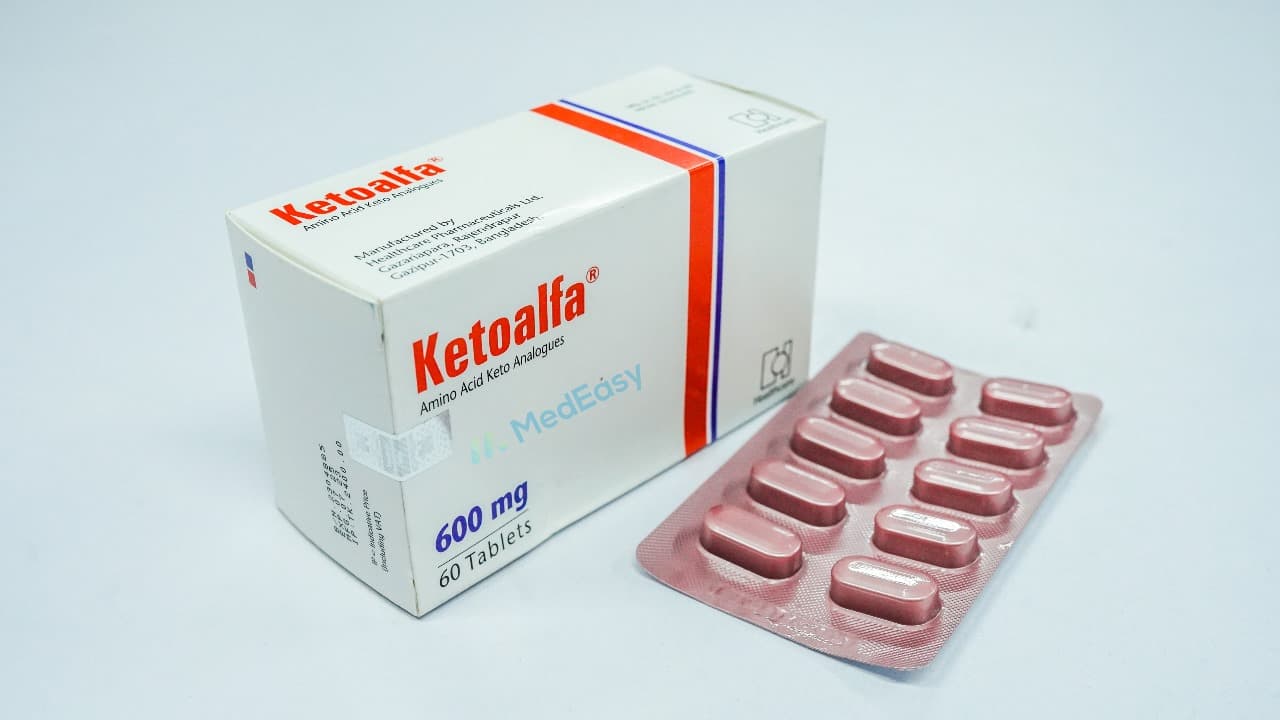

Medicine overview
Indications of Ketoalfa
Ketoalfa is a specialized nutritional supplement, not a conventional pharmacological drug. Its use is supported by nephrology clinical practice guidelines (e.g., KDOQI, ESPEN) as an adjunct to dietary protein restriction in chronic kidney disease (CKD).
Guideline-supported / established use
- Adjunct to a supervised very-low-protein diet (0.3–0.6 g protein/kg/day) in adults with non-dialysis-dependent CKD (typically stage 4–5), to supply essential amino acid equivalents while reducing dietary nitrogen and protein-derived metabolic waste, and to help preserve nutritional status and potentially slow progression toward dialysis.
- Adjunct nutritional support in dialysis patients (hemodialysis or peritoneal dialysis) with protein-energy wasting, used together with an individualized protein-controlled diet under a renal dietitian's supervision.
Requires combination therapy / structured dietary plan
Ketoalfa is only effective and appropriate when combined with a carefully calculated, individualized low-protein diet designed and monitored by a nephrology and renal-dietitian team. It is not intended as a standalone product or as a substitute for standard protein intake without such supervision.
Not established / not appropriate
Ketoalfa is not indicated for general nutritional supplementation, for patients without significant chronic kidney disease, for acute kidney injury without specialist guidance, or as a substitute for dialysis or other standard renal replacement therapy.
Composition
Amino acid keto analogues typically contains calcium salts of the keto/hydroxy analogues of certain branched-chain and aromatic essential amino acids (analogues of leucine, isoleucine, valine, and phenylalanine, and of methionine), combined with select essential amino acids that cannot be produced by transamination (such as lysine, threonine, tryptophan, histidine) and tyrosine, along with a calcium component. Exact composition and strength per tablet vary by manufacturer/brand; refer to the specific product label for the precise quantitative formula.
Description
Ketoalfa is a nitrogen-free (or nitrogen-reduced) preparation of the keto/hydroxy acid analogues of several essential amino acids, combined with a small number of essential amino acids and calcium. These keto/hydroxy analogues lack the amino group of the parent amino acid; in the body they can be converted into the corresponding essential amino acid through transamination, a process that consumes nitrogen from the body's own metabolic nitrogen/urea pool rather than adding new dietary nitrogen.
This mechanism allows patients with chronic kidney disease to follow a very-low-protein diet — which reduces the generation of nitrogenous waste products and the workload on failing kidneys — while still meeting their essential amino acid requirements and helping to maintain adequate nutritional status. Ketoalfa is always used as part of a structured, physician- and dietitian-supervised low-protein diet program, not as an isolated supplement.
Therapeutic Class
Ketoalfa belongs to the class of renal-specific nutritional supplements, specifically essential amino acid and ketoacid/hydroxy-acid analogue preparations used as an adjunct to protein-restricted diets in chronic kidney disease.
Pharmacology
Mechanism of action
Amino acid keto analogues supplies the carbon-skeleton (keto/hydroxy acid) analogues of several essential amino acids instead of the intact amino acids themselves. In vivo, these analogues undergo reversible transamination, in which an amino group is transferred from another amino acid (using nitrogen that would otherwise be excreted as urea) onto the keto-acid skeleton, regenerating the corresponding essential amino acid (e.g., the keto analogue of leucine is converted to leucine).
This allows the body's essential amino acid pool to be replenished with markedly less dietary nitrogen intake than would be required from intact protein or amino acids, thereby reducing production of nitrogenous waste products (urea, and other metabolites) that must be cleared by the kidneys, while still supporting protein synthesis and nutritional status.
Pharmacokinetics
The keto/hydroxy acid analogues are absorbed from the gastrointestinal tract and undergo transamination mainly in the liver, kidney, and muscle. The calcium salt component is also absorbed and contributes to the body's calcium pool, which is relevant to monitoring in patients with renal bone disease.
Dosage & Administration of Ketoalfa
By indication
| Indication | Typical adult dosing |
|---|---|
| Adjunct to very-low-protein diet in non-dialysis CKD (adults) | Commonly around 1 tablet per 5 kg body weight per day, given in divided doses with meals (e.g., a 60–75 kg adult may take approximately 4–8 tablets, three times daily with meals) — exact dose individualized by the treating nephrologist/dietitian based on body weight, residual renal function, and protein intake. |
| Adjunct nutritional support in dialysis patients | Dose individualized by the nephrology/renal-dietitian team based on nutritional status, dialysis modality, and dietary protein allowance; generally similar per-kg dosing principles as above, adjusted to the patient's diet plan. |
Pediatric dose
Not established for routine use; see Pediatric Uses / Use in Special Populations.
Renal/hepatic adjustment
Ketoalfa is specifically formulated for use in chronic kidney disease and its dose is titrated according to the degree of renal impairment and the prescribed protein-restricted diet rather than by a separate fixed renal-dose adjustment scale. No well-established hepatic dose adjustment has been defined; use with caution and specialist input in significant hepatic impairment.
Administration of Ketoalfa
Ketoalfa tablets should be swallowed whole with meals (not chewed or crushed unless the specific product labeling states otherwise), divided across the main meals of the day to coincide with dietary protein intake. It should always be taken as part of the individualized low-protein diet plan prescribed by the treating physician and renal dietitian, and not on an as-needed basis.
Interaction of Ketoalfa
- Calcium-containing products and vitamin D analogues: Ketoalfa contains a calcium component; co-administration with other calcium supplements, calcium-based phosphate binders, or vitamin D/active vitamin D analogues can increase the risk of hypercalcemia, particularly in patients with renal bone disease. Serum calcium should be monitored by the treating renal team.
- Tetracyclines and fluoroquinolone antibiotics: the calcium content of Ketoalfa can chelate these antibiotics in the gastrointestinal tract and reduce their absorption/efficacy; separate dosing times (e.g., by at least 2–3 hours) when co-administration is necessary.
- Oral levothyroxine and oral bisphosphonates: calcium can reduce the absorption of these drugs; separate administration times are advised.
Contraindications
- Known hypersensitivity to Amino acid keto analogues or any component of the formulation.
- Pre-existing hypercalcemia.
- Inborn or acquired disorders of amino acid metabolism unrelated to the intended chronic-kidney-disease, low-protein-diet indication (e.g., certain metabolic disorders where these specific amino acid/ketoacid loads would be inappropriate).
- Clinical situations in which a very-low-protein diet would itself be inappropriate or unsafe without careful nephrology/dietitian supervision (e.g., significant protein-energy malnutrition without a properly structured supervised diet plan).
Side Effects of Ketoalfa
Ketoalfa is generally well tolerated when used correctly as part of a supervised diet. Reported effects include:
- Common: mild gastrointestinal discomfort, nausea, or epigastric fullness, especially if not taken with meals.
- Uncommon: hypercalcemia (related to the calcium content — see Interactions and Precautions), which may present with symptoms such as nausea, constipation, fatigue, or confusion if significant.
- Rare: hypersensitivity reactions to a component of the formulation.
Pregnancy & Lactation
Data on the use of Ketoalfa in pregnancy and lactation are limited. Because pregnancy and lactation substantially increase protein and essential nutrient requirements, a very-low-protein diet combined with Ketoalfa is generally not appropriate in these situations without specific, individualized guidance from an obstetric and nephrology specialist team. Ketoalfa should be used in pregnancy or breastfeeding only if clearly needed and specifically directed by the treating specialists, who will weigh the potential benefit against potential risk to the mother, fetus, or infant, and adjust the dietary/nutritional plan accordingly. Patients should always consult their physician before use in these situations.
Precautions & Warnings
- Ketoalfa must be used only as part of a carefully calculated, individualized low-protein diet plan designed and supervised by a nephrology physician and renal dietitian team — it is not a substitute for standard protein intake and should not be started or adjusted without proper medical dietary planning.
- Some formulations contain a significant calcium load; this requires monitoring in the context of renal bone disease and any concurrent calcium or vitamin D therapy, because of the risk of hypercalcemia if these are combined without oversight (see Interactions).
- Regular monitoring of nutritional status, adequacy of protein intake, and relevant laboratory parameters (e.g., serum albumin, electrolytes, calcium, phosphate) by the treating renal care team is required throughout treatment.
- Not generally appropriate for children, pregnant or breastfeeding women, or acutely ill patients (e.g., acute illness, sepsis, acute kidney injury) without specific specialist guidance, since protein and nutrient needs are altered in these situations (see Pediatric Uses, Pregnancy and Lactation).
Overdose Effects of Ketoalfa
Specific overdose data for Ketoalfa are limited. Because of its calcium content, excessive intake beyond the prescribed dose could theoretically increase the risk of hypercalcemia, with symptoms such as nausea, vomiting, constipation, muscle weakness, confusion, or, in severe cases, cardiac rhythm disturbance. If an overdose is suspected, or if symptoms suggestive of hypercalcemia occur, seek immediate medical attention or contact a poison control center rather than attempting to manage this at home; the treating team may check serum calcium and other relevant parameters and manage accordingly.
Storage Conditions
Store at room temperature (below 30°C), away from light and moisture. Keep out of reach of children.
Use In Special Populations
- Renal impairment: Ketoalfa is specifically indicated for use in chronic kidney disease as part of a supervised low-protein diet; dosing is individualized to the stage of renal impairment and dietary plan (see Dosage and Administration).
- Hepatic impairment: no well-established dose adjustment; use with caution and specialist supervision.
- Elderly: no specific dose adjustment beyond individualization by body weight and renal status is established; monitor nutritional and calcium status as in other adults.
- Pediatric patients: not generally recommended; safety and efficacy not established for routine use — see Pediatric Uses.
- Pregnancy and lactation: use only under specific specialist guidance — see Pregnancy and Lactation.
- Acutely ill patients: not appropriate without specific specialist guidance, as protein and nutrient needs are altered during acute illness.
Duration Of Treatment
Ketoalfa is typically used long-term, for as long as the patient remains on a supervised very-low-protein diet for chronic kidney disease (which may be an extended or indefinite period until dialysis or transplantation, or as otherwise directed). The treating nephrology/renal-dietitian team should periodically reassess the ongoing need, dose, and dietary plan based on renal function, nutritional status, and laboratory monitoring.
Drug Classes
Renal-specific nutritional supplements; essential amino acid and ketoacid/hydroxy-acid analogue preparations
Mode Of Action
Amino acid keto analogues provides the keto/hydroxy acid (nitrogen-free) analogues of several essential amino acids. These are converted into the corresponding essential amino acids in the body via transamination, using nitrogen recycled from the body's own amino acid pool rather than from additional dietary protein. This supplies essential amino acids needed for protein synthesis and nutrition while allowing dietary protein and nitrogen intake to be reduced, thereby lowering the production of nitrogenous waste that the impaired kidneys must excrete.
Pediatric Uses
The safety and efficacy of Ketoalfa have not been well established for routine use in children. Use in pediatric patients with chronic kidney disease is generally not recommended outside of specialized pediatric nephrology and renal-dietitian care, because children have distinct and evolving protein and nutrient requirements for growth; any use in this population should be individualized and closely supervised by a pediatric renal specialist team.
Frequently Asked Questions
Q: What is Ketoalfa 600 mg Tablet used for?
A: Ketoalfa 600 mg Tablet is a specialized nutritional supplement used together with a carefully supervised, very-low-protein diet in patients with chronic kidney disease. It supplies essential amino acids in a nitrogen-sparing form, helping meet the body's amino acid needs while reducing the amount of nitrogenous waste the kidneys must handle.
Q: Can I take Ketoalfa 600 mg Tablet on my own without a special diet?
A: No. Ketoalfa 600 mg Tablet is only effective and safe when used as part of an individualized, physician- and dietitian-supervised low-protein diet plan. It is not a general protein or nutrition supplement and should not replace standard protein intake without proper medical dietary planning.
Q: Who should not take Ketoalfa 600 mg Tablet?
A: Ketoalfa 600 mg Tablet should not be used by anyone with known hypersensitivity to it or its components, by people with pre-existing hypercalcemia (high blood calcium), by those with unrelated disorders of amino acid metabolism, or in situations where a very-low-protein diet would be inappropriate without careful nephrology/dietitian supervision.
Q: Are there any special monitoring requirements while taking Ketoalfa 600 mg Tablet?
A: Yes. Because some formulations of Ketoalfa 600 mg Tablet contain calcium, regular monitoring of serum calcium is important, especially if you are also taking calcium supplements or vitamin D, due to the risk of hypercalcemia. Your renal care team will also monitor your nutritional status, protein intake adequacy, and laboratory parameters such as albumin and electrolytes.
Q: Is Ketoalfa 600 mg Tablet safe during pregnancy or breastfeeding?
A: Data are limited. Pregnancy and breastfeeding increase protein needs, so a very-low-protein diet with Ketoalfa 600 mg Tablet is generally not suitable in these situations unless a specialist team has specifically determined it is needed and that the potential benefit outweighs potential risk. Always consult your physician before use if you are pregnant or breastfeeding.
Q: Can children use Ketoalfa 600 mg Tablet?
A: Safety and efficacy in children have not been well established for routine use. Ketoalfa 600 mg Tablet is generally not recommended for children with chronic kidney disease except under close supervision by a pediatric nephrology and renal-dietitian specialist team, given children's distinct protein and growth requirements.
Disclaimer
The information provided is accurate to the best of our knowledge, but it does not replace professional medical advice. We cannot guarantee its completeness or accuracy, and the absence of specific information about a drug should not be taken as an endorsement. We are not responsible for any consequences arising from this information, so please consult a healthcare professional for any concerns or questions.
