
10% Off
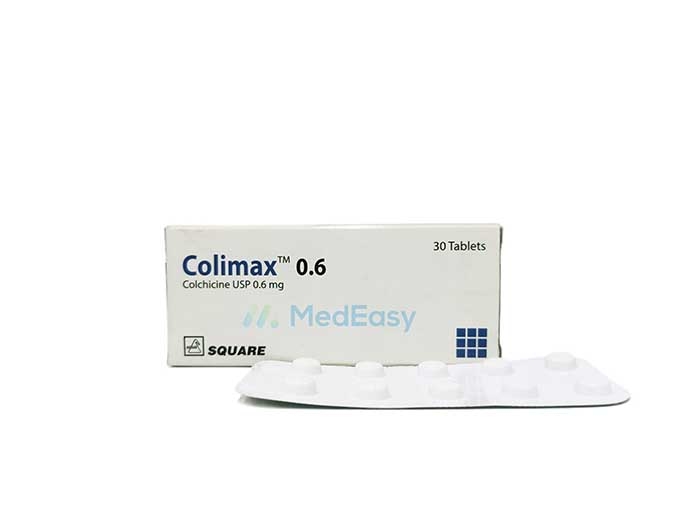
Colimax0.6 mg
Square Pharmaceuticals PLC.
৳54.00
Add to cart
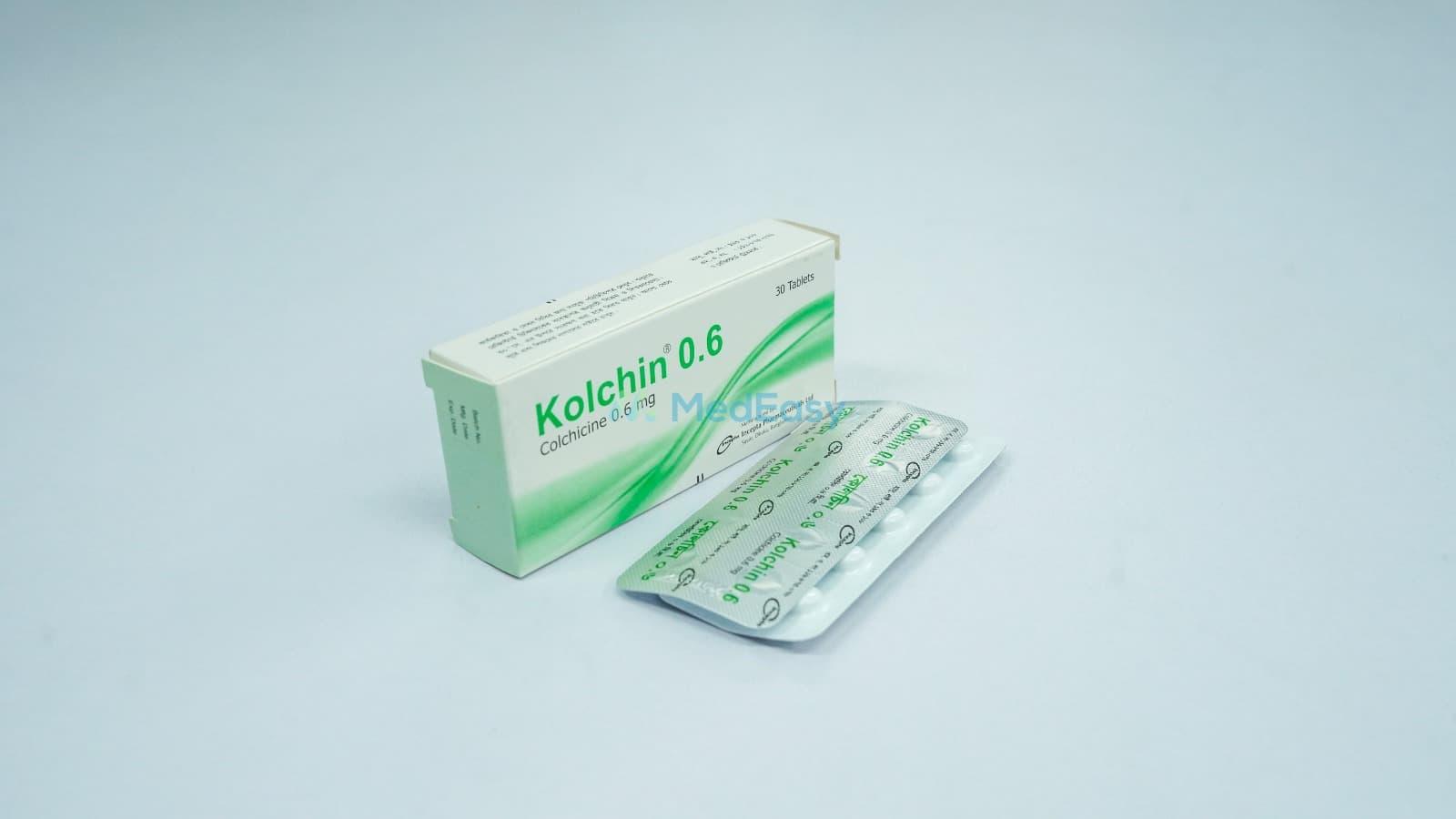

Kolchin is an anti-inflammatory agent (microtubule inhibitor) with the following evidence-based indications:
Kolchin should be used strictly under medical supervision because of its narrow therapeutic index.
Each tablet/capsule of Colchicine contains Colchicine as the active pharmaceutical ingredient, typically available in strengths such as 0.5 mg or 0.6 mg per tablet, along with standard pharmaceutical excipients. Please check the product label/pack insert of the specific brand for the exact strength and excipients.
Kolchin is an alkaloid derived from the plant Colchicum autumnale. It is a well-established anti-inflammatory medicine used mainly for gout and familial Mediterranean fever. Unlike NSAIDs or corticosteroids, Kolchin works by disrupting microtubule formation, which interferes with inflammatory cell activation, chemotaxis, and phagocytosis of urate crystals.
Kolchin has a narrow therapeutic index and carries a boxed warning for fatal overdose (see Overdose and Precautions sections), so it must be taken exactly as directed by a physician.
Kolchin belongs to the therapeutic class of anti-gout agents, specifically classified as an anti-inflammatory/anti-mitotic (microtubule inhibitor) agent. It is distinct from NSAIDs, corticosteroids, and urate-lowering agents (e.g., allopurinol, febuxostat), and is often used alongside or as an alternative to these depending on the clinical scenario.
Colchicine works by binding to intracellular tubulin, preventing its polymerization into microtubules. This action:
Colchicine does not affect uric acid metabolism or excretion; it does not lower serum uric acid levels and is not a substitute for urate-lowering therapy in chronic gout management.
Pharmacokinetics: Colchicine is absorbed orally, undergoes hepatic metabolism partly via CYP3A4, and is a substrate of P-glycoprotein (P-gp). It is eliminated via both hepatic and renal pathways, which is why drug interactions affecting CYP3A4/P-gp and renal/hepatic impairment significantly affect its safety (see Interactions and Contraindications).
| Indication | Typical Adult Dosing |
|---|---|
| Gout flare (acute treatment) | 1.2 mg at the first sign of a flare, followed by 0.6 mg one hour later (total 1.8 mg over 1 hour); do not repeat this regimen within 3 days unless directed by a physician. |
| Gout flare prophylaxis | 0.6 mg once or twice daily (maximum 1.2 mg/day), adjusted for renal/hepatic status and interacting medications. |
| Familial Mediterranean Fever (adults and children >12 years) | 1.2 to 2.4 mg daily, in one or two divided doses, titrated based on response and tolerability. |
| FMF (children 6-12 years) | 0.9 to 1.8 mg daily in divided doses. |
| FMF (children 4-6 years) | 0.3 to 1.8 mg daily in divided doses. |
Renal impairment: Use with caution; in severe renal impairment, reduce dose and monitor closely (e.g., prophylaxis may be reduced to 0.3 mg once daily or less frequently); avoid repeat gout-flare treatment courses within 14 days in severe impairment.
Hepatic impairment: Use with caution in mild-to-moderate impairment; dose reduction should be considered in severe hepatic impairment.
Concomitant use with P-glycoprotein or CYP3A4 inhibitors requires dose reduction or avoidance depending on the specific interacting drug and the patient's renal/hepatic function (see Interactions).
Kolchin may be taken with or without food. Swallow tablets whole; do not crush or split unless the product labeling specifically allows this.
Kolchin tablets should be swallowed with a glass of water, with or without food. Take doses at the same time(s) each day for prophylaxis or FMF use to maintain consistent blood levels. Do not take an extra or repeat dose for gout flare treatment within 3 days of a completed course unless instructed by a physician, due to the risk of cumulative toxicity.
Kolchin has a narrow therapeutic index, and interactions affecting its metabolism/transport can be life-threatening.
Drugs such as clarithromycin, ketoconazole, itraconazole, and ritonavir can markedly increase Kolchin blood levels (200-300% increase), raising the risk of severe or fatal toxicity. Concomitant use should be avoided or requires substantial dose reduction, especially in patients with renal or hepatic impairment.
Cyclosporine, ranolazine, and similar P-gp inhibitors increase Kolchin exposure; fatal interactions have been reported, particularly with cyclosporine. Concomitant use requires avoidance or major dose reduction.
Diltiazem, verapamil, erythromycin, and similar agents moderately increase Kolchin levels; dose adjustment and closer monitoring are recommended.
Concurrent use with statins (e.g., atorvastatin, simvastatin) or fibrates increases the risk of myopathy and rhabdomyolysis. Monitor for muscle pain, weakness, or dark urine.
Always inform your physician of all medicines you are taking before starting Kolchin.
Colchicine is contraindicated in:
This is not an exhaustive list of situations requiring caution; see Precautions and Warnings for conditions requiring dose adjustment or close monitoring rather than absolute avoidance.
The most commonly reported side effects of Kolchin involve the gastrointestinal tract:
Less common but serious adverse effects include:
Patients should seek prompt medical attention if severe or persistent diarrhea, unusual bruising/bleeding, muscle weakness/pain, or signs of infection occur while on Kolchin.
Pregnancy: Available published data on the use of Kolchin during pregnancy (largely from patients treated for FMF) have not shown an increased risk of major birth defects. However, animal reproduction studies have shown embryofetal toxicity at clinically relevant doses. Kolchin should be used during pregnancy only if the potential benefit justifies the potential risk to the fetus, and only under close physician supervision.
Lactation: Kolchin is present in breast milk, generally at concentrations similar to maternal serum. Published data have not shown adverse effects in breastfed infants, but caution is advised; discuss the risks and benefits of breastfeeding while taking Kolchin with your physician, and monitor the infant for gastrointestinal symptoms.
Fatal overdose has been reported with Kolchin, particularly when combined with P-glycoprotein or strong CYP3A4 inhibitors in patients with renal or hepatic impairment (see Interactions and Contraindications). Careful patient selection and dose adjustment are essential.
Because Kolchin has a narrow therapeutic index and is cleared via both renal and hepatic pathways, dose reduction and close monitoring are required in patients with renal or hepatic impairment, even without interacting drugs.
Elderly patients, especially those with reduced renal function, may have higher Kolchin blood levels and are at increased risk of toxicity; use the lowest effective dose and monitor closely.
Increased risk of myopathy/rhabdomyolysis when Kolchin is used with statins; monitor for muscle symptoms.
Long-term or excessive use of Kolchin may cause bone marrow suppression; periodic blood counts are recommended with chronic therapy.
Kolchin should never be shared with others and should be taken exactly as prescribed, since even modest excess dosing can be dangerous.
Overdose with Kolchin is a medical emergency and can be fatal, even at doses only modestly above the therapeutic range. Early symptoms (within the first 24 hours) typically include severe nausea, vomiting, diarrhea, and abdominal pain, which may be mistaken for a mild gastrointestinal illness. Without prompt treatment, this can progress over the following days to multi-organ failure, bone marrow suppression, cardiovascular collapse, and death.
If overdose of Kolchin is suspected, seek immediate emergency medical attention or contact a poison control center right away — do not wait for symptoms to worsen. There is no specific antidote; management is supportive and must occur in a hospital setting. Any gastrointestinal symptoms occurring during regular use of Kolchin should also prompt urgent reassessment of the dose by a physician, as they may be an early sign of toxicity.
Store at room temperature (below 30°C), away from light and moisture. Keep out of reach of children.
Renal impairment: Requires dose reduction and close monitoring; severe impairment substantially increases toxicity risk with Kolchin (see Dosage and Administration).
Hepatic impairment: Dose adjustment recommended, particularly in severe impairment.
Elderly: May require lower doses due to age-related decline in renal function and increased sensitivity to Kolchin toxicity.
Pediatric patients: Kolchin is approved for FMF in children 4 years of age and older, with age-based dosing. Safety and effectiveness for gout in pediatric patients have not been established.
Pregnant and breastfeeding women: See Pregnancy and Lactation section.
Duration of Kolchin therapy depends on the indication: acute gout flare treatment is a short course (up to 1.8 mg over about 1 hour, not repeated within 3 days); gout flare prophylaxis and FMF treatment are typically long-term/chronic, continued as directed by a physician with periodic monitoring of blood counts and renal/hepatic function.
Colchicine is classified as an anti-gout agent and anti-inflammatory (microtubule inhibitor); it is not an NSAID, corticosteroid, or urate-lowering agent.
Colchicine binds to tubulin and prevents microtubule polymerization, thereby inhibiting neutrophil migration, activation, and NLRP3 inflammasome-mediated interleukin-1β release, which reduces the acute inflammatory response associated with urate crystal deposition (gout) and with the dysregulated innate immune activation seen in FMF.
Kolchin is approved for the treatment of Familial Mediterranean Fever in children 4 years of age and older, with weight/age-based dosing (see Dosage and Administration). Long-term studies in FMF patients treated with Kolchin from a young age have not shown growth impairment.
The safety and effectiveness of Kolchin for the treatment of gout in pediatric patients have not been established, and it should not be used for this indication in children outside of specialist guidance.
Q: What is Kolchin 0.6 mg Tablet used for?
A: Kolchin 0.6 mg Tablet is mainly used to treat and prevent acute gout flares in adults and to treat Familial Mediterranean Fever in adults and children 4 years and older. It is sometimes used off-label, under a physician's direction, for conditions such as pericarditis.
Q: Can I take Kolchin 0.6 mg Tablet with other medicines?
A: Some medicines, particularly strong CYP3A4 inhibitors (such as clarithromycin or ketoconazole) and P-glycoprotein inhibitors (such as cyclosporine), can dangerously increase Kolchin 0.6 mg Tablet levels in the blood, especially if you have kidney or liver problems, and this combination can be fatal. Always tell your doctor about all medicines, including statins, that you are taking before starting Kolchin 0.6 mg Tablet.
Q: What should I do if I miss a dose of Kolchin 0.6 mg Tablet?
A: For regular prophylactic or FMF dosing, take the missed dose as soon as you remember unless it is almost time for your next dose, in which case skip the missed dose. Do not double the dose. For gout flare treatment, follow your physician's specific instructions, as this regimen is not meant to be repeated frequently.
Q: Is Kolchin 0.6 mg Tablet safe during pregnancy or breastfeeding?
A: Kolchin 0.6 mg Tablet should be used during pregnancy only if clearly needed and if the benefit justifies the potential risk to the baby; it is present in breast milk, so breastfeeding while taking Kolchin 0.6 mg Tablet should be discussed with your physician, who can weigh the risks and benefits for you and your infant.
Q: What are the signs of Kolchin 0.6 mg Tablet overdose or toxicity?
A: Early signs include severe nausea, vomiting, diarrhea, and abdominal pain. This can progress to life-threatening multi-organ failure if untreated. Overdose of Kolchin 0.6 mg Tablet is a medical emergency — seek immediate emergency care or contact poison control if overdose is suspected; do not attempt to manage it at home.
Q: Does Kolchin 0.6 mg Tablet lower uric acid levels?
A: No. Kolchin 0.6 mg Tablet reduces the inflammation caused by urate crystals but does not lower uric acid levels itself. It is often used alongside, not as a replacement for, urate-lowering medicines such as allopurinol in long-term gout management.
Disclaimer
The information provided is accurate to the best of our knowledge, but it does not replace professional medical advice. We cannot guarantee its completeness or accuracy, and the absence of specific information about a drug should not be taken as an endorsement. We are not responsible for any consequences arising from this information, so please consult a healthcare professional for any concerns or questions.

