
5% Off
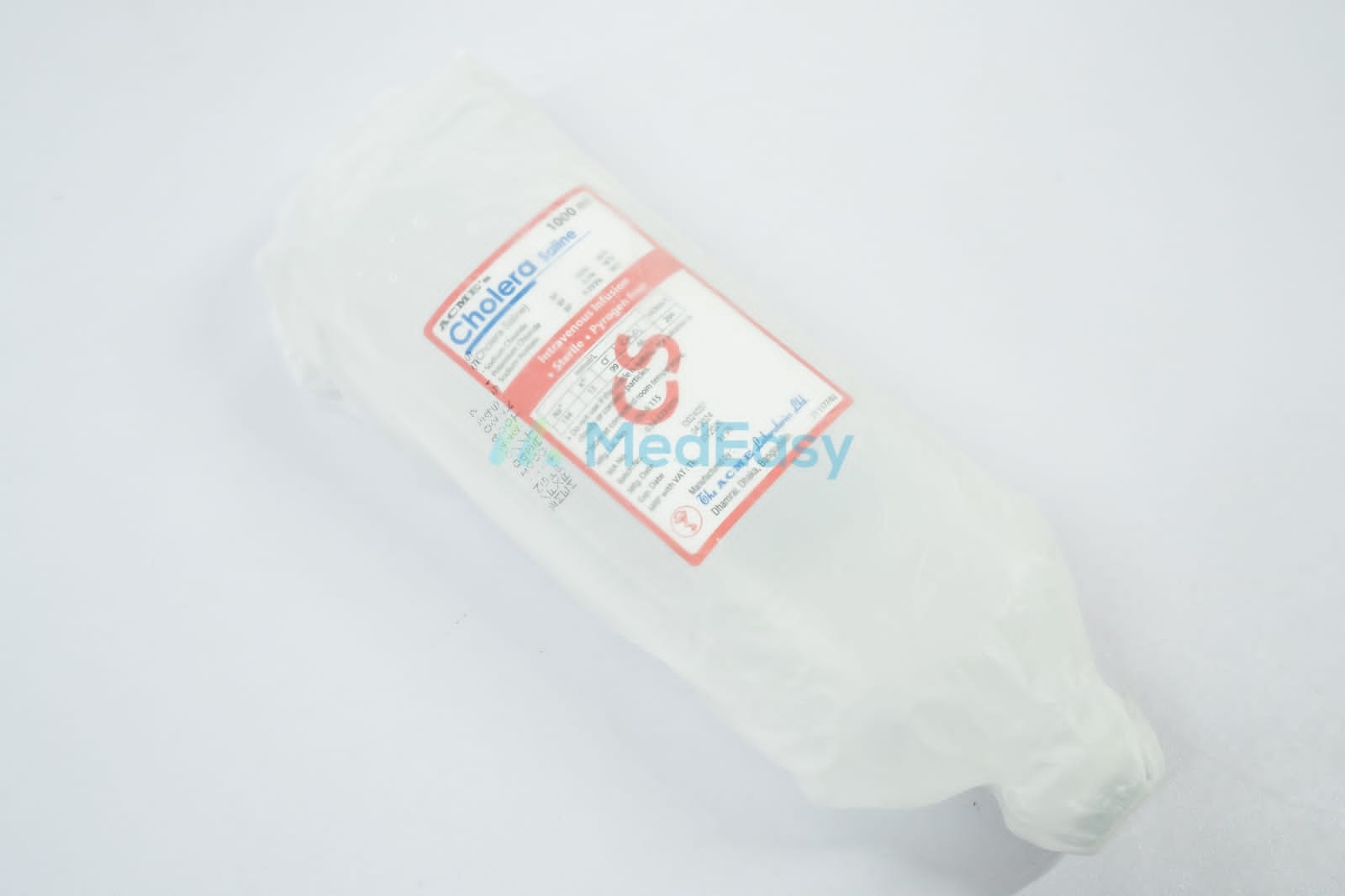
Cholera Saline
ACME Laboratories Ltd.
৳87.39
Add to cart


Koloride is an electrolyte-glucose rehydration therapy used to replace fluid and electrolyte losses caused by diarrhoeal illness. Its use is classified by strength of evidence as follows:
Each formulation of Cholera Saline is typically based on the WHO-recommended low-osmolarity oral rehydration salts (ORS) formula. A standard sachet, when dissolved in 1 litre of safe drinking water, provides approximately:
| Component | Approximate concentration |
|---|---|
| Sodium | 75 mmol/L (as sodium chloride) |
| Potassium | 20 mmol/L (as potassium chloride) |
| Chloride | 65 mmol/L |
| Citrate | 10 mmol/L (as trisodium citrate, or equivalent bicarbonate) |
| Glucose (anhydrous) | 75 mmol/L |
Exact salt content and excipients can vary slightly by manufacturer. Some presentations of Cholera Saline are supplied as a sterile intravenous electrolyte solution for severe dehydration, with sodium, potassium, chloride, and acetate/bicarbonate concentrations formulated to match fluid losses seen in cholera. Always check the specific product's label or pack insert for exact composition.
Koloride is a fluid and electrolyte replacement therapy rather than a conventional pharmacologic drug. It is formulated to replace the water, sodium, potassium, chloride, and bicarbonate/citrate lost in large amounts through watery diarrhoea and vomiting, most notably in cholera and other acute diarrhoeal illnesses. Koloride is available as an oral powder/solution (oral rehydration salts) for home and clinic use and, in some presentations, as a sterile solution for intravenous infusion in hospital for severe dehydration. It is a cornerstone of the World Health Organization's diarrhoeal disease management strategy and has substantially reduced diarrhoea-related mortality worldwide.
Koloride belongs to the therapeutic class of Oral/Intravenous Rehydration Salts – Fluid and Electrolyte Replenishers, used in the management of dehydration due to diarrhoeal disease.
Cholera Saline works through a physiological mechanism rather than a receptor-mediated drug action. Its glucose and sodium content exploits the intestinal sodium-glucose co-transporter (SGLT1), which remains functional even during severe secretory diarrhoea such as cholera. As sodium and glucose are absorbed together across the intestinal brush border, water is drawn passively along the resulting osmotic gradient, restoring hydration despite ongoing fluid losses. The potassium in Cholera Saline replaces losses from stool, and the citrate (or bicarbonate) component helps correct the metabolic acidosis commonly seen in dehydrated patients.
The following is general guidance; a physician's advice or the packaging instructions for the specific Koloride product should always be followed.
Dissolve the entire contents of one sachet of Koloride in the exact volume of clean, safe (boiled and cooled, or otherwise safe) drinking water stated on the pack — usually 200 mL, 500 mL, or 1 litre. Do not add sugar, salt, or other substances. Use the freshly prepared solution within 24 hours and discard any unused portion after that time.
| Situation | Recommended amount |
|---|---|
| No visible dehydration (prevention), under 2 years | 50–100 mL of Koloride solution after each loose stool |
| No visible dehydration (prevention), 2–10 years | 100–200 mL after each loose stool |
| No visible dehydration (prevention), over 10 years/adults | At least 200–400 mL after each loose stool, or as much as wanted |
| Some dehydration (first 4 hours) | Approximately 75 mL per kg body weight, given in small, frequent sips |
| Severe dehydration | Oral Koloride alone is inadequate; urgent intravenous fluid therapy under medical supervision is required, followed by oral Koloride once the patient can drink |
Continue breastfeeding and normal age-appropriate feeding throughout treatment with Koloride. Give small sips frequently, especially if vomiting occurs; if vomiting continues, wait about 10 minutes and resume more slowly. Seek medical care urgently for signs of severe dehydration such as lethargy, sunken eyes, very little or no urine, persistent vomiting, blood in the stool, or inability to drink.
Dissolve one sachet of Koloride completely in the exact amount of clean drinking water specified on the label — never estimate this amount. Give by spoon, cup, or oral syringe in small, frequent sips, especially to infants and young children; a nasogastric tube may be used in a clinical setting if the patient cannot drink but is not in shock. Do not mix Koloride with milk, juice, or other fluids, and do not add extra sugar or salt. Prepare a fresh batch every 24 hours and discard any leftover solution.
Koloride is not extensively metabolised and has few significant drug-drug interactions, but the following should be noted:
True absolute contraindications to Cholera Saline are limited:
Milder concerns such as renal impairment, cardiac disease, or diabetes are precautions requiring dose adjustment and monitoring, not absolute contraindications (see Precautions and Warnings).
When Koloride is prepared and used correctly, side effects are uncommon. Reported effects include:
Koloride is a physiological fluid and electrolyte replacement and is generally considered appropriate for use during pregnancy and breastfeeding when there is a genuine need to treat or prevent dehydration, since untreated dehydration itself poses a risk to both mother and baby. As with any medicine or rehydration product, Koloride should be used only as clearly needed, prepared exactly as directed, and under medical advice during pregnancy, particularly if there is pre-eclampsia, kidney disease, or other complications. Breastfeeding should be continued alongside Koloride therapy, as recommended by WHO; there is no established need to interrupt breastfeeding.
Use Koloride with caution and under medical supervision in the following situations:
If Koloride is being used as part of treatment for suspected cholera, appropriate antibiotic therapy as prescribed by a physician, and infection-control/sanitation measures, should be pursued alongside rehydration; take any prescribed antimicrobial exactly as prescribed by your physician — do not stop, extend, skip doses, or share this medicine with others without medical advice.
Excessive or incorrectly prepared Koloride (for example, an over-concentrated solution or excessive intravenous administration) can cause hypernatremia, hyperkalemia, and fluid overload, which may present as swelling, difficulty breathing, irregular heartbeat, confusion, or seizures. If overdose or over-concentration of Koloride is suspected, stop administration and seek immediate medical attention or contact a poison control centre or emergency services. Treatment is supportive, with correction of fluid and electrolyte imbalance under medical supervision; do not attempt to self-treat a suspected overdose at home.
Store unmixed Koloride sachets/powder at room temperature (below 30°C), away from direct light and moisture. Once prepared, use the solution within 24 hours and discard any unused portion; refrigeration (not freezing) of the prepared solution can help keep it fresh within that 24-hour period. Keep out of reach of children.
Infants and young children: Koloride is a first-line treatment for dehydration at any age, including neonates, using age/weight-appropriate volumes and slow administration by spoon, cup, or dropper; breastfeeding should continue throughout.
Elderly patients: Generally safe, but should be monitored more closely for signs of fluid overload or electrolyte imbalance, especially with coexisting heart or kidney disease.
Renal impairment: Use with caution and medical supervision; risk of hyperkalemia and fluid overload; dose and monitoring must be individualised.
Hepatic impairment: No specific dose adjustment is well-established, but Koloride should still be used under medical guidance if there is associated fluid retention such as ascites.
Diabetes mellitus: Monitor blood glucose, as Koloride contains glucose.
Koloride is generally continued until diarrhoea and dehydration resolve and normal fluid intake and urine output are restored — typically for the duration of the diarrhoeal episode, often 2 to 5 days for acute gastroenteritis. It should be continued for the full course recommended by a physician in confirmed cholera or persistent diarrhoea, and any prescribed antibiotic course should be completed in full. Seek medical review if diarrhoea or the need for Koloride continues beyond a few days.
Dissolve the entire contents of one Koloride sachet completely in the exact volume of clean, safe drinking water printed on the pack (commonly 200 mL, 500 mL, or 1 litre) — using more or less water than specified changes the electrolyte concentration and can be harmful. Stir until fully dissolved, do not boil the solution after mixing, and use the prepared Koloride solution within 24 hours, discarding any unused portion after that time.
Cholera Saline belongs to the drug class of Oral Rehydration Salts (ORS) / Fluid, Electrolyte, and Glucose Replenisher, and, in intravenous form, the Electrolyte/Crystalloid Infusion Solution class.
Cholera Saline restores hydration by supplying glucose together with sodium in a ratio that drives active sodium-glucose co-transport (via the SGLT1 transporter) across the intestinal wall, a pathway that remains intact even during cholera toxin-mediated secretory diarrhoea. Water follows the resulting osmotic gradient, correcting dehydration. The potassium and citrate/bicarbonate components of Cholera Saline replace electrolyte losses and correct the metabolic acidosis that commonly accompanies severe diarrhoea.
Koloride is a first-line, WHO/UNICEF-endorsed therapy for dehydration in children of all ages, including neonates and infants, when prepared and dosed correctly for age and body weight. It should be given in small, frequent amounts, especially to infants, using a spoon, cup, or dropper rather than a bottle with a fast-flowing teat, to reduce the risk of vomiting or aspiration. Breastfeeding and age-appropriate feeding should continue throughout treatment. In infants under 2 months, or any child with signs of severe dehydration, medical evaluation and possible intravenous therapy are required rather than relying on oral Koloride alone.
Q: What is Koloride IV Infusion used for?
A: Koloride IV Infusion is an oral (and, in some forms, intravenous) rehydration therapy used to prevent and treat dehydration caused by diarrhoea and vomiting, including diarrhoea due to cholera. It replaces the water, sodium, potassium, chloride, and other electrolytes lost in loose stools.
Q: How do I prepare and give Koloride IV Infusion correctly?
A: Dissolve one full sachet of Koloride IV Infusion in the exact amount of clean, safe drinking water stated on the pack — never more or less. Give small, frequent sips, especially to infants and young children, and continue breastfeeding if applicable. Use the prepared solution within 24 hours and discard any leftover after that.
Q: Can Koloride IV Infusion be given to infants and during pregnancy?
A: Yes. Koloride IV Infusion is considered a first-line treatment for dehydration at any age, including infants, when correctly prepared and dosed. During pregnancy and breastfeeding, Koloride IV Infusion should be used only as clearly needed for genuine dehydration and, ideally, under medical advice, since untreated dehydration itself carries risk; breastfeeding should continue alongside treatment.
Q: When should I stop oral Koloride IV Infusion and seek emergency care instead?
A: Seek urgent medical care immediately if there is persistent vomiting that prevents drinking, sunken eyes, very little or no urine output, unusual sleepiness or difficulty waking, blood in the stool, or an inability to drink at all — these indicate severe dehydration, possible intestinal obstruction, or shock, situations in which oral Koloride IV Infusion alone is not enough and intravenous fluid therapy is required.
Q: Are there any side effects or risks with Koloride IV Infusion?
A: When mixed and used correctly, Koloride IV Infusion is very safe. Occasional nausea, vomiting if drunk too fast, or bloating can occur. Preparing it with too little water, using excessive intravenous amounts, or using potassium-containing formulations in someone with kidney failure or anuria can cause serious problems such as hypernatremia, hyperkalemia, or fluid overload, so always follow the exact preparation instructions and medical advice, especially in people with kidney or heart disease.
Q: Does Koloride IV Infusion interact with other medicines?
A: Koloride IV Infusion has few significant drug interactions. However, if it contains potassium, using it together with potassium-sparing diuretics, ACE inhibitors, ARBs, or other medicines that raise potassium levels can increase the risk of hyperkalemia, particularly in people with kidney problems. Tell your doctor about all medicines you take before starting Koloride IV Infusion.
Disclaimer
The information provided is accurate to the best of our knowledge, but it does not replace professional medical advice. We cannot guarantee its completeness or accuracy, and the absence of specific information about a drug should not be taken as an endorsement. We are not responsible for any consequences arising from this information, so please consult a healthcare professional for any concerns or questions.

