10% Off
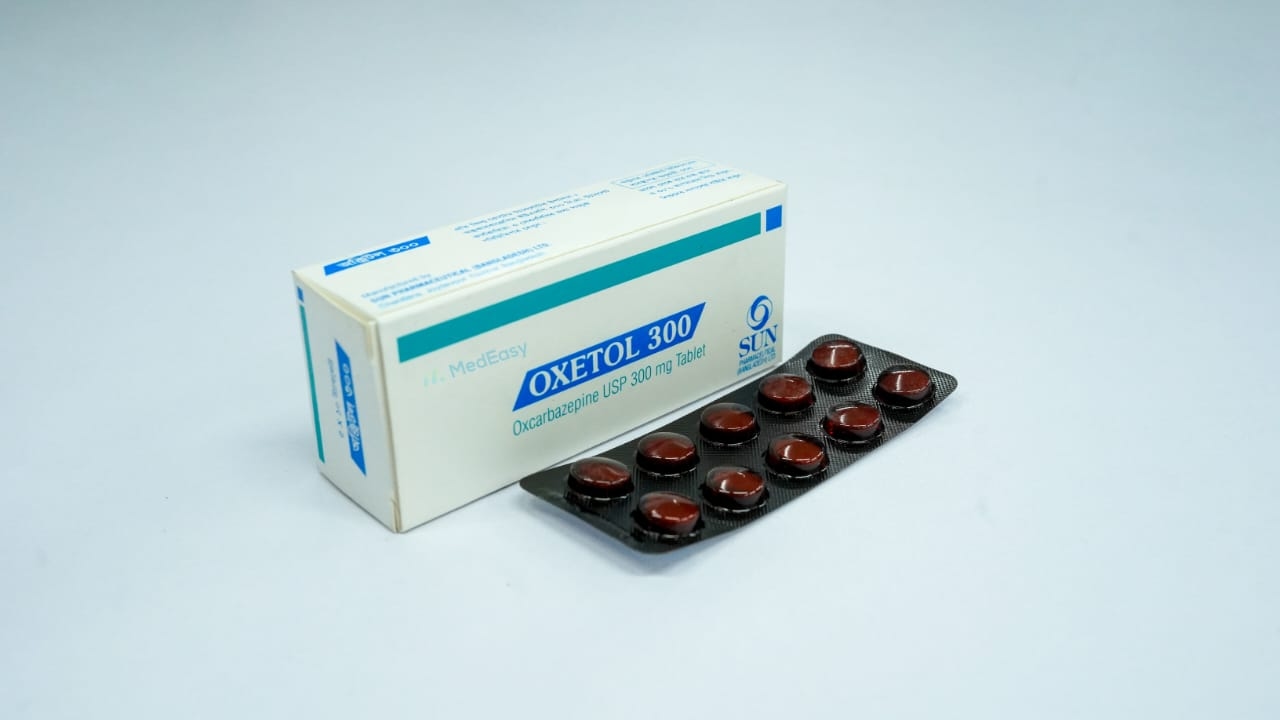
Oxetol300 mg
Sun Pharmaceutical Ltd.
৳135.00
Add to cart


Leptal is an anticonvulsant (antiepileptic) medicine indicated for the treatment of partial-onset (focal) seizures.
Use of Leptal for any indication should be guided and monitored by a physician.
Each tablet/oral suspension of Oxcarbazepine contains Oxcarbazepine as the active ingredient. Oxcarbazepine is commonly available as film-coated tablets (e.g. 150 mg, 300 mg, 600 mg) and as an oral suspension (e.g. 300 mg/5 mL) for patients who cannot swallow tablets.
Leptal is an anticonvulsant medicine chemically related to carbamazepine (it is the keto analog/derivative of carbamazepine).It is used to control partial-onset seizures in people with epilepsy, either alone or together with other antiepileptic medicines.
Leptal works by stabilizing over-excited nerve membranes in the brain, which reduces the abnormal electrical activity that causes seizures.It is largely converted in the body to an active metabolite (the 10-monohydroxy derivative, MHD) that is responsible for most of its effect.
Anticonvulsant / Antiepileptic drug (AED) - carboxamide/keto derivative related to carbamazepine. Leptal is classified as a voltage-gated sodium channel blocker.
Oxcarbazepine is a keto analog of carbamazepine. Its principal mechanism of action is thought to be blockade of voltage-sensitive sodium channels,which stabilizes hyperexcited neuronal membranes, inhibits repetitive neuronal firing, and reduces propagation of synaptic impulses.Oxcarbazepine and its main active metabolite (10-monohydroxy derivative, MHD) may also affect potassium conductance and modulate high-voltage activated calcium channels.
Pharmacokinetics: Oxcarbazepine is rapidly and almost completely absorbed after oral administration and is extensively metabolized by the liver(primarily by cytosolic enzymes, not the CYP450 system to a major extent) to its active metabolite, MHD, which is responsible for most of the pharmacological activity.MHD is further metabolized and excreted mainly by the kidneys. The elimination half-life of MHD is approximately 9 hours.
Initial dose: 300 mg twice daily. May be increased by up to 300 mg/day every third day to a target dose of 1200 mg/day, based on clinical response.
Initial dose: 300 mg twice daily, added to existing therapy. Increase by a maximum of 600 mg/day at approximately weekly intervals,to an achieved daily dose of 600-2400 mg/day, as needed and tolerated.
| Use | Dosing approach |
|---|---|
| Adjunctive therapy | Weight-based starting dose (approximately 8-10 mg/kg/day divided twice daily), titrated over about 2 weeks to a weight-based maintenance dose (higher mg/kg doses for lower body weights), as advised by the treating physician. |
| Monotherapy | Weight-based initial and maintenance dosing similar in principle to adjunctive therapy, individualized by the physician. |
In patients with creatinine clearance less than 30 mL/min, therapy should be started at half the usual starting dose (300 mg/day) with slower titration, due to reduced clearance of the active metabolite.
Leptal can be taken with or without food. Do not stop Leptal abruptly without medical advice, as this can increase the risk of seizures; dose reduction should be gradual (tapered) when discontinuing.
Leptal tablets should be swallowed whole with a sufficient amount of liquid; they may be taken with or without food.Leptal oral suspension should be shaken well before use and can be measured using an oral dosing syringe, taken directly or mixed in a small glass of water immediately before swallowing;it may also be taken with or without food. Tablets and oral suspension of Leptal may be interchanged at equal total daily doses.Do not change from tablets to suspension or vice versa without consulting the prescribing physician. Always take Leptal exactly as prescribed, at the same times each day.
Leptal has the following clinically significant drug interactions:
Always inform the physician about all other medicines being taken before starting Leptal.
Oxcarbazepine is contraindicated in patients with a known hypersensitivity to Oxcarbazepine or to any of its excipients.
Because Oxcarbazepine is chemically related to carbamazepine, patients who have had a hypersensitivity reaction to carbamazepine should be aware that cross-hypersensitivity to Oxcarbazepine occurs in a notable proportion of such patients (approximately one in four); Oxcarbazepine should not be used in patients with known hypersensitivity to carbamazepine unless the potential benefit is judged by the physician to outweigh the risk, with close monitoring.
Common side effects of Leptal include:
Hyponatremia (low blood sodium) is a notable and relatively common side effect of Leptal, more so than with many other anticonvulsants; it can occasionally be severe (see Precautions and Warnings).
Serious but less common side effects that require prompt medical attention include serious skin reactions (see Precautions and Warnings), multi-organ hypersensitivity reactions, and mood/behavioral changes including suicidal thoughts.
Leptal should be used during pregnancy only if clearly needed and if the potential benefit to the mother justifies the potential risk to the fetus; this decision should always be made in consultation with a physician.
Like other antiepileptic drugs, Leptal has been associated with an increased risk of congenital malformations when taken during pregnancy, although data suggest the risk profile may differ from some other anticonvulsants. Physicians may recommend folic acid supplementation before and during pregnancy in women taking Leptal. Antiepileptic therapy should generally not be stopped abruptly during pregnancy without medical advice, because uncontrolled seizures also carry risk to mother and fetus.
Leptal and its active metabolite pass into breast milk. Breastfeeding while taking Leptal should only be done after discussing the potential risks and benefits with a physician, with the infant monitored for drowsiness or poor feeding.
Leptal can cause clinically significant hyponatremia (serum sodium below 125 mmol/L in some cases). This risk is higher during the first few months of treatment, but can occur at any time. Serum sodium should be monitored in patients at higher risk (e.g. those on other medicines that lower sodium, or with kidney disease) and in anyone who develops symptoms such as nausea, headache, confusion, or worsening seizures while on Leptal.
Leptal can rarely cause serious dermatologic reactions, including Stevens-Johnson syndrome (SJS) and toxic epidermal necrolysis (TEN). Patients with the HLA-B*1502 allele (more common in certain Asian ancestries) who have a history of hypersensitivity to carbamazepine may be at increased risk given the structural similarity between the two drugs; genetic testing may be considered by the physician in at-risk patients before starting Leptal. Any new rash, blistering, mouth sores, or skin peeling while taking Leptal requires immediate medical evaluation and, typically, discontinuation of the drug.
Leptal has been associated with rare but serious multi-organ hypersensitivity reactions (including fever, rash, and involvement of organs such as the liver, kidneys, or blood) - sometimes called anticonvulsant hypersensitivity syndrome or DRESS. Treatment must be stopped immediately if such a reaction is suspected.
Overdose of Leptal may cause somnolence, dizziness, nausea, vomiting, ataxia, and, in severe cases, coma, hyponatremia, cardiac conduction abnormalities, or respiratory depression.
If an overdose of Leptal is suspected, seek immediate medical attention or contact emergency services / a poison control center right away. Do not attempt to treat an overdose at home. Management in a hospital setting is generally supportive (there is no specific antidote), and may include monitoring of vital signs, cardiac monitoring, correction of electrolyte disturbances, and general supportive care.
Store at room temperature (below 30°C), protected from light and moisture. Keep out of reach of children.
In patients with creatinine clearance below 30 mL/min, Leptal therapy should be initiated at half the usual starting dose with slower titration (see Dosage and Administration).
No dose adjustment is generally needed in mild-to-moderate hepatic impairment; Leptal has not been extensively studied in severe hepatic impairment, so caution and close monitoring are advised.
Elderly patients may be more susceptible to hyponatremia and dizziness/somnolence with Leptal; dose adjustment may be guided by renal function and clinical response.
See Pediatric Uses for age-specific information; safety and efficacy of Leptal have not been established in children below 4 years of age.
The duration of treatment with Leptal is individualized by the treating physician based on seizure control, response, and tolerability, and is typically long-term for chronic management of epilepsy.Leptal should not be stopped or the dose changed without medical advice, and any discontinuation should be done gradually (tapered) to reduce the risk of rebound seizures.
Anticonvulsants (antiepileptic drugs); Oxcarbazepine belongs to the carboxamide/keto-derivative class, structurally related to carbamazepine.
Oxcarbazepine and its active metabolite (MHD) primarily block voltage-gated sodium channels in neurons, stabilizing hyperexcitable nerve cell membranes,inhibiting repetitive neuronal firing, and reducing the spread of abnormal electrical impulses that cause seizures.It may also modulate calcium and potassium channel activity, contributing to its anticonvulsant effect. See Pharmacology for full detail.
C
Leptal is approved for use, as monotherapy or adjunctive therapy for partial seizures, in children 4 years of age and older, using weight-based dosing that is individualized and titrated by the treating physician.
Safety and efficacy of Leptal have not been established in children younger than 4 years of age.
Children and adolescents taking Leptal should be monitored for the same risks seen in adults, including hyponatremia, serious skin reactions, and mood/behavioral changes, as well as for growth and cognitive development during long-term therapy.
Q: What is Leptal 300 mg Tablet used for?
A: Leptal 300 mg Tablet is an anticonvulsant medicine used to treat partial-onset (focal) seizures in adults and children 4 years of age and older, either alone (monotherapy) or together with other antiepileptic medicines (adjunctive therapy).
Q: How should I take Leptal 300 mg Tablet?
A: Take Leptal 300 mg Tablet exactly as prescribed by your physician, at the same times each day, with or without food. Tablets should be swallowed whole with liquid; the oral suspension should be shaken well before measuring the dose. Do not stop Leptal 300 mg Tablet suddenly without medical advice, as this can increase the risk of seizures.
Q: Can Leptal 300 mg Tablet affect birth control pills?
A: Yes. Leptal 300 mg Tablet can reduce the effectiveness of hormonal contraceptives. Women taking Leptal 300 mg Tablet who wish to avoid pregnancy should discuss using an additional or alternative non-hormonal method of contraception with their physician.
Q: What is the most important side effect to watch for with Leptal 300 mg Tablet?
A: Leptal 300 mg Tablet can cause low blood sodium (hyponatremia), which is more common than with many other seizure medicines. Symptoms can include nausea, headache, confusion, or worsening seizures. Contact your physician if these occur, as blood sodium levels may need to be checked, especially early in treatment.
Q: Is Leptal 300 mg Tablet safe during pregnancy?
A: Leptal 300 mg Tablet should be used during pregnancy only if clearly needed and if your physician determines the benefit outweighs the potential risk to the baby, since antiepileptic drugs including Leptal 300 mg Tablet have been associated with an increased risk of birth defects. Do not stop Leptal 300 mg Tablet on your own if you become pregnant; talk to your physician, who may recommend folic acid supplementation.
Q: What should I do if I miss a dose of Leptal 300 mg Tablet or take too much?
A: If you miss a dose of Leptal 300 mg Tablet, take it as soon as you remember unless it is almost time for the next dose; do not double the dose. If you or someone else has taken too much Leptal 300 mg Tablet and shows symptoms such as severe drowsiness, unsteadiness, or loss of consciousness, seek immediate medical attention or contact emergency services / a poison control center right away.
Disclaimer
The information provided is accurate to the best of our knowledge, but it does not replace professional medical advice. We cannot guarantee its completeness or accuracy, and the absence of specific information about a drug should not be taken as an endorsement. We are not responsible for any consequences arising from this information, so please consult a healthcare professional for any concerns or questions.