
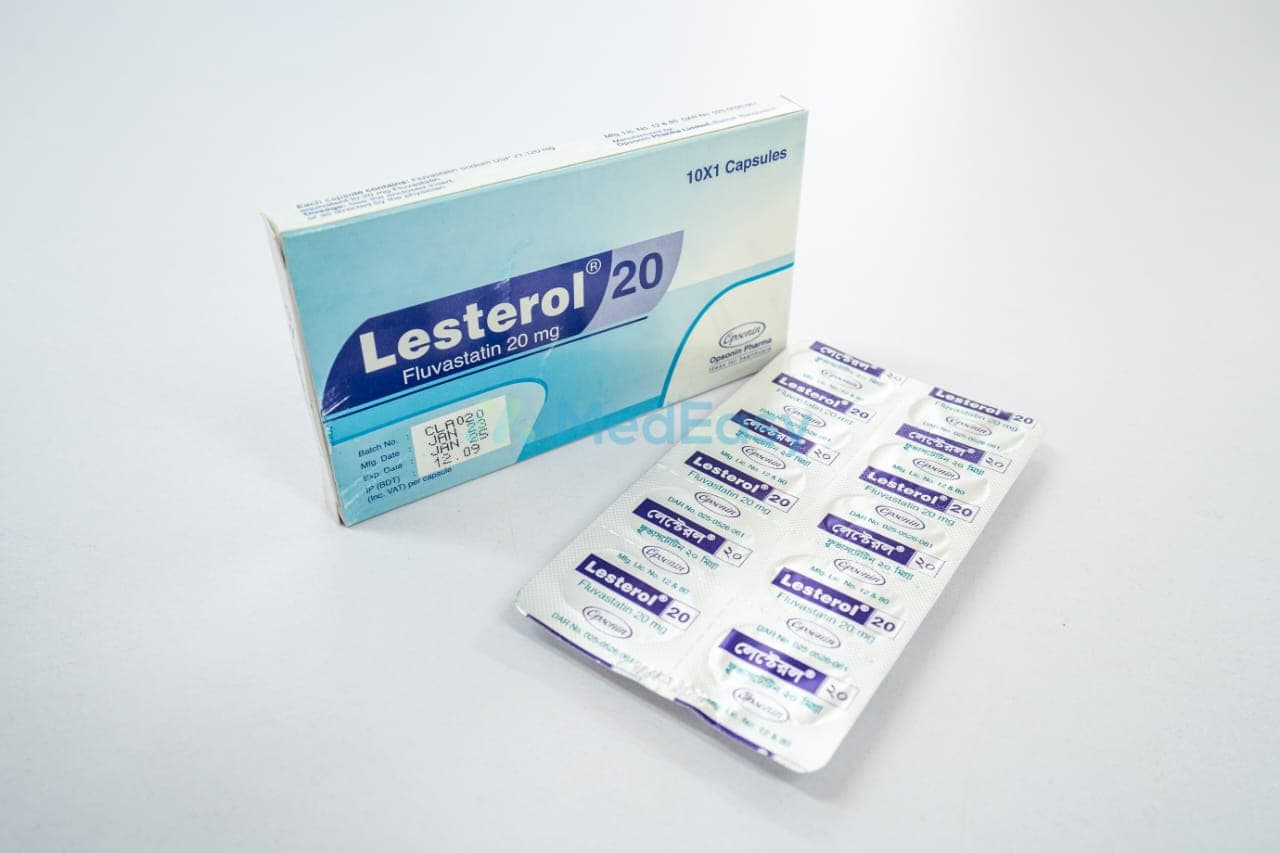

Medicine overview
Indications of Lesterol
Lesterol is a statin (HMG-CoA reductase inhibitor) indicated for the management of dyslipidemia and for reducing cardiovascular risk. Indications are classified below by strength of evidence.
Established / FDA-approved uses
- Primary hyperlipidemia and mixed dyslipidemia: Lesterol is indicated, as an adjunct to diet, to reduce elevated total cholesterol, LDL-cholesterol, apolipoprotein B, and triglycerides in adults with primary hypercholesterolemia (Fredrickson type IIa) and mixed dyslipidemia (type IIb).
- Slowing progression of coronary atherosclerosis: Lesterol is indicated to slow the progression of coronary atherosclerosis in patients with coronary heart disease as part of a treatment strategy that also lowers total-C and LDL-C.
- Reduction of risk of coronary revascularization procedures: Lesterol is indicated to reduce the risk of undergoing coronary revascularization procedures in patients with coronary heart disease.
- Heterozygous familial hypercholesterolemia (pediatric, ≥10 years): Lesterol is indicated, as an adjunct to diet, to reduce LDL-C in adolescents with heterozygous familial hypercholesterolemia who require the 80 mg dose.
Adjunct-therapy note
Lesterol is always intended to be used together with diet, exercise, and weight management as first-line measures; it is an adjunct to, not a replacement for, lifestyle modification.
Off-label use
Lesterol is occasionally used off-label for lipid management in select post-transplant patients (owing to fewer CYP3A4-mediated interactions with immunosuppressants than some other statins), but this is not an FDA-approved indication and should only be undertaken under specialist supervision.
Composition
Each tablet contains Fluvastatin (as fluvastatin sodium) in strengths typically available as 20 mg and 40 mg immediate-release capsules/tablets, and 80 mg extended-release tablets. Exact strengths and excipients vary by manufacturer and market; refer to the product-specific package insert for the complete list of inactive ingredients.
Description
Lesterol is a synthetic lipid-lowering agent belonging to the statin class. Unlike several other statins, Lesterol is a fully synthetic compound (not derived from a fungal fermentation product). It is used to lower elevated LDL-cholesterol and triglycerides and to raise HDL-cholesterol modestly, thereby reducing the risk of atherosclerotic cardiovascular events.
Lesterol is available in immediate-release and extended-release oral formulations and is generally taken once daily, in the evening for immediate-release forms.
Therapeutic Class
HMG-CoA reductase inhibitor (statin); antihyperlipidemic / lipid-lowering agent. Lesterol belongs to this class of drugs used to manage dyslipidemia and reduce cardiovascular risk.
Pharmacology
Mechanism of action
Fluvastatin competitively and reversibly inhibits HMG-CoA reductase, the rate-limiting enzyme that converts 3-hydroxy-3-methylglutaryl-coenzyme A to mevalonate, an early step in hepatic cholesterol biosynthesis. Reduced intracellular cholesterol synthesis leads to upregulation of hepatic LDL receptors, increasing the clearance of LDL-cholesterol from the circulation and lowering total-C, LDL-C, apolipoprotein B, and triglycerides, with a modest increase in HDL-C.
Pharmacokinetics
- Absorption: Rapidly and almost completely absorbed after oral dosing; extensive first-pass hepatic extraction limits systemic bioavailability (~24% for the immediate-release form).
- Distribution: Highly protein-bound (>98%).
- Metabolism: Primarily via hepatic CYP2C9, with minor contributions from CYP2C8 and CYP3A4; this CYP2C9-predominant pathway distinguishes Fluvastatin from statins that rely more heavily on CYP3A4.
- Elimination: Mainly via biliary/fecal excretion as metabolites; elimination half-life is short (approximately 1–3 hours for immediate-release, longer apparent duration of effect with the extended-release formulation).
Dosage & Administration of Lesterol
Dosage of Lesterol should be individualized according to the indication, baseline LDL-C, treatment goal, and patient response, with periodic lipid monitoring (e.g., at 4-week intervals) and dose adjustment as needed.
| Indication | Recommended dosing |
|---|---|
| Primary hyperlipidemia / mixed dyslipidemia (adults) | Initial: 20–40 mg once daily (immediate-release, in the evening) or 80 mg once daily (extended-release). Range: 20–80 mg/day, given once daily or as 40 mg twice daily if >40 mg/day of immediate-release is needed. |
| Slowing coronary atherosclerosis / reducing revascularization risk | 40 mg twice daily (immediate-release) or 80 mg once daily (extended-release). |
| Heterozygous familial hypercholesterolemia, adolescents ≥10 years | 80 mg once daily (extended-release only); do not initiate therapy directly with the extended-release 80 mg tablet — dose should first be titrated using an immediate-release formulation. |
Renal impairment
No dosage adjustment is generally required in mild-to-moderate renal impairment. Lesterol should be used with caution and at the lowest effective dose in patients with severe renal impairment, with close monitoring for myopathy.
Hepatic impairment
Lesterol is contraindicated in patients with active liver disease or unexplained persistent elevations of serum transaminases (see Contraindications). Liver function should be assessed before starting therapy and if symptoms suggestive of hepatotoxicity occur.
Administration of Lesterol
Lesterol extended-release tablets may be taken with or without food, at any time of day, but should be taken at approximately the same time each day. Immediate-release Lesterol is generally recommended to be taken in the evening or at bedtime, as cholesterol synthesis is higher overnight, which may improve efficacy. Tablets/capsules should be swallowed whole and not crushed, split, or chewed unless the specific product is scored for splitting. Missed doses should not be doubled up.
Interaction of Lesterol
Lesterol is metabolized predominantly by CYP2C9, which makes its interaction profile somewhat different from statins that depend on CYP3A4, but clinically significant interactions still occur.
Interactions requiring avoidance or extra caution
- Cyclosporine: Significantly increases Lesterol plasma concentrations; concomitant use is generally avoided or requires dose limitation and close monitoring for myopathy.
- Fibrates (e.g., gemfibrozil, fenofibrate) and niacin (≥1 g/day): Increase the risk of myopathy and rhabdomyolysis when combined with Lesterol; combination should be avoided when possible or used with caution and close monitoring.
- Strong CYP2C9 inhibitors (e.g., fluconazole): May raise Lesterol plasma levels and increase the risk of dose-related adverse effects, particularly myopathy.
- Colchicine: Reports of myopathy/rhabdomyolysis when statins are combined with colchicine; use with caution.
- Warfarin: Lesterol can potentiate the anticoagulant effect of warfarin; INR should be monitored closely when Lesterol is started, stopped, or dose-adjusted in patients on warfarin.
- Glyburide and other CYP2C9-metabolized drugs (e.g., phenytoin): Lesterol may alter plasma levels of these agents; monitor blood glucose (with glyburide) or drug levels/clinical effect (with phenytoin) as appropriate.
Patients should inform their physician of all prescription, over-the-counter, and herbal products they are taking before starting Lesterol.
Contraindications
Fluvastatin is contraindicated in:
- Patients with known hypersensitivity to Fluvastatin or any component of the formulation.
- Patients with active liver disease, including unexplained persistent elevations of serum transaminases.
- Pregnancy — Fluvastatin may cause fetal harm; it should be discontinued immediately if pregnancy occurs (see Pregnancy and Lactation).
- Breastfeeding — Fluvastatin is contraindicated during lactation (see Pregnancy and Lactation).
Side Effects of Lesterol
The most commonly reported adverse effects of Lesterol (generally mild) include:
- Headache
- Dyspepsia and abdominal discomfort
- Nausea
- Influenza-like symptoms, sinusitis, bronchitis
- Myalgia (mild muscle aches)
- Insomnia
Less common but more serious effects — including myopathy/rhabdomyolysis, liver enzyme elevation, and immune-mediated necrotizing myopathy — are discussed in detail under Precautions and Warnings; patients experiencing unexplained muscle pain, weakness, or dark urine should seek medical attention promptly.
Pregnancy & Lactation
Pregnancy: Lesterol is contraindicated in pregnancy. Statins, including Lesterol, may cause fetal harm, and cholesterol and other products of cholesterol biosynthesis are essential for fetal development. Lesterol should be discontinued as soon as pregnancy is recognized or planned. Women of reproductive potential should use effective contraception during treatment. This is a well-established contraindication rather than a precaution.
Lactation: Lesterol is contraindicated during breastfeeding because of the potential for serious adverse effects in the nursing infant. A woman who requires Lesterol therapy should not breastfeed; alternative feeding should be discussed with a physician.
Precautions & Warnings
Myopathy and rhabdomyolysis
Lesterol, like other statins, can cause myopathy and, rarely, rhabdomyolysis with acute kidney injury secondary to myoglobinuria. Risk is increased with advanced age (≥65 years), renal impairment, hypothyroidism, and concomitant use of interacting drugs such as fibrates, cyclosporine, or niacin (see Interactions). Patients should be advised to promptly report unexplained muscle pain, tenderness, weakness, or dark urine. Lesterol should be discontinued if markedly elevated creatine kinase levels occur or myopathy is diagnosed or suspected.
Hepatotoxicity
Increases in serum transaminases have been reported with Lesterol. Liver function tests are recommended before initiating therapy and if signs or symptoms of liver injury occur. Rare cases of fatal and non-fatal hepatic failure have been reported with statins as a class. Lesterol should be discontinued if serious liver injury is suspected (see Contraindications for active liver disease).
New-onset diabetes mellitus
Statin therapy, including Lesterol, is associated with a small increase in fasting blood glucose and HbA1c, and increased incidence of new-onset diabetes has been reported. The cardiovascular benefits of statin therapy generally outweigh this risk, but glycemic status should be monitored per usual clinical practice.
Renal impairment
Use Lesterol with caution in patients with severe renal impairment, as they may be at increased risk of myopathy (see Dosage and Administration).
Overdose Effects of Lesterol
There is no specific antidote for Lesterol overdose. In the event of a suspected overdose, seek immediate medical attention or contact a poison control center/emergency services. Management is supportive and symptomatic, guided by the patient's clinical status; hemodialysis is unlikely to significantly enhance clearance given high protein binding. Do not attempt home treatment without professional medical guidance.
Storage Conditions
Store at room temperature (below 30°C), protected from light and moisture. Keep the container tightly closed and out of the reach of children.
Use In Special Populations
- Elderly (≥65 years): No overall dosage adjustment is required, but elderly patients are at higher risk of myopathy with Lesterol and should be monitored closely (see Precautions and Warnings).
- Renal impairment: No adjustment needed in mild-to-moderate impairment; use with caution in severe impairment (see Dosage and Administration).
- Hepatic impairment: Lesterol is contraindicated in active liver disease (see Contraindications).
- Pediatric patients: Use is established only in adolescents ≥10 years with heterozygous familial hypercholesterolemia at the 80 mg extended-release dose; safety and efficacy have not been established in younger children or for other indications (see Pediatric Uses).
- Pregnancy and lactation: Contraindicated (see Pregnancy and Lactation).
Duration Of Treatment
Lesterol is typically used as long-term, ongoing therapy for chronic management of dyslipidemia and cardiovascular risk reduction, since lipid levels rise again after discontinuation. Duration should be determined by the prescribing physician based on lipid response, tolerability, and continued cardiovascular risk-benefit assessment, with periodic reassessment of the need for continued therapy.
Drug Classes
HMG-CoA reductase inhibitors (statins)
Mode Of Action
Fluvastatin works by competitively inhibiting HMG-CoA reductase, the enzyme that catalyzes the rate-limiting step in hepatic cholesterol biosynthesis. This lowers intracellular cholesterol, upregulates hepatic LDL-receptor expression, and increases clearance of circulating LDL-cholesterol, thereby lowering total cholesterol, LDL-C, apolipoprotein B, and triglycerides.
Pregnancy
X
Pediatric Uses
Lesterol is approved for use in adolescents 10 years of age and older with heterozygous familial hypercholesterolemia who require treatment with the 80 mg extended-release dose, as an adjunct to diet. Growth and sexual maturation should be monitored per routine pediatric care during treatment. Safety and efficacy of Lesterol have not been established in children younger than 10 years, in pediatric patients with other forms of hyperlipidemia, or in premenarchal girls beyond the studied population. Use in pediatric patients should be supervised by a physician experienced in managing pediatric dyslipidemia.
Frequently Asked Questions
Q: What is Lesterol 20 mg Capsule used for?
A: Lesterol 20 mg Capsule is a statin medicine used to lower high LDL ("bad") cholesterol and triglycerides, and to reduce the risk of heart disease complications in adults with high cholesterol, as well as in adolescents 10 years and older with a specific inherited high-cholesterol condition (heterozygous familial hypercholesterolemia). It is always used together with a healthy diet.
Q: How should I take Lesterol 20 mg Capsule?
A: Take Lesterol 20 mg Capsule exactly as prescribed by your physician, at about the same time each day. Extended-release tablets can be taken with or without food; immediate-release forms are usually taken in the evening. Swallow tablets/capsules whole; do not crush or chew unless told otherwise.
Q: Can I take Lesterol 20 mg Capsule if I am pregnant or breastfeeding?
A: No. Lesterol 20 mg Capsule is contraindicated in pregnancy because it may harm the developing baby, and it is also contraindicated during breastfeeding. If you become pregnant or are planning pregnancy while taking Lesterol 20 mg Capsule, stop the medicine and contact your physician immediately.
Q: What side effects should prompt me to call my doctor?
A: Contact your physician promptly if you experience unexplained muscle pain, tenderness, or weakness, dark-colored urine, unusual tiredness, yellowing of the skin or eyes, or abdominal pain, as these can be signs of muscle injury (myopathy/rhabdomyolysis) or liver problems associated with Lesterol 20 mg Capsule.
Q: Are there medicines I should avoid while taking Lesterol 20 mg Capsule?
A: Yes. Combining Lesterol 20 mg Capsule with cyclosporine, certain fibrate medicines (like gemfibrozil), high-dose niacin, or fluconazole can increase the risk of serious muscle side effects. Lesterol 20 mg Capsule can also increase the effect of warfarin (blood thinner). Always tell your doctor and pharmacist about all medicines, supplements, and herbal products you take.
Q: What should I do if I take too much Lesterol 20 mg Capsule?
A: If an overdose of Lesterol 20 mg Capsule is suspected, seek immediate medical attention or contact a poison control center/emergency services right away. Do not try to treat an overdose at home.
Disclaimer
The information provided is accurate to the best of our knowledge, but it does not replace professional medical advice. We cannot guarantee its completeness or accuracy, and the absence of specific information about a drug should not be taken as an endorsement. We are not responsible for any consequences arising from this information, so please consult a healthcare professional for any concerns or questions.
