10% Off
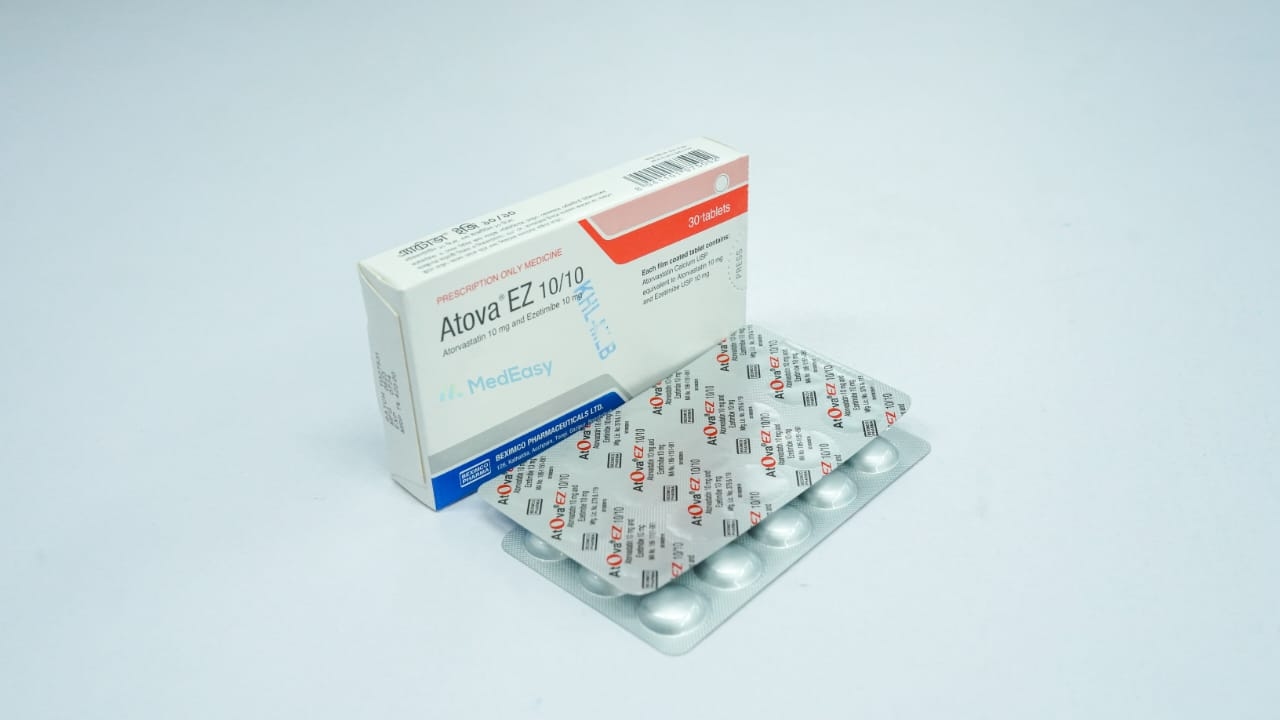
Atova EZ10 mg+10 m
Beximco Pharmaceuticals Ltd.
৳189.00
Add to cart
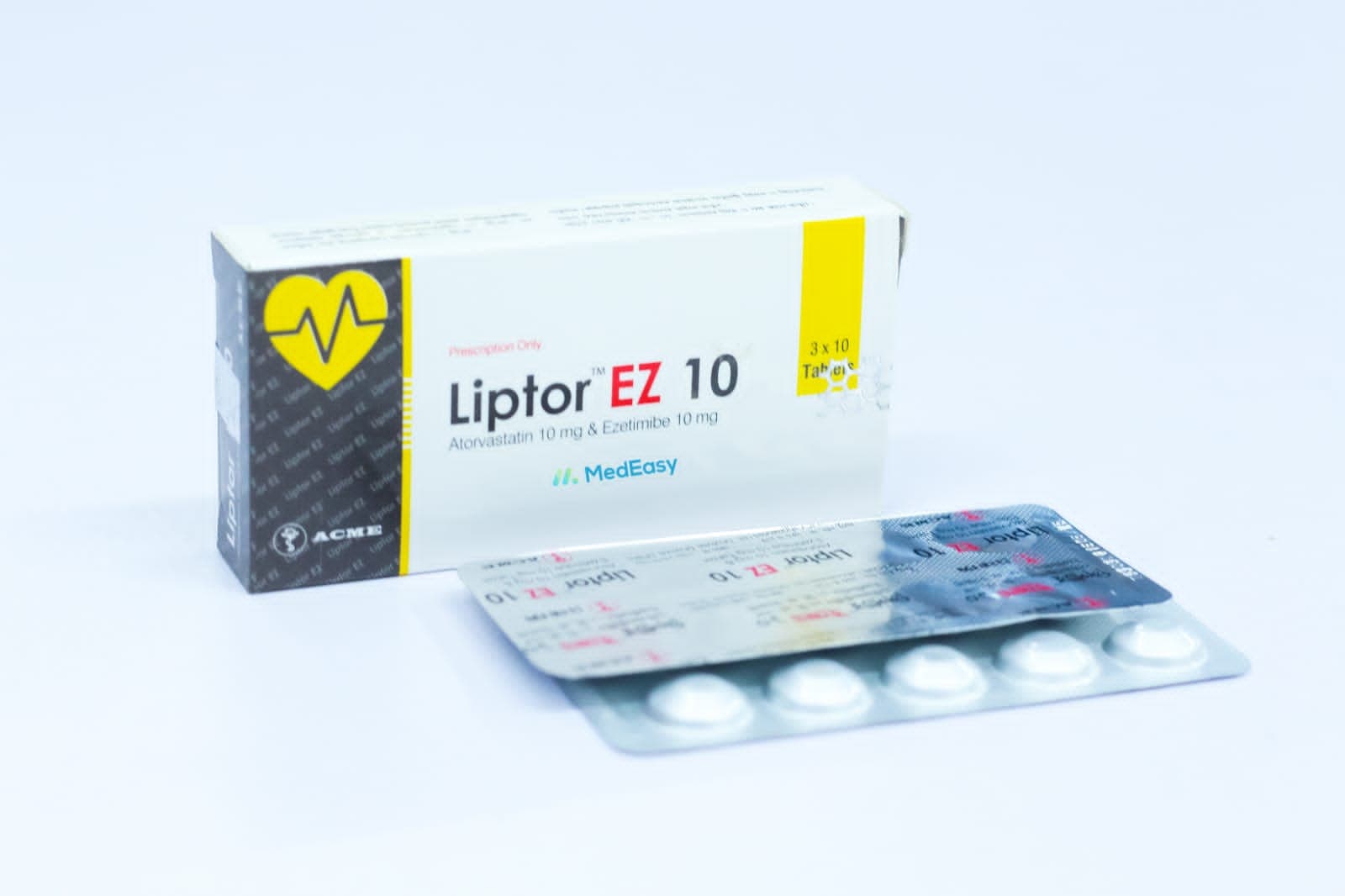

Liptor Ez combines a statin (atorvastatin) with a cholesterol absorption inhibitor (ezetimibe) and is used for the following indications:
Liptor Ez is not indicated for patients whose predominant abnormality is elevated chylomicrons (elevated triglycerides only, e.g. Fredrickson Type I, III, IV, and V dyslipidemia).
Atorvastatin + Ezetimibe is a fixed-dose combination oral tablet containing two active ingredients:
It is commonly available in combined strengths such as atorvastatin 10 mg/20 mg/40 mg with ezetimibe 10 mg, though exact available strengths vary by manufacturer and market. Confirm the exact strength on the product pack before use.
Liptor Ez is a fixed-dose combination medicine used to manage high cholesterol and mixed dyslipidemia. It works through two complementary mechanisms: atorvastatin lowers cholesterol production in the liver, while ezetimibe reduces the amount of cholesterol absorbed from the intestine. Together, they produce a greater reduction in LDL ("bad") cholesterol than either agent alone at comparable doses.
Liptor Ez is intended for use alongside a cholesterol-lowering diet and other lifestyle measures, and is typically prescribed when treatment with a statin alone has not adequately controlled cholesterol levels, or when combination therapy is considered appropriate from the start based on a patient's cardiovascular risk.
Liptor Ez belongs to the therapeutic class of antihyperlipidemic agents (lipid-lowering drugs), specifically a combination of an HMG-CoA reductase inhibitor (statin) and a cholesterol absorption inhibitor.
Atorvastatin + Ezetimibe lowers cholesterol through two distinct and complementary mechanisms:
Atorvastatin is a selective, competitive inhibitor of HMG-CoA reductase, the rate-limiting enzyme in hepatic cholesterol biosynthesis. By inhibiting this enzyme, atorvastatin reduces cholesterol production in the liver and increases the number of hepatic LDL receptors on the cell surface, which enhances uptake and clearance of LDL-cholesterol from the blood. It also reduces triglycerides and modestly raises HDL-cholesterol.
Ezetimibe acts at the brush border of the small intestine, where it selectively inhibits the Niemann-Pick C1-Like 1 (NPC1L1) protein, blocking the absorption of dietary and biliary cholesterol. This reduces the amount of cholesterol delivered to the liver, which further upregulates hepatic LDL receptors and increases LDL-cholesterol clearance from the blood, complementing atorvastatin's effect.
Together, the two components of Atorvastatin + Ezetimibe act on both cholesterol synthesis and cholesterol absorption, producing an additive reduction in LDL-cholesterol.
Liptor Ez is taken orally, once daily, generally in the evening, with or without food. The dose is individualized based on baseline LDL-cholesterol level, treatment goal, and current statin/ezetimibe therapy, and should be determined by the prescribing physician.
| Indication | Typical Adult Dose |
|---|---|
| Primary hyperlipidemia / mixed dyslipidemia | Starting dose commonly atorvastatin 10 mg/ezetimibe 10 mg once daily; may be adjusted up to atorvastatin 80 mg/ezetimibe 10 mg once daily depending on response and goal, at intervals of no less than 2 weeks between titrations. |
| Patients requiring >55% LDL-C reduction | May be started at a higher combined strength (e.g. atorvastatin 40 mg/ezetimibe 10 mg) under physician supervision. |
| Homozygous familial hypercholesterolemia (adjunct) | Atorvastatin 10–80 mg with ezetimibe 10 mg once daily, as adjunct to other lipid-lowering treatments (e.g. LDL apheresis), under specialist supervision. |
| Concomitant strong CYP3A4 inhibitors or specific interacting drugs | Lower atorvastatin-component doses or avoidance may be required (see Interactions). |
No dose adjustment of the atorvastatin component is generally required for renal impairment; ezetimibe also generally requires no adjustment in mild-to-moderate renal impairment, but Liptor Ez should be used with caution and under medical supervision in patients with significant renal disease.
Liptor Ez is contraindicated in active liver disease (see Contraindications). Liver function should be assessed before starting and monitored during treatment.
Liptor Ez should be taken by mouth, once daily, generally in the evening. It may be taken with or without food. Tablets should be swallowed whole with a glass of water; do not crush or chew unless specifically advised. If a dose is missed, it should be taken as soon as remembered unless it is almost time for the next dose, in which case the missed dose should be skipped — do not double the dose.
Liptor Ez has several clinically significant drug interactions, mainly related to its atorvastatin component:
Always inform the physician or pharmacist of all other medicines being taken before starting Liptor Ez.
Atorvastatin + Ezetimibe is contraindicated in the following situations:
Most patients tolerate Liptor Ez well; when side effects occur, they are usually mild. Reported side effects include:
Liptor Ez is contraindicated in pregnancy. The atorvastatin component can cause fetal harm; cholesterol and other products of cholesterol biosynthesis are essential for fetal development, and statin use during pregnancy has been associated with adverse outcomes in some reports. If pregnancy occurs while taking Liptor Ez, it should be discontinued immediately and the physician informed. Liptor Ez should only be given to women of childbearing potential who are highly unlikely to conceive and who have been informed of the potential risks.
Liptor Ez is also contraindicated during breastfeeding, as statins may pass into breast milk and pose a risk of serious adverse effects in nursing infants. Women who require lipid-lowering therapy while breastfeeding should discuss alternative approaches with their physician.
The following precautions apply to Liptor Ez:
Liptor Ez can cause myopathy, and rarely life-threatening rhabdomyolysis with acute kidney injury. Risk is increased with higher doses, advanced age, hypothyroidism, renal impairment, and concomitant use of interacting drugs (see Interactions). Patients should promptly report unexplained muscle pain, tenderness, or weakness, particularly if accompanied by fever or malaise.
Persistent elevations in liver transaminases can occur. Liver function tests are recommended before starting therapy and if signs or symptoms of liver injury occur (fatigue, jaundice, dark urine, abdominal pain). Liptor Ez should be discontinued if serious liver injury is suspected.
Statins, including the atorvastatin component of Liptor Ez, have been associated with modest increases in blood glucose and HbA1c, and increased risk of new-onset diabetes; the cardiovascular benefit generally outweighs this risk, but glycemic status should be monitored.
Use with caution in patients with significant renal impairment, and avoid entirely in active liver disease (see Contraindications).
Patients who consume substantial quantities of alcohol should use Liptor Ez with caution due to increased risk of liver problems.
There is limited specific experience with Liptor Ez overdose. Based on its components, overdose may cause exaggerated side effects, potentially including significant GI upset and increased risk of myopathy/liver enzyme elevation. There is no specific antidote. In case of suspected overdose, seek immediate medical attention or contact a poison control center; treatment should be supportive, with monitoring of liver function and symptomatic management as directed by a physician. Do not attempt to manage an overdose at home without medical guidance.
Store at room temperature (below 30°C), away from light and moisture. Keep out of reach of children.
Elderly: No overall differences in safety or effectiveness of Liptor Ez have been observed between elderly and younger patients, but elderly patients (especially those over 65) may have a higher risk of myopathy; use with appropriate monitoring.
Renal impairment: Generally no dose adjustment required for mild-to-moderate impairment; use with caution and medical supervision in significant renal disease.
Hepatic impairment: Contraindicated in active liver disease (see Contraindications); use with caution and monitoring in mild, stable hepatic impairment only if directed by a specialist.
Women of childbearing potential: Should use effective contraception during treatment; see Pregnancy and Lactation.
Pediatric patients: See Pediatric Uses.
Liptor Ez is generally used long-term as part of ongoing management of chronic hypercholesterolemia and cardiovascular risk reduction, alongside continued lifestyle and dietary measures. Lipid levels are typically reassessed roughly 4–12 weeks after starting or adjusting therapy, with dose adjustments made as needed. Treatment duration should be determined by the prescribing physician based on ongoing cardiovascular risk and response to therapy; it is not intended for short-term or as-needed use.
HMG-CoA reductase inhibitor (statin) combined with a cholesterol absorption inhibitor (fixed-dose antihyperlipidemic combination).
Atorvastatin + Ezetimibe lowers LDL-cholesterol via two complementary actions: the atorvastatin component inhibits HMG-CoA reductase, reducing hepatic cholesterol synthesis and upregulating LDL receptors; the ezetimibe component blocks the NPC1L1 transporter in the intestinal brush border, reducing absorption of dietary and biliary cholesterol. The combined effect is a greater reduction in LDL-cholesterol than either mechanism alone.
X
The safety and effectiveness of Liptor Ez as a fixed-dose combination have not been established in pediatric patients. Atorvastatin alone has established pediatric dosing for certain inherited lipid disorders in children above specific age thresholds (per local labeling), under specialist supervision, but the combination product Liptor Ez is generally not recommended for use in children and adolescents unless specifically directed by a pediatric lipid specialist. Use in pediatric patients should only occur under close specialist supervision with regular monitoring of growth, development, and liver function.
Q: What is Liptor Ez 10 mg+10 mg Tablet used for?
A: Liptor Ez 10 mg+10 mg Tablet is used to lower high cholesterol and treat mixed dyslipidemia, as an adjunct to diet, especially when a statin alone has not adequately controlled cholesterol, and to help reduce the risk of heart attack and stroke in people with or at high risk of cardiovascular disease.
Q: How should I take Liptor Ez 10 mg+10 mg Tablet?
A: Liptor Ez 10 mg+10 mg Tablet is usually taken once daily, generally in the evening, with or without food, exactly as prescribed by your physician. Swallow the tablet whole with water. Do not change the dose or stop taking it without consulting your doctor.
Q: Can Liptor Ez 10 mg+10 mg Tablet be used during pregnancy or breastfeeding?
A: No. Liptor Ez 10 mg+10 mg Tablet is contraindicated in pregnancy and during breastfeeding because the statin component can harm the developing fetus and may pass into breast milk. If you become pregnant while taking Liptor Ez 10 mg+10 mg Tablet, stop the medicine and contact your doctor immediately.
Q: What side effects should I watch for with Liptor Ez 10 mg+10 mg Tablet?
A: Common side effects of Liptor Ez 10 mg+10 mg Tablet include muscle aches, diarrhea, joint pain, and mildly elevated liver enzymes. Seek urgent medical attention for unexplained muscle pain, tenderness or weakness (possible sign of myopathy or rhabdomyolysis), or signs of liver problems such as yellowing of the skin/eyes, dark urine, or unusual fatigue.
Q: Can I drink grapefruit juice or alcohol while taking Liptor Ez 10 mg+10 mg Tablet?
A: Large amounts of grapefruit juice (more than about 1.2 liters a day) can increase levels of the atorvastatin component of Liptor Ez 10 mg+10 mg Tablet and should be avoided. Alcohol should be used in moderation, as heavy alcohol use increases the risk of liver problems while taking Liptor Ez 10 mg+10 mg Tablet.
Q: What should I do if I miss a dose or take too much Liptor Ez 10 mg+10 mg Tablet?
A: If you miss a dose of Liptor Ez 10 mg+10 mg Tablet, take it as soon as you remember unless it is almost time for the next dose — in that case, skip the missed dose and do not double up. If you suspect an overdose, seek immediate medical attention or contact a poison control center right away.
Disclaimer
The information provided is accurate to the best of our knowledge, but it does not replace professional medical advice. We cannot guarantee its completeness or accuracy, and the absence of specific information about a drug should not be taken as an endorsement. We are not responsible for any consequences arising from this information, so please consult a healthcare professional for any concerns or questions.