10% Off
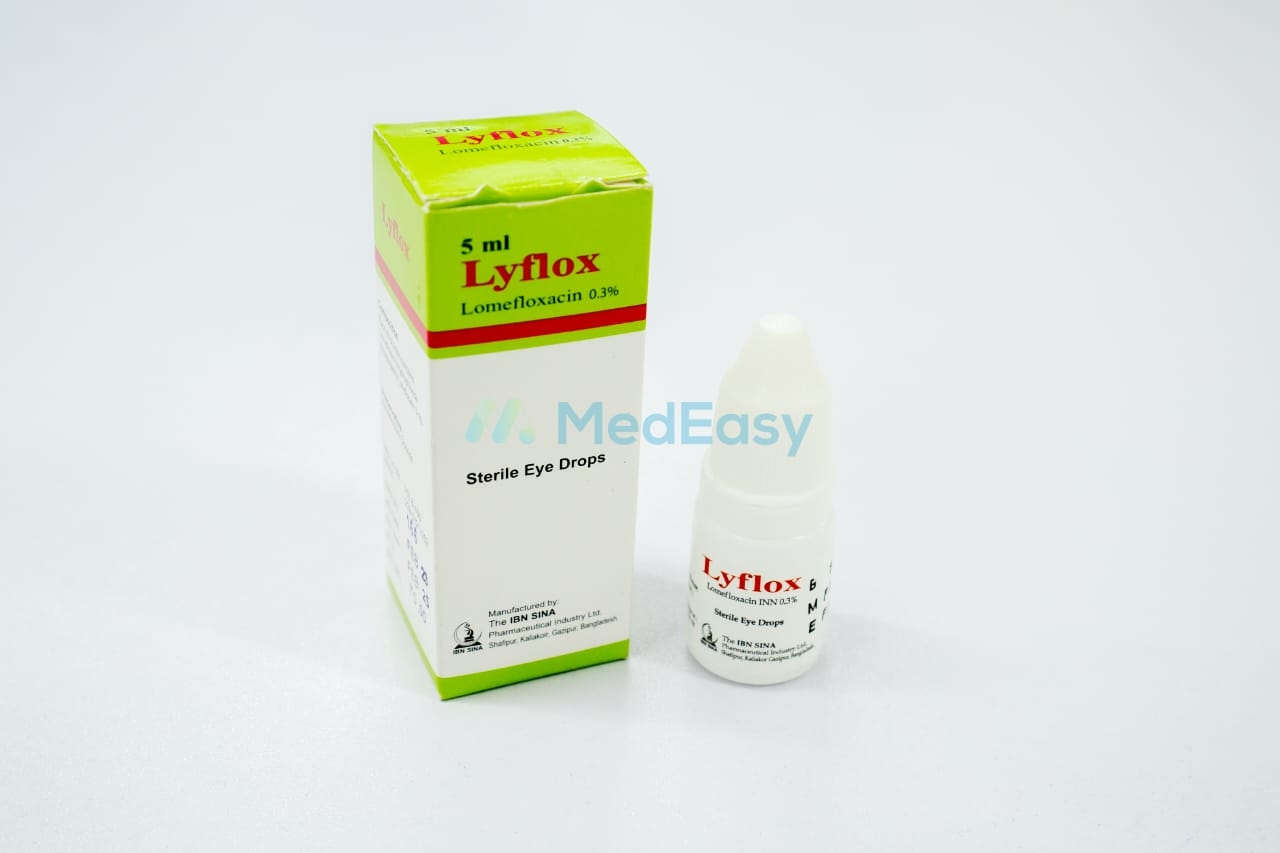
Lyflox0.3%
Ibn-Sina Pharmaceuticals Ltd.
৳63.00
Add to cart


Lomegen is a synthetic broad-spectrum fluoroquinolone antibiotic. Its uses can be classified by strength of evidence as follows:
Where an ophthalmic (eye drop) formulation of Lomegen is available, it is indicated for topical treatment of bacterial conjunctivitis caused by susceptible organisms.
Because of its comparatively pronounced photosensitivity risk and the availability of other fluoroquinolones with better-characterized safety profiles, Lomegen is not commonly used today and is not listed as an actively marketed product in several major drug databases, including in Bangladesh. Lomegen should be prescribed only when a physician has confirmed local product availability and determined that it is an appropriate, susceptibility-guided choice — as with all fluoroquinolones, reserved for infections where more narrow-spectrum agents are not suitable, in line with antibiotic stewardship principles.
Each Lomefloxacin oral tablet (where marketed) typically contains Lomefloxacin (as Lomefloxacin hydrochloride) 400 mg as the active ingredient, together with standard pharmaceutical excipients such as binders, fillers, and coating agents.
Where an ophthalmic solution of Lomefloxacin is marketed, it typically contains Lomefloxacin hydrochloride equivalent to 0.3% w/v Lomefloxacin base, along with a preservative and tonicity/buffering agents. Exact composition can vary by manufacturer and brand; the product label should always be checked.
Lomegen is a synthetic, broad-spectrum antibiotic of the fluoroquinolone class. It is active against a range of Gram-negative organisms and has moderate activity against some Gram-positive organisms, acting by interfering with bacterial DNA replication.
Lomegen has historically been formulated as an oral tablet for systemic infections (marketed in some countries in the past under brand names such as Maxaquin) and, separately, as a topical ophthalmic solution for bacterial conjunctivitis. Among fluoroquinolones, Lomegen is particularly notable for a comparatively higher risk of phototoxicity/photosensitivity reactions, which requires strict sun and ultraviolet-light precautions during treatment.
Like other fluoroquinolones, Lomegen carries class warnings for tendon injury, peripheral neuropathy, central nervous system effects, and other serious adverse effects, and should be reserved for infections where its use is clearly appropriate.
Fluoroquinolone (quinolone) antibacterial — systemic (oral) and/or ophthalmic anti-infective agent.
Lomefloxacin is a bactericidal fluoroquinolone antibiotic. It inhibits two essential bacterial enzymes, DNA gyrase (topoisomerase II) and topoisomerase IV, which are required for bacterial DNA replication, transcription, repair, and recombination. Inhibition of these enzymes by Lomefloxacin causes breakage of bacterial DNA strands, leading to rapid bacterial cell death.
Pharmacokinetics (oral form): Lomefloxacin is well absorbed after oral administration, with high oral bioavailability that is largely unaffected by food. It has a long elimination half-life (approximately 6–8 hours), which historically allowed once-daily dosing. Lomefloxacin is widely distributed into body tissues and fluids, undergoes only limited hepatic metabolism, and is eliminated predominantly unchanged by the kidneys via glomerular filtration and tubular secretion, making renal function an important determinant of dosing.
Following topical ophthalmic use, systemic absorption of Lomefloxacin is minimal, limiting the potential for systemic adverse effects from the eye-drop formulation.
Important: Take Lomegen exactly as prescribed by your physician; do not stop, extend, skip doses, or share this medicine with others without medical advice, even if symptoms improve before the course is finished.
| Indication | Usual adult dose | Usual duration |
|---|---|---|
| Uncomplicated urinary tract infection (cystitis) | 400 mg orally once daily | 3 days |
| Complicated urinary tract infection / acute pyelonephritis | 400 mg orally once daily | Up to 14 days, per physician assessment |
| Acute bacterial exacerbation of chronic bronchitis | 400 mg orally once daily | Up to 10 days |
| Pre-operative prophylaxis (transurethral procedures) | 400 mg orally as a single dose | Single dose, 2–6 hours before the procedure |
| Uncomplicated gonorrhea (where used) | 400 mg orally as a single dose | Single dose |
Because Lomegen is eliminated mainly by the kidneys, dose adjustment is required in patients with reduced renal function (e.g. creatinine clearance below approximately 40 mL/min), typically by giving a normal loading dose followed by a reduced maintenance dose or extended dosing interval, as directed by the physician.
No specific dose adjustment is well established for hepatic impairment alone, but caution and physician judgment are advised.
Typically one to two drops instilled into the affected eye(s) as directed by the physician; the exact frequency and duration should follow the specific product label.
Antacids and multivalent cation products (aluminum, magnesium, calcium, iron, zinc, sucralfate): These significantly reduce absorption of oral Lomegen through chelation. Separate administration by at least 2 hours before or 4–6 hours after Lomegen.
Theophylline: Fluoroquinolones including Lomegen may increase theophylline levels and the risk of theophylline-related toxicity (e.g. seizures); monitoring of theophylline levels is advised if co-administered.
Warfarin and other oral anticoagulants: Lomegen may enhance the anticoagulant effect of warfarin, increasing bleeding risk; closer monitoring of coagulation parameters (INR) is recommended.
Non-steroidal anti-inflammatory drugs (NSAIDs): Concurrent use with Lomegen may increase the risk of central nervous system stimulation and seizures.
Corticosteroids: Concurrent use, particularly in elderly patients, increases the risk of tendinitis and tendon rupture associated with fluoroquinolones such as Lomegen (see Precautions and Warnings).
Drugs that prolong the QT interval (e.g. certain antiarrhythmics, antipsychotics): Co-administration with Lomegen may increase the risk of QT prolongation and serious arrhythmia.
Probenecid: May reduce renal clearance of Lomegen and increase its plasma concentration.
Antidiabetic agents (e.g. insulin, sulfonylureas): Fluoroquinolones including Lomegen can cause disturbances of blood glucose (both hyperglycemia and hypoglycemia); glucose monitoring is advised in patients on these agents.
Lomefloxacin is contraindicated in:
Common side effects of Lomegen may include:
Serious side effects (fluoroquinolone class effects, applicable to systemic/oral use) that require prompt medical attention include:
For the ophthalmic form, adverse effects are generally limited to local eye irritation, burning, or discomfort, with much lower risk of the systemic effects listed above.
Pregnancy: Adequate and well-controlled studies of Lomegen in pregnant women are lacking. Fluoroquinolones as a class have been associated with musculoskeletal effects (arthropathy) in immature animals, raising theoretical concern for the developing fetus. Lomegen should be used during pregnancy only if clearly needed and if the potential benefit justifies the potential risk to the fetus — always under direct medical advice.
Lactation: Fluoroquinolones, including Lomegen, are excreted into human breast milk and could pose a risk of joint/cartilage effects in a nursing infant. Breastfeeding is generally not recommended during treatment with Lomegen; a physician should be consulted to weigh the benefits of breastfeeding against potential infant risk, and alternative antibiotics are often preferred during lactation.
Lomegen carries a notably higher risk of photosensitivity/phototoxic skin reactions compared with several other fluoroquinolones. Patients should strictly avoid direct and indirect sunlight, sunlamps, tanning beds, and other ultraviolet (UV) light exposure during Lomegen therapy and for at least several days after the last dose, and should use protective clothing and broad-spectrum sunscreen if sun exposure cannot be avoided. Treatment should be discontinued and medical advice sought promptly if a sunburn-like reaction, rash, or blistering occurs.
Fluoroquinolones, including Lomegen, are associated with an increased risk of tendinitis and tendon rupture (most often the Achilles tendon), which can occur during or after therapy. Risk is higher in the elderly, in patients taking corticosteroids concurrently, and in kidney, heart, or lung transplant recipients. Lomegen should be discontinued immediately if pain, swelling, or inflammation of a tendon occurs.
Lomegen may cause peripheral neuropathy (numbness, tingling, burning, weakness) which can occur soon after starting therapy and may be irreversible. Discontinue immediately and consult a physician if symptoms of neuropathy develop.
Fluoroquinolones may cause CNS effects including seizures, increased intracranial pressure, confusion, hallucinations, anxiety, depression, and (rarely) suicidal thoughts. Use with caution in patients with known CNS disorders or seizure risk.
Fluoroquinolones, including Lomegen, may worsen muscle weakness in patients with myasthenia gravis, including life-threatening breathing difficulty. Lomegen should generally be avoided in patients with a known history of myasthenia gravis.
Lomegen may prolong the QT interval. Use with caution, or avoid, in patients with known QT prolongation, uncorrected electrolyte disturbances (e.g. hypokalemia), or those taking other QT-prolonging medications.
Fluoroquinolones have been associated with an increased risk of aortic aneurysm and dissection, particularly in elderly patients or those with a history of aneurysm, hypertension, or certain connective tissue disorders (e.g. Marfan or Ehlers-Danlos syndrome). Avoid Lomegen in such patients unless no other treatment option is available.
Disturbances in blood glucose, including symptomatic hyper- and hypoglycemia, have been reported with fluoroquinolones, particularly in diabetic patients receiving concurrent antidiabetic therapy. Monitor blood glucose closely.
Serious, sometimes fatal, hypersensitivity reactions can occur, even after a single dose. Clostridioides difficile-associated diarrhea has been reported with nearly all antibacterial agents, including Lomegen, and may range from mild diarrhea to fatal colitis.
Take Lomegen exactly as prescribed by your physician; do not stop, extend, skip doses, or share this medicine with others without medical advice. To reduce the development of drug-resistant bacteria, Lomegen should be used only to treat infections that are proven or strongly suspected to be caused by susceptible bacteria.
Specific data on Lomegen overdose are limited. In the event of a suspected overdose, features may include nausea, vomiting, dizziness, tremor, confusion, seizures, or exaggerated forms of the drug's known adverse effects (e.g. severe QT prolongation, CNS effects).
There is no specific antidote for Lomegen overdose. Seek immediate medical attention or contact a poison control center / emergency services. Management is supportive and symptomatic, and may include gastric decontamination if the ingestion is recent and appropriate, close cardiac (ECG) monitoring, and maintaining adequate hydration. Do not attempt any specific home treatment beyond seeking urgent medical care.
Store at room temperature (below 30°C), away from light and moisture. Keep the container tightly closed. Keep out of reach of children.
Dose adjustment (loading dose followed by a reduced maintenance dose/extended interval) is required in patients with significant renal impairment, since Lomegen is eliminated mainly by the kidneys (see Dosage and Administration).
No well-established specific dose adjustment exists for hepatic impairment; use with caution and under physician judgment.
Elderly patients, especially those also taking corticosteroids, are at increased risk of tendon injury and other fluoroquinolone-related adverse effects with Lomegen and should be monitored closely.
Safety and efficacy of Lomegen have not been established in patients under 18 years of age; use is generally not recommended in this population (see Pediatric Uses).
See Pregnancy and Lactation section for detailed guidance.
Duration of Lomegen therapy depends on the indication: typically 3 days for uncomplicated urinary tract infection, up to 14 days for complicated urinary tract infection/pyelonephritis, up to 10 days for acute exacerbation of chronic bronchitis, and a single dose for surgical prophylaxis or uncomplicated gonorrhea (where used). Always complete the full course prescribed by the physician, even if symptoms improve earlier, and do not extend treatment beyond the prescribed duration without medical advice.
Fluoroquinolone antibacterials (quinolone class); Lomefloxacin belongs to this class of synthetic broad-spectrum antibiotics.
Lomefloxacin acts by inhibiting two essential bacterial enzymes, DNA gyrase (topoisomerase II) and topoisomerase IV, which bacteria require for DNA supercoiling, replication, transcription, and repair. By blocking these enzymes, Lomefloxacin causes double-strand breaks in bacterial DNA, halting bacterial growth and division and leading to rapid bactericidal (bacteria-killing) activity.
C
Safety and efficacy of Lomegen have not been established in patients younger than 18 years of age. Consistent with fluoroquinolone-class labeling, Lomegen is generally not recommended for use in children and adolescents because of the risk of arthropathy (joint and cartilage damage) observed with fluoroquinolones in juvenile animal studies. Use in this age group should occur only if a physician determines that no suitable alternative exists and that the potential benefit outweighs the potential risk, under close medical supervision.
Q: What is Lomegen 0.3% Eye/Ear Drop used for?
A: Lomegen 0.3% Eye/Ear Drop is a fluoroquinolone antibiotic historically used to treat certain bacterial infections, including urinary tract infections, acute exacerbations of chronic bronchitis, and (as an eye drop, where available) bacterial conjunctivitis. It should only be used for infections confirmed or strongly suspected to be caused by bacteria susceptible to Lomegen 0.3% Eye/Ear Drop, as determined by a physician.
Q: How should I take Lomegen 0.3% Eye/Ear Drop?
A: Take Lomegen 0.3% Eye/Ear Drop exactly as prescribed by your physician, at the same time each day, with a full glass of water, and complete the entire course even if you feel better before finishing — do not stop, extend, skip doses, or share this medicine with others without medical advice. Avoid taking it together with antacids, calcium, iron, or zinc products within a few hours of your dose, as these reduce its absorption.
Q: Why do I need to avoid sunlight while taking Lomegen 0.3% Eye/Ear Drop?
A: Lomegen 0.3% Eye/Ear Drop carries a notably higher risk of photosensitivity (phototoxic skin) reactions compared with several other antibiotics in its class. Direct or indirect sunlight, sunlamps, and tanning beds can trigger a severe sunburn-like reaction even after brief exposure. You should strictly avoid UV light exposure during treatment and for several days after your last dose, and use protective clothing and sunscreen if you cannot avoid the sun.
Q: What are the serious risks of taking Lomegen 0.3% Eye/Ear Drop?
A: Like other fluoroquinolones, Lomegen 0.3% Eye/Ear Drop can cause tendinitis or tendon rupture (especially the Achilles tendon), peripheral neuropathy that may be irreversible, central nervous system effects such as seizures or confusion, worsening of myasthenia gravis, QT interval prolongation with risk of serious heart rhythm problems, and — rarely — aortic aneurysm or dissection. Stop taking Lomegen 0.3% Eye/Ear Drop and seek medical attention immediately if you develop tendon pain or swelling, numbness or tingling, unusual mood or thinking changes, fainting, or a severe skin reaction.
Q: Is Lomegen 0.3% Eye/Ear Drop safe during pregnancy or breastfeeding?
A: Lomegen 0.3% Eye/Ear Drop should be used during pregnancy only if clearly needed and if the potential benefit justifies the potential risk to the fetus, always under a physician's direct advice. Lomegen 0.3% Eye/Ear Drop passes into breast milk and is generally not recommended during breastfeeding; consult your physician, who may recommend an alternative antibiotic while nursing.
Q: Can children take Lomegen 0.3% Eye/Ear Drop?
A: Lomegen 0.3% Eye/Ear Drop is generally not recommended for patients younger than 18 years because safety and efficacy have not been established in this age group, and fluoroquinolones have been linked to joint/cartilage effects in growing animals. It should be used in children only if a physician decides there is no suitable alternative and that the benefit outweighs the risk.
Disclaimer
The information provided is accurate to the best of our knowledge, but it does not replace professional medical advice. We cannot guarantee its completeness or accuracy, and the absence of specific information about a drug should not be taken as an endorsement. We are not responsible for any consequences arising from this information, so please consult a healthcare professional for any concerns or questions.