10% Off
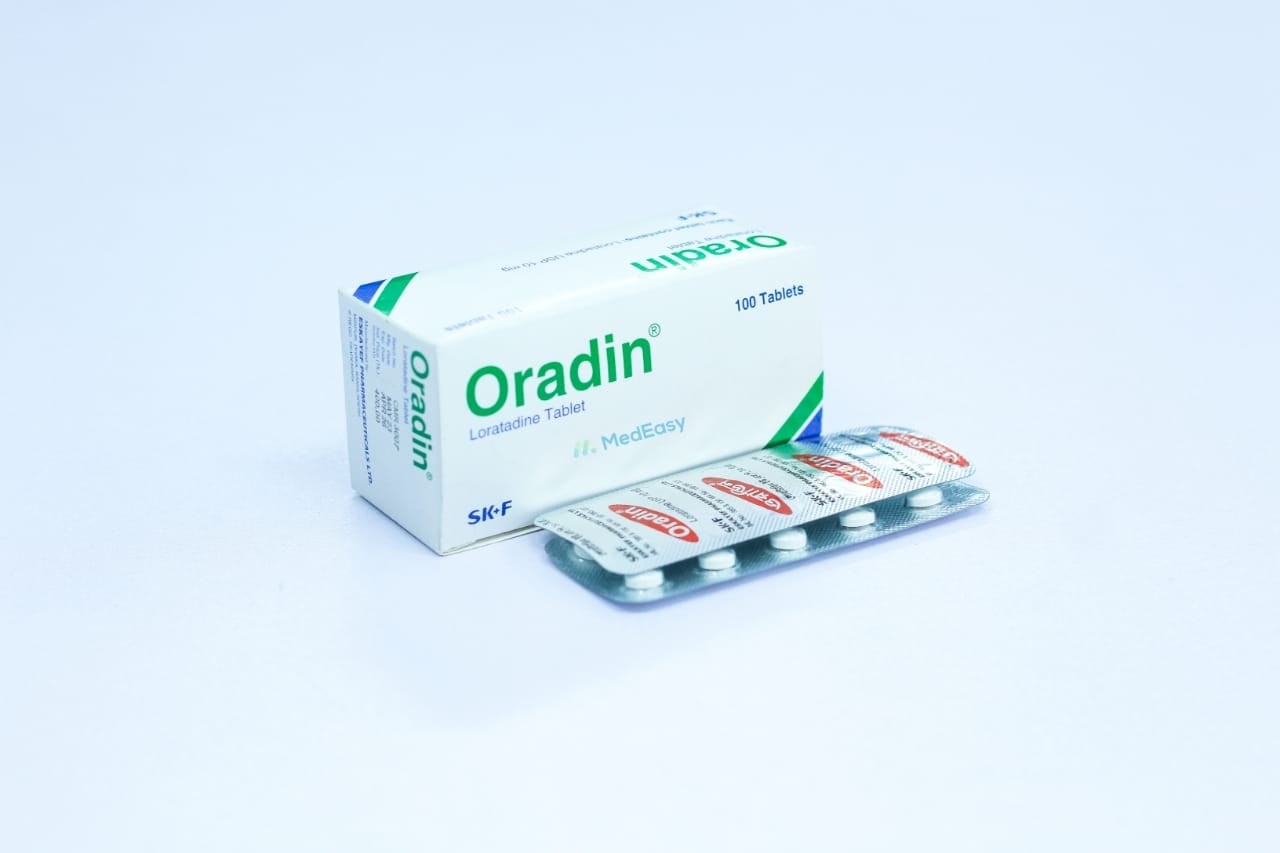
Oradin10 mg
Eskayef Bangladesh Ltd.
৳36.00
Add to cart


Lora 10 mg is a second-generation antihistamine widely prescribed for fast, effective relief from allergy symptoms. It works by blocking the action of histamine, a natural substance the body produces during an allergic reaction, thereby reducing sneezing, itching, and nasal or skin irritation.
Lora 10 mg is commonly indicated for:
In children over 2 years of age, Lora 10 mg is used for symptomatic relief of seasonal allergic rhinitis and allergic skin conditions such as urticaria. Because it does not readily cross into the central nervous system, it provides allergy relief with a much lower risk of drowsiness compared to older first-generation antihistamines.
Non-sedating antihistamines (second-generation H1-receptor antagonists)
Lora 10 mg is a long-acting tricyclic antihistamine that selectively blocks peripheral histamine H1 receptors. Unlike first-generation antihistamines, it has minimal ability to cross the blood-brain barrier, which means it produces little to no central sedative or anticholinergic effects at recommended doses.
After oral administration, Lora 10 mg is rapidly absorbed and extensively metabolized in the liver into its active metabolite, desLora 10 mg, which contributes significantly to its overall antihistaminic effect. Its onset of action typically begins within 1–3 hours, reaches peak effect within 8–12 hours, and provides symptom control for a full 24 hours, allowing for convenient once-daily dosing.
Lora 10 mg dosage varies by age and body weight. It should always be taken as advised by a registered physician.
Lora 10 mg tablets can be taken with or without food, usually in the morning or whenever allergy symptoms occur. For patients using the oral suspension, the dose should be measured accurately with a calibrated measuring cup or spoon. Consistent daily timing helps maintain steady symptom control.
Note: Always take medication strictly according to a registered physician's advice.
Lora 10 mg has a favorable interaction profile compared to older antihistamines. There are no reports of clinically significant hazardous interactions with common medications. Unlike many first-generation antihistamines, Lora 10 mg does not produce additional sedation or impair psychomotor performance when taken along with alcohol.
However, caution is advised with drugs that inhibit or are metabolized by the hepatic cytochrome P450 enzymes (CYP3A4 and CYP2D6), as these can raise plasma concentrations of Lora 10 mg:
Although these interactions can increase Lora 10 mg serum levels, no significant adverse clinical effects have been reported in studies. Even so, patients on these medications should inform their doctor before starting Lora 10 mg.
Lora 10 mg is contraindicated in patients with known hypersensitivity or idiosyncratic reactions to Lora 10 mg or any of its formulation components. Patients with a history of allergic reactions to antihistamines should inform their doctor before use.
Lora 10 mg is generally well tolerated. In controlled clinical studies, the incidence of adverse effects — including sedation and anticholinergic effects — with the standard 10 mg dose was comparable to placebo. Driving performance and cognitive-psychomotor function tests have also shown results similar to placebo, confirming its non-sedating profile.
Although uncommon, some patients may experience mild side effects such as:
Seek medical attention if you notice signs of a serious allergic reaction such as facial swelling, difficulty breathing, or severe skin rash.
There is limited clinical experience with Lora 10 mg use during human pregnancy; therefore, its use during pregnancy is not generally advisable unless considered essential by a physician.
Lora 10 mg is excreted in breast milk in very small amounts. Nursing mothers are advised to avoid taking this medication unless directed otherwise by a registered doctor, as safety data in lactation remain limited.
Lora 10 mg should be used with caution in patients with:
Patients with these conditions should consult their physician, who may recommend a lower dose or less frequent dosing schedule (e.g., every other day) to avoid drug accumulation.
In adults, overdoses greater than 10 mg have been associated with somnolence, tachycardia (rapid heartbeat), and headache. In children, overdoses greater than 10 mg have been linked to extrapyramidal signs and palpitations.
Management of overdose includes prompt general symptomatic and supportive care, maintained for as long as clinically necessary. Oral activated charcoal may be considered in patients presenting soon after a large overdose. Inducing vomiting or performing gastric lavage may also be appropriate in conscious patients under medical supervision.
If an overdose is suspected, seek emergency medical care immediately.
Non-sedating antihistamines
This tablet is a preparation of Lora 10 mg. Lora 10 mg is a non-sedative histamine Hr receptor antagonist with antiallergic properties. Lora 10 mg is a long-acting tricyclic antihistamine with selective peripheral Hi-receptor antagonistic activity and no central sedative or anticholinergic effect. It is rapidly effective and long-lasting, allowing once-a-day administration.
There is no experience of the use of Lora 10 mg in human pregnancy. Therefore its use during pregnancy is not advisable. Lora 10 mg is excreted in breast milk in a very small amount. So nursing mothers are advised not to take the drug.
What is Lora 10 mg used for?
Lora 10 mg is a second-generation antihistamine widely prescribed for fast, effective relief from allergy symptoms. It works by blocking the action of histamine, a natural substance the body produces during an allergic reaction, thereby reducing sneezing, itching, and nasal or skin irritation. Lora 10 mg is commonly indicated for: Seasonal allergic rhinitis (hay fever) — sneezing, runny nose, and …
What is the dosage of Lora 10 mg?
Lora 10 mg dosage varies by age and body weight. It should always be taken as advised by a registered physician. Age Group Recommended Dose Adults & children over 12 years One 10 mg tablet once daily Children 2–12 years (body weight over 30 kg) One 10 mg tablet once daily Children 2–12 years (body weight below 30 kg) Half tablet (5 mg) once daily Children under 2 years Not recommended — safety and…
What are the side effects of Lora 10 mg?
Lora 10 mg is generally well tolerated. In controlled clinical studies, the incidence of adverse effects — including sedation and anticholinergic effects — with the standard 10 mg dose was comparable to placebo. Driving performance and cognitive-psychomotor function tests have also shown results similar to placebo, confirming its non-sedating profile. Although uncommon, some patients may experienc…
Who should not take Lora 10 mg?
Lora 10 mg is contraindicated in patients with known hypersensitivity or idiosyncratic reactions to Lora 10 mg or any of its formulation components. Patients with a history of allergic reactions to antihistamines should inform their doctor before use.
What precautions should be taken with Lora 10 mg?
Lora 10 mg should be used with caution in patients with: Liver impairment — reduced hepatic function may slow drug metabolism Renal insufficiency (eGFR less than 30 mL/min) — dose adjustment may be required Patients with these conditions should consult their physician, who may recommend a lower dose or less frequent dosing schedule (e.g., every other day) to avoid drug accumulation.
Is Lora 10 mg safe during pregnancy and breastfeeding?
There is limited clinical experience with Lora 10 mg use during human pregnancy; therefore, its use during pregnancy is not generally advisable unless considered essential by a physician. Lora 10 mg is excreted in breast milk in very small amounts. Nursing mothers are advised to avoid taking this medication unless directed otherwise by a registered doctor, as safety data in lactation remain limite…
The information provided is accurate to our best practices, but it does not replace professional medical advice. We cannot guarantee its completeness or accuracy. The absence of specific information about a drug should not be seen as an endorsement. We are not responsible for any consequences resulting from this information, so consult a healthcare professional for any concerns or questions.