
10% Off
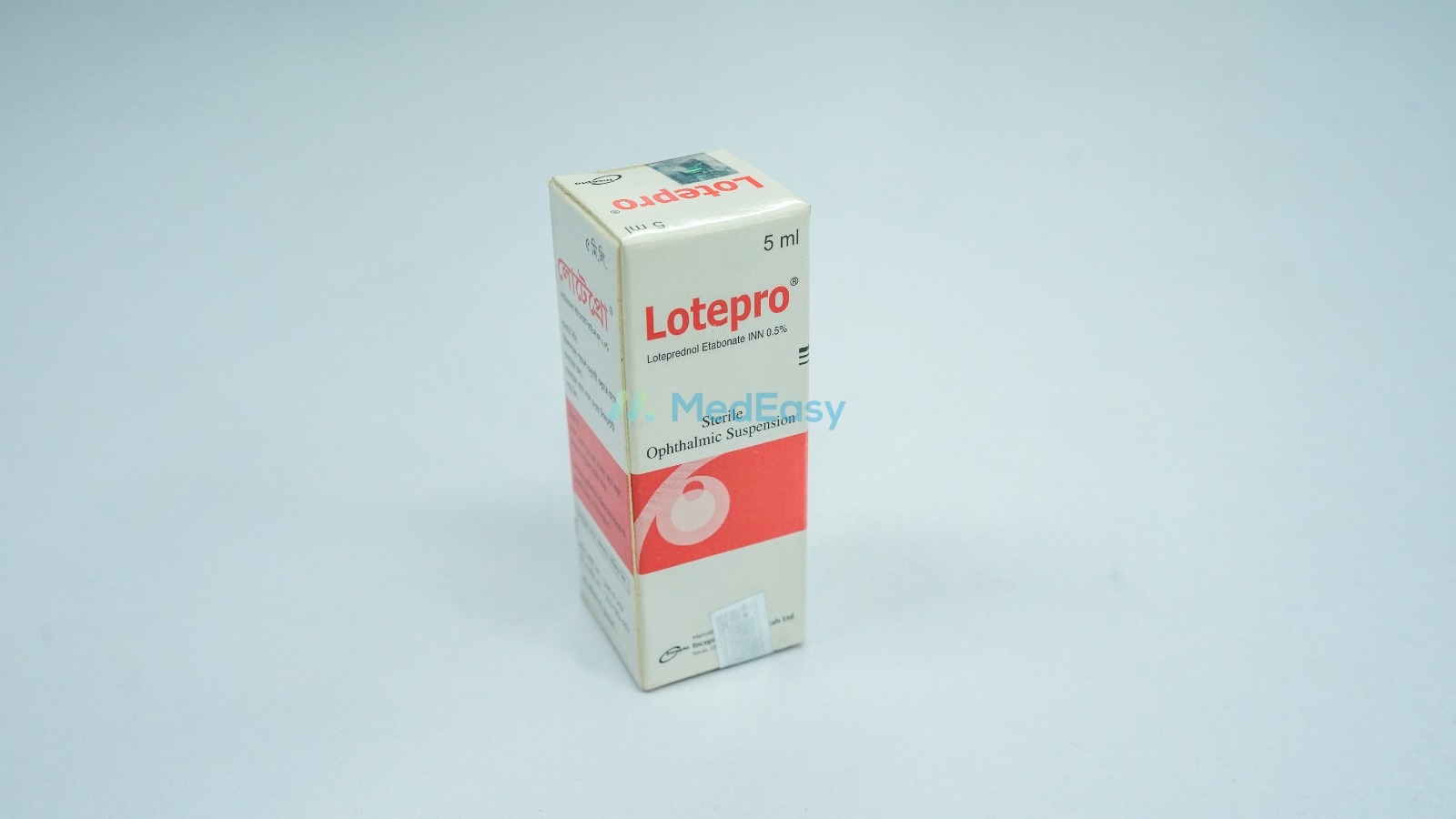
Lotepro0.5%
Incepta Pharmaceuticals Ltd.
৳157.50
Add to cart


Loterex is a topical ophthalmic corticosteroid indicated for the treatment of steroid-responsive inflammatory conditions of the eye. Established/FDA-approved uses include:
For acute anterior uveitis, Loterex has shown lower efficacy than prednisolone acetate 1% in comparative trials and is generally considered a second-line option for this specific indication.
Fixed-dose combination products containing Loterex with an antibiotic (e.g., tobramycin or gatifloxacin) are used off-label-as-combination when concurrent anti-inflammatory and antibacterial coverage is needed, such as after ocular surgery, and require a physician's assessment of infection risk.
Each mL of ophthalmic suspension typically contains Loteprednol Etabonate 5 mg (0.5%) or 10 mg (1%) as the active ingredient in a sterile aqueous vehicle. Ophthalmic gel and ointment formulations typically contain Loteprednol Etabonate 0.5%. Inactive ingredients vary by brand and commonly include benzalkonium chloride (preservative), edetate disodium, glycerin, povidone, and purified water; combination products additionally contain an antibiotic such as tobramycin or gatifloxacin. Always check the specific product label for the exact formulation.
Loterex is a synthetic corticosteroid formulated for topical ophthalmic use. It belongs to a class of corticosteroids sometimes called "soft steroids," designed with an ester-based chemical structure at the C-20 position rather than the ketone group found in older corticosteroids such as prednisolone or dexamethasone. This structural modification allows Loterex to undergo rapid, extensive metabolism to inactive carboxylic acid metabolites once it has exerted its local anti-inflammatory effect, which is believed to lower — though not eliminate — the risk of intraocular pressure elevation compared with some older ophthalmic corticosteroids.
Loterex is available as an ophthalmic suspension (0.5% and 1%), gel (0.5%), and ointment (0.5%), and in fixed-dose combinations with antibiotics for combined anti-inflammatory and antimicrobial coverage.
Loterex belongs to the therapeutic class of ophthalmic corticosteroids — topical anti-inflammatory agents for ocular use.
Corticosteroids such as Loteprednol Etabonate inhibit the inflammatory response to a variety of inciting agents (mechanical, chemical, or immunological) by inducing synthesis of lipocortin-like anti-inflammatory proteins. These proteins inhibit phospholipase A2, suppressing release of arachidonic acid and reducing downstream synthesis of prostaglandins and leukotrienes, key mediators of ocular inflammation.
Unlike traditional ketone-based corticosteroids, Loteprednol Etabonate is an ester-based ("site-specific" or "soft") steroid, structurally designed for rapid, predictable inactivation by ocular esterases into inactive carboxylic-acid metabolites after it exerts its anti-inflammatory action. In pharmacokinetic studies, plasma concentrations after ocular administration of Loteprednol Etabonate were generally below the limit of quantitation, indicating minimal systemic absorption. This rapid local inactivation is associated with a comparatively lower incidence of intraocular pressure (IOP) elevation than seen with some older ophthalmic corticosteroids such as prednisolone acetate — a distinguishing feature of Loteprednol Etabonate — although IOP elevation can still occur, particularly with prolonged use, and monitoring remains necessary.
| Formulation | Typical Adult Dosage |
|---|---|
| Ophthalmic suspension 0.5% | Instill 1–2 drops into the conjunctival sac of the affected eye(s) four times daily. During the initial treatment week, frequency may be increased to 1 drop every 1–2 hours if directed by a physician. |
| Ophthalmic suspension 1% | Instill 1 drop into the affected eye(s) twice daily; may be increased to up to four times daily during the first 2 weeks after surgery if directed. |
| Ophthalmic gel/ointment 0.5% | Apply a small amount into the conjunctival sac four times daily, typically starting 24 hours after surgery and continuing for up to 2 weeks. |
Shake suspension formulations of Loterex well before each use. Dose, frequency, and total treatment duration should be individualized by the prescribing ophthalmologist based on severity of inflammation and clinical response. If signs and symptoms fail to improve after 2 days of treatment with Loterex, the patient should be re-evaluated.
For ophthalmic (eye) use only. Wash hands before use. Shake the bottle well before each use for suspension formulations of Loterex. Tilt the head back, gently pull down the lower eyelid to form a small pocket, and instill the prescribed number of drops without letting the dropper tip touch the eye, eyelid, fingers, or any other surface, to avoid contaminating the product. Remove contact lenses before instilling Loterex and wait at least 10–15 minutes before reinserting them; contact lenses should generally be avoided during active ocular inflammation. If other topical ophthalmic products are used concurrently, space administration at least 5 minutes apart. Replace and tighten the cap after each use.
No clinically significant systemic drug-drug interactions are well established for ophthalmic Loterex, reflecting its minimal systemic absorption when used as directed. However, note the following local considerations:
Always inform the prescribing physician or pharmacist of all other eye drops, ointments, and medications in use before starting Loterex.
Loteprednol Etabonate is contraindicated in:
The most common adverse reactions to Loterex (occurring in approximately 5–15% of patients) include:
Less common (affecting fewer than 5% of patients): conjunctivitis, corneal abnormalities, eyelid erythema, keratitis, ocular pain or discomfort, and uveitis. Non-ocular effects reported include headache, rhinitis, and pharyngitis.
More serious but less frequent risks with prolonged use of Loterex include elevated intraocular pressure/glaucoma, posterior subcapsular cataract formation, secondary ocular infection, and delayed wound healing (see Precautions and Warnings for detail). Patients should contact their physician promptly if they experience significant eye pain, vision changes, or persistent redness.
Pregnancy: Animal reproduction studies with Loterex have shown embryotoxic and teratogenic effects at systemic exposures higher than typical ocular exposure in humans. There are no adequate and well-controlled studies of Loterex in pregnant women. Loterex should be used during pregnancy only if clearly needed and if the potential benefit justifies the potential risk to the fetus; consult a physician before use.
Lactation: It is not known whether topical ophthalmic administration of Loterex results in sufficient systemic absorption to produce detectable quantities in human breast milk. Caution should be exercised, and a physician should be consulted before using Loterex while breastfeeding.
Intraocular pressure (IOP): Prolonged use of Loterex may cause elevated IOP and, in susceptible individuals, glaucoma with optic nerve damage and visual field defects. Although the ester-based structure of Loterex is associated with a comparatively lower risk of IOP elevation than some older ophthalmic corticosteroids, this risk is not eliminated. IOP should be monitored if treatment continues for 10 days or longer, and periodically thereafter with extended use.
Cataracts: Long-term use of Loterex may increase the risk of posterior subcapsular cataract formation.
Delayed wound healing and infection risk: Use of Loterex after cataract surgery may delay healing and increase the incidence of bleb formation. Corticosteroids may suppress the host immune response, increasing the hazard of secondary ocular infection (bacterial, viral, or fungal) with prolonged use, and may mask or worsen an existing infection. Use with caution in patients with a history of herpes simplex keratitis; discontinue Loterex if a fungal infection is suspected.
Route restriction: For ophthalmic use only; Loterex is not for injection or oral use.
Contact lenses: Remove contact lenses before instilling Loterex; active ocular inflammation is generally a reason to avoid contact lens wear during treatment.
Contamination: Avoid letting the dropper tip touch the eye or any surface to prevent contaminating the product.
Response monitoring: If signs and symptoms fail to improve after 2 days of Loterex, the patient should be re-evaluated by an ophthalmologist.
Ocular over-instillation of Loterex can generally be managed by flushing the eye(s) with lukewarm water. If Loterex is accidentally ingested or a significant overdose is suspected, seek immediate medical attention or contact a poison control center or emergency services; do not attempt unsupervised home treatment. Systemic toxicity from ophthalmic use of Loterex is unlikely given its minimal systemic absorption, but any signs suggestive of systemic corticosteroid effect with excessive or prolonged use warrant prompt medical evaluation.
Store upright between 15°C and 25°C (59°F to 77°F). Do not freeze. Keep the container tightly closed and protect from light. Keep out of reach of children. Discard any unused product after the expiry date on the label, and discard opened multidose containers after the manufacturer-specified in-use period (commonly around 4 weeks) to reduce the risk of contamination.
Pediatric use: Safety and effectiveness of Loterex in pediatric patients have not been formally established; use only under close physician supervision if considered necessary (see Pediatric Uses).
Geriatric use: No overall differences in safety or effectiveness of Loterex have been observed between elderly and younger adult patients; no dosage adjustment is required based on age alone.
Renal/hepatic impairment: No specific dose adjustment is established or generally required for ophthalmic Loterex, given its minimal systemic absorption; use with routine clinical judgment.
Contact lens wearers: Remove lenses before instilling Loterex (see Precautions and Warnings).
Duration of treatment with Loterex depends on the indication and clinical response and should be determined by the treating ophthalmologist. Typical courses range from about 2 weeks (e.g., post-operative inflammation) to longer courses for chronic steroid-responsive inflammatory conditions, with IOP monitoring recommended when use extends beyond 10 days. Treatment with Loterex should not be stopped abruptly without physician guidance, and the patient should not exceed the prescribed duration without re-evaluation.
Ophthalmic corticosteroid; topical ocular anti-inflammatory agent (an ester-type, "soft steroid" corticosteroid). Loteprednol Etabonate is classified within this drug class.
Loteprednol Etabonate exerts its anti-inflammatory effect by binding to the glucocorticoid receptor, inducing lipocortin-like proteins that inhibit phospholipase A2 and thereby reduce production of inflammatory mediators such as prostaglandins and leukotrienes. Its distinguishing pharmacologic feature is an ester-based ("soft steroid") structure, which allows rapid conversion to inactive metabolites by ocular tissue esterases once local anti-inflammatory action is achieved. This limits systemic exposure and contributes to a comparatively lower propensity for intraocular pressure elevation relative to some older ketone-based ophthalmic corticosteroids — though, as noted under Precautions and Warnings, this risk is reduced, not absent.
C
Safety and effectiveness of Loterex in pediatric patients have not been established by well-controlled clinical trials. If a physician determines that treatment with Loterex is necessary in a child, it should be used at the lowest effective dose, for the shortest duration necessary, with close monitoring for intraocular pressure elevation, cataract formation, and signs of secondary infection, since children may be more susceptible to steroid-induced IOP elevation than adults.
Q: What is Loterex 0.5% Ophthalmic Suspension used for?
A: Loterex 0.5% Ophthalmic Suspension is an eye drop, gel, or ointment used to treat steroid-responsive inflammatory conditions of the eye, such as allergic conjunctivitis and inflammation following eye surgery. It reduces redness, swelling, and irritation caused by inflammation.
Q: How many times a day should I use Loterex 0.5% Ophthalmic Suspension?
A: This depends on the strength and formulation prescribed. The 0.5% ophthalmic suspension of Loterex 0.5% Ophthalmic Suspension is typically used 4 times daily, while the 1% suspension is typically used twice daily. Always follow your physician's specific instructions, and shake the suspension well before each use.
Q: Can I wear contact lenses while using Loterex 0.5% Ophthalmic Suspension?
A: No. Contact lenses should be removed before instilling Loterex 0.5% Ophthalmic Suspension and generally not worn during active ocular inflammation. You may reinsert lenses at least 10–15 minutes after using Loterex 0.5% Ophthalmic Suspension, once your physician confirms this is appropriate.
Q: Is Loterex 0.5% Ophthalmic Suspension safe to use during pregnancy or breastfeeding?
A: Animal studies with Loterex 0.5% Ophthalmic Suspension have shown embryotoxic and teratogenic effects at high systemic exposures, and there are no adequate studies in pregnant women, so Loterex 0.5% Ophthalmic Suspension should be used in pregnancy only if clearly needed and if the potential benefit outweighs the potential risk to the fetus. It is also not known whether Loterex 0.5% Ophthalmic Suspension passes into breast milk in clinically significant amounts. In both cases, consult your physician before use.
Q: What serious side effects should I watch for with Loterex 0.5% Ophthalmic Suspension?
A: With prolonged use of Loterex 0.5% Ophthalmic Suspension, watch for signs of increased eye pressure or glaucoma (eye pain, halos around lights, vision changes), cataract symptoms (gradual blurring of vision), and signs of eye infection (increasing redness, discharge, or pain). Although Loterex 0.5% Ophthalmic Suspension has a comparatively lower risk of raising eye pressure than some older steroid eye drops, this risk is not zero, especially with use beyond 10 days, so periodic eye pressure checks are recommended. Contact your ophthalmologist promptly if any of these occur.
Q: What should I do if I accidentally swallow Loterex 0.5% Ophthalmic Suspension or use too much?
A: If excess Loterex 0.5% Ophthalmic Suspension gets in the eye, flush the eye with lukewarm water. If Loterex 0.5% Ophthalmic Suspension is accidentally swallowed or you suspect a significant overdose, seek immediate medical attention or contact a poison control center right away rather than attempting home treatment.
Disclaimer
The information provided is accurate to the best of our knowledge, but it does not replace professional medical advice. We cannot guarantee its completeness or accuracy, and the absence of specific information about a drug should not be taken as an endorsement. We are not responsible for any consequences arising from this information, so please consult a healthcare professional for any concerns or questions.

