
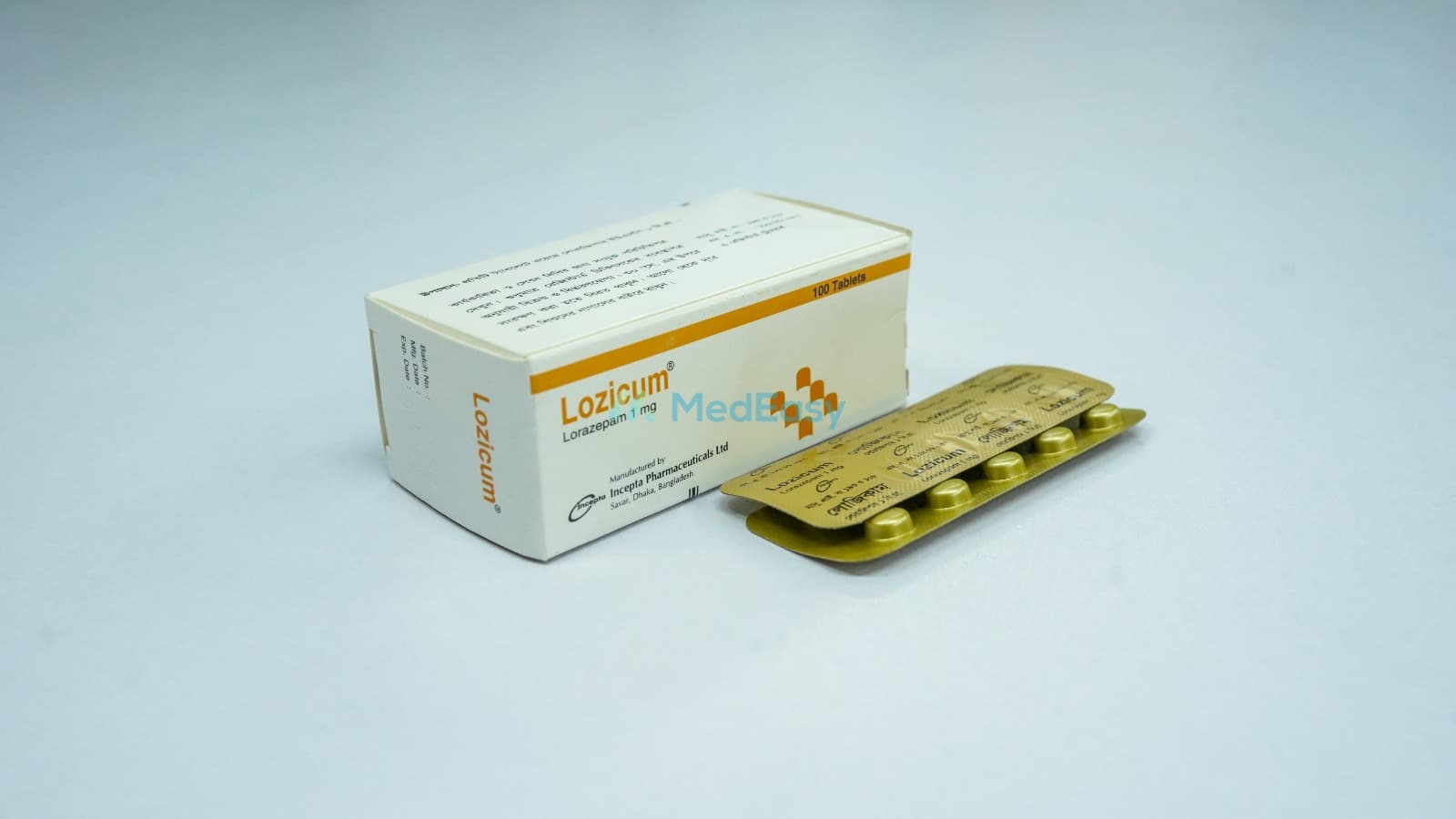

Medicine overview
Indications of Lozicum 1 mg
Lozicum 1 mg is a benzodiazepine indicated for the following uses:
Established / FDA-approved uses
- Anxiety disorders: short-term relief (generally not longer than 4 months) of the symptoms of anxiety, or anxiety associated with symptoms of depression.
- Status epilepticus: injectable Lozicum 1 mg is indicated for the treatment of status epilepticus, given intravenously by a healthcare professional.
- Preanesthetic sedation: injectable Lozicum 1 mg is used for sedation, relief of anxiety, and to produce a decreased ability to recall events related to surgery or unpleasant procedures, when given intramuscularly or intravenously prior to a procedure.
Commonly used off-label (not formally FDA-approved for this use)
- Short-term management of insomnia associated with anxiety.
- Alcohol withdrawal syndrome (adjunct, to control agitation, tremor, and prevent seizures).
- Adjunct antiemetic for chemotherapy-induced nausea and vomiting (used in combination with standard antiemetics).
Lozicum 1 mg is not indicated for the treatment of anxiety associated with everyday stress, and long-term use is generally not recommended.
Composition
Each formulation of Lozicum 1 mg contains Lozicum 1 mg as the active pharmaceutical ingredient. Lozicum 1 mg is available as oral tablets (commonly 0.5 mg, 1 mg, and 2 mg strengths) and as a sterile injectable solution for intramuscular or intravenous use. Exact strengths, dosage forms, and inactive ingredients vary by manufacturer; refer to the specific product label for full composition details.
Description
Lozicum 1 mg is a synthetic benzodiazepine with anxiolytic, sedative, hypnotic, anticonvulsant, and skeletal muscle relaxant properties. It belongs to the intermediate-acting class of benzodiazepines, meaning its clinical effects have a moderate duration compared with shorter- or longer-acting agents in the same class.
Lozicum 1 mg is classified as a controlled substance due to its potential for dependence and abuse, and is intended for short-term, physician-supervised use in the management of anxiety and certain seizure and sedation indications.
Theropeutic Class
Lozicum 1 mg belongs to the benzodiazepine class of medicines, specifically an intermediate-acting anxiolytic/sedative-hypnotic agent. It is chemically and pharmacologically distinct from barbiturates but shares a similar mechanism of central nervous system depression through enhancement of GABA activity.
Pharmacology
Mechanism of Action
Lozicum 1 mg acts on the central nervous system by binding to a specific site on the GABA-A receptor complex, a ligand-gated chloride ion channel. This binding enhances the affinity of the inhibitory neurotransmitter gamma-aminobutyric acid (GABA) for its receptor, increasing the frequency of chloride channel opening. The resulting influx of chloride ions hyperpolarizes the neuronal membrane, reducing neuronal excitability. This produces the anxiolytic, sedative, anticonvulsant, and muscle-relaxant effects characteristic of Lozicum 1 mg and other benzodiazepines.
Pharmacokinetics
Lozicum 1 mg is well absorbed after oral administration, with peak plasma concentrations reached within about 2 hours. It has intermediate lipophilicity and undergoes hepatic conjugation (glucuronidation) to an inactive metabolite, which is renally excreted; unlike many other benzodiazepines, Lozicum 1 mg metabolism does not depend on the cytochrome P450 system, which reduces the likelihood of certain metabolic drug interactions. Its elimination half-life is approximately 10 to 20 hours in healthy adults.
Dosage & Administration of Lozicum 1 mg
Adult Dosage
| Indication | Typical Adult Dose |
|---|---|
| Anxiety disorders (oral) | 1–10 mg/day in divided doses; a common starting dose is 2–3 mg/day given 2–3 times daily, titrated to response. Larger doses at bedtime, smaller during the day. |
| Insomnia associated with anxiety (oral, off-label) | 2–4 mg at bedtime. |
| Status epilepticus (IV, hospital setting) | Typically 4 mg given by slow intravenous injection; may be repeated once after 10–15 minutes if seizures persist, per treating physician's judgment. |
| Preanesthetic sedation (IM/IV) | Dose individualized by the anesthesia provider based on age, weight, and clinical status. |
Dosage in the Elderly / Debilitated Patients
A lower starting dose (e.g., 1–2 mg/day in divided doses) is recommended, adjusted according to response and tolerability, due to increased sensitivity to sedative effects.
Hepatic/Renal Impairment
Because Lozicum 1 mg is metabolized by glucuronidation rather than oxidative liver metabolism, it is often preferred in patients with hepatic impairment compared with other benzodiazepines; nonetheless, dose reduction and close monitoring are advised in significant hepatic or renal impairment.
Administration
Oral tablets may be taken with or without food. Injectable Lozicum 1 mg must be administered only by trained healthcare professionals in a setting equipped to manage sedation and respiratory depression.
Lozicum 1 mg should be used at the lowest effective dose for the shortest duration necessary, as prescribed by a physician.
Dosage of Lozicum 1 mg
See Dosage and Administration above for detailed, indication-specific dosing of Lozicum 1 mg. The dose of Lozicum 1 mg must always be individualized by a physician based on the indication, patient age, hepatic/renal function, and response to treatment.
Administration of Lozicum 1 mg
Lozicum 1 mg oral tablets are taken by mouth, with or without food, exactly as directed by the prescribing physician. Injectable Lozicum 1 mg is administered intramuscularly or intravenously only by qualified healthcare personnel, with monitoring for excessive sedation and respiratory depression. Do not adjust the dose or frequency of Lozicum 1 mg without consulting a physician.
Interaction of Lozicum 1 mg
Clinically Significant Drug Interactions
- Opioids (Boxed Warning): Concomitant use of Lozicum 1 mg with opioid analgesics or opioid-containing cough/cold products can result in profound sedation, respiratory depression, coma, and death. Concomitant prescribing should be reserved for cases where alternatives are inadequate, using the lowest effective doses.
- Other CNS depressants (alcohol, barbiturates, other benzodiazepines, sedating antihistamines, general anesthetics, antipsychotics, other antidepressants): Additive central nervous system and respiratory depression; concurrent use should be avoided or closely monitored.
- Probenecid: May decrease the clearance and increase the plasma levels and effect of Lozicum 1 mg; a lower Lozicum 1 mg dose may be needed.
- Valproate: Can increase plasma concentrations of Lozicum 1 mg; dose adjustment may be required.
- Clozapine: Concurrent use with Lozicum 1 mg has been associated with marked sedation, excessive salivation, hypotension, and respiratory arrest in some patients; use with caution.
Always inform the physician or pharmacist of all other medicines being taken before starting Lozicum 1 mg.
Contraindications
Lozicum 1 mg is contraindicated in patients with:
- Known hypersensitivity to Lozicum 1 mg or to other benzodiazepines.
- Acute narrow-angle glaucoma.
- Severe respiratory insufficiency (for the injectable form, except in patients who are already mechanically ventilated).
- Sleep apnea syndrome (injectable form).
Concomitant use with opioids carries a boxed warning for risk of profound sedation, respiratory depression, coma, and death (see Interactions and Precautions), and should be avoided unless no alternative treatment options are adequate.
Side Effects of Lozicum 1 mg
The most common side effects of Lozicum 1 mg are related to central nervous system depression and include:
- Sedation and drowsiness (most common)
- Dizziness
- Weakness and unsteadiness (ataxia)
- Fatigue
- Disorientation or confusion, particularly in elderly patients
Less common effects include headache, blurred vision, nausea, changes in appetite, and skin rash. Rarely, paradoxical reactions such as agitation, irritability, or aggression can occur, especially in children and the elderly. Abrupt discontinuation after prolonged use can cause withdrawal symptoms (see Precautions and Warnings). Patients should report any unusual or severe side effects to their physician promptly.
Pregnancy & Lactation
Pregnancy
Lozicum 1 mg should be used during pregnancy only if clearly needed and the potential benefit justifies the potential risk to the fetus. Benzodiazepines, including Lozicum 1 mg, cross the placenta and use late in pregnancy or during labor has been associated with neonatal sedation, hypotonia ("floppy infant syndrome"), and withdrawal symptoms in the newborn. Lozicum 1 mg use during pregnancy should only occur under close medical supervision, and any decision should be made in consultation with a physician.
Lactation
Lozicum 1 mg is excreted in breast milk and may cause sedation, poor feeding, or weight loss in a breastfed infant. Breastfeeding while using Lozicum 1 mg is not generally recommended; a physician should be consulted to weigh the benefits of breastfeeding against the potential risk to the infant.
Precautions & Warnings
Dependence and Withdrawal
Prolonged use of Lozicum 1 mg can lead to physical and psychological dependence, even at recommended doses. Abrupt discontinuation after extended use may cause withdrawal symptoms, including anxiety rebound, tremor, insomnia, and, rarely, seizures. Lozicum 1 mg should be discontinued gradually under medical supervision, never stopped abruptly without consulting a physician.
Sedation and Fall Risk
Lozicum 1 mg can cause significant drowsiness and impaired coordination, increasing the risk of falls and injury, particularly in elderly patients. Patients should avoid driving or operating heavy machinery until they know how Lozicum 1 mg affects them.
Respiratory Depression
Lozicum 1 mg, especially the injectable form, can cause dose-dependent respiratory depression; caution is required in patients with pre-existing respiratory disease and when combined with other CNS depressants or opioids (see boxed warning under Contraindications/Interaction).
Tolerance and Abuse Potential
Lozicum 1 mg is a controlled substance with potential for misuse, abuse, and addiction. It should be used only as prescribed and not shared with others.
Lozicum 1 mg should be used at the lowest effective dose for the shortest duration consistent with treatment goals, and only as prescribed by a physician.
Overdose Effects of Lozicum 1 mg
Overdose of Lozicum 1 mg may cause excessive drowsiness, confusion, slurred speech, impaired coordination, and, in severe cases, respiratory depression, coma, and death, particularly when combined with alcohol or other CNS depressants such as opioids.
If an overdose of Lozicum 1 mg is suspected, seek immediate medical attention or contact emergency services / a poison control center right away. Treatment is generally supportive (monitoring of airway, breathing, and circulation); do not attempt specific home treatment. A specific reversal agent (flumazenil) may be used by medical professionals in certain circumstances, but only under close medical supervision due to risks including seizures.
Storage Conditions
Store Lozicum 1 mg tablets at room temperature (below 30°C), protected from light and moisture. Keep out of reach of children. Injectable Lozicum 1 mg formulations may require refrigeration and protection from light per the specific manufacturer's instructions — check the product label. Do not use after the expiry date.
Use In Special Populations
Elderly
Elderly patients are more sensitive to the sedative and psychomotor effects of Lozicum 1 mg and are at higher risk of falls, confusion, and respiratory depression. Lower starting doses are recommended, with careful titration.
Hepatic Impairment
Lozicum 1 mg does not require oxidative hepatic metabolism and is often better tolerated than other benzodiazepines in liver disease, but dose reduction and monitoring are still advised in significant impairment.
Renal Impairment
Use with caution; dose adjustment may be needed as the inactive glucuronide metabolite is renally excreted.
Pediatric Use
See Pediatric Uses section.
Duration Of Treatment
Oral Lozicum 1 mg for anxiety is generally recommended for short-term use, typically not exceeding 4 months, including any necessary tapering period, as efficacy for longer-term use has not been systematically evaluated and risk of dependence increases with duration. The need for continued treatment should be reassessed regularly by the prescribing physician. Duration for status epilepticus and preanesthetic use is determined by the treating physician in the acute care setting.
Drug Classes
Lozicum 1 mg belongs to the benzodiazepine class of central nervous system depressants, further categorized as an intermediate-acting anxiolytic, sedative-hypnotic, and anticonvulsant agent.
Mode Of Action
Lozicum 1 mg enhances the inhibitory effect of the neurotransmitter GABA on the GABA-A receptor complex, increasing chloride ion influx into neurons. This hyperpolarizes neuronal membranes and reduces neuronal excitability throughout the central nervous system, producing anxiolytic, sedative, anticonvulsant, and muscle-relaxant effects.
Pregnancy
D
Pediatric Uses
The safety and efficacy of Lozicum 1 mg oral tablets for the management of anxiety have not been established in pediatric patients, and routine use in children for this indication is generally not recommended.
Injectable Lozicum 1 mg has been used under specialist supervision in pediatric status epilepticus and for procedural sedation, based on clinical guidelines and physician judgment, with dosing individualized by weight and age; this should only occur in a hospital setting under close monitoring for sedation and respiratory depression. Any pediatric use of Lozicum 1 mg should be directed and supervised by a physician experienced in pediatric care.
Frequently Asked Questions
Q: What is Lozicum 1 mg used for?
A: Lozicum 1 mg is a benzodiazepine primarily used for the short-term relief of anxiety symptoms and anxiety associated with depression. Injectable forms are also used for status epilepticus (a prolonged seizure emergency) and for sedation before procedures, always under medical supervision.
Q: Can I stop taking Lozicum 1 mg suddenly?
A: No. Lozicum 1 mg should never be stopped abruptly after regular use, as this can cause withdrawal symptoms such as anxiety rebound, tremor, insomnia, and, rarely, seizures. Your physician will guide you on gradually tapering the dose.
Q: Is Lozicum 1 mg safe during pregnancy?
A: Lozicum 1 mg should be used during pregnancy only if clearly needed and if the potential benefit justifies the potential risk to the baby, since use late in pregnancy has been associated with neonatal sedation and withdrawal symptoms. Always consult your physician before using Lozicum 1 mg if you are pregnant or planning pregnancy.
Q: Can I drive after taking Lozicum 1 mg?
A: Lozicum 1 mg commonly causes drowsiness, dizziness, and impaired coordination. You should avoid driving or operating machinery until you know how Lozicum 1 mg affects you, and avoid alcohol, which increases these effects.
Q: What should I do if I take too much Lozicum 1 mg?
A: An overdose of Lozicum 1 mg can cause severe drowsiness, confusion, and dangerous respiratory depression, especially if combined with alcohol or opioids. Seek immediate medical attention or contact emergency services/poison control right away; do not wait for symptoms to worsen.
Q: Can Lozicum 1 mg be taken with other sedatives or opioid painkillers?
A: Combining Lozicum 1 mg with opioids or other central nervous system depressants (including alcohol) significantly increases the risk of profound sedation, slowed breathing, coma, and death. This combination should only be used if specifically directed by a physician, at the lowest possible doses.
Disclaimer
The information provided is accurate to the best of our knowledge, but it does not replace professional medical advice. We cannot guarantee its completeness or accuracy, and the absence of specific information about a drug should not be taken as an endorsement. We are not responsible for any consequences arising from this information, so please consult a healthcare professional for any concerns or questions.
