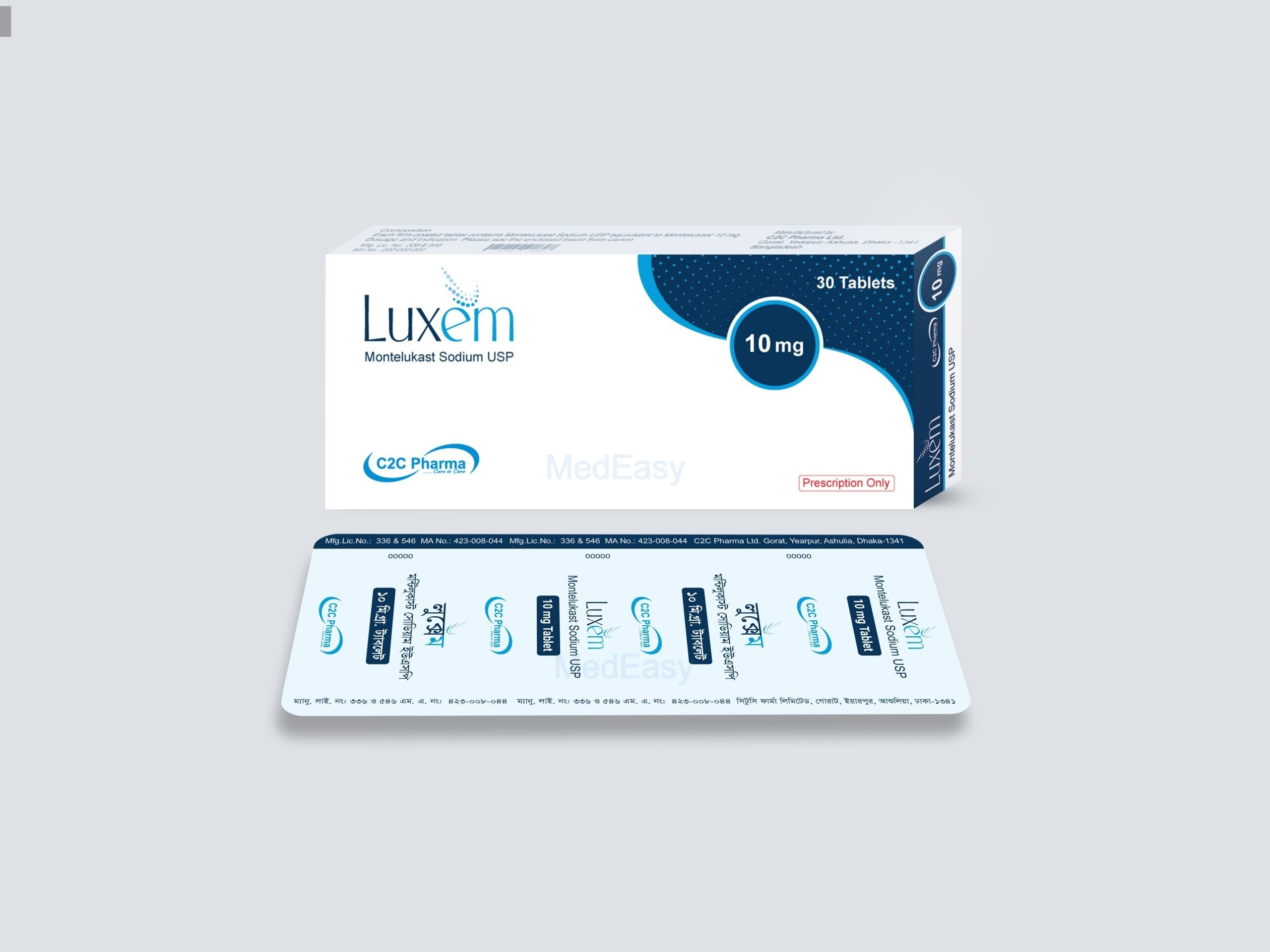
8% Off
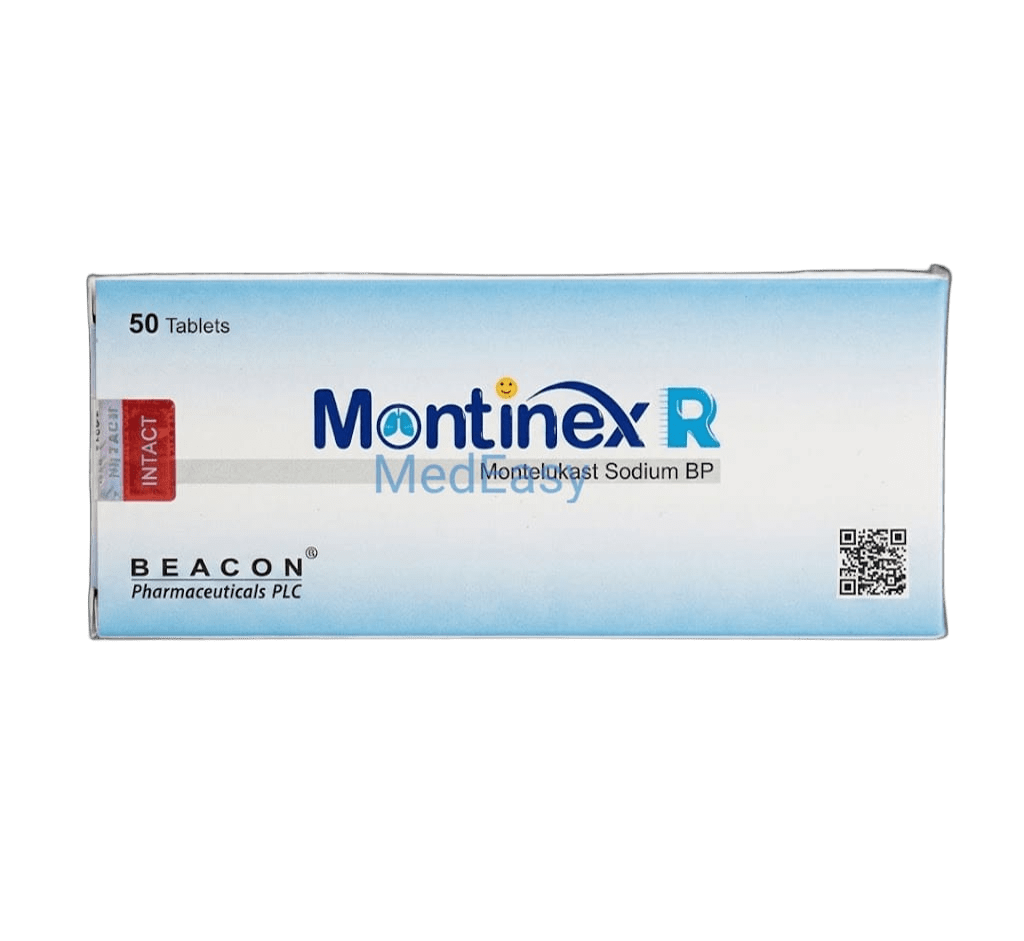
Montinex R10 mg
Beacon Pharmaceuticals PLC
৳161.00
Add to cart
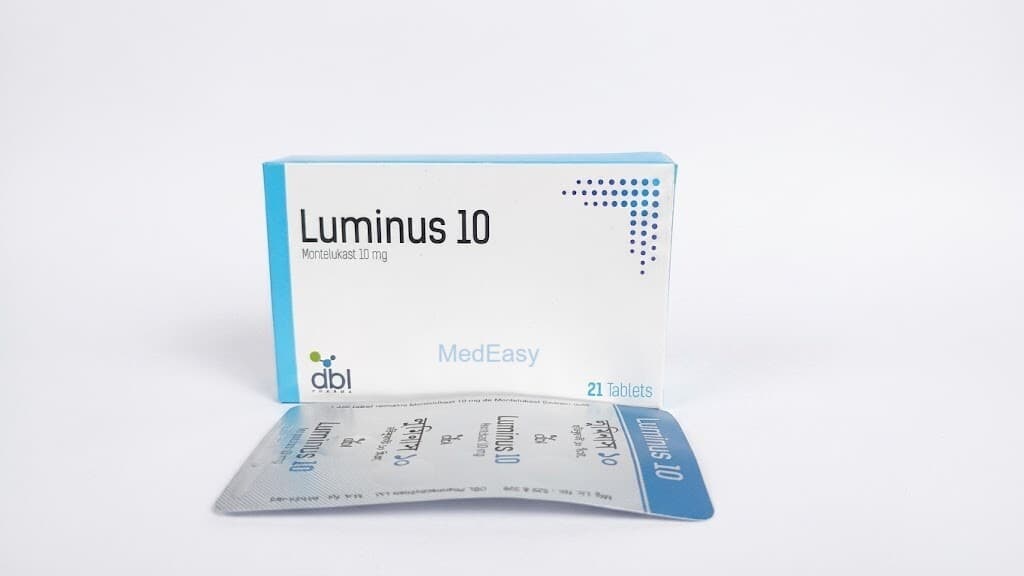
Luminus 10 mg Tablet is available on MedEasy for ৳107.10 per 7's Strip, with home delivery anywhere in Bangladesh. It is manufactured by DBL Pharmaceuticals Ltd. Its generic name is Montelukast Sodium.

Luminus is a leukotriene receptor antagonist used for the following FDA-approved indications:
Luminus is often used as an adjunct/add-on to inhaled corticosteroids when asthma control is inadequate, and it is a guideline-recognized alternative (not first-line) controller option in patients who cannot or will not use inhaled corticosteroids.
Important: Luminus is not indicated for the reversal of bronchospasm in acute asthma attacks, including status asthmaticus. It has no role as a rescue medication.
Each tablet/chewable tablet/sachet of oral granules contains Montelukast Sodium equivalent to the labelled strength of montelukast (commonly available as 4 mg oral granules, 4 mg and 5 mg chewable tablets, and 10 mg film-coated tablets), along with pharmaceutically acceptable excipients.
Luminus is an orally active, selective leukotriene receptor antagonist (LTRA) belonging to the class of anti-asthmatic and anti-allergic medicines. It is used for the long-term control (not immediate relief) of asthma symptoms and for the relief of symptoms of allergic rhinitis.
Unlike bronchodilators, Luminus works by blocking the action of leukotrienes, inflammatory chemical mediators involved in airway narrowing, mucus production, and allergic inflammation, and is intended for regular, once-daily use rather than as-needed symptom relief (except when used specifically before exercise for EIB prevention).
Luminus belongs to the therapeutic class of Leukotriene Receptor Antagonists (LTRAs), also broadly categorized under anti-asthmatic and anti-allergic (anti-rhinitis) agents.
Montelukast Sodium is a selective and orally active antagonist of the cysteinyl leukotriene CysLT1 receptor. Cysteinyl leukotrienes (LTC4, LTD4, LTE4) are potent inflammatory mediators released from mast cells and eosinophils that bind to CysLT1 receptors in the human airway, producing bronchoconstriction, increased vascular permeability, mucus secretion, and eosinophil recruitment.
By blocking the CysLT1 receptor, Montelukast Sodium inhibits these leukotriene-mediated effects, thereby reducing airway inflammation and improving airflow in asthma, and reducing nasal congestion, sneezing, and rhinorrhea in allergic rhinitis. Montelukast Sodium does not have direct bronchodilator activity and does not act on histamine receptors.
After oral administration, montelukast is rapidly absorbed with high oral bioavailability (film-coated tablet), is highly bound to plasma proteins (>99%), is extensively metabolized in the liver primarily via CYP3A4 and CYP2C8 (with a minor role for CYP2C9), and is eliminated almost entirely via biliary excretion, with a plasma half-life of approximately 2.7 to 5.5 hours in healthy adults.
| Indication | Age Group | Recommended Dose |
|---|---|---|
| Asthma (maintenance) | Adults and adolescents ≥15 years | 10 mg film-coated tablet once daily, in the evening |
| Children 6–14 years | 5 mg chewable tablet once daily, in the evening | |
| Children 2–5 years | 4 mg chewable tablet or 4 mg oral granules once daily, in the evening | |
| Children 12–23 months | 4 mg oral granules once daily, in the evening | |
| Seasonal allergic rhinitis | Adults and children ≥2 years | Same age-based doses as above, once daily (timing may be given any time of day if only for rhinitis) |
| Children 6 months–2 years | 4 mg oral granules once daily (perennial allergic rhinitis) | |
| Prevention of exercise-induced bronchoconstriction (EIB) | Adults and adolescents ≥15 years | 10 mg at least 2 hours before exercise; no additional dose within 24 hours |
| Children 6–14 years | 5 mg chewable at least 2 hours before exercise; no additional dose within 24 hours |
Renal impairment: No dosage adjustment is required.
Hepatic impairment: No dosage adjustment is required for mild-to-moderate hepatic impairment; Luminus has not been studied in severe hepatic impairment, so it should be used with caution in that setting.
Missed dose: If a dose of Luminus is missed, it should not be doubled; resume the normal once-daily schedule.
Luminus has the following clinically relevant drug interactions:
No clinically significant interactions requiring dose adjustment have been demonstrated between Luminus and theophylline, warfarin, digoxin, oral contraceptives, or oral corticosteroids/prednisone at recommended doses.
Montelukast Sodium is contraindicated in patients with known hypersensitivity to montelukast or to any component of the formulation.
Common side effects of Luminus (occurring in clinical trials) include headache, abdominal pain, cough, dyspepsia, dizziness, fatigue, fever, and, in children, ear infection (otitis media), sinusitis, and influenza-like symptoms.
Serious but less common effects include neuropsychiatric events (see Precautions and Warnings for the boxed warning), hepatic effects such as eosinophilic hepatitis (rare), hypersensitivity reactions including anaphylaxis, angioedema, rash, urticaria, and rare severe skin reactions (Stevens-Johnson syndrome, erythema multiforme), and rare eosinophilic conditions such as Churg-Strauss syndrome (eosinophilic granulomatosis with polyangiitis), particularly in patients whose oral corticosteroid dose is being reduced (see Precautions and Warnings).
Pregnancy: Available human data (including pregnancy registry and observational data) have not shown a clear association between Luminus use in pregnancy and major birth defects. However, as with any medicine in pregnancy, Luminus should be used during pregnancy only if clearly needed, and only if the potential benefit to the mother justifies the potential risk to the fetus. A physician should be consulted before use in pregnancy.
Lactation: Montelukast passes into breast milk in animal studies; limited human data are available. A physician should be consulted to weigh the benefits of treatment against any potential risk to the breastfed infant before using Luminus during breastfeeding.
Luminus carries a boxed warning for neuropsychiatric events. Postmarketing reports with Luminus include agitation, aggression, anxiousness, abnormal dreams, hallucinations, depression, insomnia, irritability, restlessness, tremor, and suicidal thoughts and behavior (including completed suicide). Patients and caregivers should be advised to be alert for new or worsening mood or behavior changes and to contact the prescriber promptly if these occur. Given the availability of alternative therapies for allergic rhinitis, prescribers should carefully weigh the risks and benefits of Luminus before prescribing it, especially for allergic rhinitis alone.
Reported symptoms of Luminus overdose include thirst, drowsiness, mydriasis (dilated pupils), hyperkinesia (restlessness/increased activity), and abdominal pain, generally without serious clinical consequences at reported doses. There is no specific antidote for Luminus overdose.
In case of suspected overdose, seek immediate medical attention or contact a poison control center/emergency services. Management is supportive and symptomatic; it is not known whether montelukast is removed by peritoneal dialysis or hemodialysis.
Store at room temperature (below 30°C), away from light and moisture, in the original package. Once opened, oral granule packets must be used within 15 minutes. Keep out of reach of children.
For chronic asthma control and allergic rhinitis, Luminus is intended for regular, long-term, once-daily use as directed by the physician, including during symptom-free periods, since its benefit depends on continuous leukotriene receptor blockade rather than on-demand symptom relief. Improvement in asthma control can be seen within one day of starting treatment, but the physician should periodically reassess ongoing need and response. For prevention of exercise-induced bronchoconstriction, treatment is a single dose taken before each anticipated exercise session rather than a fixed "course" of therapy.
Leukotriene Receptor Antagonist (LTRA); Anti-asthmatic and anti-allergic agent.
Montelukast Sodium selectively and competitively antagonizes the cysteinyl leukotriene receptor CysLT1, which mediates the bronchoconstrictive, mucus-secretory, vaso-permeability, and eosinophil-chemotactic effects of cysteinyl leukotrienes (LTC4, LTD4, LTE4) released during allergic and asthmatic inflammatory responses. By blocking this receptor, Montelukast Sodium reduces airway inflammation and symptoms without producing direct bronchodilation.
B (legacy FDA pregnancy category, assigned prior to the 2015 Pregnancy and Lactation Labeling Rule)
Luminus is approved for use in specific pediatric age groups depending on indication: from 12 months of age for asthma (as oral granules), from 6 months of age for perennial allergic rhinitis, from 2 years of age for seasonal allergic rhinitis, and from 6 years of age for prevention of exercise-induced bronchoconstriction. Dosing is age- and formulation-specific (oral granules, chewable tablets, or film-coated tablets); parents/caregivers should be counseled on the correct formulation and administration technique for the child's age. Safety and efficacy of Luminus have not been established in children younger than these approved age thresholds for each respective indication. Caregivers should be specifically counseled about the boxed warning for neuropsychiatric events, including in children, and told to report any new mood, behavior, or sleep changes promptly.
Q: What is Luminus 10 mg Tablet used for?
A: Luminus 10 mg Tablet is used for the long-term (maintenance) control of asthma, for relief of symptoms of seasonal and perennial allergic rhinitis, and to prevent exercise-induced bronchoconstriction. It is not a rescue medicine and does not relieve a sudden asthma attack.
Q: Can Luminus 10 mg Tablet be used during a sudden asthma attack?
A: No. Luminus 10 mg Tablet does not act quickly enough to relieve a sudden asthma attack. Patients should always keep their prescribed fast-acting rescue inhaler on hand and seek urgent medical care for a worsening attack.
Q: Are there any serious mental health warnings with Luminus 10 mg Tablet?
A: Yes. Luminus 10 mg Tablet carries a boxed warning about neuropsychiatric side effects, including agitation, aggression, anxiety, abnormal dreams, hallucinations, depression, sleep disturbances, irritability, restlessness, and suicidal thoughts or behavior. Patients and caregivers should watch for any new or worsening mood or behavior change and contact the prescribing physician immediately if this occurs.
Q: Can Luminus 10 mg Tablet be taken with aspirin or NSAIDs?
A: Patients who already have known sensitivity/allergy to aspirin or NSAIDs must continue to avoid those drugs even while taking Luminus 10 mg Tablet, because Luminus 10 mg Tablet does not treat or prevent that sensitivity reaction.
Q: Is Luminus 10 mg Tablet safe in pregnancy or while breastfeeding?
A: Luminus 10 mg Tablet should be used in pregnancy only if clearly needed, when the expected benefit outweighs any potential risk to the baby, and only under medical advice. Since the drug passes into breast milk in animal studies, a physician should also be consulted before using Luminus 10 mg Tablet while breastfeeding.
Q: What should I do if I miss a dose or take too much Luminus 10 mg Tablet?
A: If a dose is missed, simply take the next dose at the usual time; do not double the dose. If an overdose is suspected (symptoms may include thirst, drowsiness, dilated pupils, restlessness, or abdominal pain), seek immediate medical attention or contact emergency/poison control services rather than trying to manage it at home.
Disclaimer
The information provided is accurate to the best of our knowledge, but it does not replace professional medical advice. We cannot guarantee its completeness or accuracy, and the absence of specific information about a drug should not be taken as an endorsement. We are not responsible for any consequences arising from this information, so please consult a healthcare professional for any concerns or questions.