
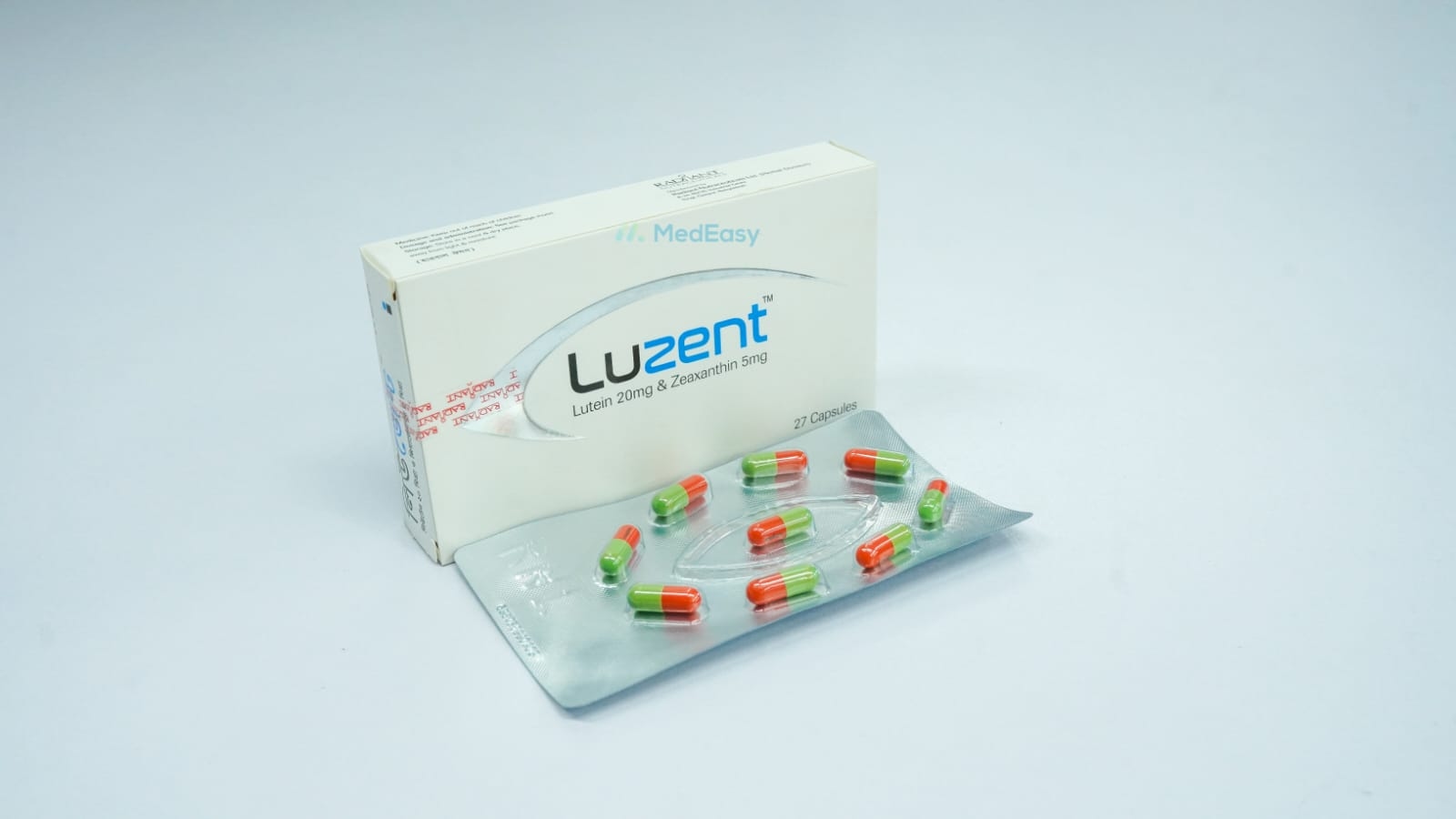
7% Off
Luzent20 mg+5 mg
Radiant Pharmaceuticals Ltd.
৳325.50
Add to cart
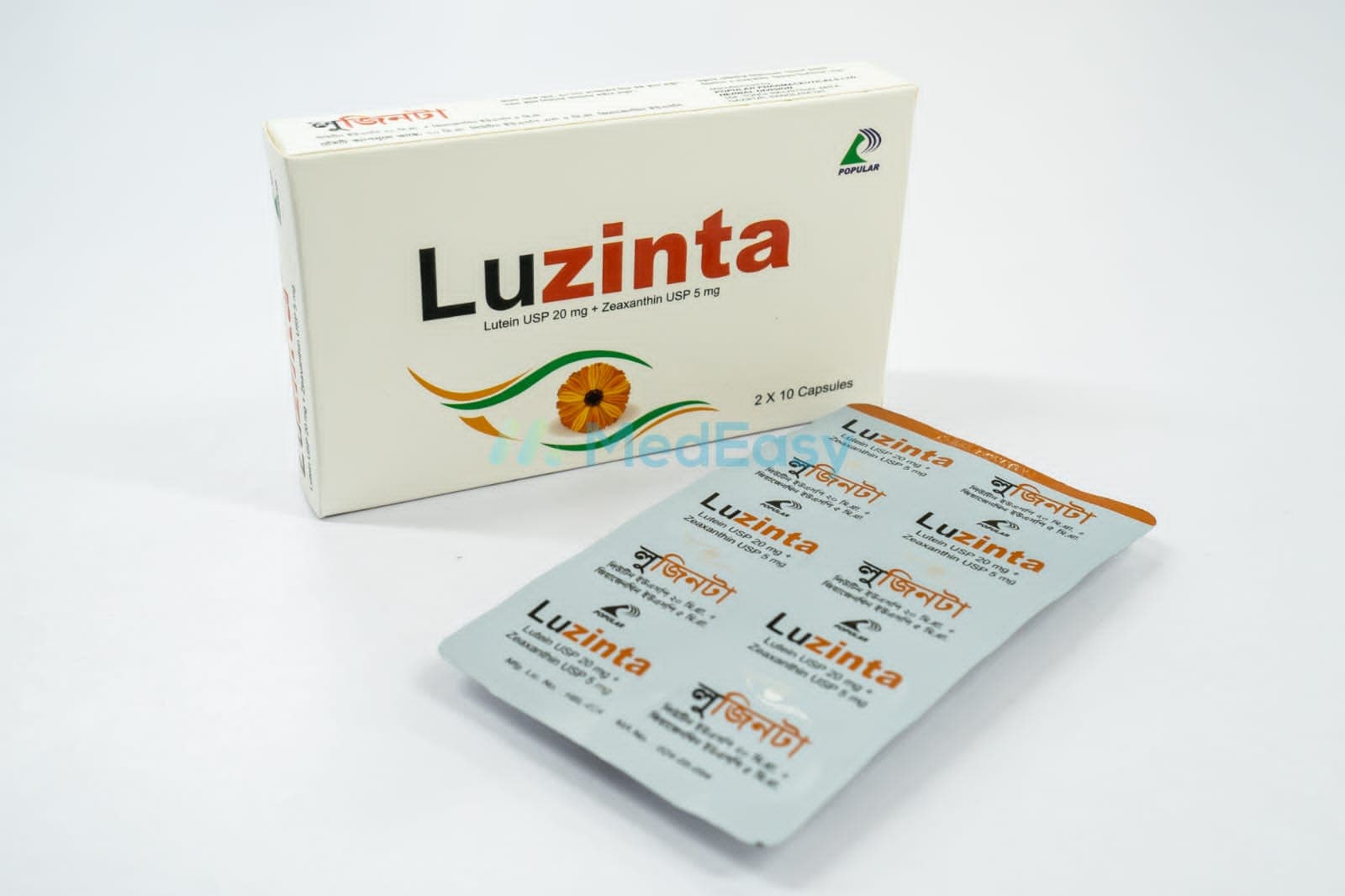

Luzinta is a carotenoid antioxidant combination used primarily as a nutritional supplement to support eye health, most notably in the context of age-related macular degeneration (AMD).
Luzinta is not indicated as a treatment for existing severe vision loss, early AMD (where benefit has not been demonstrated), or any acute eye disease, and does not replace regular ophthalmologic monitoring.
Each unit of a typical Lutein + Zeaxanthin supplement formulation contains Lutein 10 mg and Zeaxanthin 2 mg (as isolated carotenoids, often derived from marigold flower (Tagetes erecta) extract), commonly combined with other AREDS2-formula nutrients such as Vitamin C, Vitamin E, Zinc (as zinc oxide), and Copper (as cupric oxide) in eye-health formulations. Strength and combination may vary by brand; refer to the specific product label.
Luzinta refers to two naturally occurring carotenoid (xanthophyll) pigments that are concentrated in the macula lutea of the human retina, where they are collectively known as macular pigment. As a nutritional supplement, Luzinta is used to supplement dietary intake of these carotenoids, which are otherwise obtained from dark leafy green vegetables (e.g., spinach, kale), corn, and egg yolk. Luzinta is best known for its role in the AREDS2 study, which established evidence for its use in reducing the risk of progression of age-related macular degeneration (AMD) when combined with other specific nutrients.
Luzinta belongs to the therapeutic class of carotenoid antioxidant nutritional supplements/ocular nutraceuticals, used for eye health support.
Lutein + Zeaxanthin consists of xanthophyll carotenoids that are selectively taken up and concentrated in the macula of the retina, where they form the macular pigment. They are believed to work through two principal mechanisms: (1) absorbing high-energy blue light before it reaches the underlying photoreceptors and retinal pigment epithelium, thereby reducing photo-oxidative stress, and (2) acting as local antioxidants that neutralize reactive oxygen species generated by light exposure and high metabolic activity in the retina.
Following oral intake, Lutein + Zeaxanthin is absorbed in the small intestine (absorption is enhanced when taken with a meal containing fat), transported in the bloodstream bound to lipoproteins, and selectively deposited in the macula and, to a lesser extent, other body tissues. Unabsorbed material is eliminated in the feces; absorbed carotenoid is metabolized and excreted via hepatobiliary pathways.
| Indication | Typical Dose |
|---|---|
| Risk reduction in intermediate AMD or advanced AMD in one eye (AREDS2 formulation) | Lutein 10 mg + Zeaxanthin 2 mg once daily, usually taken as part of a combined AREDS2 multi-nutrient formulation (with vitamin C, vitamin E, zinc, and copper), sometimes divided into two doses per day depending on the product |
| General dietary/antioxidant supplementation | As per product label; commonly 6-20 mg lutein with 1-4 mg zeaxanthin daily |
Not established; Luzinta supplementation for AMD risk reduction is not applicable to children, as AMD is a disease of older adults.
No well-established dose adjustment is required for renal or hepatic impairment; however, patients with significant hepatic or renal disease should consult a physician before use, particularly if the product also contains high-dose zinc.
Luzinta should be taken orally with food, preferably a meal containing some fat, to enhance absorption of the fat-soluble carotenoids. It should be taken consistently, as directed by a physician or the product label, for long-term risk reduction rather than short-term symptom relief.
Luzinta is administered orally, typically once or twice daily with food (preferably a meal containing fat) to improve absorption. It should be swallowed whole with water and not chewed or crushed unless the specific product formulation allows this.
Luzinta has minimal known clinically significant drug interactions and is generally well tolerated when combined with commonly used medications. As with other carotenoids, concurrent high-dose supplementation with beta-carotene is not recommended, as competitive intestinal absorption may reduce the bioavailability of one or more carotenoids. Patients taking other vitamin/mineral supplements (particularly those also containing zinc, vitamin E, or vitamin C in AREDS2-type formulations) should avoid duplicating doses to prevent inadvertent excess intake. No significant interactions with anticoagulants, antiplatelets, or other major drug classes have been well established for Luzinta itself.
Lutein + Zeaxanthin is contraindicated only in patients with known hypersensitivity to lutein, zeaxanthin, or any excipient/component of the specific product formulation.
Luzinta is generally well tolerated. Reported adverse effects are usually mild and include:
Serious adverse effects are rare. Any unusual or severe reaction should be reported to a physician.
Data specifically evaluating supplemental (above-dietary) doses of Luzinta in pregnancy and lactation are limited. Lutein and zeaxanthin are normal dietary carotenoids and are transferred to breast milk, but formal safety studies of concentrated supplement doses in pregnant or breastfeeding women are lacking. As a general precaution, Luzinta supplementation above ordinary dietary intake should be used during pregnancy and lactation only if clearly needed and after consulting a physician, who can weigh the potential benefit against the limited safety data.
Luzinta is intended as a risk-reduction and supportive supplement, not as a treatment for existing severe vision loss or acute eye disease, and does not replace regular comprehensive ophthalmologic examinations and monitoring. Patients with early AMD (rather than intermediate or advanced AMD) have not been shown to benefit from AREDS2-type supplementation and should discuss the appropriateness of use with their eye care provider. When Luzinta is combined with other AREDS2-formula ingredients (particularly high-dose zinc), patients should be aware of the potential for zinc-related adverse effects (e.g., copper deficiency, gastrointestinal upset) and should not exceed the recommended combined dose. Smokers or former smokers should specifically avoid beta-carotene-containing formulations (an increased lung cancer risk was seen with beta-carotene in AREDS-type trials), though this caution applies to beta-carotene rather than to Luzinta itself.
Excessive or prolonged high-dose intake of Luzinta may cause carotenodermia (yellow-orange skin discoloration), which is generally harmless and reversible after stopping or reducing the dose. Significant acute toxicity from Luzinta alone is not well documented; however, if a very large amount has been ingested (especially of a combined multi-nutrient product also containing zinc or vitamins in high doses), or if any concerning symptoms occur, the patient should seek immediate medical attention or contact a poison control center/emergency services rather than attempting home treatment.
Store at room temperature (below 30°C), away from light and moisture. Keep out of reach of children.
Luzinta is primarily intended for use in older adults, as AMD is a disease of aging; this is the population in which the supporting AREDS2 evidence was generated, and no special dose adjustment beyond standard dosing is required for this group.
No well-established dose adjustment is required; caution and physician consultation are advised in patients with significant organ impairment, particularly when using combined multi-nutrient formulations.
Smokers and former smokers should use AREDS2-type formulations that use Luzinta instead of beta-carotene, given the demonstrated lung cancer risk associated with beta-carotene supplementation in this population.
Luzinta for AMD risk reduction is intended for long-term, typically indefinite, daily use under ongoing ophthalmologic supervision, as the supporting clinical evidence reflects sustained daily supplementation over several years. Duration should be guided by a physician or eye care provider based on periodic reassessment of the patient's retinal status.
Lutein + Zeaxanthin belongs to the carotenoid (xanthophyll) class of compounds, categorized therapeutically as an ocular antioxidant nutraceutical/dietary supplement.
Lutein + Zeaxanthin acts by accumulating in the macula of the retina, where it filters damaging blue light and neutralizes oxidative free radicals, thereby helping protect retinal photoreceptors and the retinal pigment epithelium from photo-oxidative damage implicated in the progression of age-related macular degeneration.
The use of Luzinta for AMD risk reduction is not applicable to the pediatric population, as age-related macular degeneration does not occur in children. Safety and efficacy of supplemental-dose Luzinta in children have not been established, and it should not be given to children except as part of normal dietary intake or under specific physician guidance for other conditions.
Q: What is Luzinta 20 mg+5 mg Capsule used for?
A: Luzinta 20 mg+5 mg Capsule is a carotenoid antioxidant supplement mainly used, as part of the AREDS2 formulation (with vitamin C, vitamin E, zinc, and copper), to reduce the risk of progression to advanced age-related macular degeneration (AMD) in people with intermediate AMD or advanced AMD in one eye. It is not a treatment for existing severe vision loss and does not replace regular eye examinations.
Q: Can Luzinta 20 mg+5 mg Capsule cure or reverse vision loss from AMD?
A: No. Luzinta 20 mg+5 mg Capsule is a risk-reduction and supportive supplement, not a cure. It may help slow progression to more advanced AMD in appropriate patients but cannot reverse vision that has already been lost.
Q: Are there any drug interactions with Luzinta 20 mg+5 mg Capsule?
A: Luzinta 20 mg+5 mg Capsule has minimal known clinically significant interactions with other medicines. However, taking it together with high-dose beta-carotene supplements may reduce absorption of one or more carotenoids, and duplicate intake of AREDS2-type multivitamin products should be avoided to prevent excess zinc, vitamin C, or vitamin E intake.
Q: Is Luzinta 20 mg+5 mg Capsule safe during pregnancy and breastfeeding?
A: Supplemental doses of Luzinta 20 mg+5 mg Capsule above normal dietary intake have not been thoroughly studied in pregnancy or breastfeeding. It should be used in these situations only if clearly needed and after consulting a physician, who can weigh the potential benefit against limited safety data.
Q: What are the possible side effects of Luzinta 20 mg+5 mg Capsule?
A: Luzinta 20 mg+5 mg Capsule is generally well tolerated. Mild gastrointestinal upset and headache can occur, and prolonged high-dose use may cause a harmless, reversible yellow-orange skin discoloration (carotenodermia). Serious side effects are rare.
Q: What should I do if I take too much Luzinta 20 mg+5 mg Capsule?
A: Taking more than the recommended amount of Luzinta 20 mg+5 mg Capsule may cause skin discoloration but is not typically associated with serious acute toxicity on its own. If a very large amount has been taken, especially of a combined multi-nutrient product, or if any concerning symptoms occur, seek immediate medical attention or contact a poison control center rather than treating it at home.
Disclaimer
The information provided is accurate to the best of our knowledge, but it does not replace professional medical advice. We cannot guarantee its completeness or accuracy, and the absence of specific information about a drug should not be taken as an endorsement. We are not responsible for any consequences arising from this information, so please consult a healthcare professional for any concerns or questions.
