8% Off
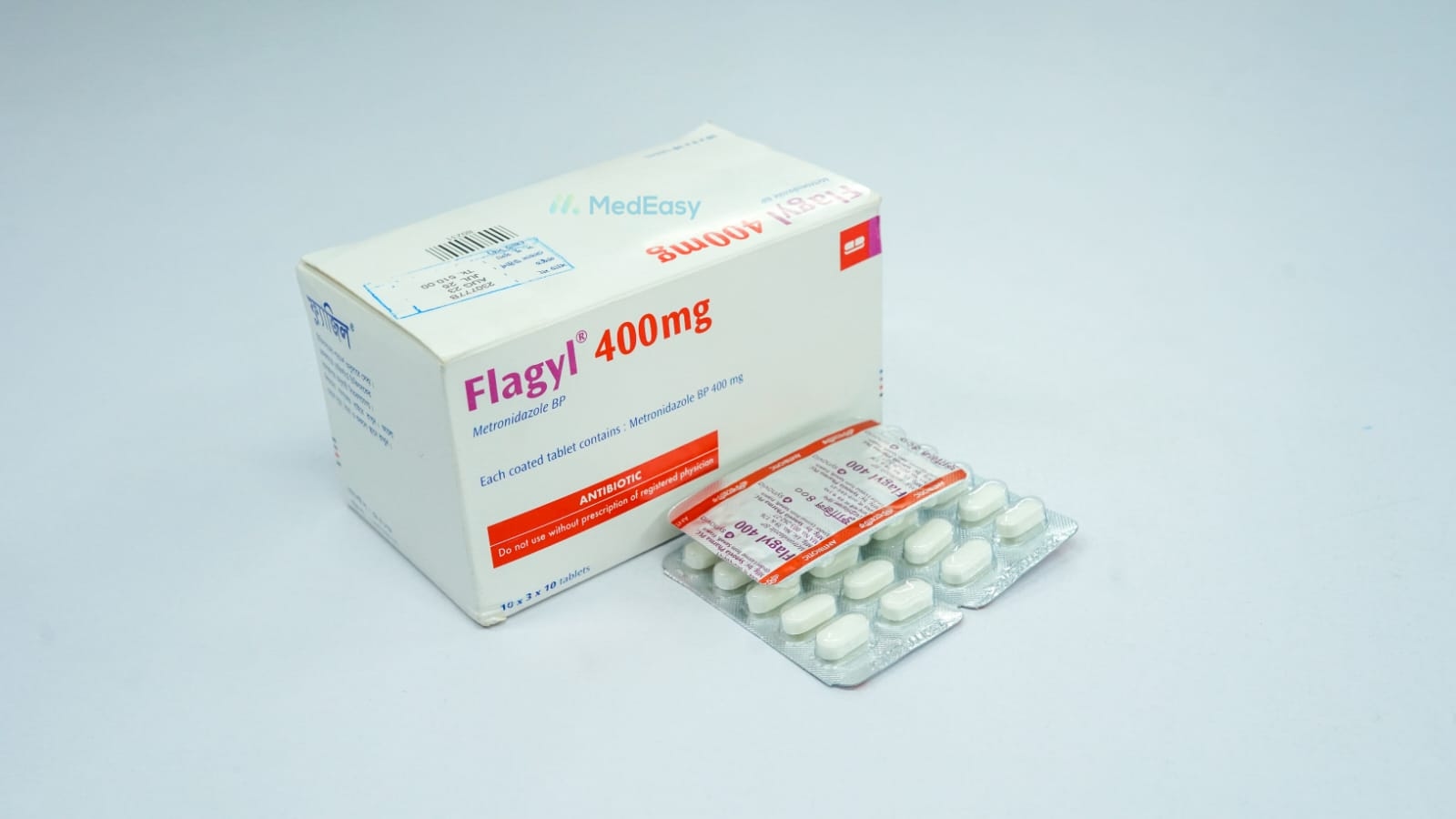
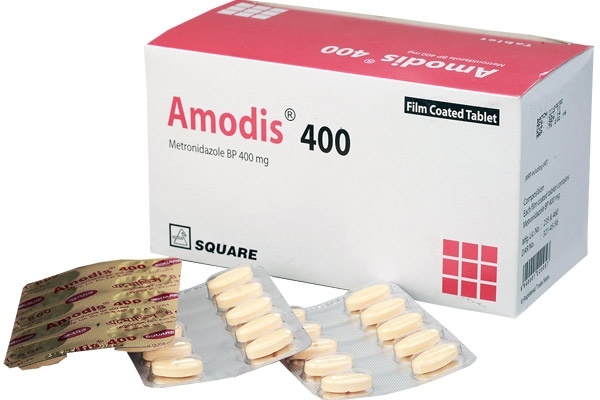
Amodis400 mg
Square Pharmaceuticals PLC.
৳15.64
Add to cart


M-400 is a nitroimidazole antimicrobial used to treat a range of anaerobic bacterial and protozoal infections. Its indications can be grouped by strength of evidence:
Each Metronidazole formulation contains Metronidazole as the active ingredient, available in various strengths (commonly 200 mg, 250 mg, 400 mg, and 500 mg tablets, oral suspension 200 mg/5 mL, vaginal gel, topical gel/cream, suppositories, and intravenous infusion 500 mg/100 mL), along with standard pharmaceutical excipients.
M-400 is a synthetic nitroimidazole derivative with broad-spectrum antibacterial activity against anaerobic bacteria and antiprotozoal activity against certain parasites. It is available in Bangladesh and worldwide as oral tablets, oral suspension, intravenous infusion, vaginal gel/tablets, and topical preparations, and is widely used for anaerobic infections, protozoal infections, and as part of combination regimens such as H. pylori eradication.
M-400 belongs to the nitroimidazole class of antimicrobials, which has both antibacterial (anti-anaerobic) and antiprotozoal (antiparasitic) activity.
Metronidazole is a prodrug that diffuses into anaerobic bacterial and protozoal cells, where its nitro group is reduced by intracellular electron-transport proteins found only in anaerobic/microaerophilic organisms. This reduction generates cytotoxic intermediates and free radicals that bind to microbial DNA, causing strand breakage, disruption of the helical structure, and inhibition of nucleic acid synthesis, ultimately leading to cell death. Because this reductive activation requires a low-redox-potential environment, Metronidazole is selectively active against anaerobic bacteria and certain protozoa (e.g., Entamoeba histolytica, Giardia duodenalis, Trichomonas vaginalis) and has little activity against aerobic organisms.
Pharmacokinetics: Metronidazole is well absorbed orally (bioavailability greater than 90%), widely distributed into body tissues and fluids (including CSF, bone, and abscess cavities), metabolized in the liver, and eliminated mainly via the kidneys. Its elimination half-life is approximately 6-8 hours in adults with normal hepatic function.
Dosage of M-400 must be individualized according to the indication, patient age, weight, and renal/hepatic function. Take M-400 exactly as prescribed by your physician; do not stop, extend, skip doses, or share this medicine with others without medical advice.
| Indication | Typical adult dose | Duration |
|---|---|---|
| Anaerobic bacterial infections | 7.5 mg/kg (usually 500 mg) orally or IV every 6-8 hours (maximum 4 g/24 hours) | 7-10 days (longer for bone/joint, endocardial, or CNS infections) |
| Trichomoniasis | 2 g single oral dose, or 250 mg three times daily, or 375 mg twice daily | Single dose or 7 days; sexual partners should be treated simultaneously |
| Intestinal amoebiasis | 500-750 mg orally three times daily | 5-10 days |
| Amoebic liver abscess | 500-750 mg orally three times daily | 5-10 days, often followed by a luminal amoebicide |
| Bacterial vaginosis | 500 mg orally twice daily, or intravaginal gel once daily | 7 days |
| Giardiasis | 250 mg orally three times daily | 5-7 days |
| H. pylori eradication (combination therapy) | 400-500 mg orally two or three times daily, combined with other antibiotics and a proton pump inhibitor | 10-14 days, per regimen |
| Surgical prophylaxis | Per institutional protocol, typically 500 mg-1 g IV before surgery | Single perioperative dose or short course |
Pediatric dosing is weight-based and indication-specific (e.g., approximately 35-50 mg/kg/day in three divided doses for amoebiasis; lower doses for giardiasis). See Use in Special Populations and Pediatric Uses for details; a pediatrician should determine the exact dose.
No dose adjustment is generally needed for mild-to-moderate renal impairment; dose reduction may be considered in severe renal impairment or hemodialysis (a supplemental dose may be needed after dialysis). In severe hepatic impairment, reduced doses and close monitoring are recommended because M-400 is extensively metabolized by the liver.
M-400 tablets/capsules can be taken with or without food; taking with food or milk may reduce stomach upset. Tablets should be swallowed whole with a full glass of water and not crushed or chewed unless directed. The oral suspension should be shaken well before use and measured with an accurate dosing device. Vaginal gel/tablets should be inserted as directed, and topical preparations applied to clean, dry skin. Intravenous M-400 is administered by slow infusion under medical supervision. Complete the full course of M-400 as prescribed even if symptoms improve early.
M-400 has several clinically significant drug interactions:
Metronidazole is contraindicated in:
Common side effects of M-400 include:
Less common but important effects:
Pregnancy: M-400 crosses the placenta. It is classified under the former FDA pregnancy category B. M-400 should be used during pregnancy only if clearly needed and the potential benefit justifies the potential risk to the fetus; consult a physician before use, particularly avoiding use of M-400 in the first trimester for trichomoniasis (see Contraindications). Single high-dose M-400 regimens are generally avoided in pregnancy in favor of longer, lower-dose courses.
Lactation: M-400 is excreted in breast milk in concentrations similar to maternal plasma. Because of concerns raised by carcinogenicity findings in animal studies, a decision should be made, in consultation with a physician, either to temporarily discontinue breastfeeding (with pumping and discarding milk for 12-24 hours after a single M-400 dose) or to avoid M-400, weighing the importance of the drug to the mother.
Take M-400 exactly as prescribed by your physician; do not stop, extend, skip doses, or share this medicine with others without medical advice.
Overdose of M-400 may cause nausea, vomiting, and ataxia (unsteady gait); very high doses of M-400 have rarely been associated with peripheral neuropathy and seizures. There is no specific antidote. If M-400 overdose is suspected, seek immediate medical attention or contact emergency services/a poison control center; treatment is supportive and symptomatic.
Store at room temperature (below 30°C), away from light and moisture. Keep out of reach of children.
Elderly: no specific dose adjustment of M-400 is generally required, but elderly patients may be more susceptible to neurological side effects; use with caution and monitor.
Renal impairment: generally no adjustment needed for mild-to-moderate impairment; consider M-400 dose reduction in severe renal impairment or dialysis patients (a supplemental post-dialysis dose may be required).
Hepatic impairment: reduced M-400 doses and monitoring recommended in severe hepatic impairment, as M-400 is extensively hepatically metabolized.
Pregnancy and lactation: see Pregnancy and Lactation.
Pediatric patients: see Pediatric Uses.
Duration of M-400 treatment depends on the indication, ranging from a single dose (e.g., 2 g for trichomoniasis) to 5-10 days for most infections, and longer courses (occasionally several weeks) for certain bone, joint, or CNS infections as directed by a physician. Complete the full prescribed course of M-400 even if symptoms resolve early.
Nitroimidazole antimicrobial (antibacterial and antiprotozoal agent)
Metronidazole is reduced intracellularly by anaerobic and microaerophilic organisms to reactive intermediates that damage microbial DNA, causing strand breakage and inhibiting nucleic acid synthesis, which leads to cell death of susceptible anaerobic bacteria and protozoa.
Category B
M-400 is used in children for indications such as amoebiasis, giardiasis, and anaerobic bacterial infections, with doses calculated on a mg/kg basis by a pediatrician. For amoebiasis, a commonly used pediatric dose of M-400 is approximately 35-50 mg/kg/day in three divided doses for 10 days; lower doses are used for giardiasis. Safety and efficacy of M-400 for indications and age groups not specifically studied have not been established, and pediatric use should always be guided and supervised by a physician.
Q: What is M-400 400 mg Tablet used for?
A: M-400 400 mg Tablet is used to treat anaerobic bacterial infections, certain protozoal infections such as amoebiasis, giardiasis and trichomoniasis, bacterial vaginosis, and as part of combination therapy for H. pylori eradication and surgical infection prevention.
Q: Can I drink alcohol while taking M-400 400 mg Tablet?
A: No. Alcohol should be avoided during treatment with M-400 400 mg Tablet and for at least 24-72 hours after the last dose, as combining them can cause a disulfiram-like reaction with flushing, nausea, vomiting, headache, and a fast heartbeat.
Q: Is it safe to take M-400 400 mg Tablet during pregnancy?
A: M-400 400 mg Tablet should be used in pregnancy only if clearly needed and if the potential benefit outweighs the potential risk to the fetus, and only under a physician's guidance; M-400 400 mg Tablet is generally avoided in the first trimester for trichomoniasis treatment. Always consult your physician before taking M-400 400 mg Tablet during pregnancy.
Q: Why does my urine look dark after taking M-400 400 mg Tablet?
A: M-400 400 mg Tablet can cause the urine to appear darker or reddish-brown. This is a harmless effect and resolves after M-400 400 mg Tablet is stopped, but tell your physician if you are concerned.
Q: What should I do if I miss a dose of M-400 400 mg Tablet?
A: Take the missed dose of M-400 400 mg Tablet as soon as you remember, unless it is almost time for the next dose, in which case skip the missed dose and continue your regular schedule. Do not double the dose. Always complete the full course of M-400 400 mg Tablet exactly as prescribed by your physician.
Q: What are the serious warning signs to watch for while taking M-400 400 mg Tablet?
A: Seek immediate medical attention if you develop numbness or tingling in your hands or feet, confusion, seizures, severe or persistent diarrhea, or signs of an allergic reaction while taking M-400 400 mg Tablet, as these may indicate rare but serious side effects.
Disclaimer
The information provided is accurate to the best of our knowledge, but it does not replace professional medical advice. We cannot guarantee its completeness or accuracy, and the absence of specific information about a drug should not be taken as an endorsement. We are not responsible for any consequences arising from this information, so please consult a healthcare professional for any concerns or questions.