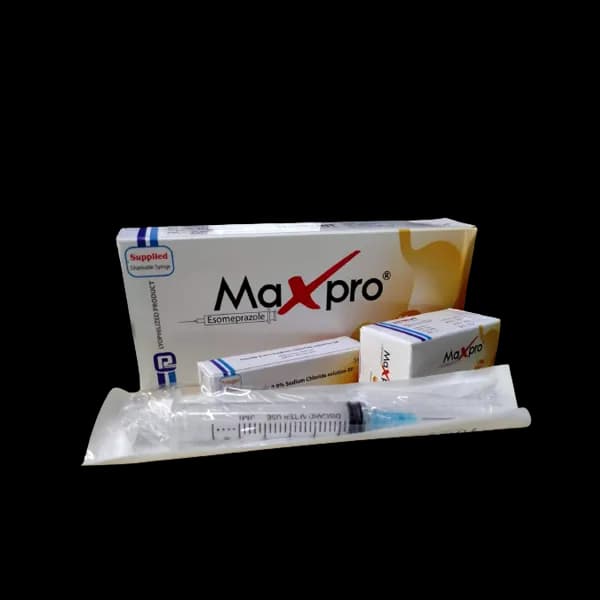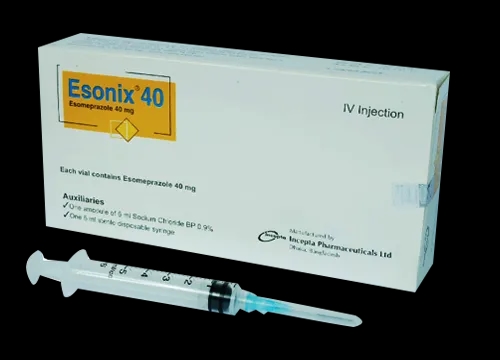
Product gallery
MRP 105.005% Off
Best PriceTk 99.75/40 mg vial
1
Section

Medicine overview

Indications of Maxpro 40 mg

Maxpro 40 mg is a proton pump inhibitor (PPI) indicated for the treatment and management of a range of acid-related gastrointestinal conditions in adults and eligible pediatric patients. It works by significantly reducing gastric acid production and is used in the following conditions:

Gastroesophageal Reflux Disease (GERD)

Healing of Erosive Esophagitis: Esomeprazole is indicated for the short-term treatment (4 to 8 weeks) of diagnostically confirmed erosive esophagitis — damage to the esophageal lining caused by chronic acid reflux. For patients who have not fully healed after the initial course, an additional 4 to 8 weeks of treatment may be considered.

Maintenance of Healing of Erosive Esophagitis: After initial healing, Esomeprazole is indicated for long-term maintenance therapy to prevent relapse of erosive esophagitis and sustain symptom-free periods.

Symptomatic GERD: Esomeprazole provides short-term relief (4 to 8 weeks) of heartburn and other symptoms associated with gastroesophageal reflux disease in adults and children aged 1 year and older.

Helicobacter pylori (H. pylori) Eradication

In combination with appropriate antibiotics (amoxicillin and clarithromycin — triple therapy), Esomeprazole Magnesium is indicated for the treatment of Helicobacter pylori infection to promote healing of active duodenal ulcers associated with H. pylori and to reduce the risk of duodenal ulcer recurrence. This triple therapy regimen has been shown to be effective against most susceptible strains of H. pylori in both laboratory and clinical settings.

Risk Reduction of NSAID-Associated Gastric Ulcers

Esomeprazole is indicated for the prevention of gastric ulcers in patients who are at risk due to continuous NSAID (non-steroidal anti-inflammatory drug) therapy. Patients considered to be at higher risk include those aged 60 years and above and those with a documented history of gastric ulcers. It is also indicated for the healing of NSAID-associated gastric ulcers when NSAID therapy cannot be discontinued.

Pathological Hypersecretory Conditions — Zollinger-Ellison Syndrome

Esomeprazole is indicated for the long-term treatment of pathological hypersecretory conditions, including Zollinger-Ellison Syndrome — a rare condition in which one or more tumors (gastrinomas) cause the stomach to produce excessive acid, leading to severe and recurrent peptic ulcers.

Prevention of Rebleeding after Therapeutic Endoscopy (IV formulation)

Intravenous Esomeprazole is indicated for reducing the risk of rebleeding from gastric or duodenal ulcers following therapeutic endoscopy in adult patients.

Pediatric Use

Esomeprazole is approved for short-term treatment of GERD (up to 8 weeks) in pediatric patients aged 1 to 17 years, with age- and weight-appropriate dosing.

Theropeutic Class

 Proton Pump Inhibitors (PPIs)

Pharmacology

Maxpro 40 mg is the magnesium salt of Esomeprazole trihydrate, the pure S-enantiomer (optical isomer) of Omeprazole. It belongs to the class of drugs known as proton pump inhibitors (PPIs) and is the first PPI to be developed as a single optical isomer, offering improved pharmacokinetic properties, greater systemic exposure, reduced inter-individual variability, and more effective acid suppression compared to racemic omeprazole and other PPIs.

Mechanism of Action

Esomeprazole exerts its pharmacological effect by irreversibly inhibiting the hydrogen-potassium ATPase enzyme system (H⁺/K⁺-ATPase) — commonly known as the "proton pump" — located on the secretory surface of gastric parietal cells. This enzyme is the final step in gastric acid secretion. By covalently binding to and blocking this pump, Esomeprazole suppresses both basal and stimulated gastric acid secretion, regardless of the stimulus (histamine, gastrin, or acetylcholine), leading to a sustained reduction in intragastric acidity.

Esomeprazole is a prodrug that requires activation in the acidic environment of the secretory canaliculi of the gastric parietal cell. Once absorbed, it is transported to the parietal cells where it is converted to its active sulfenamide form, which then binds irreversibly to the proton pump. Because the drug acts on actively secreting pumps, the acid-suppressive effect is maximal when the drug is taken before a meal.

Pharmacokinetics

  • Absorption: Esomeprazole is acid-labile and is formulated as enteric-coated pellets in delayed-release capsules to protect the drug from degradation in the stomach. The enteric coating dissolves at pH >6 in the small intestine. After a single oral dose of 40 mg, peak plasma concentration (Cmax) is reached at approximately 1.5 hours (Tmax). Bioavailability after a single 40 mg dose is approximately 64%, increasing to approximately 90% with repeated once-daily dosing — due to reduced first-pass metabolism with repeated administration.
  • Effect of Food: Food decreases both the rate and extent of absorption. Esomeprazole should be taken at least 1 hour before meals for optimal efficacy.
  • Distribution: Esomeprazole is extensively distributed into body tissues. It has a plasma protein binding of approximately 97%, primarily to albumin and alpha-1-acid glycoprotein.
  • Metabolism: Esomeprazole is extensively metabolized in the liver, primarily by the cytochrome P450 enzyme CYP2C19 (producing the hydroxy and desmethyl metabolites) and to a lesser extent by CYP3A4 (producing esomeprazole sulfone). All metabolites are pharmacologically inactive. Patients who are CYP2C19 "poor metabolizers" (approximately 2–3% of the Caucasian population and 15–20% of Asian populations) will have significantly higher plasma concentrations due to reduced hepatic clearance.
  • Half-life: Approximately 1 to 1.5 hours with once-daily dosing. Despite the short plasma half-life, the pharmacodynamic effect (acid suppression) persists for 24 hours due to irreversible binding to the proton pump.
  • Elimination: The metabolites are excreted primarily in the urine (approximately 80%) and the remainder in feces. Less than 1% of the parent drug is excreted unchanged in the urine.

Pharmacodynamics

Following repeated once-daily dosing of 40 mg Esomeprazole, the mean 24-hour intragastric pH is significantly elevated. In clinical studies, approximately 68% of patients maintained intragastric pH >4 for more than 16 hours per day with 40 mg dosing. This sustained acid suppression is key to healing erosive esophagitis and eradicating H. pylori in combination with antibiotics.

Dosage of Maxpro 40 mg

The dose of Maxpro 40 mg depends on the condition being treated, the patient's age, and hepatic function. Always follow your registered physician's prescribed dose. Do not self-medicate. Esomeprazole should be taken at least 1 hour before meals.

Adults — Oral

Indication Dose Frequency Duration
Healing of Erosive Esophagitis 20 mg or 40 mg Once daily 4–8 weeks (may extend by further 4–8 weeks if needed)
Maintenance of Healing of Erosive Esophagitis 20 mg Once daily Long-term (controlled studies up to 6 months)
Symptomatic GERD 20 mg Once daily 4 weeks (reassess if symptoms persist)
H. pylori Eradication — Triple Therapy (with Amoxicillin 1000 mg + Clarithromycin 500 mg) 40 mg Once daily 10 days
Risk Reduction of NSAID-Associated Gastric Ulcer 20 mg or 40 mg Once daily Up to 6 months
Healing of NSAID-Associated Gastric Ulcer 20 mg Once daily 4–8 weeks
Zollinger-Ellison Syndrome (pathological hypersecretory conditions) 40 mg (titrate based on response; doses up to 240 mg/day have been administered) Twice daily (starting dose) Long-term, as required

Pediatric Patients — Oral

Age Group Indication Dose Duration
12–17 years Healing of Erosive Esophagitis 20 mg or 40 mg once daily 4–8 weeks
12–17 years Symptomatic GERD 20 mg once daily 4 weeks
1–11 years (weight <20 kg) Symptomatic GERD / Erosive Esophagitis 10 mg once daily Up to 8 weeks
1–11 years (weight ≥20 kg) Symptomatic GERD / Erosive Esophagitis 10 mg or 20 mg once daily Up to 8 weeks

Adults — Intravenous (IV)

IV Esomeprazole is reserved for patients who are unable to take oral medication.

Indication Dose Administration
Short-term treatment of GERD with Erosive Esophagitis (when oral therapy not possible) 20 mg or 40 mg once daily IV injection over at least 3 minutes, or IV infusion over 10–30 minutes
Prevention of Rebleeding following Therapeutic Endoscopy 80 mg infused over 30 minutes, then 8 mg/hour continuous IV infusion Total treatment duration of 72 hours, then switch to oral therapy

Special Dosage Considerations

Hepatic Impairment: No dose adjustment is required for patients with mild to moderate hepatic impairment (Child-Pugh Classes A and B). For patients with severe hepatic impairment (Child-Pugh Class C), the maximum dose should not exceed 20 mg once daily due to significantly reduced drug clearance.

Renal Impairment: No dose adjustment is required in patients with any degree of renal impairment, as less than 1% of the drug is excreted unchanged in the urine.

Elderly Patients: No dose adjustment is required for elderly patients.

Administration of Maxpro 40 mg

Oral Delayed-Release Capsules

  • Esomeprazole Magnesium capsules must be taken at least 1 hour before eating — preferably in the morning before breakfast — for optimal efficacy. Food decreases absorption and reduces the drug's acid-suppressive effect.
  • Swallow the capsule whole with a full glass of water. Do not crush, break, or chew the capsule or its enteric-coated pellets, as this will destroy the acid-protective coating and render the drug ineffective.
  • For patients who have difficulty swallowing capsules, the capsule may be opened and the intact enteric-coated pellets mixed with one tablespoon of soft applesauce or yogurt. The pellets should be swallowed immediately without chewing and the mixture should not be stored for future use.
  • For administration via a nasogastric (NG) tube, the capsule contents can be dispersed in water and administered through the tube — consult prescribing information for the specific procedure.
  • Complete the full prescribed course as directed, even if symptoms improve before treatment is complete.

Oral Delayed-Release Suspension (Granules/Powder Sachet)

  • Empty the contents of one sachet into a container with 15 mL of water. Stir and allow to thicken for 2–3 minutes. Stir again and drink the suspension within 30 minutes.
  • Refill the container with water and drink to ensure the full dose is consumed.
  • Do not use any other liquid to prepare the suspension.

Intravenous (IV) Administration

  • Reconstitute the lyophilized powder with 5 mL of 0.9% Sodium Chloride Injection, then further dilute to 50 mL for infusion.
  • IV injection: Administer over at least 3 minutes.
  • IV infusion: Administer over 10 to 30 minutes.
  • For rebleeding prevention: Administer 80 mg IV over 30 minutes, followed by a continuous infusion of 8 mg/hour for 71.5 hours.
  • Inspect visually for particulate matter and discoloration before administration. Discard if solution is discolored or contains visible particles.
  • Switch to oral Esomeprazole as soon as the patient can tolerate oral medications.
  • Reconstituted IV solution should be used within 12 hours when stored at room temperature, or within 24 hours when refrigerated.
  • Do not mix Esomeprazole IV with other medications in the same infusion line.

Interaction of Maxpro 40 mg

Maxpro 40 mg is metabolized primarily by CYP2C19 and to a lesser extent by CYP3A4. It can affect the absorption, metabolism, and plasma levels of several drugs. The following interactions are clinically significant:

Clopidogrel (Avoid Combination)

Clopidogrel is a prodrug that requires activation by CYP2C19 to its active metabolite. Esomeprazole inhibits CYP2C19, thereby significantly reducing the antiplatelet activity of clopidogrel — potentially increasing the risk of cardiovascular events (heart attack, stroke) in patients with coronary artery disease. Co-administration should be avoided; consider alternative antiplatelet or acid-suppressive therapy where possible.

Antiretroviral Drugs

Rilpivirine (Contraindicated): Esomeprazole increases gastric pH, significantly reducing rilpivirine absorption (AUC reduced by approximately 40%). This interaction can lead to treatment failure and development of HIV drug resistance. Co-administration is contraindicated.

Atazanavir and Nelfinavir: Elevated gastric pH reduces absorption of these antiretroviral agents, lowering their plasma concentrations and potentially compromising HIV therapy efficacy. Avoid concomitant use.

Methotrexate

Concomitant use of PPIs including Esomeprazole with high-dose methotrexate may elevate and prolong serum levels of methotrexate and/or its active metabolite, hydroxymethotrexate, potentially leading to methotrexate toxicity. Temporary withdrawal of Esomeprazole may be considered in patients receiving high-dose methotrexate.

Drugs Dependent on Gastric pH for Absorption

  • Ketoconazole and Itraconazole: Esomeprazole raises gastric pH, reducing the oral absorption and efficacy of these antifungal agents. Use with caution; monitor for reduced antifungal effectiveness.
  • Iron salts (oral): Absorption is reduced in a higher gastric pH environment. Separate dosing is recommended.
  • Erlotinib: Esomeprazole decreases erlotinib plasma levels, potentially reducing its anti-cancer efficacy. Co-administration is generally contraindicated.
  • Mycophenolate mofetil: PPIs may reduce the absorption of mycophenolic acid, requiring monitoring of drug levels and immunosuppressive efficacy after transplant.

Tacrolimus

Co-administration of Esomeprazole may increase the serum levels of tacrolimus, an immunosuppressant. Tacrolimus blood levels should be monitored and doses adjusted as necessary in patients receiving this combination.

Digoxin

Esomeprazole may increase digoxin plasma concentrations. This is more significant in patients with impaired renal function. Monitor digoxin levels during concurrent use.

Diuretics

Concurrent use of Esomeprazole with diuretics may increase the risk of hypomagnesemia, particularly with long-term use. Magnesium levels should be monitored during combined therapy, especially in patients on long-term treatment.

St. John's Wort and Rifampin (CYP Inducers)

St. John's Wort (an inducer of CYP3A4) and rifampin (a potent inducer of both CYP2C19 and CYP3A4) can significantly reduce the plasma concentration of Esomeprazole, decreasing its therapeutic effect. Avoid concomitant use.

Voriconazole

Voriconazole (a CYP2C19 and CYP3A4 inhibitor) increases the exposure of Esomeprazole. Dose adjustment of Esomeprazole is not normally required, but in patients with Zollinger-Ellison syndrome requiring higher doses, dose adjustment may need to be considered.

Warfarin

Some cases of increased INR and prothrombin time have been reported in patients receiving PPIs and warfarin concomitantly. INR monitoring is recommended when initiating or stopping Esomeprazole in patients on anticoagulant therapy.

Cilostazol and Diazepam

Esomeprazole may increase plasma levels of cilostazol and diazepam through CYP2C19 inhibition, potentially enhancing their pharmacological effects and risk of adverse reactions.

Contraindications

Maxpro 40 mg is contraindicated in the following situations:

  • Known hypersensitivity to Esomeprazole, any other substituted benzimidazole (e.g., omeprazole, lansoprazole, pantoprazole), or to any component of the formulation. Hypersensitivity reactions may include anaphylaxis, anaphylactic shock, angioedema, bronchospasm, acute interstitial nephritis, and urticaria.
  • Concurrent use with rilpivirine-containing products (e.g., Complera, Odefsey, Edurant) — Esomeprazole significantly reduces rilpivirine absorption, which may lead to HIV treatment failure and resistance.
  • Concurrent use with products whose clearance is significantly affected by CYP2C19 inhibition in situations where elevated levels may pose a serious safety risk.

Side Effects of Maxpro 40 mg

Maxpro 40 mg is generally well tolerated. Most side effects are mild and resolve after completing or discontinuing therapy. The following adverse effects have been reported:

Common Side Effects (1–10%)

  • Gastrointestinal: Headache (most commonly reported), diarrhea, nausea, flatulence (gas), abdominal pain, constipation, and dry mouth
  • Neurological: Headache, dizziness, and drowsiness

Uncommon to Rare Side Effects

  • Gastrointestinal: Vomiting, dyspepsia, acid regurgitation, and taste disturbances
  • Hepatic: Elevated liver enzymes (ALT, AST); rarely, hepatitis with or without jaundice, and very rarely, hepatic failure
  • Skin and Hypersensitivity: Rash, pruritus, urticaria; rarely Stevens-Johnson syndrome, toxic epidermal necrolysis (TEN), and erythema multiforme. Discontinue Esomeprazole immediately if severe skin reactions develop.
  • Musculoskeletal: Arthralgia (joint pain), myalgia (muscle pain), and fractures of the hip, wrist, or spine with long-term or high-dose use
  • Renal: Acute interstitial nephritis (AIN) — present with fever, rash, arthralgia, fatigue, and declining renal function. Discontinue immediately if suspected.

Serious Side Effects (Requiring Immediate Medical Attention)

Hypomagnesemia (Low Magnesium)

Long-term PPI use (typically more than 1 year) can cause symptomatic and asymptomatic hypomagnesemia. Risk is increased in patients also taking digoxin or diuretics. Signs and symptoms include:

  • Seizures and convulsions
  • Fast, irregular, or racing heartbeat (cardiac arrhythmias)
  • Muscle spasms, cramps, and tetany
  • Tremors and jitteriness
  • Dizziness and unusual tiredness or weakness

Serum magnesium levels should be checked before initiating long-term therapy and periodically thereafter.

Clostridium difficile-Associated Diarrhea (CDAD)

PPI-induced reduction in gastric acid creates conditions more favorable to C. difficile overgrowth. Patients who develop severe watery or bloody diarrhea during or after therapy should be evaluated promptly for CDAD. Discontinue Esomeprazole if CDAD is confirmed.

Bone Fractures

Several published observational studies suggest that PPI therapy is associated with an increased risk of osteoporosis-related fractures of the hip, wrist, and spine — primarily with high-dose, prolonged use (more than 1 year). Patients at risk should be managed per appropriate guidelines, and calcium and vitamin D supplementation should be considered.

Lupus Erythematosus

Cutaneous lupus erythematosus (CLE) and systemic lupus erythematosus (SLE) have been reported in patients taking PPIs. Existing lupus may worsen. If joint pain or a skin rash that worsens on sun exposure develops, discontinue Esomeprazole and consult a physician.

Fundic Gland Polyps

Long-term use of PPIs has been associated with the development of fundic gland polyps in the stomach. The risk increases with duration of PPI use, particularly beyond 1 year. These polyps are usually benign.

Vitamin B12 Deficiency

Long-term use (more than 2 years) of PPIs may lead to reduced absorption of dietary vitamin B12 (cyanocobalamin) due to reduced gastric acid secretion. Patients on long-term PPI therapy, particularly the elderly, should be monitored for B12 deficiency.

Pregnancy & Lactation

Pregnancy

Available epidemiological data on Esomeprazole use during pregnancy have not identified a drug-associated risk for major birth defects, miscarriage, or adverse maternal or fetal outcomes. Animal studies using Esomeprazole and Omeprazole (the racemic parent compound) at doses substantially higher than human doses did not demonstrate evidence of fetal malformations or teratogenicity. However, because animal studies are not always predictive of human response, Esomeprazole should be used during pregnancy only if clearly necessary, when the potential benefit to the mother outweighs any potential risk to the fetus. Physicians should be consulted before use during pregnancy.

Lactation

Esomeprazole is the S-isomer of Omeprazole. Limited data indicate that maternal doses of Omeprazole 20 mg daily produce low levels in human milk. It is likely that Esomeprazole is also excreted into breast milk in small amounts. The potential effects on a breastfed infant are unknown. Caution should be exercised when Esomeprazole is administered to a nursing woman. The decision to breastfeed during treatment should take into account the benefit of breastfeeding to the infant, the clinical need of the mother for Esomeprazole, and any potential adverse effects on the infant.

Precautions & Warnings

Masking of Gastric Malignancy

Symptomatic response to Esomeprazole therapy does not preclude the presence of gastric malignancy, including gastric cancer. In patients with alarm symptoms (e.g., significant and unintentional weight loss, dysphagia, persistent vomiting, hematemesis, or iron-deficiency anemia), the possibility of malignancy should be excluded before initiating PPI therapy. Long-term PPI use without investigation in patients with persistent symptoms should be avoided.

Hypomagnesemia Monitoring

Long-term use of PPIs (typically more than 1 year) may cause hypomagnesemia. Serum magnesium levels should be checked before starting long-term treatment and periodically during therapy — especially in patients who are also taking digoxin or diuretics, where the risk of combined hypomagnesemia-related complications (arrhythmias, seizures) is higher. Magnesium supplementation and/or discontinuation of Esomeprazole may be required.

Bone Fracture Risk

Patients taking high doses of PPIs or taking them for extended periods (>1 year) may be at increased risk of hip, wrist, and spine fractures. Patients on long-term therapy should be advised to maintain adequate calcium and vitamin D intake, and bone density monitoring should be considered in high-risk patients.

Interference with Diagnostic Tests

PPI-induced decreases in gastric acidity result in enterochromaffin-like (ECL) cell hyperplasia and elevated serum Chromogranin A (CgA) levels. This elevation can interfere with diagnostic investigations for neuroendocrine tumors. Esomeprazole should be stopped at least 14 days before measuring CgA levels. If levels remain elevated, repeat testing should be performed after another 14 days without PPI therapy.

C. difficile-Associated Disease

PPI use has been associated with an increased risk of Clostridioides difficile-associated diarrhea (CDAD). Patients who develop persistent watery diarrhea during or after PPI therapy should be evaluated immediately. Unnecessary or prolonged PPI use should be avoided.

Acute Interstitial Nephritis

Acute interstitial nephritis (AIN) has been observed in patients taking PPIs and may occur at any point during therapy. Patients who develop signs of AIN (fever, rash, joint pain, reduced urine output, or elevated creatinine) should discontinue Esomeprazole promptly and seek medical evaluation.

Avoid Unnecessary Long-Term Use

The duration of PPI therapy should be the shortest effective duration. PPIs should only be initiated and continued when the clinical benefits outweigh the risks. Regular review of the need for ongoing PPI therapy is essential, particularly in patients using them for indications where short-term use is appropriate.

CYP2C19 Poor Metabolizers

Patients who are CYP2C19 poor metabolizers (more prevalent in Asian populations) have significantly higher plasma Esomeprazole levels compared to extensive metabolizers. While no dose adjustment is routinely required, awareness of this pharmacogenomic variability is important, especially when using Esomeprazole in combination regimens.

Overdose Effects of Maxpro 40 mg

There is no specific antidote for Esomeprazole overdose. Based on experience with Omeprazole (the parent racemate), symptoms observed following large overdoses include:

  • Confusion and drowsiness
  • Blurred vision
  • Tachycardia (rapid heart rate)
  • Nausea and vomiting
  • Diaphoresis (excessive sweating) and flushing
  • Headache and dry mouth
  • Other adverse effects similar to those seen at recommended doses

Single doses of Esomeprazole up to 80 mg have been reported as uneventful. Symptoms from deliberate overdosage (doses in excess of 240 mg/day) are typically transient. Reports with Omeprazole at doses up to 2,400 mg have generally described reversible effects.

Since Esomeprazole is extensively protein-bound, it is not expected to be removed by hemodialysis. Management is symptomatic and supportive. The possibility of multiple drug ingestion should always be considered in overdose cases. In the event of suspected overdose, contact a poison control center or seek emergency medical care immediately.

Storage Conditions

  • Store delayed-release capsules and suspension sachets below 30°C (86°F), in a cool, dry place protected from light and moisture.
  • Keep out of the reach of children.
  • Do not use any formulation after the expiry date printed on the packaging.
  • IV vials (before reconstitution): Store at or below 30°C, protected from light. Do not freeze.
  • Reconstituted IV solution: Use within 12 hours at room temperature (≤25°C) or within 24 hours when refrigerated (2°C–8°C). Do not freeze the reconstituted solution.
  • Esomeprazole is acid-labile — do not store the oral suspension after preparation; it should be consumed within 30 minutes of mixing.
  • Store in original packaging to protect from moisture and light exposure.

Use In Special Populations

Pediatric Patients

The safety and effectiveness of Esomeprazole Magnesium have been established in pediatric patients aged 1 to 17 years for the short-term treatment of GERD (up to 8 weeks). Dosing is age- and weight-dependent. Esomeprazole has not been studied for other indications in pediatric patients, and use for conditions other than GERD is not recommended in children. The safety of Esomeprazole in infants below 1 year of age has not been established.

Elderly Patients

No dose adjustment is required for elderly patients. The pharmacokinetics of Esomeprazole in the elderly are similar to those in younger adult patients. However, elderly patients on long-term PPI therapy should be monitored for hypomagnesemia, vitamin B12 deficiency, and bone fracture risk, as these risks increase with age and prolonged use.

Patients with Hepatic Impairment

No dose adjustment is required for patients with mild to moderate hepatic impairment (Child-Pugh Classes A and B). For patients with severe hepatic impairment (Child-Pugh Class C), Esomeprazole metabolism is significantly reduced and plasma concentrations are substantially elevated. The maximum dose in severe hepatic impairment is 20 mg once daily.

Patients with Renal Impairment

No dose adjustment is required in patients with any degree of renal impairment — including those undergoing hemodialysis — as Esomeprazole is primarily eliminated by hepatic metabolism and less than 1% is excreted unchanged in the urine. Since Esomeprazole is extensively protein-bound, it is not expected to be removed by dialysis.

CYP2C19 Poor Metabolizers

Patients who are CYP2C19 poor metabolizers (more common in Asian populations: approximately 15–20%) have significantly higher and more prolonged plasma Esomeprazole levels due to reduced hepatic metabolism. Standard dosing is typically appropriate, but awareness of this variation may be clinically relevant in drug interaction assessment.

Mode Of Action

By specifically inhibiting the H+/K+-ATPase in the gastric parietal cell, the proton pump inhibitor esomeprazole reduces stomach acid output. The first single optical isomer of a proton pump inhibitor, esomeprazole (S-isomer of omeprazole), offers superior acid control over racemic proton pump inhibitors. Absorption: The enteric-coated pellet version of esomeprazole magnesium is what is found in esomeprazole capsules. Peak plasma levels (Cmax) after oral dosing happen about 1.5 hours later (Tmax). The area under the plasma concentration-time curve (AUC) increases by a factor of three from 20 to 40 mg, and the Cmax increases correspondingly when the dose is raised. The systemic bioavailability is about 90% at repeated once-daily dosage as opposed to 64% following a single dose. When compared to fasting settings, the AUC following a single dosage of esomeprazole is reduced by 33-53% after eating. It is recommended to take esomeprazole at least an hour before meals. Distribution: Plasma proteins are 97% bound to esomeprazole. Across the concentration range of 2–20 mmol/L, plasma protein binding remains stable. In healthy volunteers, the apparent volume of distribution at steady state is roughly 16 L. Esomeprazole is extensively processed by the cytochrome P450 (CYP) enzyme system in the liver. Esomeprazole's metabolites don't have any anti-secretory properties. The CYP2C19 isoenzyme, which produces the hydroxy and desmethyl metabolites, is essential for the majority of the metabolism of esomeprazole. The CYP3A4 enzyme, which produces the sulphone metabolite, determines the residual amount. Excretion: Esomeprazole has a plasma elimination half-life of about 1-1.5 hours. The amount of parent medication discharged in urine is less than 1%. Esomeprazole is an oral medication that is excreted in two ways: 80% of an oral dose is found in the urine as inactive metabolites, and the remaining 20% is found in the feces as inactive metabolites. Esomeprazole magnesium 40 mg once daily is administered for 7 days in combination with clarithromycin 500 mg twice daily and amoxicillin 1000 mg twice daily. Esomeprazole's average steady-state AUC and Cmax increased by 70% and 18%, respectively.

Pregnancy

There is no sufficient and reliable research on expectant mothers. No teratogenic effects have been identified in animal investigations. Esomeprazole's excretion in milk has not been investigated. So, if the usage of esomeprazole is deemed necessary, breastfeeding should be stopped.

Pediatric Uses

Pediatric Use: Pediatric patients' safety and efficacy have not been shown. Geriatric Use: There haven't been any overall variations in safety and effectiveness between elderly and younger people, and other recorded clinical experience hasn't found differences in reactions between elderly and younger patients, although it's possible that certain older people may be more sensitive. Hepatic Insufficiency: For individuals with mild to moderate hepatic insufficiency, no dosage change is advised. On the other hand, a dose of 20 mg once daily should not be exceeded in individuals with severe hepatic impairment. Renal Insufficiency: As less than 1% of esomeprazole is eliminated unaltered in the urine, it is not anticipated that the pharmacokinetics of esomeprazole in patients with a renal impairment will differ from those in healthy volunteers.

Frequently Asked Questions

What is Maxpro 40 mg used for?

Maxpro 40 mg is a proton pump inhibitor (PPI) indicated for the treatment and management of a range of acid-related gastrointestinal conditions in adults and eligible pediatric patients. It works by significantly reducing gastric acid production and is used in the following conditions: Gastroesophageal Reflux Disease (GERD) Healing of Erosive Esophagitis: Esomeprazole is indicated for the short-te…

What is the dosage of Maxpro 40 mg?

The dose of Maxpro 40 mg depends on the condition being treated, the patient's age, and hepatic function. Always follow your registered physician's prescribed dose. Do not self-medicate. Esomeprazole should be taken at least 1 hour before meals . Adults — Oral Indication Dose Frequency Duration Healing of Erosive Esophagitis 20 mg or 40 mg Once daily 4–8 weeks (may extend by further 4–8 weeks if n…

What are the side effects of Maxpro 40 mg?

Maxpro 40 mg is generally well tolerated. Most side effects are mild and resolve after completing or discontinuing therapy. The following adverse effects have been reported: Common Side Effects (1–10%) Gastrointestinal: Headache (most commonly reported), diarrhea, nausea, flatulence (gas), abdominal pain, constipation, and dry mouth Neurological: Headache, dizziness, and drowsiness Uncommon to Rar…

Who should not take Maxpro 40 mg?

Maxpro 40 mg is contraindicated in the following situations: Known hypersensitivity to Esomeprazole , any other substituted benzimidazole (e.g., omeprazole, lansoprazole, pantoprazole), or to any component of the formulation. Hypersensitivity reactions may include anaphylaxis, anaphylactic shock, angioedema, bronchospasm, acute interstitial nephritis, and urticaria. Concurrent use with rilpivirine…

What precautions should be taken with Maxpro 40 mg?

Masking of Gastric Malignancy Symptomatic response to Esomeprazole therapy does not preclude the presence of gastric malignancy, including gastric cancer. In patients with alarm symptoms (e.g., significant and unintentional weight loss, dysphagia, persistent vomiting, hematemesis, or iron-deficiency anemia), the possibility of malignancy should be excluded before initiating PPI therapy. Long-term …

Is Maxpro 40 mg safe during pregnancy and breastfeeding?

Pregnancy Available epidemiological data on Esomeprazole use during pregnancy have not identified a drug-associated risk for major birth defects, miscarriage, or adverse maternal or fetal outcomes. Animal studies using Esomeprazole and Omeprazole (the racemic parent compound) at doses substantially higher than human doses did not demonstrate evidence of fetal malformations or teratogenicity. Howev…

Disclaimer

The information provided is accurate to our best practices, but it does not replace professional medical advice. We cannot guarantee its completeness or accuracy. The absence of specific information about a drug should not be seen as an endorsement. We are not responsible for any consequences resulting from this information, so consult a healthcare professional for any concerns or questions.