10% Off
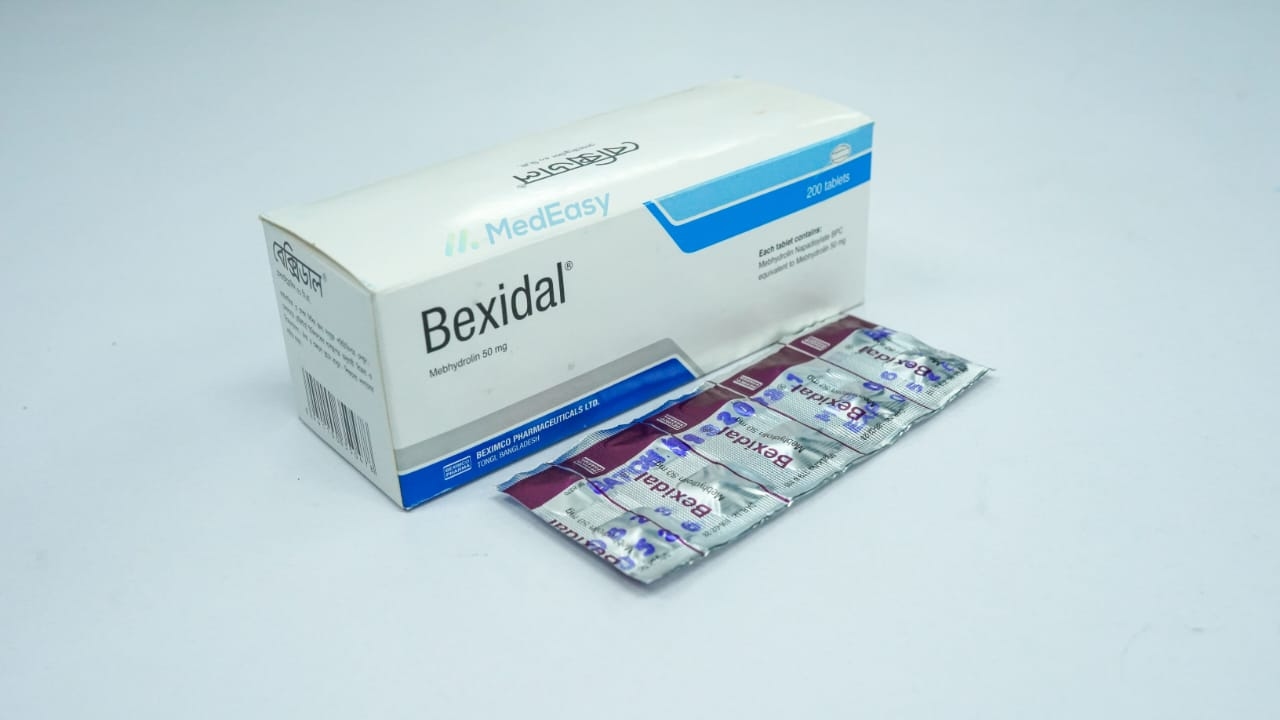
Bexidal50 mg
Beximco Pharmaceuticals Ltd.
৳27.00
Add to cart
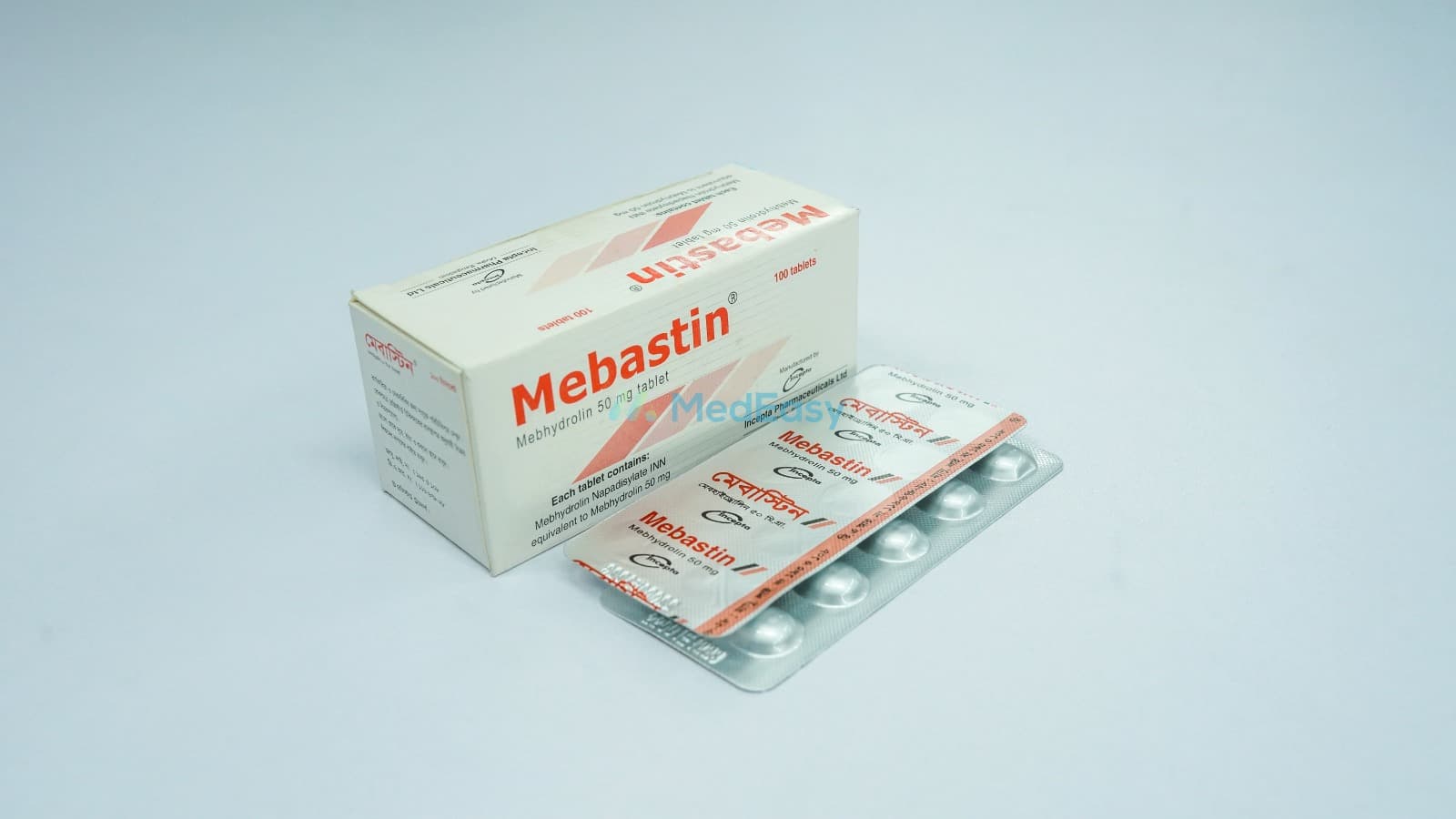
Mebastin 50 mg Tablet is available on MedEasy for ৳1.80 per piece, with home delivery anywhere in Bangladesh. It is manufactured by Incepta Pharmaceuticals Ltd. Its generic name is Mebhydrolin Napadisylate.

Note: Mebastin is not marketed or FDA-approved in the United States; the uses above reflect labeling and clinical use in countries where it is marketed (including Bangladesh).
Each tablet commonly contains 50 mg of Mebhydrolin Napadisylate as the active ingredient, formulated with standard pharmaceutical excipients. Mebhydrolin Napadisylate is also available in some markets as an oral suspension/syrup for pediatric use.
Mebastin is a first-generation (older, sedating) antihistamine belonging to the H1-receptor antagonist class of drugs. It is used for the symptomatic relief of allergic conditions caused by histamine release, such as itching, hives, and allergic rhinitis.
Mebastin works by competitively blocking histamine at H1 receptors, reducing symptoms such as itching, sneezing, watery eyes, and skin wheals. Like other first-generation antihistamines, it crosses the blood-brain barrier and commonly causes sedation.
Mebastin belongs to the first-generation (sedating) H1-antihistamine class, also categorized as an antiallergic / antipruritic agent.
Mebhydrolin Napadisylate is a competitive, reversible antagonist at peripheral and central histamine H1 receptors. By blocking H1 receptors, it prevents histamine-mediated increases in capillary permeability, smooth muscle contraction, and sensory nerve stimulation, thereby reducing itching, wheal-and-flare responses, sneezing, and rhinorrhea.
Mebhydrolin Napadisylate also possesses mild anticholinergic (antimuscarinic) activity, which can contribute to side effects such as dry mouth and urinary retention. As a first-generation antihistamine, it penetrates the blood-brain barrier and produces central nervous system depression, manifesting clinically as drowsiness and sedation. Onset of action is generally within 15-60 minutes of oral administration.
Mebastin 50 mg tablets: 2 to 6 tablets (100-300 mg) per day, in divided doses.
| Age Group | Dose |
|---|---|
| 5-10 years | 2-4 tablets (100-200 mg) daily, in divided doses |
| 2-5 years | 1-3 tablets (50-150 mg) daily, in divided doses |
| Under 2 years | 1-2 tablets (50-100 mg) daily, in divided doses, only under direct physician guidance |
Mebastin tablets are usually taken with meals to reduce gastric irritation, and may be crushed and mixed with food for young children who cannot swallow tablets whole. Doses should be divided evenly through the day as advised by the prescriber.
Renal/Hepatic impairment: No well-established dose-adjustment guidelines exist; use with caution and under medical supervision in patients with significant hepatic or renal impairment, as drug clearance may be reduced (see Precautions).
Mebastin tablets are taken orally, generally with or after meals to minimize stomach upset. Swallow tablets with water; for young children, tablets may be crushed and mixed with a small amount of soft food or liquid immediately before giving. Doses should be spaced evenly across the day as directed. Do not exceed the prescribed dose or frequency (see Dosage and Administration for exact amounts).
Mebhydrolin Napadisylate is contraindicated in patients with known hypersensitivity to Mebhydrolin Napadisylate or to any component of the formulation. There are no other well-established absolute contraindications; conditions such as narrow-angle glaucoma, prostatic hypertrophy/urinary retention, severe asthma/COPD, and early pregnancy warrant caution rather than absolute avoidance — see Precautions and Warnings and Pregnancy and Lactation.
The most common adverse effect is sedation/drowsiness, which is typically dose-related. Other reported side effects include:
Severe allergic reactions (e.g., rash, angioedema) to Mebastin itself are rare but should prompt immediate discontinuation and medical attention.
Pregnancy: The safety of Mebastin in pregnancy has not been well established through controlled human studies. Use during the first trimester is generally best avoided. Mebastin should be used in pregnancy only if clearly needed and if the potential benefit justifies the potential risk to the fetus; a physician should always be consulted before use.
Lactation: It is not well established whether Mebastin passes into breast milk. As a sedating first-generation antihistamine, there is a theoretical risk of drowsiness or irritability in the nursing infant. Mebastin should be used during breastfeeding only under medical advice, weighing benefits against potential risks to the infant.
Overdose with Mebastin may cause marked drowsiness or, particularly in young children, paradoxical CNS excitation (restlessness, tremor, hallucinations), along with anticholinergic effects such as dry mouth, flushing, fixed dilated pupils, urinary retention, and rapid heartbeat. Severe overdose can potentially cause seizures, loss of consciousness, or cardiorespiratory compromise.
If overdose with Mebastin is suspected, seek immediate medical attention or contact a poison control center/emergency services right away. Treatment is generally supportive and should only be given in a medical facility; do not attempt specific home treatment.
Store at room temperature (below 30°C), away from light and moisture. Keep out of reach of children.
Mebastin is generally intended for short-term, symptomatic relief of acute allergic symptoms (typically a few days to about 2 weeks). For chronic or recurrent allergic conditions (e.g., chronic urticaria or persistent allergic rhinitis), the duration of treatment should be individualized and determined by the prescribing physician, with periodic reassessment. It should not be used continuously for prolonged periods without medical supervision.
First-generation (sedating) antihistamine; H1-receptor antagonist; antiallergic/antipruritic agent.
Mebhydrolin Napadisylate acts by competitively and reversibly antagonizing histamine at H1-receptor sites on effector cells (blood vessels, bronchial and gut smooth muscle, and sensory nerve endings), without preventing histamine release itself. This blocks the downstream allergic effects of histamine, including vasodilation, increased vascular permeability, and pruritus.
Mebastin has been used in children for allergic symptoms based on local pediatric age-based dosing schedules (see Dosage and Administration), typically starting from around 2 years of age under medical guidance. Tablets may be crushed and mixed with food or liquid for children who cannot swallow them whole.
The safety and efficacy of Mebastin in infants under 2 years of age, and especially in neonates, have not been well established, and use in this age group is generally not recommended except under direct physician supervision. As with other sedating antihistamines, children may show paradoxical excitation rather than sedation; parents/caregivers should be advised to monitor for unusual behavioral changes and to consult a physician before giving Mebastin to young children.
Q: What is Mebastin 50 mg Tablet used for?
A: Mebastin 50 mg Tablet is a first-generation antihistamine used to relieve allergic symptoms such as itching, hives (urticaria), allergic rhinitis (sneezing, runny/itchy nose), allergic conjunctivitis, and skin reactions like insect bites or drug rash.
Q: Does Mebastin 50 mg Tablet cause drowsiness?
A: Yes. Mebastin 50 mg Tablet is a sedating (first-generation) antihistamine, and drowsiness is its most common side effect. Avoid driving or operating machinery until you know how it affects you, and avoid alcohol while taking it, as alcohol can worsen sedation.
Q: Can Mebastin 50 mg Tablet be given to children?
A: Mebastin 50 mg Tablet can be used in children from about 2 years of age using age-based dosing under medical guidance, but its safety and efficacy in infants under 2 years have not been well established, so it is generally not recommended in this age group except under a doctor's direct supervision.
Q: Is Mebastin 50 mg Tablet safe during pregnancy or breastfeeding?
A: The safety of Mebastin 50 mg Tablet in pregnancy and breastfeeding has not been well established, and it is generally avoided in the first trimester of pregnancy. It should only be used during pregnancy or lactation if a physician determines that the benefit outweighs the potential risk to the baby.
Q: Who should not take Mebastin 50 mg Tablet?
A: Anyone with a known hypersensitivity (allergy) to Mebastin 50 mg Tablet or any ingredient in the tablet should not take it. People with narrow-angle glaucoma, prostate enlargement/urinary retention, asthma/COPD, or who are elderly should use it cautiously and only under medical advice.
Q: What should I do if I take too much Mebastin 50 mg Tablet?
A: An overdose of Mebastin 50 mg Tablet can cause severe drowsiness, or in children, unusual excitation, along with symptoms like dry mouth, flushing, and rapid heartbeat. If overdose is suspected, seek immediate medical attention or contact emergency/poison control services right away rather than attempting home treatment.
Disclaimer
The information provided is accurate to the best of our knowledge, but it does not replace professional medical advice. We cannot guarantee its completeness or accuracy, and the absence of specific information about a drug should not be taken as an endorsement. We are not responsible for any consequences arising from this information, so please consult a healthcare professional for any concerns or questions.