10% Off
Bizoran5 mg+20 mg
Beximco Pharmaceuticals Ltd.
৳162.08
Add to cart


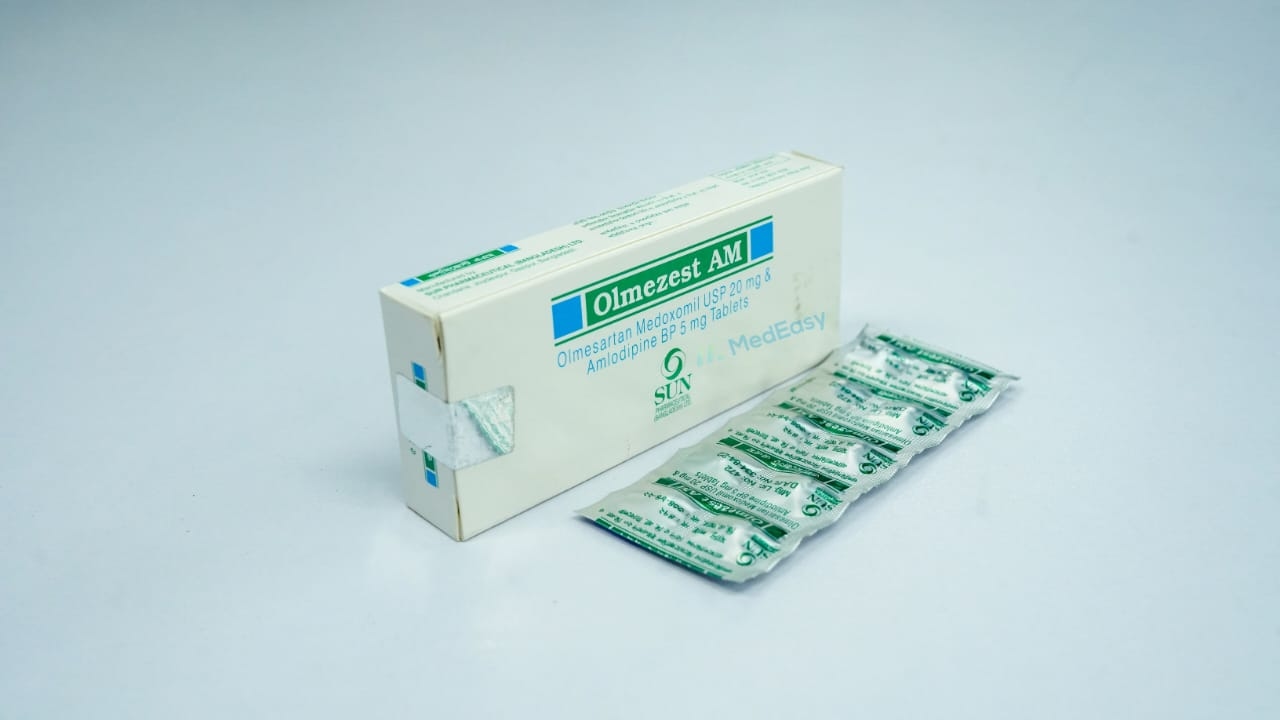
Mesartin Plus is a fixed-dose combination of a dihydropyridine calcium channel blocker (amlodipine) and an angiotensin II receptor blocker (ARB, olmesartan medoxomil), indicated for:
Mesartin Plus is not indicated for initial therapy in patients who require blood pressure reduction of more than 20/10 mmHg without prior assessment, as recommended by treating physicians on a case-by-case basis, and is not intended as a first-line drug for hypertensive emergencies.
Each tablet of Amlodipine + Olmesartan Medoxomil contains amlodipine (as amlodipine besylate) and olmesartan medoxomil in fixed-dose combinations, commonly available as 5 mg/20 mg, 5 mg/40 mg, 10 mg/20 mg, and 10 mg/40 mg (amlodipine/olmesartan medoxomil) strengths, along with pharmaceutically acceptable excipients.
Mesartin Plus combines two complementary antihypertensive mechanisms in a single tablet. Amlodipine is a long-acting dihydropyridine calcium channel blocker that relaxes vascular smooth muscle, while olmesartan medoxomil is a prodrug that is hydrolyzed to olmesartan, an angiotensin II receptor (AT1 subtype) blocker. Combining the two provides complementary blood-pressure-lowering effects and is used when a single agent does not adequately control blood pressure.
Mesartin Plus belongs to the therapeutic class of antihypertensive combination agents, specifically a calcium channel blocker (dihydropyridine) combined with an angiotensin II receptor blocker (ARB).
Amlodipine + Olmesartan Medoxomil has a dual mechanism of action:
Together, the two components of Amlodipine + Olmesartan Medoxomil act on different pathways involved in blood pressure regulation, producing an additive antihypertensive effect.
Mesartin Plus is taken once daily, with or without food, and should be swallowed whole with water.
| Clinical Situation | Recommended Dose |
|---|---|
| Initial therapy in adults not at goal on monotherapy | 5 mg/20 mg once daily |
| Dose titration (if blood pressure not controlled after 1-2 weeks) | Increase to a maximum of 10 mg/40 mg once daily, at intervals of at least 2 weeks |
Because of a greater sensitivity to amlodipine in patients ≥75 years, initiation of Mesartin Plus as a starting combination product is generally not recommended in this age group; treatment should instead be titrated using the individual components under physician guidance.
No initial dosage adjustment of Mesartin Plus is required in patients with moderate to marked renal impairment, but renal function and serum potassium should be monitored periodically.
Mesartin Plus is generally not recommended as initial therapy in patients with hepatic impairment; if used, doses should be adjusted cautiously and the patient monitored closely, since amlodipine clearance is reduced in hepatic impairment.
Safety and efficacy of Mesartin Plus in pediatric patients have not been established; it is not recommended for use in children.
Mesartin Plus should be taken by mouth once daily, at approximately the same time each day, with or without food. Tablets should be swallowed whole with a glass of water and should not be crushed or chewed unless otherwise directed by a physician.
Clinically significant drug interactions with Mesartin Plus include:
Amlodipine + Olmesartan Medoxomil is contraindicated in:
The most common adverse effect reported with Mesartin Plus is:
Less common but clinically important adverse effects include:
Pregnancy: Mesartin Plus is contraindicated in pregnancy. Drugs that act on the renin-angiotensin system, such as the olmesartan component of Mesartin Plus, can cause injury and death to the developing fetus when used in the second and third trimesters, including fetal renal failure, oligohydramnios, hypoplasia of fetal lungs, skeletal deformations, and other abnormalities. When pregnancy is detected, Mesartin Plus should be discontinued as soon as possible, and the patient should consult her physician promptly to switch to an alternative antihypertensive agent considered safer in pregnancy.
Lactation: It is not known whether the components of Mesartin Plus are excreted in human breast milk. Because of the potential for serious adverse effects in a nursing infant, breastfeeding is not recommended during treatment with Mesartin Plus; a decision should be made in consultation with a physician to either discontinue nursing or discontinue Mesartin Plus, taking into account the importance of the drug to the mother.
Overdosage with Mesartin Plus may be expected to cause excessive peripheral vasodilation with marked hypotension, and possibly reflex tachycardia. Significant hypotension, dizziness, and shock have been reported with amlodipine overdose.
If overdose of Mesartin Plus is suspected, seek immediate medical attention or contact emergency services / a poison control center. Management is supportive: hemodynamic monitoring, cardiac and respiratory support, elevation of the extremities, and careful monitoring of fluid status and cardiac/renal function. Intravenous calcium gluconate may help reverse the effects of calcium channel blockade. Because amlodipine is highly protein bound, dialysis is not expected to be beneficial for the amlodipine component. Do not attempt to manage an overdose at home.
Store at room temperature (below 30°C), away from light and moisture. Keep out of reach of children.
Mesartin Plus is typically used long-term for chronic management of hypertension. Duration of treatment should be determined by the prescribing physician based on blood pressure control, tolerability, and cardiovascular risk, and is usually continued indefinitely as part of ongoing hypertension management unless discontinued due to adverse effects or a change in therapy.
Calcium channel blocker (dihydropyridine) + Angiotensin II receptor blocker (ARB) — antihypertensive combination
The amlodipine component of Amlodipine + Olmesartan Medoxomil blocks calcium ion influx into vascular smooth muscle, causing vasodilation and reduced peripheral resistance. The olmesartan component blocks the AT1 receptor, preventing angiotensin II from causing vasoconstriction and aldosterone release. The combined effect in Amlodipine + Olmesartan Medoxomil produces greater blood pressure lowering than either agent alone.
D
Safety and effectiveness of Mesartin Plus in pediatric patients have not been established. Mesartin Plus is therefore not recommended for use in children and adolescents.
Q: What is Mesartin Plus 5 mg+20 mg Tablet used for?
A: Mesartin Plus 5 mg+20 mg Tablet is used to treat high blood pressure (hypertension), either in patients who are not adequately controlled on a single blood-pressure medicine, or as initial combination therapy in patients likely to need more than one drug to reach their blood pressure goal.
Q: Can Mesartin Plus 5 mg+20 mg Tablet be taken during pregnancy?
A: No. Mesartin Plus 5 mg+20 mg Tablet is contraindicated in pregnancy. It can cause serious harm to the developing fetus, including kidney problems, low amniotic fluid, and other birth defects, especially if used in the second or third trimester. If pregnancy occurs or is suspected while taking Mesartin Plus 5 mg+20 mg Tablet, stop the medicine and contact your physician immediately to switch to a safer alternative.
Q: What are the most common side effects of Mesartin Plus 5 mg+20 mg Tablet?
A: The most common side effect is swelling (edema) of the legs, ankles, or feet. Other common effects include headache, dizziness, flushing, and fatigue. Most of these are mild, but you should tell your doctor if they are bothersome or persistent.
Q: Can I take Mesartin Plus 5 mg+20 mg Tablet with ibuprofen or other NSAID painkillers?
A: Regular use of NSAIDs (like ibuprofen or naproxen) with Mesartin Plus 5 mg+20 mg Tablet can reduce its blood-pressure-lowering effect and, particularly in older adults, dehydrated patients, or those with kidney problems, can increase the risk of kidney injury. Discuss any regular NSAID use with your physician.
Q: What should I do if I miss a dose or take too much Mesartin Plus 5 mg+20 mg Tablet?
A: If you miss a dose, take it as soon as you remember unless it is almost time for your next dose — do not double up. If you or someone else has taken more Mesartin Plus 5 mg+20 mg Tablet than prescribed, this can cause dangerously low blood pressure and a fast heart rate; seek immediate medical attention or contact a poison control center right away rather than trying to manage it at home.
Q: Does Mesartin Plus 5 mg+20 mg Tablet cause kidney problems?
A: Mesartin Plus 5 mg+20 mg Tablet can affect kidney function, particularly in people with pre-existing kidney disease, narrowing of the arteries to the kidneys, heart failure, or dehydration. Your doctor will typically monitor your kidney function and blood potassium levels periodically while you are taking Mesartin Plus 5 mg+20 mg Tablet.
Disclaimer
The information provided is accurate to the best of our knowledge, but it does not replace professional medical advice. We cannot guarantee its completeness or accuracy, and the absence of specific information about a drug should not be taken as an endorsement. We are not responsible for any consequences arising from this information, so please consult a healthcare professional for any concerns or questions.