
8% Off
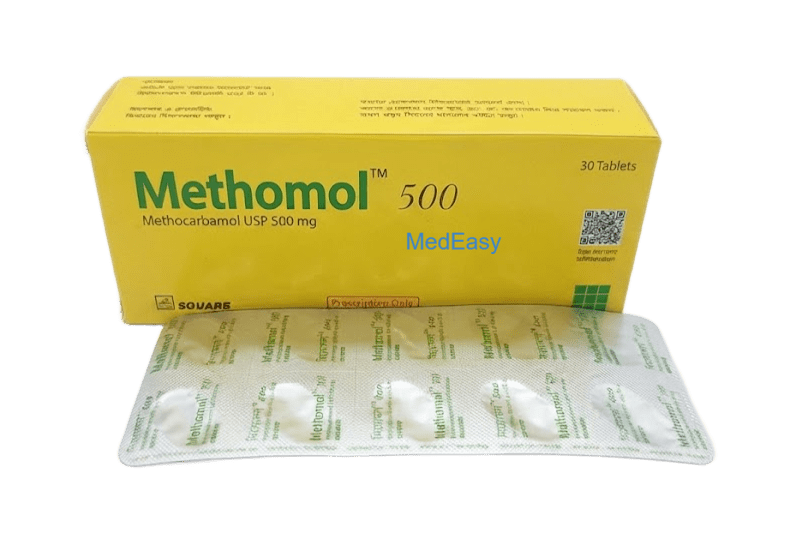
Methomol500 mg
Square Pharmaceuticals PLC.
৳92.00
Add to cart
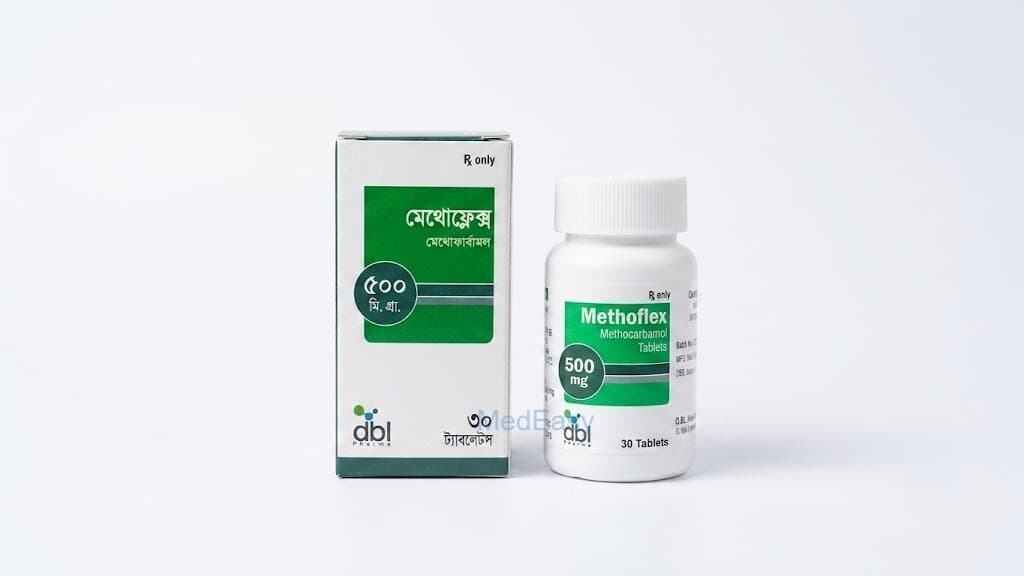
Methoflex 500 mg Tablet is available on MedEasy for ৳216.00 per 30's Pack, with home delivery anywhere in Bangladesh. It is manufactured by DBL Pharmaceuticals Ltd. Its generic name is Methocarbamol.

Methoflex is indicated as an adjunct to rest, physical therapy, and other measures for the relief of discomfort associated with acute, painful musculoskeletal conditions.
Methoflex does not act directly on skeletal muscle, the motor endplate, or the nerve fiber; its benefit is thought to result from generalized central nervous system depression.
Each tablet of Methocarbamol typically contains Methocarbamol USP 500 mg or 750 mg as the active ingredient, along with pharmaceutically approved excipients. An injectable solution (Methocarbamol 100 mg/mL) is available in some markets for hospital use.
Methoflex is a carbamate derivative of guaifenesin belonging to the centrally-acting skeletal muscle relaxant class. It is used as a short-term adjunct to rest, physical therapy, and other supportive measures to relieve discomfort from acute, painful musculoskeletal conditions. Methoflex is available as oral tablets and, in hospital settings, as an injectable solution.
Centrally-Acting Skeletal Muscle Relaxant
Methocarbamol is a centrally-acting skeletal muscle relaxant. Its precise mechanism of action in humans has not been fully established, but its clinical effect is believed to result from general central nervous system (CNS) depression rather than any direct relaxant action on skeletal muscle, the motor endplate, or nerve conduction.
After oral administration, Methocarbamol is well absorbed from the gastrointestinal tract, with peak plasma concentrations reached within about 1 to 2 hours. It is extensively metabolized in the liver via dealkylation and hydroxylation, and the metabolites are eliminated mainly through the kidneys, along with a small amount of unchanged drug. Plasma protein binding is approximately 46-50%, and the elimination half-life is roughly 1 to 2 hours in individuals with normal renal and hepatic function.
Methoflex should be used at the lowest effective dose for the shortest duration necessary, in conjunction with rest and physical therapy.
| Indication | Population | Typical Dosing |
|---|---|---|
| Acute musculoskeletal spasm/pain | Adults | Initial: 1500 mg (e.g., 3 x 500 mg tablets, or 2 x 750 mg tablets) four times daily for the first 48-72 hours, up to a maximum of 8 g/day in severe cases. Maintenance: approximately 4 g/day in divided doses (e.g., 750 mg every 4 hours or 1000 mg three times daily). |
| Acute musculoskeletal spasm/pain | Children < 16 years | Safety and efficacy not established; not generally recommended for this indication. |
| Adjunct in tetanus (injectable, hospital use) | Adults | Per hospital protocol; administered by slow IV infusion or IM injection under direct medical supervision. |
| Renal impairment | Adults | Use with caution; drug clearance may be reduced. See Use in Special Populations. |
| Hepatic impairment | Adults | Use with caution at a reduced dose; elimination half-life may be prolonged. See Use in Special Populations. |
Tablets should be swallowed whole with water and may be taken with food if stomach upset occurs. Treatment with Methoflex is generally intended for short-term use; consult a physician if symptoms persist beyond 2-3 weeks. Do not exceed the maximum recommended dose. Any injectable form of Methoflex must be administered only by a qualified healthcare professional in a clinical setting.
Take Methoflex tablets orally, swallowed whole with a full glass of water, with or without food. If stomach upset occurs, taking it with food or milk may help. The injectable form of Methoflex is given only by a healthcare professional via slow intravenous infusion or intramuscular injection. Do not drive or operate machinery until you know how Methoflex affects you.
Methoflex has the following well-documented clinically significant interactions:
Always inform your physician or pharmacist of all medicines, supplements, and alcohol use before starting Methoflex.
Methocarbamol is contraindicated in:
Side effects associated with Methoflex are usually mild and dose-related.
Seek medical attention if you experience signs of a serious allergic reaction (swelling of the face/throat, difficulty breathing) or any severe or persistent side effect while taking Methoflex.
Methoflex is classified under the older FDA pregnancy category C. Teratogenic effects have been observed in some animal studies, and adequate, well-controlled studies in pregnant women are lacking. Methoflex should be used during pregnancy only if the potential benefit justifies the potential risk to the fetus; use only if clearly needed and after consulting a physician.
It is not known whether Methoflex or its metabolites pass into human breast milk in clinically significant amounts. Because of the potential for sedation in a nursing infant, caution is advised, and a physician should be consulted before using Methoflex while breastfeeding.
Observe the following precautions when using Methoflex:
Overdose of Methoflex may cause nausea, drowsiness, blurred vision, hypotension, seizures, and, in severe cases, coma. Combination with alcohol or other CNS depressants can increase the risk and severity of overdose effects.
If an overdose of Methoflex is suspected, seek immediate medical attention or contact a poison control center/emergency services right away. Treatment is supportive and may include maintaining the airway, monitoring vital signs, and other measures provided by medical professionals; there is no specific antidote for Methoflex overdose. Do not attempt to manage a suspected overdose at home.
Store at room temperature (below 30°C), away from light and moisture. Keep out of reach of children.
Pediatric use: The safety and efficacy of Methoflex for acute musculoskeletal spasm have not been established in children under 16 years of age; it is not generally recommended for this indication in this age group. Pediatric use of the injectable form for tetanus, when required, is determined by a specialist based on weight and clinical judgment.
Elderly: Older adults may be more susceptible to the sedative and CNS-depressant effects of Methoflex; use the lowest effective dose and monitor closely for dizziness, drowsiness, or falls.
Renal impairment: Drug clearance may be reduced; use oral Methoflex with caution and avoid the injectable formulation in known or suspected renal pathology (see Contraindications).
Hepatic impairment: Clearance is reduced and the elimination half-life is prolonged in significant hepatic impairment; use a reduced dose with caution and close monitoring.
Methoflex is generally used short-term, typically for no more than 2 to 3 weeks, as an adjunct to rest and physical therapy for acute muscle spasm. If symptoms persist beyond this period, consult a physician to reassess treatment; Methoflex is not intended for long-term or chronic use.
Centrally-Acting Skeletal Muscle Relaxants; Carbamate derivative of guaifenesin
The exact mechanism of action of Methocarbamol has not been fully established in humans. It does not act directly on skeletal muscle fibers, the motor endplate, or the nerve fiber. Its muscle-relaxant and analgesic-adjunct effect is thought to result from general central nervous system depression.
C
Safety and efficacy of Methoflex for acute musculoskeletal spasm have not been established in children under 16 years of age. Use of the injectable form for tetanus in pediatric patients, when indicated, should be guided by a specialist and based on body weight.
Q: What is Methoflex 500 mg Tablet used for?
A: Methoflex 500 mg Tablet is used, together with rest and physical therapy, to relieve discomfort from acute, painful musculoskeletal conditions such as muscle strain or spasm. It is also used, in injectable form, as an adjunct in the supportive management of tetanus in a hospital setting.
Q: How should I take Methoflex 500 mg Tablet?
A: Take Methoflex 500 mg Tablet tablets by mouth, swallowed whole with water, with or without food, exactly as directed by your physician. Do not exceed the recommended dose, and do not use it for longer than advised, as Methoflex 500 mg Tablet is intended for short-term use.
Q: Can Methoflex 500 mg Tablet make me drowsy or affect driving?
A: Yes. Methoflex 500 mg Tablet commonly causes drowsiness, dizziness, and blurred vision. Avoid driving or operating machinery until you know how Methoflex 500 mg Tablet affects you, and avoid alcohol or other sedating medicines while taking it, as these effects can add up.
Q: Is it normal for my urine to change color while taking Methoflex 500 mg Tablet?
A: Yes, Methoflex 500 mg Tablet can harmlessly turn urine black, brown, or green. This is an expected, benign effect and does not mean there is a problem with your kidneys or liver; it resolves after you stop the medicine.
Q: Can I take Methoflex 500 mg Tablet during pregnancy or while breastfeeding?
A: Methoflex 500 mg Tablet should be used in pregnancy only if clearly needed, since it falls under the older pregnancy category C and animal studies have shown possible risks; discuss with your physician first. It is not known whether Methoflex 500 mg Tablet passes into breast milk in significant amounts, so caution and medical advice are recommended before use while breastfeeding.
Q: What should I do if I take too much Methoflex 500 mg Tablet?
A: An overdose of Methoflex 500 mg Tablet can cause severe drowsiness, blurred vision, low blood pressure, seizures, or coma. Seek emergency medical attention or contact a poison control center immediately if an overdose is suspected; do not try to treat it at home.
Disclaimer
The information provided is accurate to the best of our knowledge, but it does not replace professional medical advice. We cannot guarantee its completeness or accuracy, and the absence of specific information about a drug should not be taken as an endorsement. We are not responsible for any consequences arising from this information, so please consult a healthcare professional for any concerns or questions.
