
8% Off
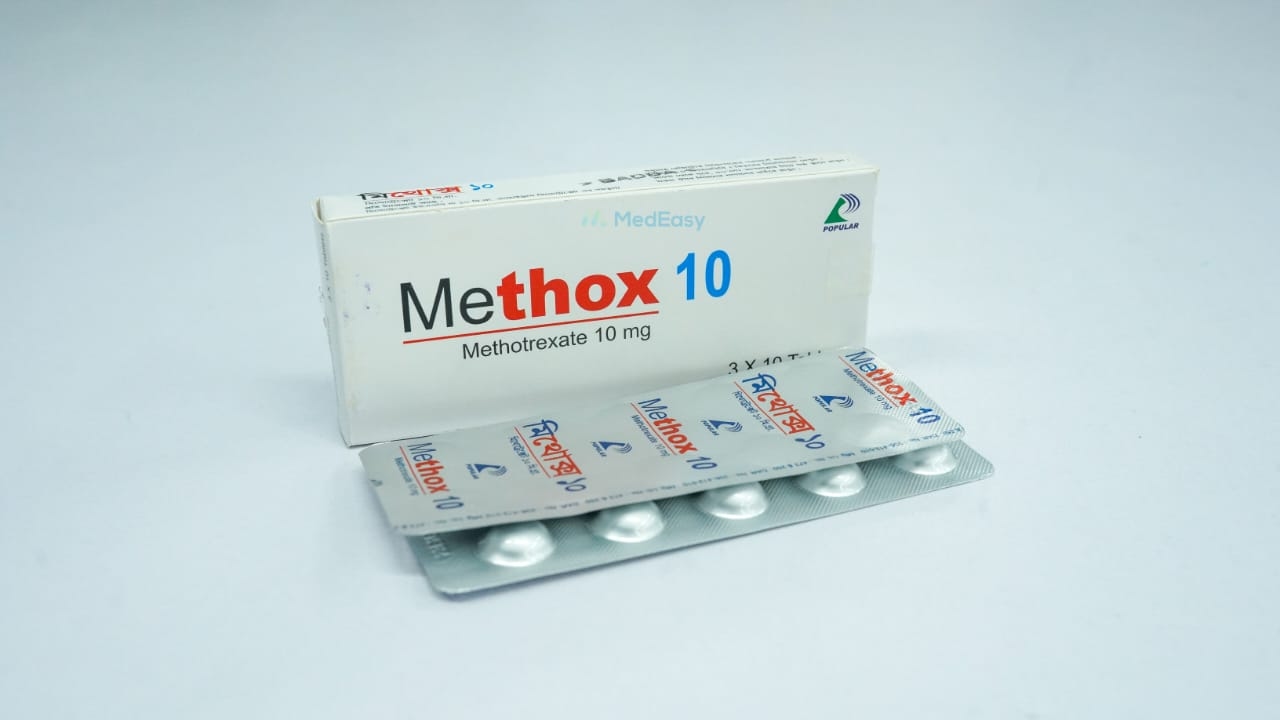
Methox10 mg
Popular Pharmaceuticals Ltd.
৳138.55
Add to cart

Important: the dose, frequency and monitoring required differ enormously between the low-dose weekly autoimmune/dermatologic regimen and the much higher intermittent oncology regimens. See Dosage and Administration.
Each tablet/vial contains Methotrexate (as methotrexate sodium) as the active ingredient. Methotrexate is available as oral tablets (commonly 2.5 mg) and as sterile solution for injection (for intramuscular, intravenous, subcutaneous or intrathecal use) in various strengths, with standard pharmaceutical excipients.
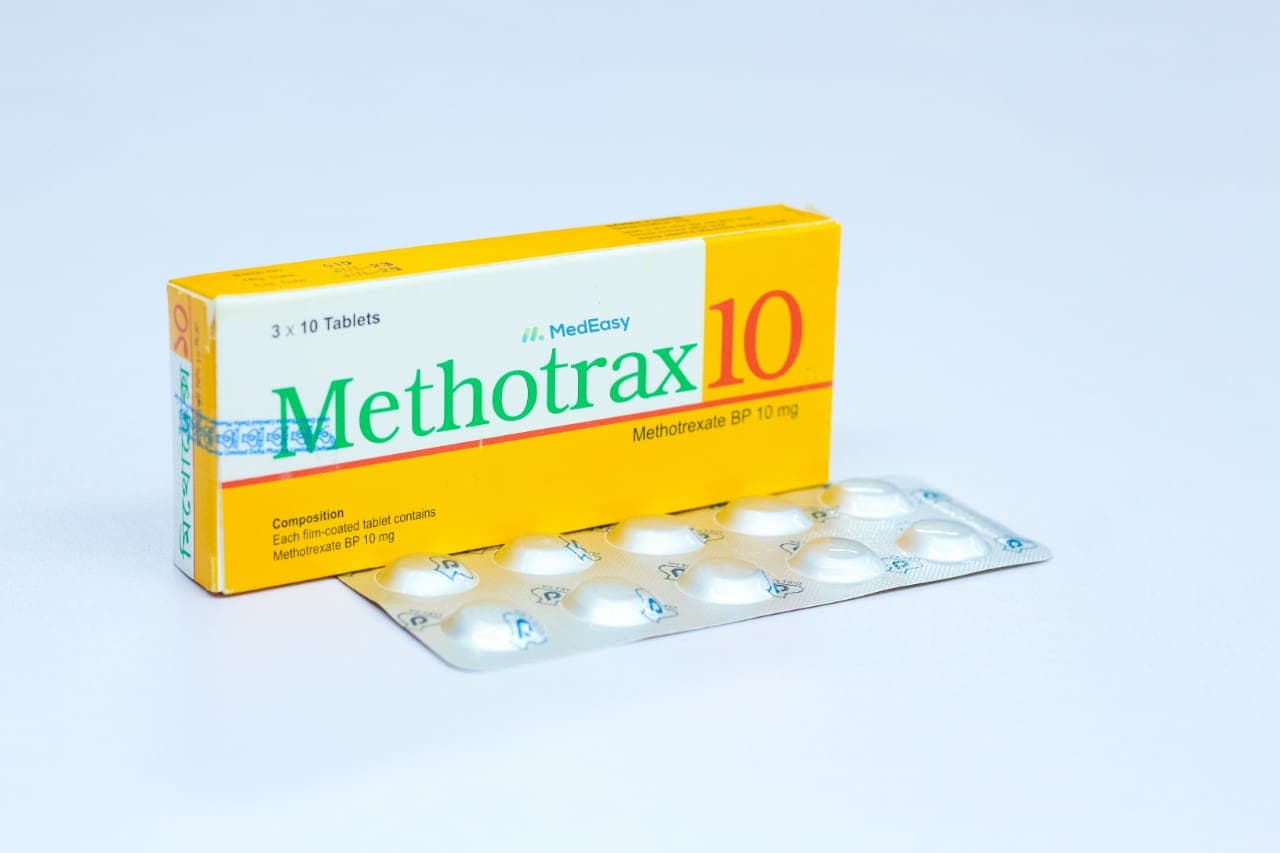
Methotrax is a folate analogue (antimetabolite) that has been used for decades in two very different clinical contexts: as a component of high-dose, intensive cancer chemotherapy regimens, and as a low-dose, once-weekly disease-modifying agent for autoimmune and inflammatory conditions such as rheumatoid arthritis and severe psoriasis.
Because the two uses require dramatically different doses and dosing schedules, Methotrax is carried in pharmacies as either tablets (mainly for the low-dose weekly regimen) or injectable solutions (used in both settings). It carries several boxed warnings related to serious, potentially fatal toxicity, and it requires regular laboratory monitoring throughout treatment.
Antimetabolite / Folic acid antagonist (antineoplastic agent); Disease-modifying antirheumatic drug (DMARD) at low dose.
Methotrexate is a competitive inhibitor of dihydrofolate reductase (DHFR), the enzyme that converts dihydrofolate to the active tetrahydrofolate. By blocking this step, Methotrexate depletes intracellular folate cofactors needed for the synthesis of thymidylate and purine nucleotides, thereby inhibiting DNA, RNA and protein synthesis. This action is most pronounced in rapidly dividing cells (malignant cells, bone marrow, GI mucosa), which explains both its anticancer effect at high doses and its dose-limiting toxicities.
At the low weekly doses used for rheumatoid arthritis and psoriasis, the precise mechanism of anti-inflammatory action is not identical to the antiproliferative/cytotoxic mechanism at high dose; it is thought to involve increased extracellular adenosine release and other immunomodulatory effects, in addition to mild antifolate activity.
Pharmacokinetics: oral absorption is dose-dependent and may be incomplete/saturable at higher doses; bioavailability is variable between individuals. Methotrexate is partly protein-bound, distributes into third-space fluid (ascites, pleural effusions, prolonging elimination), and is eliminated primarily unchanged by the kidneys via glomerular filtration and active tubular secretion. Renal impairment substantially reduces clearance and increases toxicity risk.
For rheumatoid arthritis, psoriasis, juvenile idiopathic arthritis and other non-cancer (autoimmune) indications, Methotrax is taken as a single dose (or divided over 24 hours) ONCE PER WEEK — on the SAME day every week — never every day. Fatal and serious toxic overdoses have occurred because patients mistakenly took their weekly autoimmune-disease dose of Methotrax every day instead of once weekly. Patients and caregivers must have the weekly schedule, and the specific day of the week, clearly explained and written down at every prescription and refill. Any pharmacist or physician dispensing or prescribing Methotrax for a non-cancer indication should confirm the patient understands "once weekly" dosing before dispensing.
Cancer chemotherapy regimens, in contrast, use much higher doses given intermittently on cycles determined by the treating oncologist, and must be administered strictly according to the specific protocol.
| Indication | Typical adult dosing |
|---|---|
| Rheumatoid arthritis | Initial oral or IM/SC dose commonly 7.5 mg once weekly (sometimes given as 2.5 mg every 12 hours for 3 doses once weekly); adjusted gradually by the physician to a usual maintenance range, generally not exceeding 20–25 mg once weekly. Folic acid is usually co-prescribed (see below). |
| Severe psoriasis | Individualized once-weekly oral, IM or SC dosing, often starting with a small test dose, then titrated (commonly in the range of 7.5–25 mg once weekly) according to response and tolerability. |
| Polyarticular juvenile idiopathic arthritis | Weight/body-surface-area based once-weekly dosing determined by a pediatric rheumatologist. |
| Oncology (e.g. leukemia, lymphoma, osteosarcoma, choriocarcinoma, head/neck and breast cancer) | Highly variable, protocol-specific regimens (ranging from low intermittent doses to very high doses requiring leucovorin/folinic acid "rescue" and IV hydration/urinary alkalinization). Administered only by, or under direct supervision of, an oncologist experienced with Methotrax chemotherapy. |
| Early ectopic pregnancy (specialist obstetric use) | Single-dose or multi-dose protocol based on body surface area, per treating obstetrician, with serial beta-hCG monitoring. |
Methotrax is largely renally eliminated; dose reduction or avoidance is required in renal impairment (contraindicated in severe renal impairment). Use is contraindicated in significant hepatic impairment; liver function should be assessed before and periodically during therapy.
For the low-dose weekly regimens (rheumatoid arthritis, psoriasis, JIA), the physician commonly co-prescribes folic acid (typically a small daily or weekly dose, on non-Methotrax days) to reduce mouth ulcers, GI upset, liver enzyme elevation and low blood counts. This is standard practice and patients should not start, stop or change their folic acid dose without medical advice.
Tablets are taken by mouth, generally with or without food, exactly on the prescribed day(s). Injectable forms are given by a healthcare professional (intramuscular, subcutaneous, intravenous or, for CNS-directed treatment, intrathecal) under appropriate supervision.
Oral tablets are swallowed whole, on the prescribed day of the week, with a full glass of water. Injectable Methotrax is administered only by a trained healthcare professional via the intramuscular, subcutaneous, intravenous, or intrathecal route, according to the specific treatment protocol.
Always tell the prescriber and pharmacist about all other medicines, supplements and herbal products being used before starting Methotrax.
Side effects depend heavily on dose. At low weekly doses (autoimmune/dermatologic use) the following are common: nausea, mouth sores/stomatitis, loss of appetite, fatigue, headache, and mild elevation of liver enzymes; these are part of why folic acid is co-prescribed.
Serious adverse effects, which are dose-related but can occur at any dose, include:
Patients should seek prompt medical attention for fever, unusual bruising/bleeding, mouth ulcers, yellowing of the skin/eyes, persistent cough or breathlessness, or severe skin rash.
Methotrax can cause serious birth defects, miscarriage, and fetal death, and is contraindicated in pregnancy for non-cancer indications. A pregnancy test is generally recommended before starting treatment in individuals who could become pregnant. Effective contraception should be used by patients during treatment with Methotrax and for at least 6 months after the last dose (females), and by male patients and their partners during treatment and for at least 3 months after the last dose, due to potential effects on sperm and possible genotoxicity. Anyone who becomes pregnant, or whose partner becomes pregnant, while taking Methotrax should contact their physician immediately.
In life-threatening cancer where Methotrax may sometimes still be used in pregnancy, this is only ever a specialist oncologist decision weighing maternal benefit against fetal risk.
Methotrax passes into breast milk and accumulates in infant tissues; breastfeeding is contraindicated during treatment. A physician should be consulted regarding when breastfeeding may safely resume after stopping treatment.
Regular blood counts, liver function tests, and renal function tests are required before starting and periodically throughout treatment with Methotrax; chest imaging may be needed if pulmonary symptoms occur.
Use with caution in patients with dehydration, pre-existing infections, peptic ulcer disease, or ulcerative colitis. Avoid live vaccines during treatment. Ensure adequate hydration, particularly with higher doses. Report any unusual bruising, bleeding, mouth sores, breathlessness, cough, jaundice, or rash to the physician immediately.
Overdose of Methotrax, or accidental daily instead of weekly dosing, is a medical emergency and can be fatal due to severe bone marrow suppression, mucosal/gastrointestinal ulceration, liver and kidney toxicity, and life-threatening infection. Seek immediate medical attention or contact emergency services / a poison control center if an overdose is suspected, even if the person feels well, because toxicity may be delayed.
Management is undertaken in a hospital setting and typically involves prompt administration of leucovorin (folinic acid) as an antidote, supportive care, IV fluids with urine alkalinization, monitoring of blood counts and organ function, and in severe cases with high Methotrax levels and renal impairment, specific enzymatic treatment or hemodialysis under specialist supervision. Do not attempt to manage a suspected overdose at home.
Store at room temperature (below 30°C), away from light and moisture. Keep out of reach of children. Injectable solutions may have specific storage requirements (some require refrigeration) — follow the instructions on the product label/pack insert.
Pregnancy and breastfeeding: see Pregnancy and Lactation — contraindicated for non-cancer use in pregnancy and during breastfeeding; effective contraception required as described.
Renal impairment: requires dose reduction and close monitoring; contraindicated in severe renal impairment because Methotrax is primarily renally cleared and toxicity risk rises sharply.
Hepatic impairment: contraindicated in significant hepatic impairment or chronic liver disease; liver function should be checked before and during therapy in all patients.
Elderly: increased susceptibility to toxicity due to age-related decline in renal/hepatic function and reduced folate stores; generally started at the lower end of the dose range with close monitoring.
Immunocompromised patients or those with active infection: Methotrax should not be used in patients with a serious active infection or significant immunodeficiency.
For autoimmune/dermatologic conditions, Methotrax is typically continued long-term (months to years) at the lowest effective once-weekly dose, with regular monitoring, as long as it remains effective and well tolerated, under ongoing physician supervision. For cancer, duration and number of cycles are determined by the specific chemotherapy protocol and response to treatment. Treatment should never be stopped or its schedule changed without consulting the prescribing physician.
Certain injectable powder-for-solution presentations of Methotrax require reconstitution with an appropriate diluent by a healthcare professional strictly according to the product's package insert before administration; oral tablets and pre-filled/ready-to-use injectable solutions do not require reconstitution.
Antimetabolites; Folate antagonists; Antineoplastic agents; Disease-modifying antirheumatic drugs (DMARDs).
Methotrexate competitively and reversibly inhibits dihydrofolate reductase, blocking conversion of folate to its active tetrahydrofolate form, thereby impairing synthesis of thymidylate and purines needed for DNA/RNA replication in rapidly dividing cells; at low weekly doses it also has folate-independent anti-inflammatory/immunomodulatory effects relevant to its use in autoimmune disease.
X (legacy FDA pregnancy category) for non-oncologic indications — contraindicated in pregnancy.
Methotrax is FDA-approved for polyarticular-course juvenile idiopathic arthritis, with dosing individualized by body surface area/weight and determined by a pediatric rheumatologist, generally given once weekly with the same critical weekly-dosing safety precautions that apply to adults. It is also used, under oncologist supervision, in pediatric cancer protocols (e.g. acute lymphoblastic leukemia).
Safety and efficacy for indications outside these established pediatric uses have not been established, and Methotrax should only be used in children under the direct supervision of a specialist experienced in its use, with the same rigorous monitoring (blood counts, liver and kidney function) as in adults. Caregivers must be clearly instructed on the once-weekly schedule to prevent dosing errors.
Q: Why is Methotrax 10 mg Tablet taken only once a week for arthritis or psoriasis, when it is used more often for cancer?
A: For autoimmune conditions like rheumatoid arthritis and psoriasis, Methotrax 10 mg Tablet is given at a low dose once weekly because this is the dose and schedule proven effective and reasonably safe for long-term disease control; taking it daily by mistake can cause severe, sometimes fatal, toxicity to the bone marrow, liver, and gut. Cancer treatment uses much higher doses on a completely different, oncologist-directed schedule. Always take Methotrax 10 mg Tablet exactly as your physician has scheduled it, on the same day each week for autoimmune conditions.
Q: Can I take ibuprofen, naproxen, or other pain relievers with Methotrax 10 mg Tablet?
A: You should check with your physician or pharmacist first. NSAIDs such as ibuprofen, naproxen, and aspirin can raise Methotrax 10 mg Tablet levels in your blood and increase the risk of serious side effects such as bone marrow suppression and gastrointestinal bleeding, even at the low doses used for rheumatoid arthritis. Your doctor may allow occasional, monitored use, or may recommend a different pain reliever such as paracetamol.
Q: Is it safe to become pregnant while taking Methotrax 10 mg Tablet?
A: No. Methotrax 10 mg Tablet can cause serious birth defects, miscarriage, or fetal death, and is contraindicated in pregnancy when used for non-cancer conditions. Effective contraception is required during treatment and for at least 6 months after stopping for females, and for at least 3 months after stopping for male patients (due to potential effects on sperm), because of this reproductive risk. Tell your doctor immediately if you or your partner become pregnant while taking Methotrax 10 mg Tablet.
Q: Why has my doctor also prescribed folic acid along with Methotrax 10 mg Tablet?
A: Folic acid is commonly prescribed alongside the low weekly Methotrax 10 mg Tablet regimen used for rheumatoid arthritis, psoriasis, and juvenile idiopathic arthritis to reduce side effects such as mouth ulcers, nausea, and abnormal liver tests, without significantly reducing how well Methotrax 10 mg Tablet works at these doses. Take folic acid exactly as directed by your physician, and do not start, stop, or change the dose on your own.
Q: What should I do if I accidentally take an extra dose of Methotrax 10 mg Tablet, or take it on the wrong day?
A: Contact your physician, pharmacist, or emergency services immediately, even if you feel fine, because toxicity from too much Methotrax 10 mg Tablet (such as severe bone marrow suppression, mouth/gut ulceration, or liver and kidney injury) can appear later. Do not wait for symptoms before seeking help, and do not attempt to manage a suspected overdose at home.
Q: What symptoms mean I should call my doctor right away while on Methotrax 10 mg Tablet?
A: Contact your physician promptly if you develop fever, unusual bruising or bleeding, mouth sores, persistent cough or shortness of breath, yellowing of the skin or eyes, severe abdominal pain, or a severe skin rash while taking Methotrax 10 mg Tablet — these can be early signs of serious, sometimes fatal, toxicity that requires urgent evaluation.
Disclaimer
The information provided is accurate to the best of our knowledge, but it does not replace professional medical advice. We cannot guarantee its completeness or accuracy, and the absence of specific information about a drug should not be taken as an endorsement. We are not responsible for any consequences arising from this information, so please consult a healthcare professional for any concerns or questions.

