10% Off
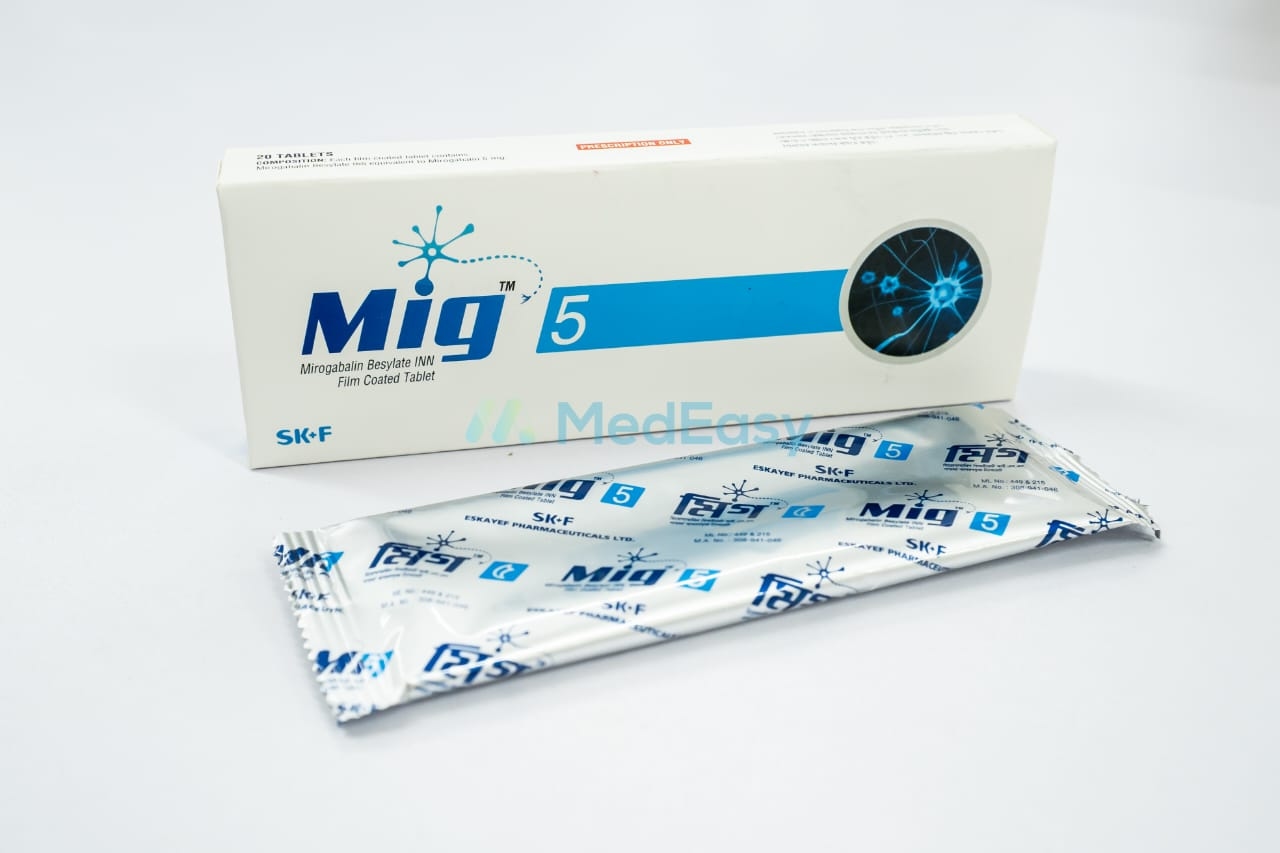
Mig5 mg
Eskayef Bangladesh Ltd.
৳180.00
Add to cart
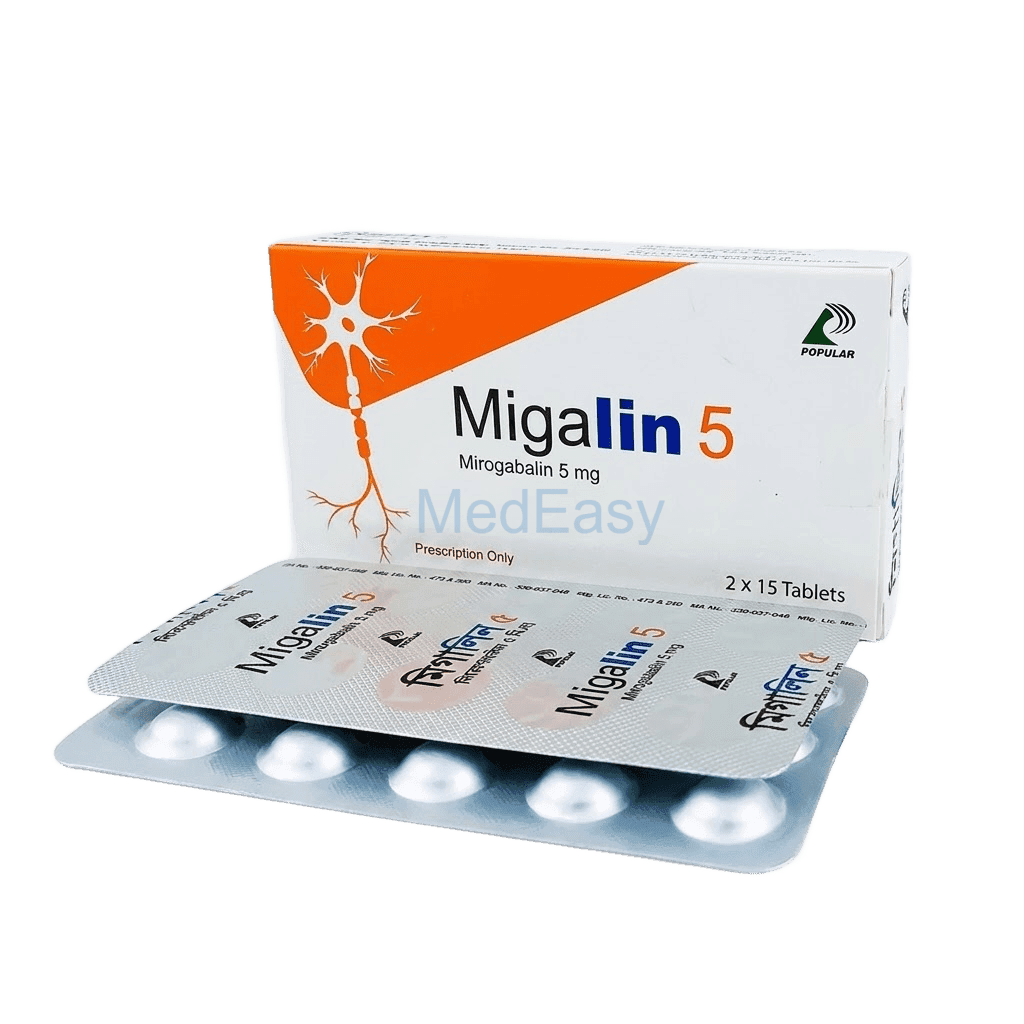

Migalin is a gabapentinoid (alpha-2-delta calcium channel ligand) used in the management of neuropathic pain. Its use can be classified by strength of evidence as follows:
Migalin is approved and marketed in Japan, South Korea, and other Asian markets (including Bangladesh) for peripheral neuropathic pain. It does not currently hold FDA approval in the United States; prescribing decisions outside markets where it is registered should follow local regulatory labeling.
As with other gabapentinoids, Migalin should be used only for indications supported by a physician's assessment of the patient's pain condition; it is not indicated for nociceptive (non-neuropathic) pain.
Mirogabalin Besylate is the besylate (benzenesulfonate) salt of mirogabalin, formulated as immediate-release oral tablets. In markets where it is available, including Bangladesh, Mirogabalin Besylate is supplied as film-coated tablets in strengths of 2.5 mg, 5 mg, 10 mg, and 15 mg (expressed as mirogabalin base equivalent).
Migalin is a small-molecule gabapentinoid that selectively binds to the alpha-2-delta (α2δ) subunit of voltage-gated calcium channels in the central nervous system. It belongs to the same pharmacological family as gabapentin and pregabalin but has a higher binding affinity and slower dissociation from the α2δ-1 subunit associated with analgesic effect, with comparatively lower affinity for the α2δ-2 subunit linked to some CNS side effects.
Migalin is used clinically for neuropathic pain conditions such as diabetic peripheral neuropathic pain and postherpetic neuralgia, and is taken orally, typically twice daily, with dose titrated to effect and tolerability.
Migalin belongs to the gabapentinoid class of medicines, also described as alpha-2-delta (α2δ) calcium channel ligands. This class also includes gabapentin and pregabalin, and is used primarily for neuropathic pain and, for related agents, certain seizure disorders.
Mirogabalin Besylate binds selectively and with high affinity to the α2δ-1 and α2δ-2 auxiliary subunits of voltage-gated calcium channels, predominantly in the dorsal horn of the spinal cord and dorsal root ganglia. This binding reduces calcium influx at nerve terminals, which decreases the release of excitatory neurotransmitters (such as glutamate, noradrenaline, and substance P) at synapses of hyperexcitable neurons. Mirogabalin Besylate does not bind to GABA-A, GABA-B, or benzodiazepine receptors, and is not thought to act directly on sodium channels.
| Parameter | Characteristic |
|---|---|
| Absorption | Rapidly absorbed orally; peak plasma concentration reached in approximately 0.5-1.5 hours |
| Protein binding | Low (approximately 25%) |
| Metabolism | Minimal hepatic metabolism |
| Elimination | Predominantly renal, largely as unchanged drug (approximately 60-70%) |
| Half-life | Approximately 2-5 hours |
Because Mirogabalin Besylate is cleared mainly by the kidneys, dose adjustment is required in patients with renal impairment (see Dosage and Administration).
Migalin is renally cleared, and dose adjustment based on creatinine clearance (CLcr) is required:
| Renal Function (CLcr, mL/min) | Starting Dose | Usual Maintenance Dose |
|---|---|---|
| Mild impairment (CLcr 60-89) | 5 mg twice daily | Up to 15 mg twice daily |
| Moderate impairment (CLcr 30-59) | 2.5 mg twice daily | Up to 7.5 mg twice daily |
| Severe impairment (CLcr <30) or on dialysis | 2.5 mg once daily | Up to 7.5 mg once daily |
Titration in renal impairment should proceed cautiously and more slowly than in patients with normal renal function, guided by physician judgment.
Migalin tablets may be taken with or without food, generally with a glass of water, at approximately the same times each day (e.g., morning and evening) to maintain steady drug levels. Tablets should be swallowed whole and not crushed or chewed unless a physician or pharmacist advises otherwise. Migalin should not be stopped abruptly; if discontinuation is needed, the dose should be tapered gradually over at least one week under medical supervision to reduce the risk of withdrawal-like symptoms (see Precautions and Warnings).
Migalin is for oral use only. Take each dose at approximately the same time every day, twice daily as directed, with or without food. Swallow the tablet whole with water. Do not stop taking Migalin suddenly without consulting your physician, as abrupt discontinuation may cause withdrawal-like symptoms such as insomnia, nausea, diarrhea, or reduced appetite; when stopping treatment, the dose should be gradually reduced over at least one week. If a dose of Migalin is missed, take it as soon as remembered unless it is close to the time of the next dose, in which case the missed dose should be skipped - do not double the dose.
Clinically significant interactions with Migalin include:
Patients should inform their physician or pharmacist of all medicines, supplements, and alcohol use before starting Migalin.
Mirogabalin Besylate is contraindicated in patients with a known history of hypersensitivity to mirogabalin or to any component of the formulation. There are no other well-established absolute contraindications to Mirogabalin Besylate; renal or hepatic impairment, pregnancy, and other clinical situations require dose adjustment or cautious use rather than absolute avoidance (see Dosage and Administration, Use in Special Populations, and Pregnancy and Lactation).
Adverse effects of Migalin are generally dose-related and most prominent during titration.
Patients should seek medical attention promptly for severe dizziness, fainting, difficulty breathing, signs of an allergic reaction, or signs of liver problems while taking Migalin.
Pregnancy: Data on the use of Migalin in human pregnancy are limited. Animal reproduction studies indicate that mirogabalin crosses the placenta. Migalin should be used during pregnancy only if the potential benefit to the mother clearly justifies the potential risk to the fetus, and only under the guidance of a physician. Women of childbearing potential should discuss effective contraception with their physician while taking Migalin.
Lactation: It is not known whether mirogabalin passes into human breast milk in clinically significant amounts, though transfer into milk has been observed in animal studies. Because of the potential for sedation or other adverse effects in a nursing infant, breastfeeding is generally not recommended during treatment with Migalin unless a physician determines that the benefit outweighs the risk; consult a physician before breastfeeding while using this medicine.
Reported symptoms of Migalin overdose may include marked somnolence, dizziness, confusion, dysarthria (slurred speech), euphoric mood, and impaired coordination. There is no specific antidote for Migalin overdose.
If overdose is suspected, seek immediate medical attention or contact a poison control center/emergency services. Management is supportive and symptomatic, and may include general measures to support vital functions. Hemodialysis removes only a small fraction of the drug and is generally not considered an effective primary treatment for overdose, though it may be considered by treating physicians in select clinical circumstances (e.g., significant renal impairment). Do not attempt to manage a suspected overdose of Migalin at home without professional medical guidance.
Store at room temperature (below 30°C), away from light and moisture. Keep out of reach of children.
Dose reduction of Migalin is required based on the degree of renal impairment (see Dosage and Administration). Close monitoring is advised in patients with reduced kidney function, including those on dialysis.
Clinical experience with Migalin in significant hepatic impairment is limited; use with caution and monitor for adverse effects, including rare reports of liver dysfunction (see Side Effects).
Elderly patients may be more susceptible to somnolence, dizziness, and edema with Migalin, increasing the risk of falls; consider more gradual dose titration and monitor closely.
See Pregnancy and Lactation section for detailed guidance.
See Pediatric Use section - safety and efficacy of Migalin have not been established in children and adolescents.
The duration of treatment with Migalin is individualized based on the underlying condition, response to therapy, and tolerability, and should be determined by the prescribing physician. Pain relief may take several weeks of consistent dosing (including titration) to become fully apparent. Treatment is typically continued as long as it provides meaningful symptom benefit with an acceptable side-effect profile, with periodic physician reassessment. When discontinuation is planned, Migalin should be tapered gradually rather than stopped abruptly (see Precautions and Warnings).
Gabapentinoid; Alpha-2-delta (α2δ) calcium channel ligand; Neuropathic pain agent
Mirogabalin Besylate selectively and with high affinity binds the α2δ-1 and α2δ-2 auxiliary subunits of voltage-gated calcium channels on hyperexcitable neurons, reducing calcium influx at nerve terminals. This decreases release of excitatory neurotransmitters (glutamate, noradrenaline, substance P) involved in pain signal transmission, thereby reducing neuropathic pain, without direct action on GABA receptors or sodium channels.
The safety and efficacy of Migalin in children and adolescents (below 18 years of age) have not been established. Migalin is therefore not recommended for use in pediatric patients outside of a clinical trial setting, and should only be considered in this population under specialist guidance if no suitable alternative exists.
Q: What is Migalin 5 mg Tablet used for?
A: Migalin 5 mg Tablet is used to treat neuropathic pain - nerve-related pain such as diabetic peripheral neuropathic pain and postherpetic neuralgia (pain that persists after a shingles infection). It works by reducing overactive nerve signaling associated with these conditions.
Q: How should I take Migalin 5 mg Tablet?
A: Migalin 5 mg Tablet is taken by mouth, usually twice daily, with or without food, at the dose and schedule prescribed by your physician. Your dose is usually started low and gradually increased over one to two weeks. Swallow tablets whole with water and take them at the same times each day.
Q: Can I stop taking Migalin 5 mg Tablet suddenly if I feel better?
A: No. You should not stop Migalin 5 mg Tablet abruptly. Suddenly stopping can cause withdrawal-like symptoms such as insomnia, nausea, diarrhea, or reduced appetite. If you and your physician decide to stop treatment, the dose should be reduced gradually over at least a week under medical supervision.
Q: Is it safe to drive or drink alcohol while taking Migalin 5 mg Tablet?
A: Migalin 5 mg Tablet commonly causes dizziness, somnolence (sleepiness), and blurred vision, especially when starting treatment or after a dose increase. You should avoid driving or operating machinery until you know how Migalin 5 mg Tablet affects you. Alcohol should be avoided because it can increase these effects and add to CNS depression, especially if you are also taking opioids, benzodiazepines, or other sedating medicines.
Q: Do I need a lower dose of Migalin 5 mg Tablet if I have kidney problems?
A: Yes. Migalin 5 mg Tablet is cleared from the body mainly by the kidneys, so patients with mild, moderate, or severe renal impairment (including those on dialysis) require a lower starting dose and lower maintenance dose than patients with normal kidney function. Your physician will select the appropriate dose based on your kidney function.
Q: Can Migalin 5 mg Tablet be used during pregnancy or breastfeeding?
A: Migalin 5 mg Tablet should be used during pregnancy only if your physician determines the potential benefit clearly justifies the potential risk to the baby, as data in human pregnancy are limited. Breastfeeding is generally not recommended during treatment with Migalin 5 mg Tablet unless your physician advises otherwise, because it is not known whether the drug passes into breast milk in significant amounts. Always consult your physician before using Migalin 5 mg Tablet if you are pregnant, planning pregnancy, or breastfeeding.
Disclaimer
The information provided is accurate to the best of our knowledge, but it does not replace professional medical advice. We cannot guarantee its completeness or accuracy, and the absence of specific information about a drug should not be taken as an endorsement. We are not responsible for any consequences arising from this information, so please consult a healthcare professional for any concerns or questions.