10% Off
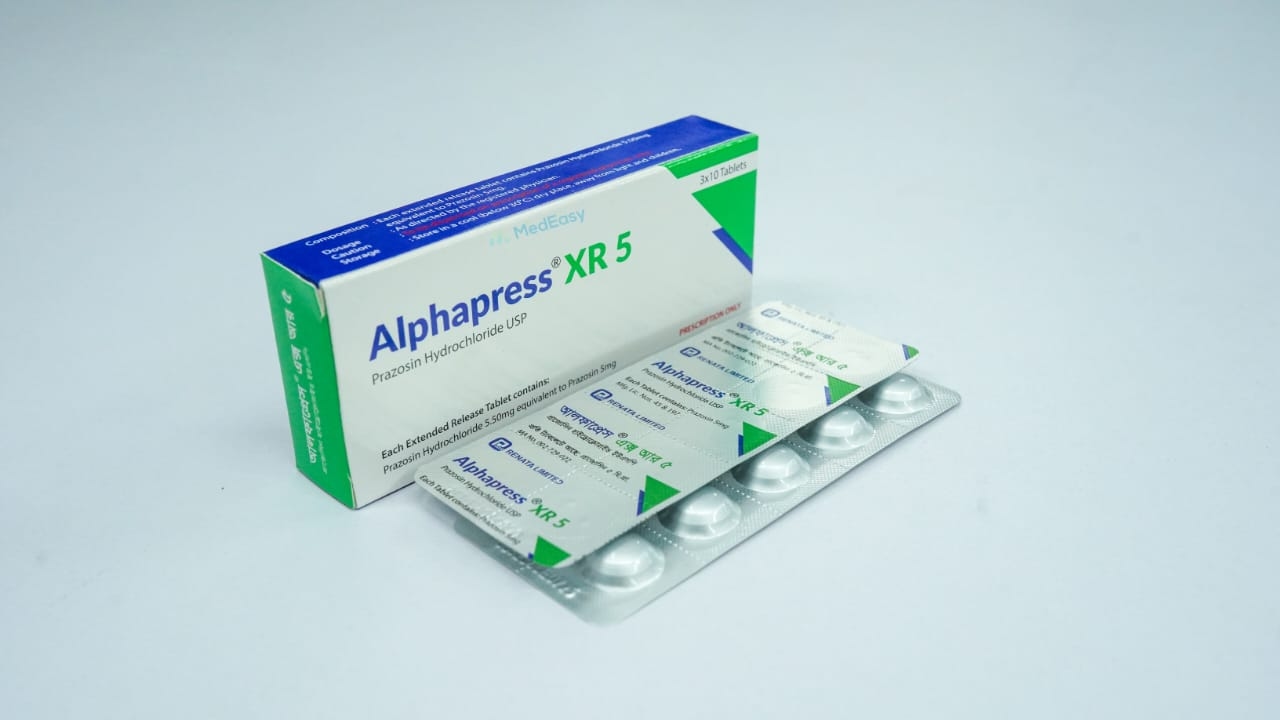
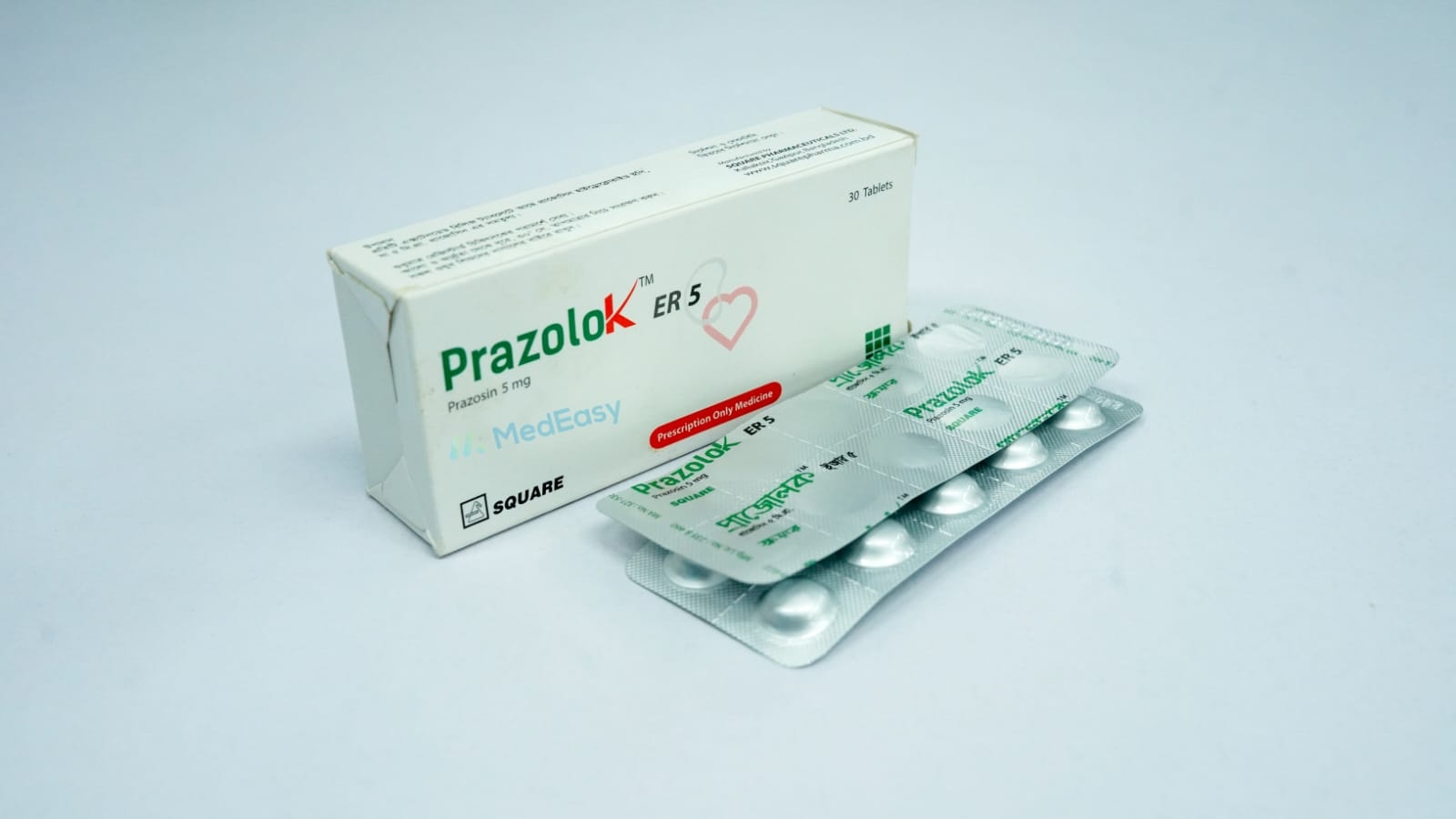
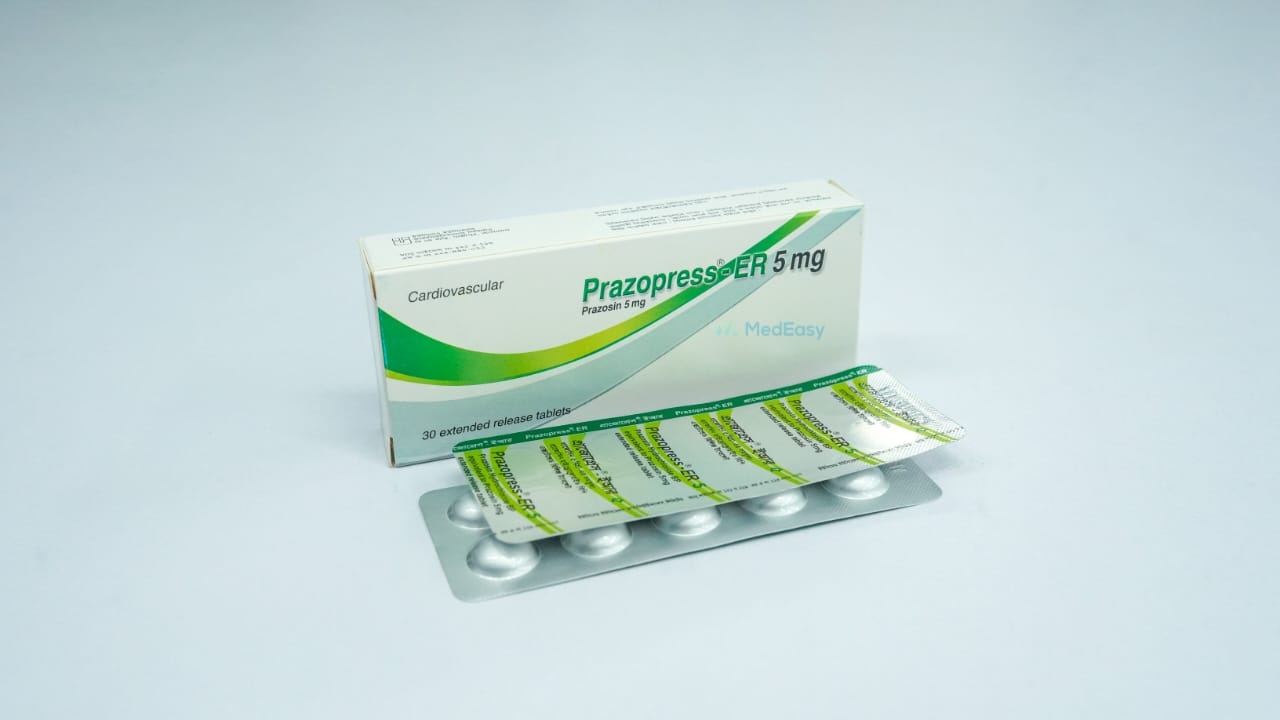
Prazopress ER5 mg
Unimed Unihealth MFG. Ltd.
৳153.00
Add to cart


Minipress XL is an alpha-1 adrenergic receptor antagonist used mainly for blood pressure control, with additional guideline-supported and off-label uses described below.
Trauma-related nightmares in post-traumatic stress disorder (PTSD) – Minipress XL has been used off-label, at bedtime, to reduce nightmares and improve sleep in patients with PTSD. Earlier controlled trials and some clinical guidelines supported this use; however, a large randomized trial found no significant benefit over placebo, so current guidance is mixed. Any use of Minipress XL for this purpose should be individualized and supervised by a physician.
Each capsule/tablet of Prazosin Hydrochloride contains Prazosin Hydrochloride equivalent to Prazosin (as the base), commonly available in strengths of 1 mg, 2 mg, or 5 mg (immediate-release) or 2.5 mg and 5 mg (extended-release), together with pharmaceutically acceptable excipients. The exact strength and formulation vary by manufacturer and product; always check the product label of the specific Prazosin Hydrochloride brand dispensed.
Minipress XL is a synthetic quinazoline-derivative alpha-1 adrenergic receptor antagonist (an “alpha-blocker”). It works by selectively blocking alpha-1 receptors in blood vessel walls, causing both arteries and veins to relax (vasodilation), which lowers peripheral vascular resistance and blood pressure. Minipress XL is administered orally and is available as immediate-release and extended-release oral formulations. Besides its primary use in hypertension, Minipress XL is also used, in selected patients, for Raynaud’s phenomenon, symptomatic benign prostatic hyperplasia, and, off-label, trauma-related nightmares in PTSD.
Minipress XL belongs to the Alpha-1 Adrenergic Receptor Antagonist (Alpha-Blocker) class, specifically the quinazoline-derivative group of alpha-blockers.
Prazosin Hydrochloride selectively and competitively blocks postsynaptic alpha-1 adrenergic receptors on vascular smooth muscle. Because it has little effect on presynaptic alpha-2 receptors, Prazosin Hydrochloride produces vasodilation of both arterioles and veins without the marked reflex tachycardia typically seen with direct-acting vasodilators. The resulting reduction in peripheral vascular resistance lowers blood pressure in both supine and standing positions. Prazosin Hydrochloride also relaxes smooth muscle in the bladder neck, prostate capsule, and prostatic urethra, which improves urinary flow in benign prostatic hyperplasia.
The dose of Minipress XL must be individualized by indication and titrated slowly to minimize the risk of first-dose orthostatic hypotension and syncope. The very first dose of Minipress XL should be small (commonly 0.5–1 mg) and taken at bedtime, with the patient advised to avoid activities requiring alertness (e.g. driving) for several hours after the first dose or any dose increase.
| Step | Dose | Notes |
|---|---|---|
| Initial (first dose) | 0.5–1 mg, taken at bedtime | Minimizes first-dose syncope/orthostatic hypotension risk |
| Early titration | 1 mg two or three times daily | Continue for several days before further increases |
| Maintenance | Usually 6–15 mg/day in divided doses | Maximum 20 mg/day (immediate-release) |
| Extended-release | Start 2.5 mg once daily; increase gradually | Maximum 20 mg once daily |
| Adding a diuretic/other antihypertensive | Reduce Minipress XL to 1–2 mg three times daily | Then re-titrate under medical supervision |
Initial 0.5 mg twice daily, increased gradually as tolerated to a usual maintenance of 1–2 mg twice daily (up to 2 mg three times daily in some patients), under physician guidance.
Initial 0.5 mg twice daily, increased as needed to a usual maintenance of about 2 mg twice daily (maximum around 4 mg/day), with blood pressure monitored given the risk of hypotension, especially in elderly patients.
Typically initiated at 1 mg at bedtime and titrated slowly over weeks under psychiatric/medical supervision, based on response and tolerability; there is no single universally agreed dose, and response to Minipress XL for this use varies between patients.
Minipress XL is taken by mouth, with or without food. The first dose of Minipress XL, and the first dose after any increase, should be taken at bedtime to reduce the risk of dizziness or fainting from a sudden drop in blood pressure (the “first-dose phenomenon”). Extended-release tablets of Minipress XL must be swallowed whole and must not be crushed, chewed, or split. If a dose of Minipress XL is missed, it should be taken as soon as remembered unless it is close to the next scheduled dose, in which case the missed dose should be skipped – doses should never be doubled. Minipress XL should be continued exactly as prescribed and not stopped abruptly without medical advice.
The following interactions with Minipress XL are clinically significant:
This is not an exhaustive list; patients should inform their physician of all medicines and supplements taken alongside Minipress XL.
Prazosin Hydrochloride is contraindicated in:
No other well-established absolute contraindications exist; conditions requiring caution (e.g. concurrent PDE5 inhibitor use, planned cataract surgery, hepatic impairment) are discussed under Precautions and Warnings rather than as absolute contraindications.
Adverse effects of Minipress XL are generally dose-related and most prominent at the start of therapy or after a dose increase.
Pregnancy: The safety of Minipress XL in human pregnancy has not been formally established in adequate, well-controlled studies. Minipress XL should be used during pregnancy only if the potential benefit to the mother clearly justifies the potential risk to the fetus, and only under the direct supervision of a physician.
Lactation: Minipress XL is excreted in breast milk. Caution is advised if Minipress XL is used by a breastfeeding mother; the infant should be monitored for drowsiness or poor feeding, and a physician should be consulted before use of Minipress XL during breastfeeding.
First-dose orthostatic hypotension/syncope: Minipress XL can cause a marked fall in blood pressure with loss of consciousness (the “first-dose phenomenon”), typically within 30–90 minutes of the first dose or a dose increase. To minimize this risk, start Minipress XL with a low dose at bedtime, avoid situations where injury could occur if fainting happens, and rise slowly from sitting or lying positions.
Priapism: Rare cases of prolonged, painful erection have been reported with Minipress XL and other alpha-blockers. This is a medical emergency – patients should seek immediate medical attention for an erection lasting more than 4 hours, as delay can cause permanent erectile dysfunction.
Intraoperative Floppy Iris Syndrome (IFIS): Patients taking, or who have previously taken, Minipress XL are at risk of IFIS during cataract surgery. Patients should inform their ophthalmologist about current or past use of Minipress XL before any eye surgery is scheduled.
Concurrent PDE5 inhibitor use: See Interactions – additive hypotension risk.
Use with other antihypertensives: See Interactions – additive blood-pressure-lowering effect requiring dose adjustment.
Hepatic impairment: Minipress XL is extensively metabolized by the liver; use with caution and consider a lower starting dose in patients with hepatic impairment.
Driving/operating machinery: Minipress XL can cause dizziness or drowsiness, especially after the first dose or a dose increase; patients should avoid driving or hazardous tasks until they know how Minipress XL affects them.
Overdose of Minipress XL primarily manifests as an exaggeration of its blood-pressure-lowering effect, including marked hypotension, drowsiness, and reflex tachycardia; syncope may occur. Overdose of Minipress XL is a medical emergency – seek immediate medical attention or contact a poison control center/emergency services. If syncope occurs, the patient should be placed immediately in a head-down (Trendelenburg) recumbent position; other treatment is supportive (e.g. intravenous fluids and, if needed, vasopressor support) and should be given under medical supervision. Because Minipress XL is highly protein-bound, it is not significantly removed by dialysis. Do not attempt to manage a suspected Minipress XL overdose at home.
Store at room temperature (below 30°C), away from light and moisture. Keep out of reach of children.
Elderly patients taking Minipress XL are generally more sensitive to its blood-pressure-lowering effects and at higher risk of orthostatic hypotension and falls; a lower starting dose and slower titration of Minipress XL are recommended.
Minipress XL is minimally excreted unchanged by the kidney; formal dose-adjustment guidelines are not well established, but patients with renal impairment should be monitored closely for hypotension. Minipress XL is not significantly removed by hemodialysis.
Because Minipress XL is extensively metabolized in the liver, patients with hepatic impairment should be started on a lower dose of Minipress XL and monitored closely.
See Pediatric Use.
See Pregnancy and Lactation.
Treatment with Minipress XL for hypertension is typically long-term/chronic, continued for as long as blood pressure control is needed, with periodic physician review. When Minipress XL is used for Raynaud’s phenomenon or benign prostatic hyperplasia, duration depends on symptom control and physician assessment. When used off-label for PTSD-related nightmares, response to Minipress XL is usually assessed over several weeks, and continued use depends on whether meaningful benefit is seen and tolerated. Minipress XL should not be stopped abruptly without consulting a physician.
Prazosin Hydrochloride belongs to the Alpha-1 Adrenergic Receptor Antagonist (Alpha-Blocker) class, within the quinazoline-derivative group, which also includes terazosin and doxazosin.
Prazosin Hydrochloride acts by selectively and competitively blocking postsynaptic alpha-1 adrenergic receptors located on vascular smooth muscle. Normally, activation of these receptors by norepinephrine causes vasoconstriction; by blocking them, Prazosin Hydrochloride causes relaxation of both arterioles and veins, reducing peripheral vascular resistance and venous return, which lowers blood pressure. Because Prazosin Hydrochloride has minimal effect on presynaptic alpha-2 receptors, it does not trigger the marked reflex increase in heart rate typically seen with non-selective vasodilators. Prazosin Hydrochloride also blocks alpha-1 receptors in the smooth muscle of the bladder neck and prostate, which reduces resistance to urine flow and underlies its use in symptomatic benign prostatic hyperplasia.
C
The safety and efficacy of Minipress XL in children have not been formally established in the manner required for a labeled pediatric indication. Use of Minipress XL in patients under 12 years of age is generally not recommended. If a physician determines that Minipress XL is necessary in an older child or adolescent, it should be used only under close specialist supervision, with careful attention to the risk of first-dose hypotension and syncope, which may be more difficult for a child to recognize or report.
Q: What is Minipress XL 5 mg Tablet used for?
A: Minipress XL 5 mg Tablet is mainly used to treat high blood pressure (hypertension). It is also used in selected patients for Raynaud’s phenomenon and symptomatic benign prostatic hyperplasia, and is sometimes used off-label, under specialist supervision, for trauma-related nightmares in PTSD – though evidence for this specific use is mixed.
Q: Why does my doctor want me to take the first dose of Minipress XL 5 mg Tablet at bedtime?
A: The first dose of Minipress XL 5 mg Tablet (and any dose increase) can cause a sudden drop in blood pressure with dizziness or fainting, known as the “first-dose phenomenon.” Taking the first dose of Minipress XL 5 mg Tablet at bedtime, while lying down, reduces the risk of a fall or injury from this effect.
Q: Can I take Minipress XL 5 mg Tablet with medicines for erectile dysfunction like sildenafil?
A: Combining Minipress XL 5 mg Tablet with PDE5 inhibitors (sildenafil, tadalafil, vardenafil) can cause an additive drop in blood pressure. Tell your doctor if you are taking or plan to take these medicines together with Minipress XL 5 mg Tablet so the doses can be managed safely.
Q: What should I do if I get a painful erection lasting several hours while taking Minipress XL 5 mg Tablet?
A: This may be priapism, a rare but serious side effect of Minipress XL 5 mg Tablet and similar medicines. An erection lasting more than 4 hours is a medical emergency – seek immediate medical attention, as delay can cause permanent damage.
Q: I am scheduled for cataract surgery. Should I tell my eye surgeon that I take Minipress XL 5 mg Tablet?
A: Yes. Patients who currently take or have previously taken Minipress XL 5 mg Tablet are at risk of a condition called intraoperative floppy iris syndrome (IFIS) during cataract surgery. Always inform your ophthalmologist about current or past use of Minipress XL 5 mg Tablet before eye surgery.
Q: Is it safe to take Minipress XL 5 mg Tablet during pregnancy?
A: The safety of Minipress XL 5 mg Tablet during pregnancy has not been fully established. It should only be used in pregnancy if your doctor decides the benefit clearly outweighs the potential risk to the baby. Always consult your physician before using Minipress XL 5 mg Tablet if you are pregnant, planning pregnancy, or breastfeeding.
Disclaimer
The information provided is accurate to the best of our knowledge, but it does not replace professional medical advice. We cannot guarantee its completeness or accuracy, and the absence of specific information about a drug should not be taken as an endorsement. We are not responsible for any consequences arising from this information, so please consult a healthcare professional for any concerns or questions.