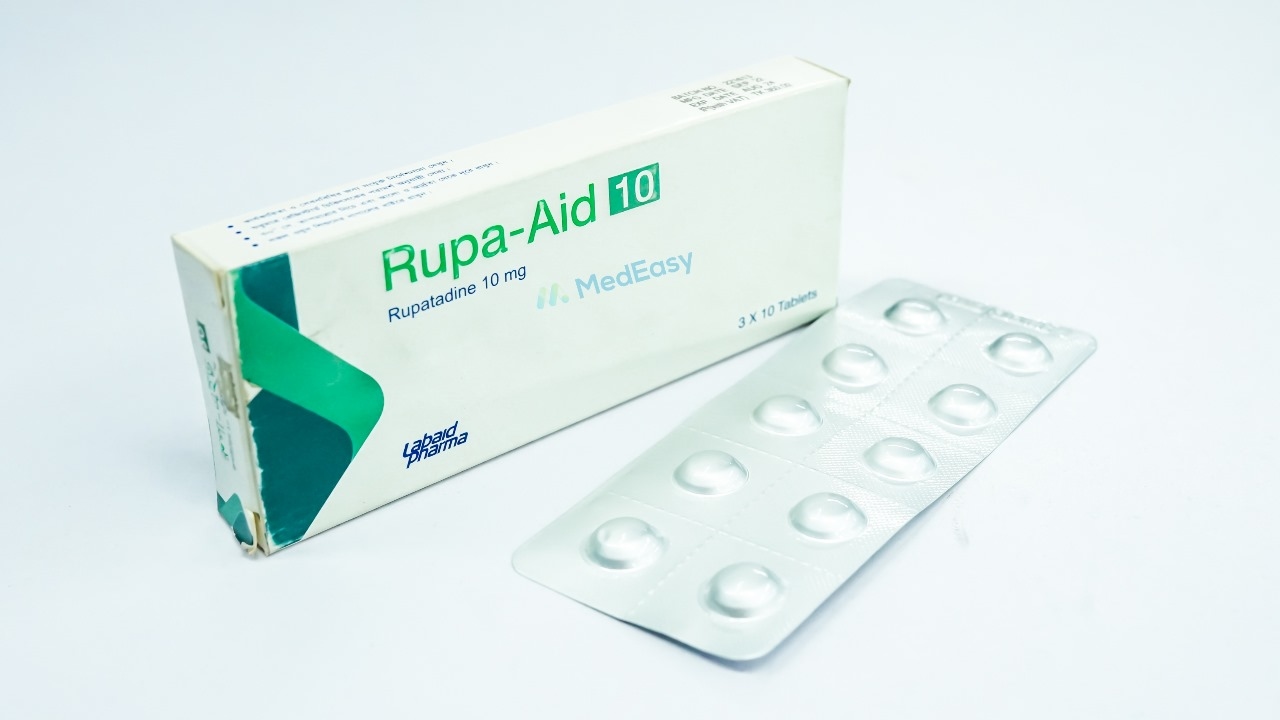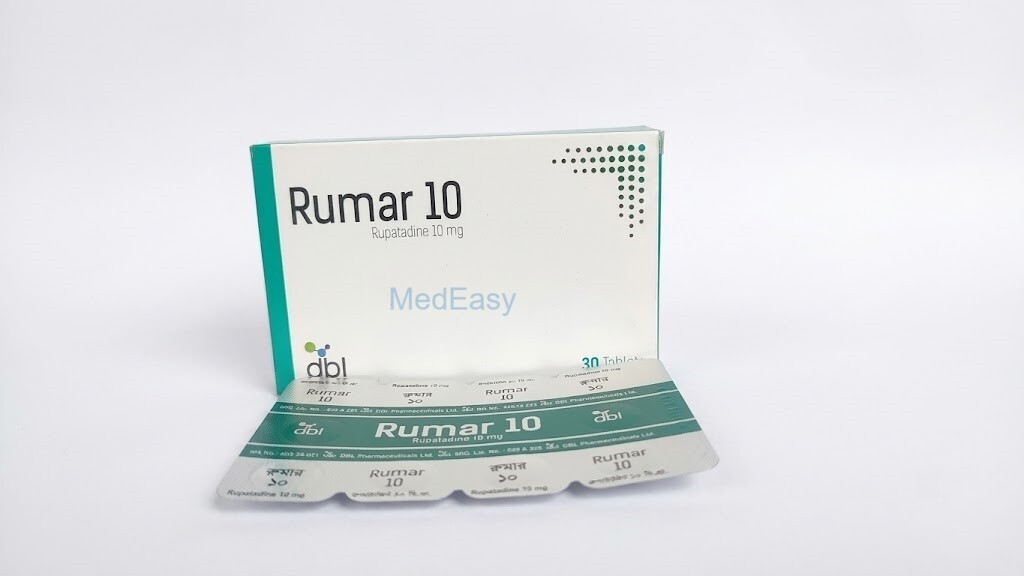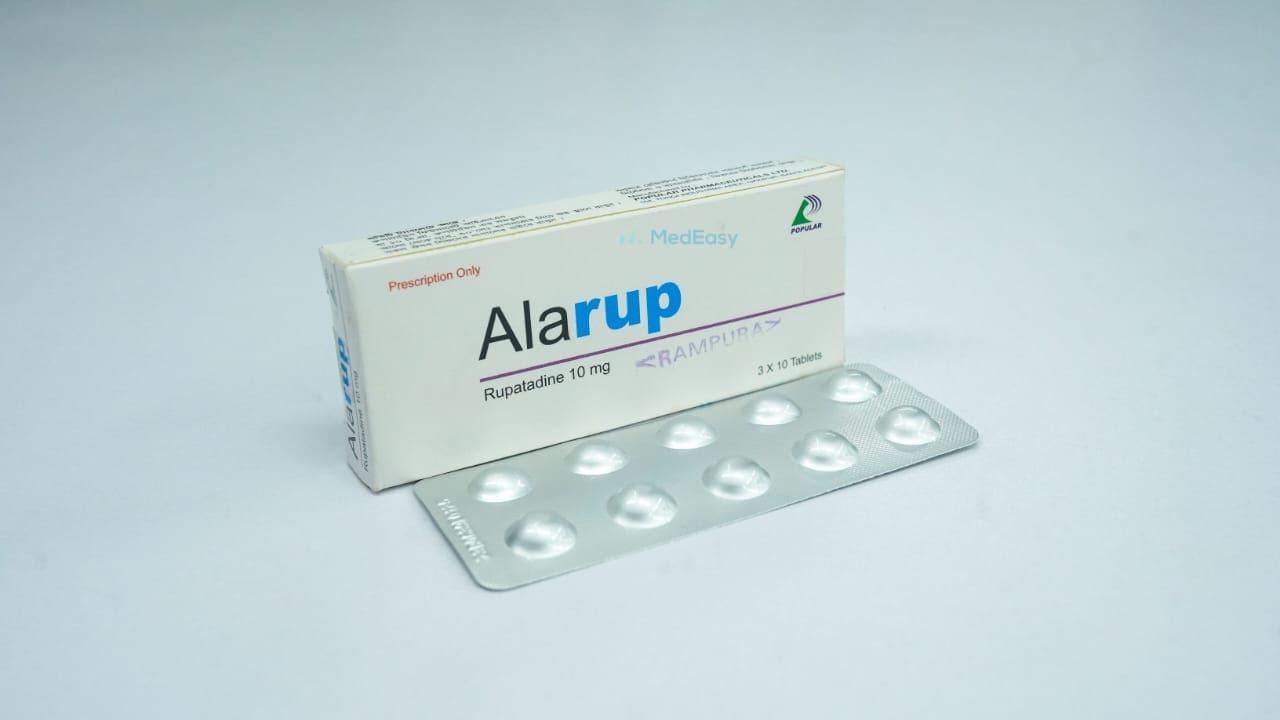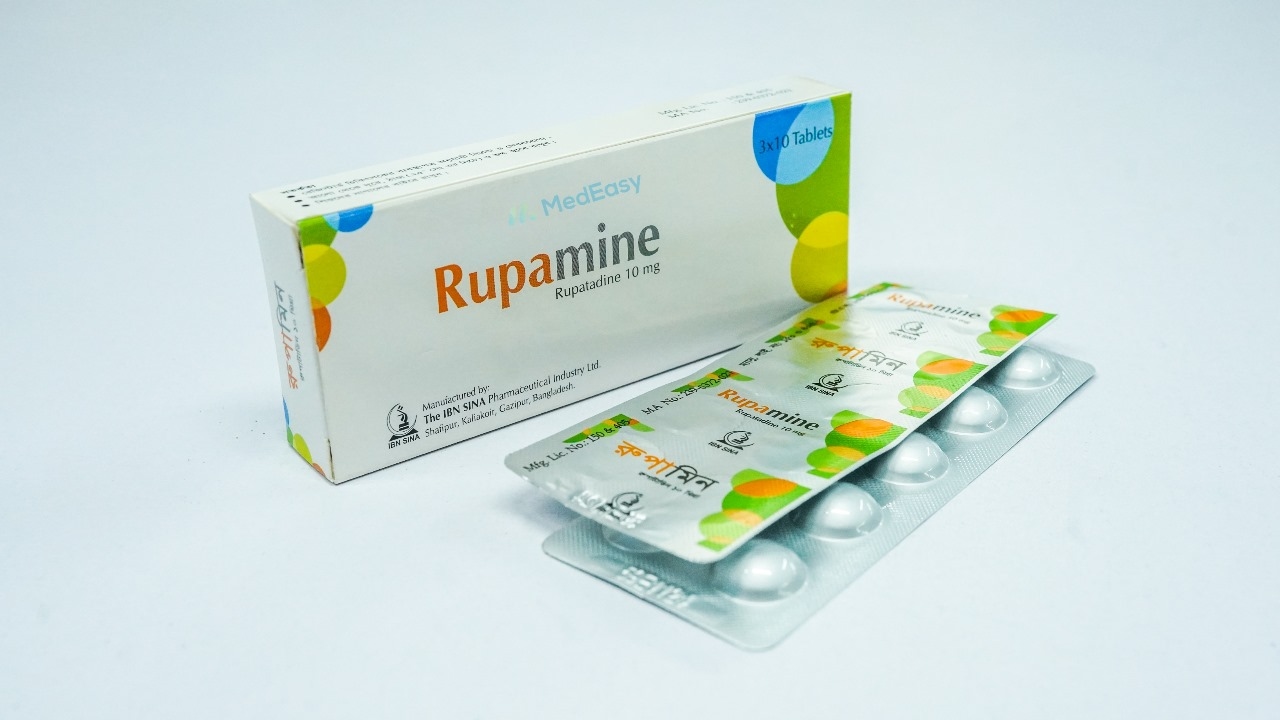
8% Off
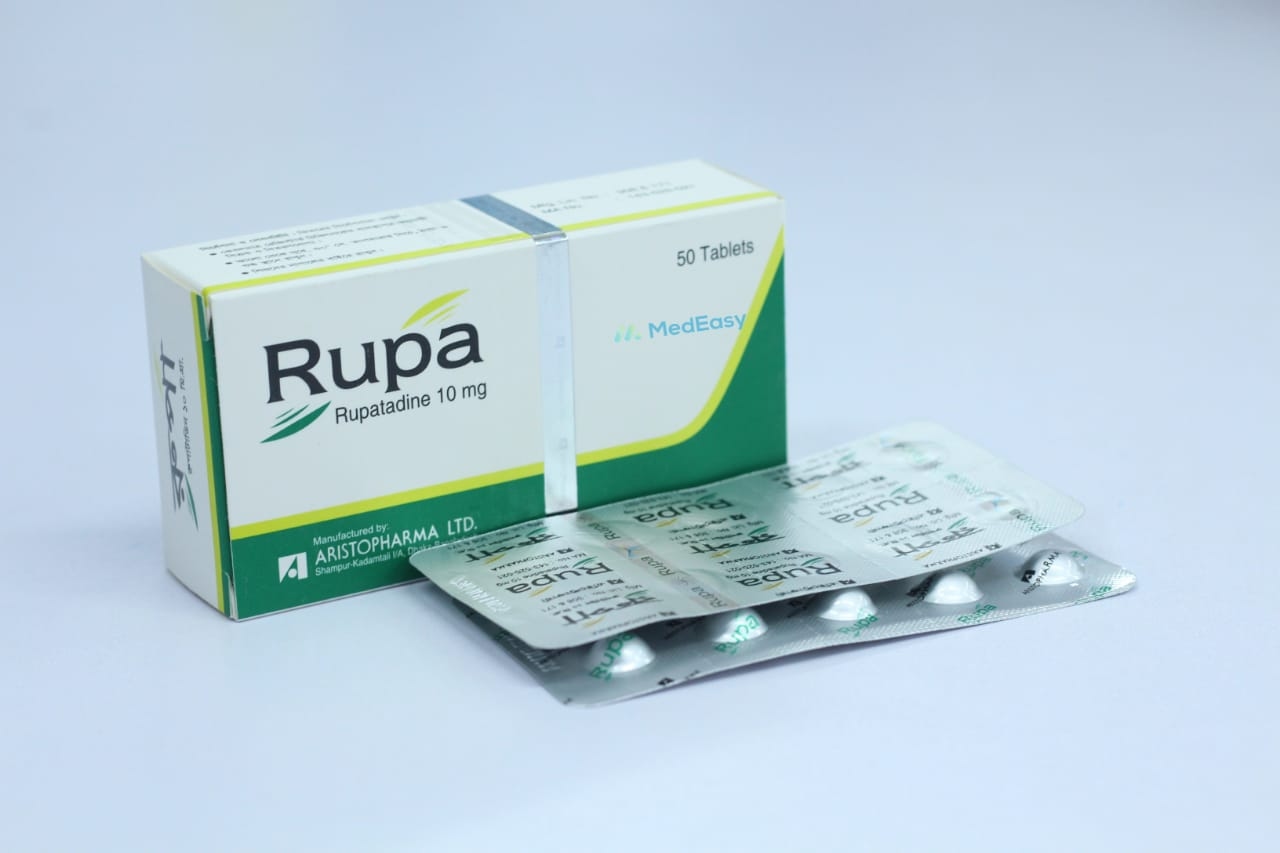
Rupa10 mg
Aristopharma Ltd.
৳110.40
Add to cart
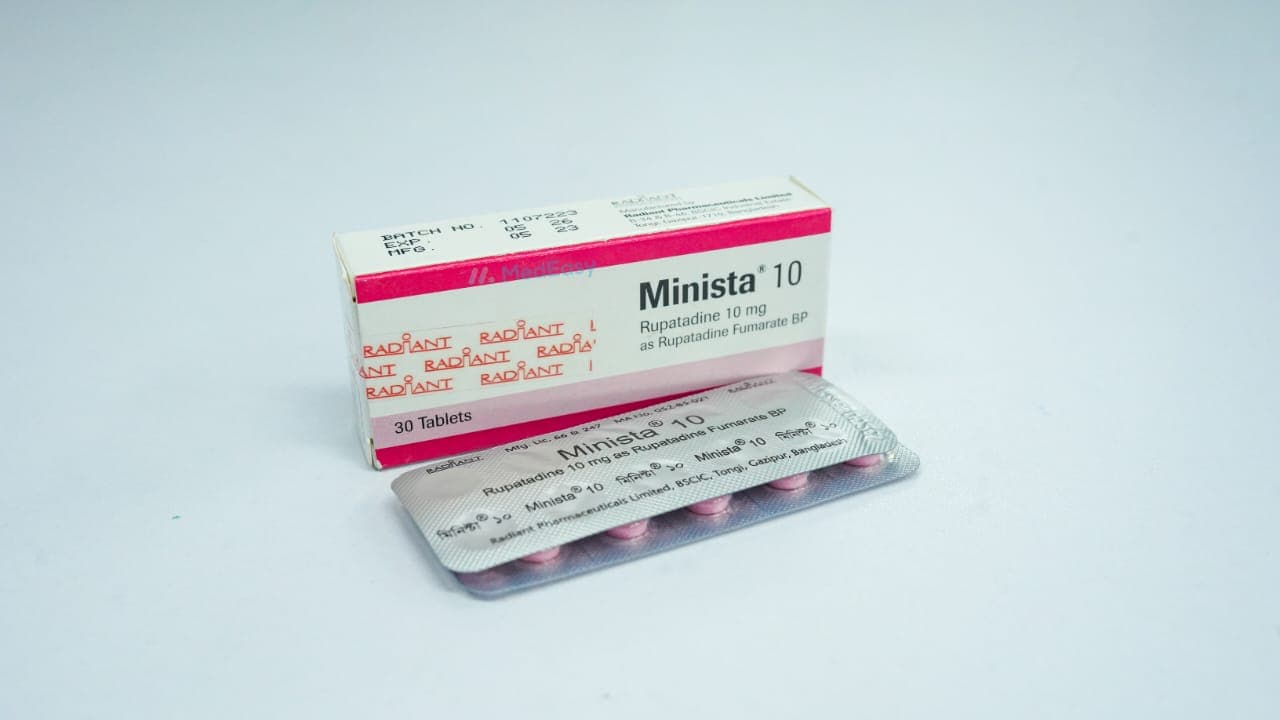

Minista is a second-generation (non-sedating) antihistamine indicated for:
Minista is not approved for, and should not be used to treat, acute anaphylaxis, and it is not a substitute for epinephrine in emergency allergic reactions.
Each formulation of Rupatadine Fumarate contains rupatadine fumarate as the active ingredient, dosed to provide the stated equivalent amount of rupatadine base.
Excipients vary by brand and formulation and may include lactose (tablets) or sucrose (oral solution); patients with relevant sugar-intolerance conditions should check the specific product's excipient list (see Contraindications).
Minista is a second-generation, long-acting, non-sedating antihistamine that combines selective peripheral histamine H1-receptor antagonism with platelet-activating factor (PAF) antagonist activity. It is taken orally, as a tablet or oral solution, for symptomatic relief of allergic conditions.
Because of this dual mechanism, Minista is often described among newer-generation antihistamines with additional anti-inflammatory, anti-allergic properties beyond simple H1-receptor blockade.
Minista belongs to the therapeutic class of second-generation (non-sedating) antihistamines — specifically, a selective histamine H1-receptor antagonist with additional platelet-activating factor (PAF) antagonist activity.
Rupatadine Fumarate is a potent, long-acting, selective antagonist of peripheral histamine H1-receptors. Unlike many first-generation antihistamines, it does not readily cross the blood-brain barrier in significant amounts at recommended doses, giving it a low potential for sedation.
In addition to H1-antagonism, Rupatadine Fumarate antagonizes platelet-activating factor (PAF), a mediator involved in the late-phase allergic inflammatory response. Combined H1- and PAF-antagonism is thought to underlie its efficacy against both the immediate (histamine-driven) and late (PAF/cytokine-driven) phases of allergic inflammation, including inhibition of mast-cell degranulation and reduction of certain pro-inflammatory cytokines such as TNF-alpha.
Pharmacokinetics: Rupatadine Fumarate is absorbed after oral administration and extensively metabolized in the liver, primarily via CYP3A4, to active metabolites. Elimination occurs mainly via the feces, with a smaller renal component. Onset of action is generally within 1–2 hours, and the duration of effect supports once-daily dosing.
Dosing of Minista should follow the indication and, in children, body weight. It may be taken with or without food.
| Population | Indication | Recommended Dose |
|---|---|---|
| Adults and adolescents ≥12 years | Allergic rhinitis / Chronic urticaria | 10 mg (one tablet or 10 mL oral solution) once daily |
| Children 2–11 years, ≥25 kg | Allergic rhinitis / Chronic urticaria | 5 mg (5 mL oral solution) once daily |
| Children 2–11 years, 10–25 kg | Allergic rhinitis / Chronic urticaria | 2.5 mg (2.5 mL oral solution) once daily |
| Children under 2 years | — | Not recommended; safety and efficacy not established |
Tablets are intended for adults and adolescents; the oral solution is the appropriate formulation for younger children who cannot swallow tablets. Do not exceed the recommended dose of Minista. For hepatic or renal impairment, elderly use, and other special situations, see Use in Special Populations.
Minista tablets should be swallowed whole with a glass of water, with or without food. The oral solution should be measured accurately using an appropriate oral dosing syringe or measuring cup, not a household spoon.
Take Minista at approximately the same time each day. If a dose is missed, take it as soon as remembered unless it is nearly time for the next dose, in which case skip the missed dose — do not double the dose. Grapefruit juice should be avoided while taking Minista, as it can substantially increase drug levels (see Interactions).
Minista is metabolized primarily by the hepatic enzyme CYP3A4, making it susceptible to clinically significant interactions with CYP3A4 inhibitors:
Rupatadine Fumarate is contraindicated in:
The most commonly reported side effects of Minista include:
Less common effects include dry mouth, nausea, abdominal pain/dyspepsia, increased appetite, weight gain, arthralgia, back pain, cough, and pharyngitis.
Rare but serious: palpitations, tachycardia, and, rarely in post-marketing reports, QT-interval changes/torsade de pointes have been described. Hypersensitivity reactions, including angioedema and anaphylaxis, have also been reported post-marketing. Seek prompt medical attention for facial/throat swelling, difficulty breathing, chest palpitations, or fainting while taking Minista.
Pregnancy: There are no adequate and well-controlled studies of Minista in pregnant women. Minista should be used during pregnancy only if clearly needed and if the potential benefit justifies the potential risk to the fetus; consult a physician before use.
Lactation: It is not known whether Minista or its metabolites pass into human breast milk. Use of Minista during breastfeeding is generally not recommended unless a physician determines that the benefit to the mother outweighs any potential risk to the breastfed infant.
Minista should be used with caution in the following situations:
Minista is not an antibiotic and has no role in treating infections.
Overdose with Minista may cause increased somnolence and other exaggerated pharmacologic effects. In clinical safety studies, doses up to 100 mg daily for six days were generally well tolerated, but individual sensitivity may vary.
There is no specific antidote for Minista overdose. If overdose is suspected, seek immediate medical attention or contact a poison control center. Management is supportive and symptomatic; inducing vomiting is not generally recommended.
Store Minista at room temperature (below 30°C), away from light and moisture. Keep out of reach of children.
Pediatric use: Minista is approved for children 2 years and older using weight-based oral-solution dosing; it is not recommended for children under 2 years (see Pediatric Uses).
Elderly: limited clinical data are available in patients over 65 years; use with caution.
Hepatic impairment: use of Minista is not recommended due to limited clinical experience and the potential for increased drug exposure.
Renal impairment: use of Minista is not recommended due to limited clinical experience in this population.
Pregnancy and lactation: see the Pregnancy and Lactation section.
The duration of treatment with Minista depends on the clinical indication:
Treatment duration with Minista should be reviewed periodically by the prescribing physician, and use should be reassessed if symptoms resolve or fail to improve.
Rupatadine Fumarate is classified as:
Rupatadine Fumarate acts as a selective antagonist at peripheral histamine H1-receptors, blocking histamine-mediated allergic symptoms such as itching, sneezing, and rhinorrhea, without significant central sedative activity at recommended doses. It additionally antagonizes platelet-activating factor (PAF), a mediator of the late-phase allergic response, and reduces mast-cell-mediated release of inflammatory mediators, giving Rupatadine Fumarate combined anti-histaminic and anti-inflammatory, anti-allergic activity.
Minista is approved for use in children 2 years of age and older for allergic rhinitis and chronic urticaria, using the oral solution formulation with weight-based dosing (2.5 mg once daily for 10–25 kg; 5 mg once daily for ≥25 kg).
Tablets are not recommended for children under 12 years; the oral solution should be used instead for younger children who require dosing. Safety and efficacy of Minista in children under 2 years of age have not been established, and use in this age group is not recommended. Long-term pediatric safety data beyond several weeks of continuous use are limited.
Q: What is Minista 10 mg Tablet used for?
A: Minista 10 mg Tablet is used to relieve symptoms of seasonal and perennial allergic rhinitis (such as sneezing, a runny, itchy, or blocked nose, and itchy, watery eyes) and chronic urticaria (hives and itching).
Q: Can Minista 10 mg Tablet make me drowsy?
A: Minista 10 mg Tablet is a non-sedating antihistamine, but mild drowsiness can occur in some people. Until you know how it affects you, use caution when driving or operating machinery, and avoid alcohol or other sedating medicines while taking Minista 10 mg Tablet.
Q: Can I take Minista 10 mg Tablet with other medicines?
A: Minista 10 mg Tablet is broken down by a liver enzyme called CYP3A4, so certain medicines (such as ketoconazole and some antibiotics) and grapefruit juice can raise its levels in your blood and increase the risk of side effects. Tell your doctor or pharmacist about all medicines you take before starting Minista 10 mg Tablet.
Q: Is Minista 10 mg Tablet safe during pregnancy or breastfeeding?
A: There is limited human data on Minista 10 mg Tablet use in pregnancy, so it should be used only if clearly needed and if your physician judges that the benefit outweighs any potential risk to the baby. It is not generally recommended during breastfeeding unless your physician advises otherwise. Always consult your physician first.
Q: Can children take Minista 10 mg Tablet?
A: Yes, Minista 10 mg Tablet oral solution is approved for children 2 years and older, dosed according to body weight. It is not recommended for children under 2 years, and tablets are only for adults and adolescents 12 years and older.
Q: What should I do if I miss a dose or take too much Minista 10 mg Tablet?
A: If you miss a dose of Minista 10 mg Tablet, take it as soon as you remember unless it is close to your next scheduled dose, in which case skip the missed dose. If you or someone else has taken more than the recommended amount, seek immediate medical attention or contact a poison control center, as overdose can cause increased drowsiness and other exaggerated effects.
Disclaimer
The information provided is accurate to the best of our knowledge, but it does not replace professional medical advice. We cannot guarantee its completeness or accuracy, and the absence of specific information about a drug should not be taken as an endorsement. We are not responsible for any consequences arising from this information, so please consult a healthcare professional for any concerns or questions.