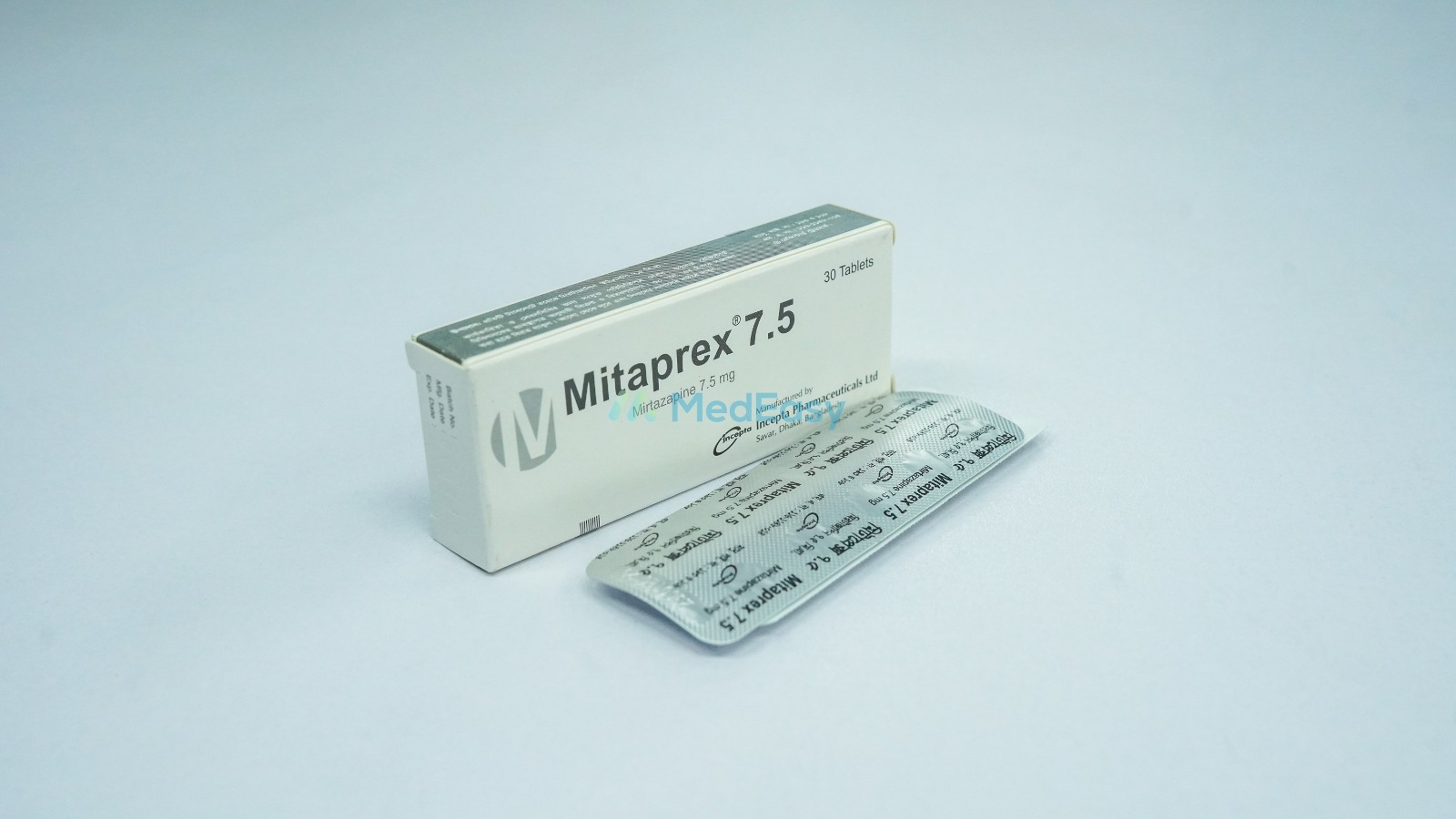
10% Off
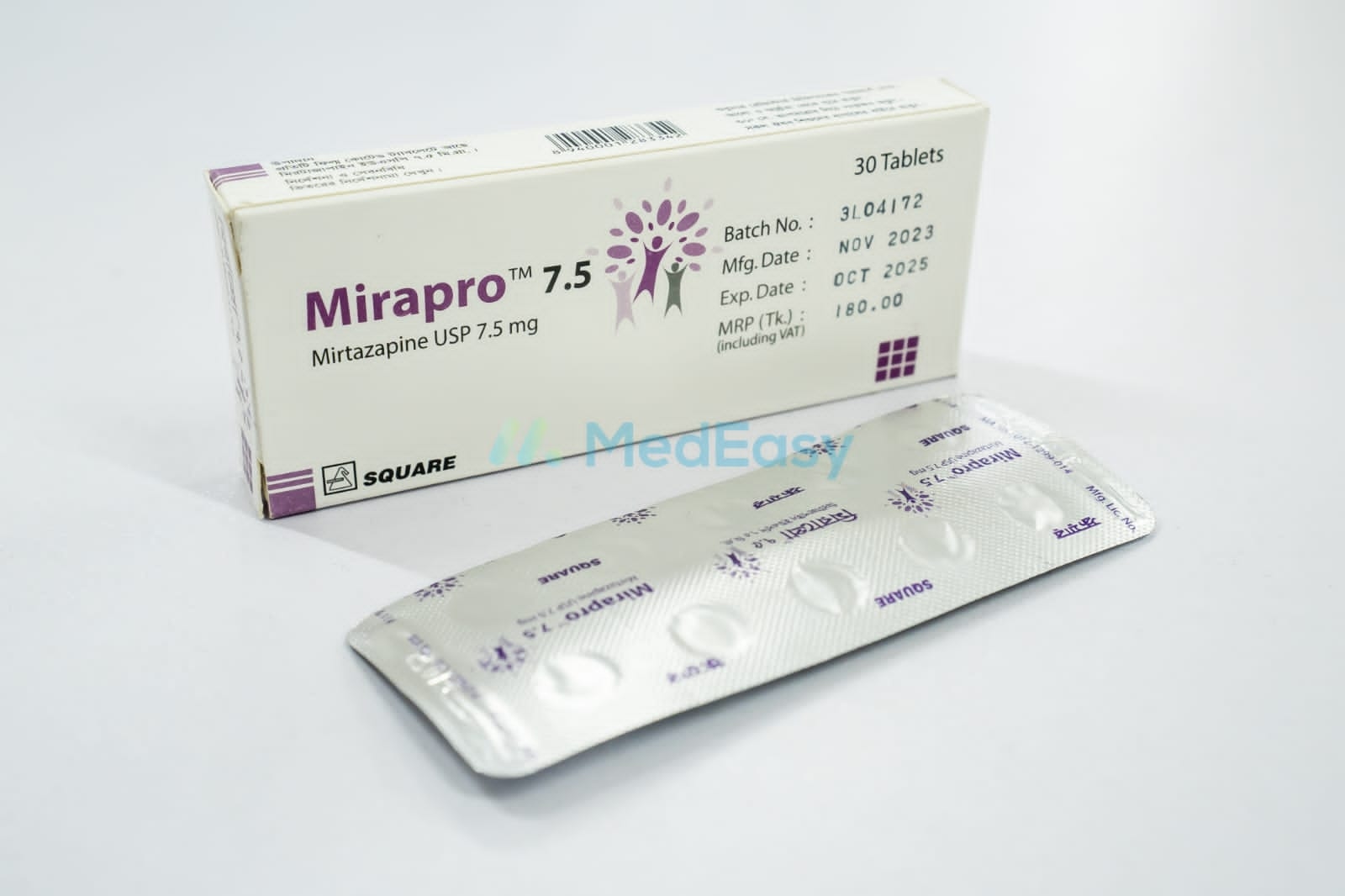
Mirapro7.5 mg
Square Pharmaceuticals PLC.
৳5.40
Add to cart
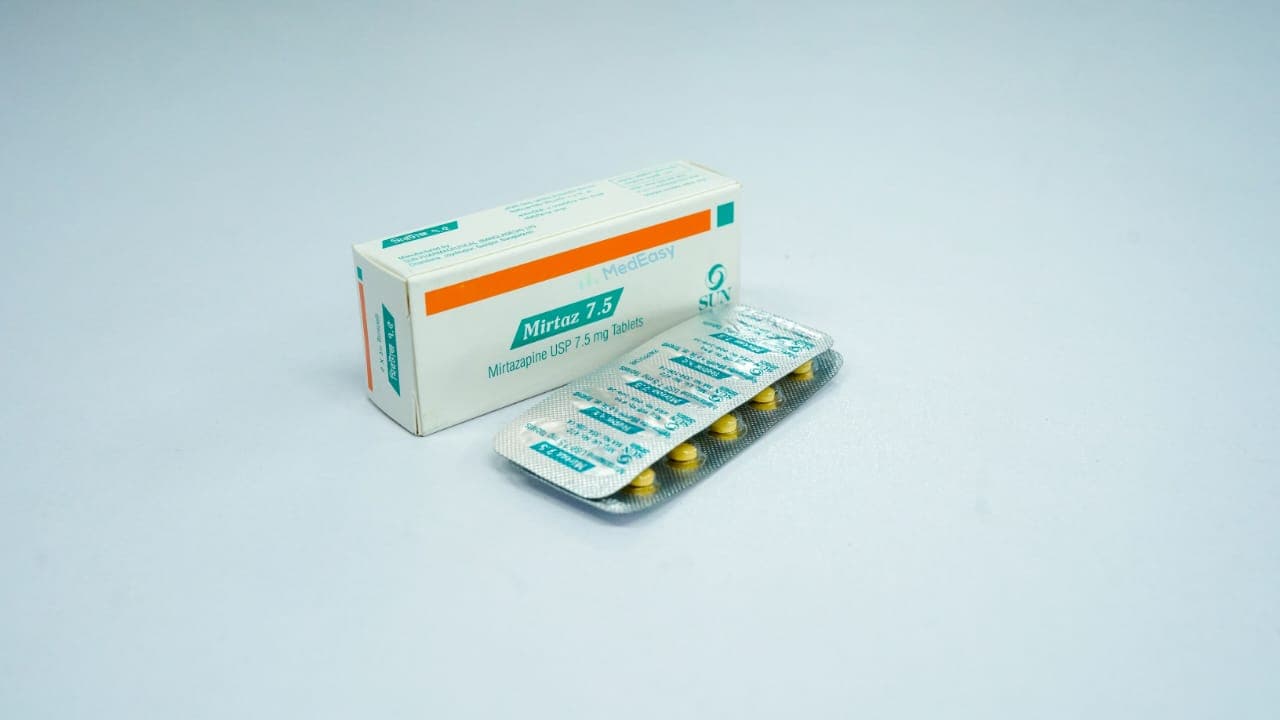

Mirtaz is an atypical antidepressant with the following evidence-based uses:
Use of Mirtaz for any indication should be individualized and supervised by a physician.
Each tablet contains Mirtazapine as the active ingredient. Mirtazapine is available as conventional film-coated tablets and orally disintegrating (dispersible) tablets, commonly in strengths of 7.5 mg, 15 mg, 30 mg, and 45 mg.
Mirtaz is an atypical antidepressant belonging to the class known as noradrenergic and specific serotonergic antidepressants (NaSSAs). Unlike selective serotonin reuptake inhibitors (SSRIs), Mirtaz does not primarily act by blocking neurotransmitter reuptake; instead it enhances central noradrenergic and serotonergic neurotransmission through receptor antagonism. It is commonly used for the treatment of major depressive disorder in adults and is notable for its sedating and appetite-stimulating side-effect profile, which is sometimes used to therapeutic advantage in patients with depression accompanied by insomnia or poor appetite.
Atypical antidepressant — Noradrenergic and Specific Serotonergic Antidepressant (NaSSA).
The precise mechanism of the antidepressant action of Mirtazapine is not fully established, but it is believed to enhance central noradrenergic and serotonergic activity through several receptor actions:
Mirtazapine has minimal effect on the reuptake of norepinephrine or serotonin and has negligible anticholinergic activity. It is well absorbed orally, extensively metabolized in the liver (via CYP1A2, CYP2D6, and CYP3A4), and has an elimination half-life of approximately 20–40 hours, allowing once-daily dosing.
Dosage of Mirtaz should be individualized under medical supervision based on response and tolerability.
| Indication | Population | Typical Dosage |
|---|---|---|
| Major Depressive Disorder | Adults | Initiate at 15 mg once daily, preferably in the evening before sleep. May be increased at intervals of 1–2 weeks up to a usual maximum of 45 mg/day, based on response and tolerability. |
| Major Depressive Disorder | Elderly patients | Use the lower end of the dosing range; titrate cautiously due to reduced clearance and increased sensitivity to side effects. |
| Major Depressive Disorder | Hepatic or renal impairment | Clearance is reduced; start at a lower dose and titrate slowly with close monitoring. |
| Any indication | Children/adolescents (<18 years) | Not approved; safety and efficacy have not been established (see Pediatric Uses). |
Do not stop Mirtaz abruptly after prolonged use; discontinuation should be gradual and supervised by a physician to reduce the risk of discontinuation symptoms.
Mirtaz tablets are usually taken once daily in the evening, preferably at bedtime, due to their sedating effect. Tablets may be taken with or without food. Orally disintegrating tablets should be placed on the tongue, allowed to dissolve, and swallowed without water (or with water if preferred), immediately upon removal from the blister pack. Conventional film-coated tablets should be swallowed whole with water. Do not chew film-coated tablets unless specifically formulated to be chewed. Take Mirtaz exactly as prescribed and do not adjust the dose or stop treatment without consulting a physician.
Mirtaz has the following clinically significant interactions:
Mirtazapine is contraindicated in:
The most commonly reported side effects of Mirtaz include:
Pregnancy: Mirtaz should be used during pregnancy only if the potential benefit justifies the potential risk to the fetus. Available data have not established a clear pattern of major birth defects, but neonates exposed to antidepressants late in the third trimester have occasionally shown complications such as respiratory distress, feeding difficulty, or withdrawal-type symptoms requiring monitoring. Abrupt discontinuation during pregnancy is not recommended without medical advice; discuss risks and benefits with a physician.
Lactation: Mirtaz is excreted in human breast milk in small amounts. Use during breastfeeding only after consulting a physician, who can weigh the benefits of treatment against potential effects on the nursing infant, and monitor the infant for sedation or feeding difficulty if used.
Mirtaz and other antidepressants increase the risk of suicidal thinking and behavior in children, adolescents, and young adults (up to age 24) compared with placebo, particularly during the first few months of treatment and after dose changes. Close monitoring for worsening depression and emergence of suicidal thoughts is required, especially in this age group. Mirtaz is not approved for use in patients under 18 years.
Rare but potentially serious reductions in white blood cell count have been reported with Mirtaz. Patients and caregivers should be educated to watch for and promptly report fever, sore throat, mouth sores, or other signs of infection; treatment should generally be discontinued if significant neutropenia occurs (see Side Effects).
Concomitant use of Mirtaz with other serotonergic agents, or use with/soon after an MAOI, can precipitate a potentially life-threatening serotonin syndrome (see Contraindications and Interactions). Discontinue immediately and seek emergency care if symptoms such as agitation, hallucinations, rapid heart rate, fever, muscle rigidity, or coordination problems occur.
Mirtaz may cause a drop in blood pressure on standing; use with caution in patients with cardiovascular disease, cerebrovascular disease, or conditions predisposing to hypotension.
Sedation is common, especially at the start of treatment or with dose increases. Patients should avoid driving or operating hazardous machinery until they know how Mirtaz affects them, and should avoid alcohol.
Increased appetite and weight gain are common; monitor weight, and use with caution in patients with diabetes or dyslipidemia.
Do not stop Mirtaz abruptly after regular use; taper gradually under medical supervision to reduce the risk of discontinuation symptoms (e.g., dizziness, nausea, irritability, anxiety).
Clearance of Mirtaz is reduced in patients with hepatic or renal impairment; use with caution, at lower doses, and with closer monitoring.
Use with caution in patients with a history of bipolar disorder, as antidepressants may trigger a manic episode.
Overdose of Mirtaz alone typically causes disorientation, drowsiness, impaired memory, and tachycardia; it has a relatively wide margin of safety compared with older antidepressants when taken alone, but overdose combined with alcohol or other CNS-depressant drugs, or with other medications, can be more dangerous and potentially life-threatening.
If an overdose of Mirtaz is suspected, seek immediate medical attention or contact a poison control center/emergency services right away. Do not attempt to manage an overdose at home. Treatment in a medical facility is generally supportive, based on symptoms, with monitoring of vital signs and cardiac function; there is no specific antidote.
Store at room temperature (below 30°C), away from light and moisture. Keep out of reach of children.
Use with caution; clearance of Mirtaz is reduced in elderly patients, who may also be more susceptible to sedation and orthostatic hypotension. Start at a lower dose and titrate slowly.
Mirtaz clearance is reduced in patients with hepatic impairment; use lower doses with careful monitoring.
Mirtaz clearance is reduced in patients with moderate to severe renal impairment; use lower doses with careful monitoring.
Safety and efficacy of Mirtaz have not been established in patients under 18 years of age; use is not recommended in this age group outside specialist guidance (see Pediatric Uses and Precautions).
An initial therapeutic response to Mirtaz may take 1–4 weeks, with full benefit sometimes taking longer. Once a response is achieved, treatment is generally continued for at least 6 months (and often longer) to consolidate remission and reduce risk of relapse, as advised by the treating physician. Treatment should not be stopped abruptly, and the total duration should be individualized based on clinical response and history of depressive episodes.
Atypical antidepressants; Noradrenergic and Specific Serotonergic Antidepressants (NaSSAs).
Mirtazapine works primarily by antagonizing central presynaptic alpha-2 adrenergic autoreceptors and heteroreceptors, which increases the release of norepinephrine and serotonin into the synapse. It also blocks postsynaptic 5-HT2 and 5-HT3 serotonin receptors, channeling the increased serotonergic activity through 5-HT1A receptors, which is thought to underlie its antidepressant effect while minimizing nausea and sexual side effects typical of SSRIs. Its potent antagonism of H1-histamine receptors accounts for its sedative and appetite-stimulating properties.
C
The safety and efficacy of Mirtaz have not been established in patients under 18 years of age, and it is not approved for use in this population. As with other antidepressants, Mirtaz carries a boxed warning for increased risk of suicidal thinking and behavior in children, adolescents, and young adults (see Precautions and Warnings). If a physician determines that treatment with Mirtaz is necessary in a minor after careful risk-benefit assessment, close clinical monitoring for worsening depression, unusual behavior changes, and suicidal ideation is essential, particularly during the first few months of therapy and after any dose adjustment.
Q: What is Mirtaz 7.5 mg Tablet used for?
A: Mirtaz 7.5 mg Tablet is an atypical antidepressant used mainly to treat major depressive disorder (MDD) in adults. It is sometimes also used off-label to help with insomnia or poor appetite associated with depression, due to its sedating and appetite-stimulating effects.
Q: How long does it take for Mirtaz 7.5 mg Tablet to work?
A: Some people notice improved sleep and appetite within the first 1–2 weeks of taking Mirtaz 7.5 mg Tablet, but the full antidepressant effect on mood typically takes 2–4 weeks or longer. It is important to continue taking Mirtaz 7.5 mg Tablet as prescribed even if improvement is not immediate, and not to stop it without consulting a physician.
Q: Why does Mirtaz 7.5 mg Tablet cause weight gain and sleepiness?
A: Mirtaz 7.5 mg Tablet blocks histamine (H1) receptors in the brain, which commonly causes sedation and increased appetite. This is why it is usually taken in the evening, and why some patients experience weight gain during treatment. Discuss significant weight changes with your physician.
Q: Can I take Mirtaz 7.5 mg Tablet with other antidepressants or migraine medicines?
A: Mirtaz 7.5 mg Tablet must never be combined with, or used within 14 days of, a monoamine oxidase inhibitor (MAOI), due to the risk of a serious and potentially fatal reaction called serotonin syndrome. Combining Mirtaz 7.5 mg Tablet with other serotonergic medicines, such as SSRIs, SNRIs, or triptans used for migraine, can also increase the risk of serotonin syndrome, so always inform your physician of all medicines you are taking before starting Mirtaz 7.5 mg Tablet.
Q: Is it safe to stop taking Mirtaz 7.5 mg Tablet suddenly?
A: No. Mirtaz 7.5 mg Tablet should not be stopped abruptly after regular use, as this can cause discontinuation symptoms such as dizziness, nausea, irritability, or anxiety. Always taper the dose gradually under a physician's supervision.
Q: What should I watch for regarding rare but serious side effects of Mirtaz 7.5 mg Tablet?
A: Rarely, Mirtaz 7.5 mg Tablet can cause a serious drop in white blood cell count (agranulocytosis), so seek prompt medical attention if you develop fever, sore throat, mouth ulcers, or other signs of infection while taking Mirtaz 7.5 mg Tablet. Also seek help immediately for symptoms of serotonin syndrome (agitation, rapid heartbeat, muscle rigidity, high fever) or worsening mood/suicidal thoughts, especially in younger patients.
Disclaimer
The information provided is accurate to the best of our knowledge, but it does not replace professional medical advice. We cannot guarantee its completeness or accuracy, and the absence of specific information about a drug should not be taken as an endorsement. We are not responsible for any consequences arising from this information, so please consult a healthcare professional for any concerns or questions.