8% Off
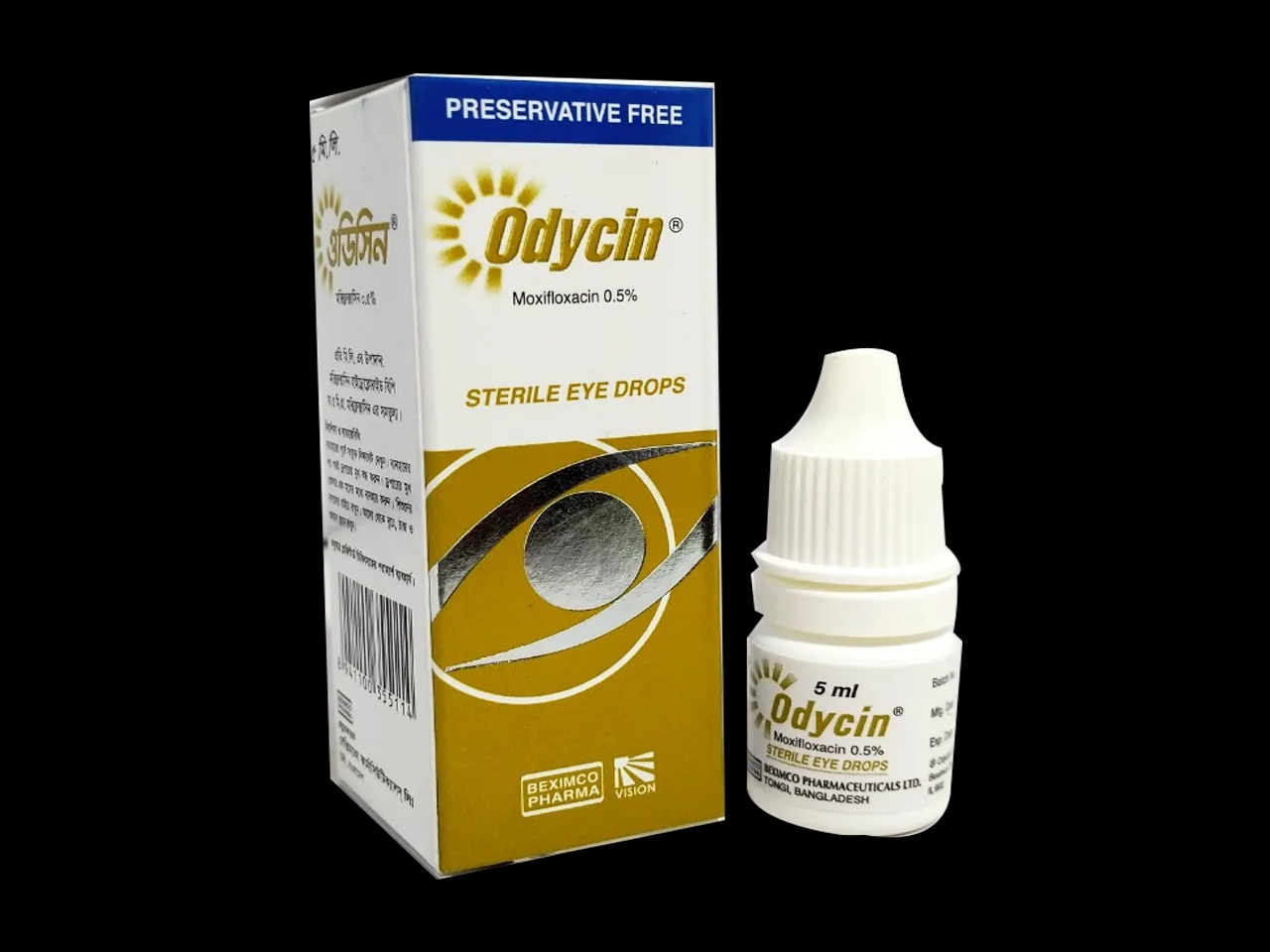
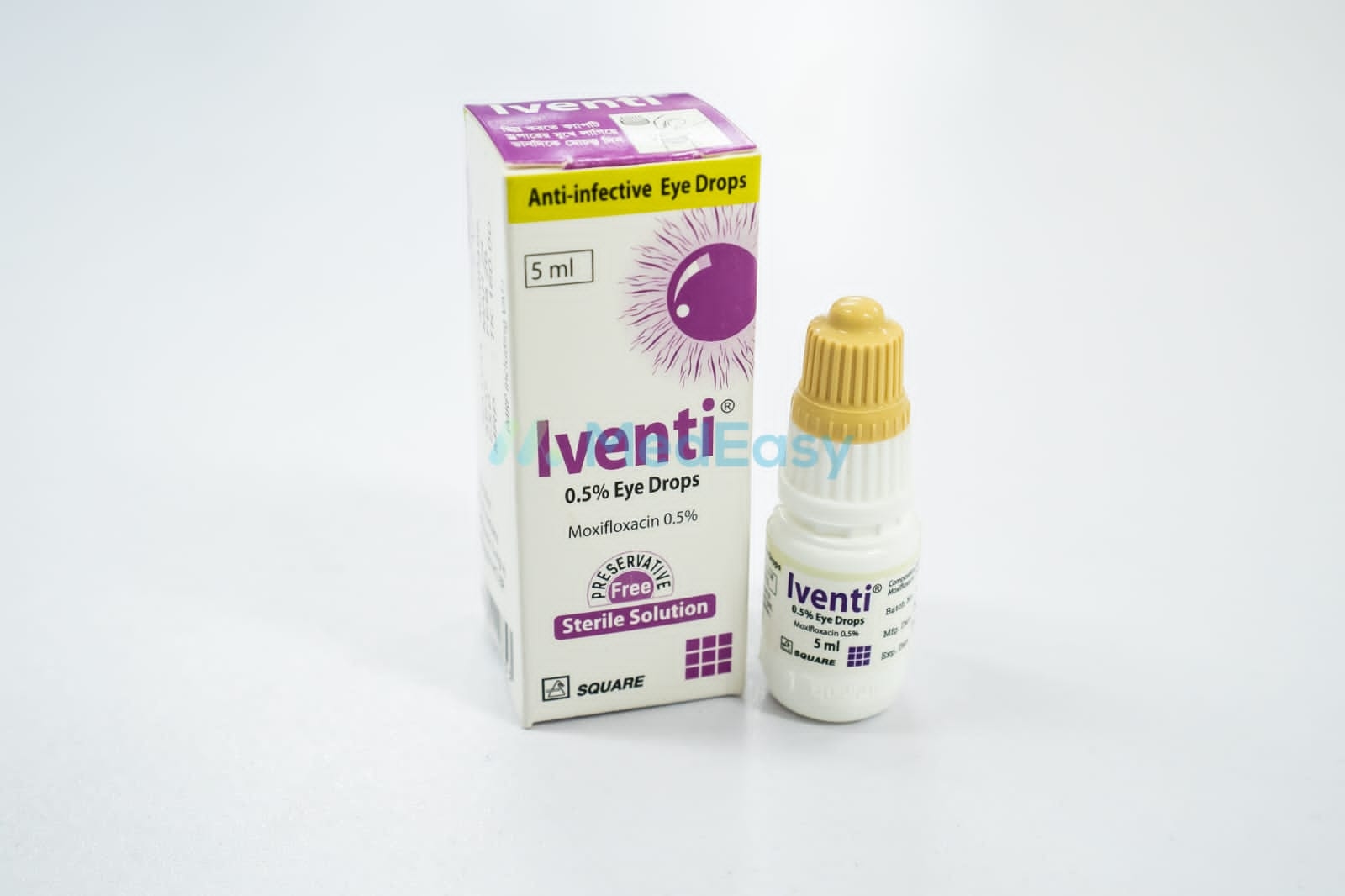
Iventi0.5%
Square Pharmaceuticals PLC.
৳147.20
Add to cart

Moxlocin 0.5% Ophthalmic Solution is available on MedEasy for ৳92.00 per 5 ml drop, with home delivery anywhere in Bangladesh. It is manufactured by Pacific Pharmaceuticals Ltd. Its generic name is Moxifloxacin Hydrochloride.

Moxlocin is a fourth-generation fluoroquinolone antibacterial indicated for infections caused by susceptible strains of bacteria. Because of the risk of serious, potentially irreversible adverse effects associated with fluoroquinolones, Moxlocin should be reserved for patients who have no alternative treatment options for certain indications (acute bacterial sinusitis and acute bacterial exacerbation of chronic bronchitis).
The ophthalmic solution of Moxlocin is indicated for bacterial conjunctivitis caused by susceptible organisms.
Moxlocin achieves relatively low concentrations in urine and is not recommended for the treatment of urinary tract infections. Moxlocin is not effective against viral infections such as the common cold or influenza and should be used only for infections proven or strongly suspected to be caused by susceptible bacteria.
Each formulation of Moxifloxacin Hydrochloride contains Moxifloxacin Hydrochloride as the active pharmaceutical ingredient. In Bangladesh, Moxifloxacin Hydrochloride is available as oral film-coated tablets (commonly 400 mg), intravenous infusion solution (400 mg/250 mL), and an ophthalmic solution for eye infections. Excipients vary by manufacturer and formulation.
Moxlocin is a synthetic, broad-spectrum, fourth-generation fluoroquinolone antibacterial agent. Compared with earlier fluoroquinolones, it has enhanced activity against Gram-positive organisms (including Streptococcus pneumoniae) and clinically useful activity against certain anaerobic bacteria and atypical pathogens (e.g., Mycoplasma pneumoniae, Chlamydophila pneumoniae, Legionella pneumophila), in addition to activity against many Gram-negative organisms.
Moxlocin is administered orally or by intravenous infusion for systemic infections, and as a topical ophthalmic solution for bacterial conjunctivitis. Oral Moxlocin is well absorbed with high bioavailability, allowing switch from intravenous to oral therapy in appropriate patients.
Moxlocin belongs to the fluoroquinolone class of antibacterial agents (fourth-generation).
Moxifloxacin Hydrochloride exerts a bactericidal effect by inhibiting bacterial DNA gyrase (topoisomerase II) and topoisomerase IV, enzymes required for bacterial DNA replication, transcription, repair, and recombination. Dual inhibition of these two enzyme targets contributes to its broad spectrum of activity and reduces the likelihood of resistance developing via a single-step mutation.
Moxlocin dosing for systemic infections is generally a fixed 400 mg once daily, regardless of severity, adjusted only by duration of treatment for the indication. Take Moxlocin exactly as prescribed by your physician; do not stop, extend, skip doses, or share this medicine with others without medical advice. Complete the full prescribed course even if symptoms improve early, to reduce the risk of treatment failure and antibiotic resistance.
| Indication | Adult Dose | Duration |
|---|---|---|
| Community-acquired pneumonia | 400 mg once daily (oral or IV) | 7-14 days |
| Acute bacterial sinusitis (reserve use) | 400 mg once daily (oral or IV) | 10 days |
| Acute bacterial exacerbation of chronic bronchitis (reserve use) | 400 mg once daily (oral or IV) | 5 days |
| Uncomplicated skin/skin structure infection | 400 mg once daily (oral) | 7 days |
| Complicated skin/skin structure infection | 400 mg once daily (oral or IV) | 7-21 days |
| Complicated intra-abdominal infection | 400 mg once daily (oral or IV) | 5-14 days |
| Plague (treatment or post-exposure prophylaxis) | 400 mg once daily (oral or IV) | 10-14 days, as directed by a physician/health authority |
Ophthalmic solution: For bacterial conjunctivitis, one drop in the affected eye(s) as directed by the prescriber (typically 2-3 times daily for 7 days); use only in the eye, not orally or by injection.
Renal and hepatic impairment: See Use in Special Populations.
Administration: Oral Moxlocin may be taken with or without food, and adequate fluid intake should be maintained. Antacids, sucralfate, and products containing multivalent cations (iron, zinc, or multivitamins containing these minerals) reduce absorption and should be taken at least 4 hours before or 8 hours after Moxlocin. The intravenous formulation must be administered as a slow infusion over approximately 60 minutes; it must not be given as a rapid or bolus intravenous injection, and must not be mixed with other medicines in the same infusion unless compatibility has been confirmed.
Moxlocin tablets should be swallowed whole with a full glass of water, with or without food. Doses should be separated by at least 4 hours (before) or 8 hours (after) from antacids, iron, zinc, or multivitamin products containing these minerals. The injectable form is given only by slow intravenous infusion (over about 60 minutes) by a healthcare professional. The ophthalmic solution should be instilled into the affected eye(s) only, avoiding contact of the dropper tip with the eye or surrounding skin.
Moxlocin has several clinically significant drug interactions:
Moxifloxacin Hydrochloride is contraindicated in:
Most patients tolerate Moxlocin well, but side effects can occur.
Patients should seek prompt medical attention if they experience tendon pain/swelling, unusual numbness or tingling, palpitations or fainting, yellowing of the skin/eyes, severe diarrhea, sudden severe chest/back/abdominal pain, or signs of an allergic reaction while taking Moxlocin.
Pregnancy: Moxlocin is generally avoided during pregnancy. Animal studies have shown fluoroquinolones, including Moxlocin, can cause cartilage and joint damage in immature animals, raising theoretical concern for the developing fetus, and some animal studies have shown embryo-fetal effects at maternally toxic doses. Moxlocin should be used during pregnancy only if the potential benefit to the mother clearly justifies the potential risk to the fetus and no safer alternative antibiotic is suitable; consult a physician before use.
Lactation: It is not known whether Moxlocin is excreted in human breast milk, though related fluoroquinolones are excreted into breast milk in small amounts. Because of the potential risk of joint/cartilage effects and other adverse effects in the nursing infant, a decision should be made whether to discontinue breastfeeding or discontinue Moxlocin, taking into account the importance of the drug to the mother; consult a physician.
Take Moxlocin exactly as prescribed by your physician; do not stop, extend, skip doses, or share this medicine with others without medical advice.
In case of a suspected Moxlocin overdose, seek immediate medical attention or contact a poison control center/emergency services right away. There is no specific antidote. Management is supportive and symptomatic, and may include gastric decontamination if performed promptly by medical professionals, close monitoring of ECG (for QT prolongation) and vital signs, maintenance of adequate hydration, and general supportive care. Hemodialysis and peritoneal dialysis do not effectively remove Moxlocin from the body. Do not attempt to manage an overdose at home.
Store at room temperature (below 30°C), away from light and moisture. Keep out of reach of children.
No dosage adjustment of Moxlocin is necessary in patients with any degree of renal impairment, including those on hemodialysis or continuous ambulatory peritoneal dialysis (CAPD), as renal excretion is not the primary route of elimination.
Caution is advised in patients with hepatic impairment, since rare but serious cases of fulminant hepatitis and liver failure have been reported with Moxlocin. Moxlocin has not been adequately studied in patients with severe (Child-Pugh Class C) hepatic impairment or cirrhosis with ascites, and use in such patients should be avoided unless the anticipated benefit outweighs the risk.
Elderly patients, particularly those on concurrent corticosteroids or with cardiac risk factors, are at increased risk of tendon disorders, QT prolongation, and aortic aneurysm/dissection with Moxlocin; use with appropriate caution and monitoring.
See Pediatric Uses section below.
Duration of Moxlocin therapy depends on the indication and typically ranges from 5 days (acute bacterial exacerbation of chronic bronchitis) to as long as 21 days (complicated skin/skin structure infections), as outlined in the Dosage and Administration section. Patients must complete the full course prescribed by their physician even if symptoms resolve earlier, to ensure eradication of infection and reduce the risk of antibiotic resistance.
Moxifloxacin Hydrochloride is classified as a fourth-generation fluoroquinolone antibacterial (a subclass of quinolone antibiotics).
Moxifloxacin Hydrochloride inhibits bacterial DNA gyrase and topoisomerase IV, enzymes essential for bacterial DNA replication, transcription, and repair, resulting in bactericidal activity against a broad range of susceptible organisms, including some Gram-positive, Gram-negative, atypical, and anaerobic bacteria.
C
Moxlocin is not recommended for use in children and adolescents under 18 years of age. Safety and efficacy in pediatric patients have not been established, and fluoroquinolones as a class have been associated with an increased incidence of musculoskeletal adverse events (e.g., arthralgia, tendon disorders) in pediatric patients compared with controls in clinical trials, as well as arthropathy in juvenile animal studies. For pediatric infections, alternative antibiotics with an established pediatric safety profile are generally preferred, and any use of Moxlocin in a child would be an off-label decision made by a specialist physician only when no suitable alternative exists.
Q: What is Moxlocin 0.5% Ophthalmic Solution used for?
A: Moxlocin 0.5% Ophthalmic Solution is a fourth-generation fluoroquinolone antibiotic used to treat bacterial infections such as pneumonia, sinusitis, chronic bronchitis flare-ups, skin infections, and certain intra-abdominal infections, as well as bacterial conjunctivitis when used as an eye drop. It only works against bacterial infections, not viral illnesses like cold or flu, and it is not used to treat urinary tract infections.
Q: Can I stop taking Moxlocin 0.5% Ophthalmic Solution once I feel better?
A: No. Take Moxlocin 0.5% Ophthalmic Solution exactly as prescribed by your physician; do not stop, extend, skip doses, or share this medicine with others without medical advice. Stopping early can allow the infection to return and contributes to antibiotic resistance.
Q: Are there foods or medicines I should avoid while taking Moxlocin 0.5% Ophthalmic Solution?
A: Yes. Avoid taking antacids, iron, zinc supplements, or multivitamins containing these minerals within 4 hours before or 8 hours after your Moxlocin 0.5% Ophthalmic Solution dose, as they reduce its absorption. Also inform your doctor about other medicines you take, especially heart-rhythm medicines (e.g., amiodarone, quinidine, sotalol), warfarin, corticosteroids, and diabetes medicines, since Moxlocin 0.5% Ophthalmic Solution can interact with these.
Q: Is Moxlocin 0.5% Ophthalmic Solution safe during pregnancy or breastfeeding?
A: Moxlocin 0.5% Ophthalmic Solution is generally avoided during pregnancy and breastfeeding because of potential risks to the developing fetus or infant, based on effects seen with fluoroquinolones in animal studies. It should be used only if a physician determines the potential benefit clearly outweighs the potential risk and no safer alternative is suitable.
Q: What side effects should prompt me to stop Moxlocin 0.5% Ophthalmic Solution and see a doctor?
A: Seek medical attention immediately if you develop tendon pain or swelling (especially in the heel/Achilles area), numbness or tingling, palpitations or fainting, yellowing of your skin or eyes, severe or persistent diarrhea, sudden severe chest or abdominal pain, seizures, confusion, or signs of an allergic reaction (rash, swelling, difficulty breathing) while taking Moxlocin 0.5% Ophthalmic Solution.
Q: Can children take Moxlocin 0.5% Ophthalmic Solution?
A: Moxlocin 0.5% Ophthalmic Solution is generally not recommended for children because safety and effectiveness have not been established in this age group, and fluoroquinolones as a class carry a risk of joint and tendon problems seen in pediatric and animal studies. It would only be considered by a specialist in a serious situation with no suitable alternative.
Disclaimer
The information provided is accurate to the best of our knowledge, but it does not replace professional medical advice. We cannot guarantee its completeness or accuracy, and the absence of specific information about a drug should not be taken as an endorsement. We are not responsible for any consequences arising from this information, so please consult a healthcare professional for any concerns or questions.