10% Off
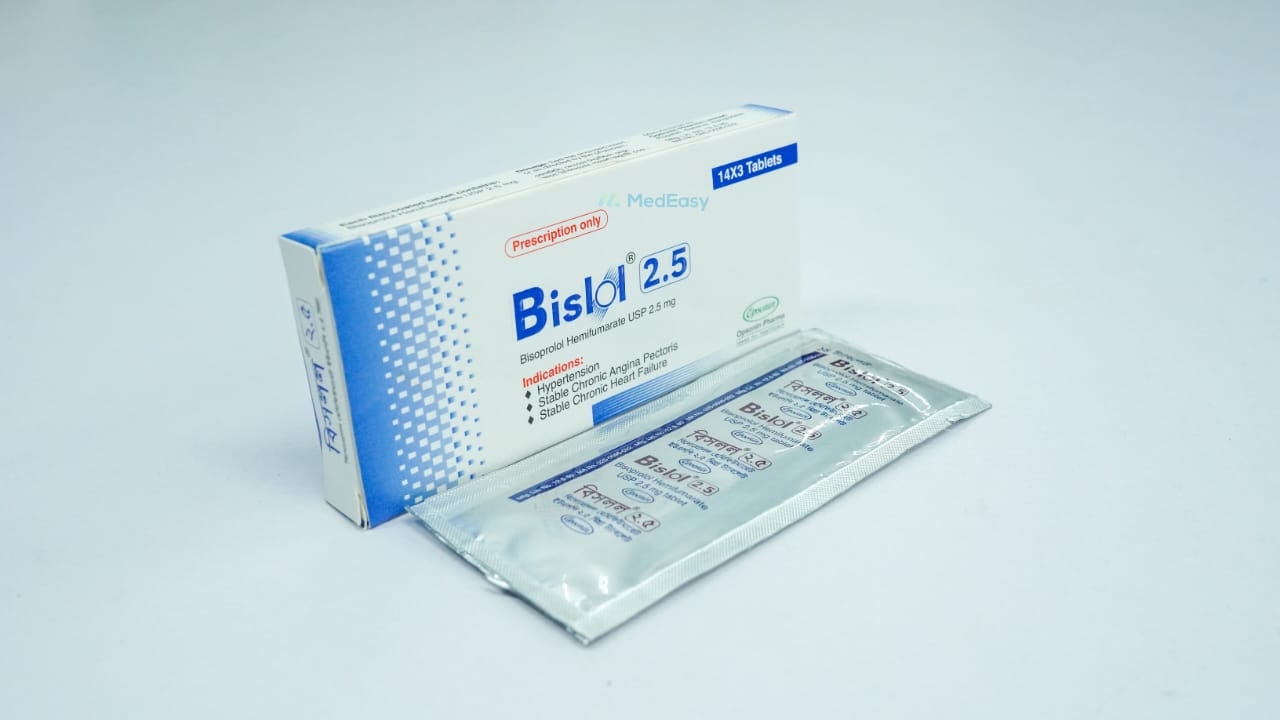
Bislol2.5 mg
Opsonin Pharma Ltd.
৳88.20
Add to cart


Myocard is a cardioselective beta-1 adrenergic blocker used in the management of the following conditions:
Use of Myocard for any indication should be individualized and supervised by a physician.
Myocard is a synthetic, highly cardioselective beta-1 adrenergic receptor blocking agent belonging to the beta-blocker class of cardiovascular medicines. It is used to treat high blood pressure, chronic stable angina, and, as part of guideline-directed therapy, chronic heart failure. At usual therapeutic doses, Myocard selectively blocks beta-1 receptors located mainly in cardiac tissue, with relatively less effect on beta-2 receptors found in bronchial and vascular smooth muscle compared with non-selective beta-blockers.
Bisoprolol Fumarate is a beta-1 selective adrenergic receptor antagonist. By selectively blocking beta-1 receptors in the heart, it:
These combined effects lower cardiac output and arterial blood pressure, reduce myocardial oxygen demand (beneficial in angina), and provide long-term hemodynamic and neurohormonal benefit in chronic heart failure. Cardioselectivity is relative and dose-dependent; at higher doses, beta-2 blocking effects (e.g., on airway smooth muscle) may also occur.
Dosage of Myocard must be individualized by a physician according to indication and patient response. Tablets are taken orally, with or without food, generally in the morning, and should be swallowed whole with water.
| Indication | Adult Dosing |
|---|---|
| Hypertension | Initially 5 mg once daily; may be increased to 10 mg once daily and, if needed, up to a maximum of 20 mg once daily based on response. |
| Chronic stable angina | Initially 5–10 mg once daily; may be increased up to a maximum of 20 mg once daily. |
| Chronic heart failure (stable, as adjunct) | Initiated at a very low dose (e.g., 1.25 mg once daily) under close medical supervision, then doubled at intervals of at least 1–2 weeks as tolerated, up to a target/maximum of 10 mg once daily. |
Renal/hepatic impairment: In patients with severe renal impairment (creatinine clearance below approximately 40 mL/min) or significant hepatic impairment, therapy should be initiated at a lower dose (e.g., 2.5 mg once daily for hypertension) with careful titration and monitoring.
Important: Do not stop Myocard abruptly; discontinuation should be gradual (tapered over 1–2 weeks) under medical guidance, as sudden withdrawal can precipitate rebound angina, arrhythmia, or hypertension.
The following are well-documented, clinically significant interactions with Myocard:
Bisoprolol Fumarate is contraindicated in patients with:
Severe bronchospastic disease (e.g., severe asthma) is generally considered a contraindication for beta-blockers as a class; although Bisoprolol Fumarate is cardioselective, this selectivity is relative and does not eliminate the risk of bronchospasm, so it should be avoided or used with extreme caution and specialist supervision in such patients.
Side effects of Myocard are generally mild and dose-related, especially at initiation of therapy. Commonly reported effects include:
Less common but clinically important effects include hypotension, worsening of AV conduction, bronchospasm (particularly in susceptible individuals), and masking of symptoms of hypoglycemia. Patients should seek prompt medical attention for a very slow pulse, fainting, significant shortness of breath, or swelling of the legs/ankles (possible sign of worsening heart failure).
Myocard should be used during pregnancy only if clearly needed and if the potential benefit justifies the potential risk to the fetus; a physician should be consulted before use. Beta-blockers, including Myocard, may reduce placental perfusion and have been associated with fetal/neonatal effects such as bradycardia, hypoglycemia, and low birth weight when used, particularly in later pregnancy; the newborn should be monitored closely if the mother received Myocard near delivery.
Myocard passes into breast milk in small amounts. Because of the potential for adverse effects (such as bradycardia or hypoglycemia) in a nursing infant, a decision should be made whether to discontinue breastfeeding or discontinue the drug, considering the importance of the drug to the mother, and only under medical advice.
The following precautions apply to the use of Myocard:
Overdose of Myocard may cause severe bradycardia, hypotension, acute heart failure, bronchospasm, and (rarely) loss of consciousness or cardiac arrest. If overdose is suspected, seek immediate medical attention or contact emergency services/a poison control center right away. Do not attempt to manage a suspected overdose at home. Treatment is supportive and must be carried out under medical supervision in a hospital setting, and may include measures to support heart rate, blood pressure, and breathing as determined by the treating physician.
Store at room temperature (below 30°C), away from light and moisture. Keep out of reach of children.
Elderly: No overall differences in safety or effectiveness of Myocard have been established between elderly and younger adult patients; dosing generally follows standard adult recommendations with attention to renal function.
Renal impairment: In patients with severe renal impairment, a lower starting dose with careful titration is recommended (see Dosage and Administration).
Hepatic impairment: In patients with significant hepatic impairment, a lower starting dose with careful titration is recommended.
Pediatric use: See Pediatric Uses.
Pregnancy and lactation: See Pregnancy and Lactation.
C
The safety and effectiveness of Myocard have not been established in pediatric patients. Use in children and adolescents is generally not recommended outside of specialist pediatric cardiology settings, and should only be considered by a pediatric specialist when the potential benefit is judged to outweigh the risk, with close monitoring.
Q: What is Myocard 2.5 mg Tablet used for?
A: Myocard 2.5 mg Tablet is used to treat high blood pressure (hypertension), chronic stable angina (chest pain due to reduced blood flow to the heart), and, as part of a broader treatment plan, chronic heart failure. It works by blocking beta-1 receptors in the heart to slow heart rate and reduce the heart's workload.
Q: Can I stop taking Myocard 2.5 mg Tablet suddenly if I feel better?
A: No. You should never stop Myocard 2.5 mg Tablet abruptly, even if you feel well. Sudden discontinuation can cause rebound chest pain, dangerous heart rhythm problems, or a sharp rise in blood pressure, especially in people with underlying heart disease. If you need to stop, your physician will guide you to reduce the dose gradually over one to two weeks.
Q: Is Myocard 2.5 mg Tablet safe during pregnancy?
A: Myocard 2.5 mg Tablet should be used in pregnancy only if clearly needed and if the potential benefit outweighs the potential risk to the fetus, as determined by a physician. It has been associated with effects such as slow heart rate and low blood sugar in the newborn when used close to delivery, so the baby may need to be monitored. Always consult your doctor before using it during pregnancy.
Q: Can people with asthma take Myocard 2.5 mg Tablet?
A: Caution is required. Although Myocard 2.5 mg Tablet is more selective for the heart than older beta-blockers, it can still trigger bronchospasm in people with asthma or severe airway disease, and it should generally be avoided or used only under close specialist supervision in such patients.
Q: Does Myocard 2.5 mg Tablet affect blood sugar monitoring in diabetics?
A: Yes. Myocard 2.5 mg Tablet can mask some of the warning signs of low blood sugar (hypoglycemia), such as a fast heartbeat. People with diabetes taking this medicine should monitor their blood glucose levels more closely and discuss this with their physician.
Q: What should I do if I miss a dose or take too much Myocard 2.5 mg Tablet?
A: If you miss a dose, take it as soon as you remember unless it is almost time for your next dose — do not double up. If you or someone else has taken more than the prescribed amount of Myocard 2.5 mg Tablet, seek immediate medical attention or contact emergency services or a poison control center right away, as overdose can cause a dangerously slow heart rate and low blood pressure.
Disclaimer
The information provided is accurate to the best of our knowledge, but it does not replace professional medical advice. We cannot guarantee its completeness or accuracy, and the absence of specific information about a drug should not be taken as an endorsement. We are not responsible for any consequences arising from this information, so please consult a healthcare professional for any concerns or questions.