

10% Off
Eprel50 mg
Orion Pharma Ltd.
৳2.71
Add to cart
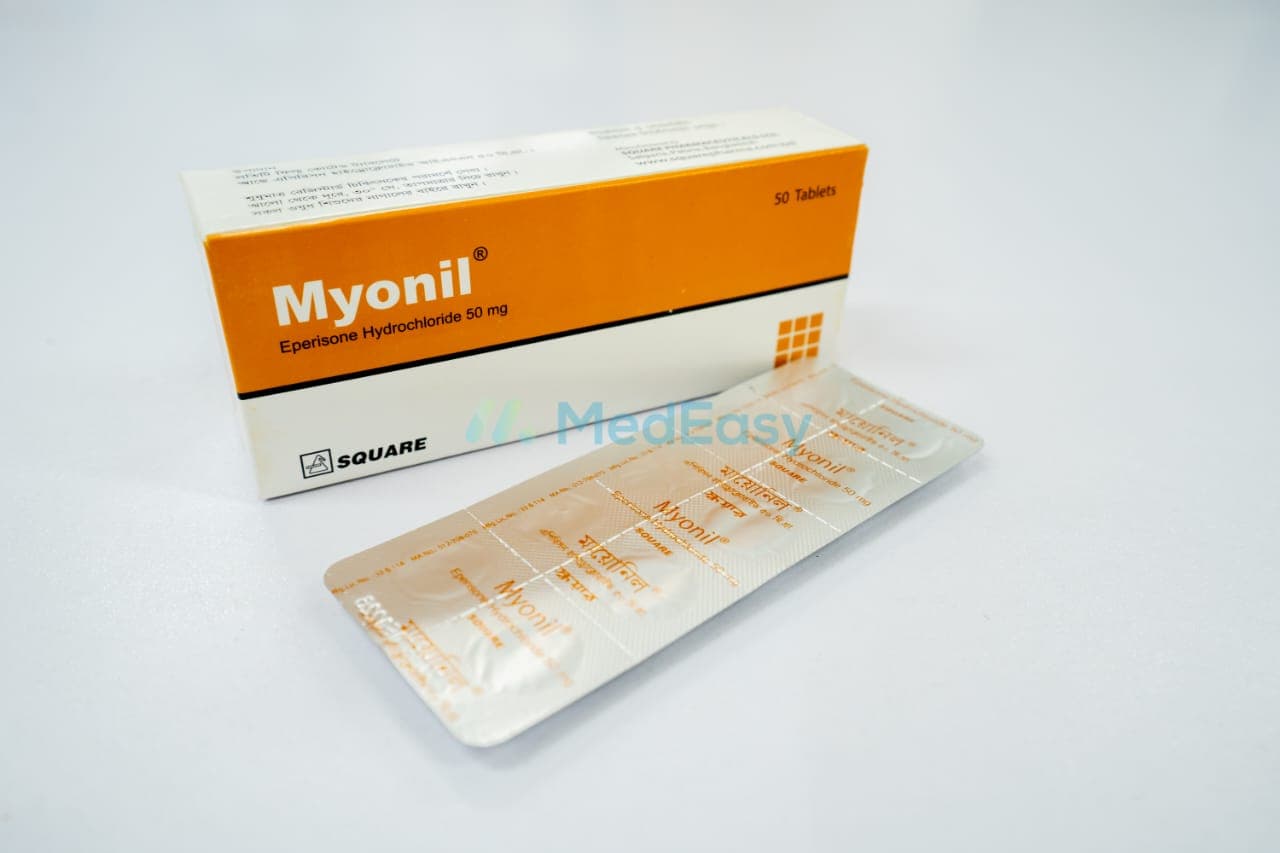

Myonil is a centrally-acting skeletal muscle relaxant used for the symptomatic relief of muscle spasm, spasticity, and stiffness associated with a range of musculoskeletal and neurological conditions. Its use is supported by clinical experience and regulatory approval in several countries, though it is not FDA-approved in the United States.
Each tablet contains Eperisone Hydrochloride as the active ingredient, most commonly available as:
Tablets also contain standard pharmaceutical excipients (fillers, binders, disintegrants, and coating agents); refer to the specific product label for the complete excipient list, particularly in patients with known excipient sensitivities.
Myonil is a centrally-acting skeletal muscle relaxant belonging to the pyrrolidine chemical class. It is used orally for the symptomatic treatment of muscle spasticity and painful muscle spasm arising from musculoskeletal and certain neurological disorders.
Unlike benzodiazepine-type muscle relaxants, Myonil acts through a dual mechanism involving both the central nervous system and the peripheral vasculature, and is generally associated with a lower incidence of pronounced sedation, although drowsiness can still occur (see Precautions and Warnings).
Skeletal Muscle Relaxant (Centrally-Acting Antispasmodic)
Eperisone Hydrochloride is a centrally-acting muscle relaxant that reduces excessive muscle tone and spasm through actions at both the spinal and vascular level.
Dosage of Myonil should be individualized according to the indication, severity of symptoms, and patient response.
| Population/Indication | Typical Dose |
|---|---|
| Adults - muscle spasm/spasticity (cervical spondylosis, lumbago, shoulder-arm-neck syndrome, spastic paralysis) | 50 mg orally three times daily after meals (total 150 mg/day), adjusted according to age, symptom severity, and response |
| Elderly | Start at the lower end of the adult dose range with close monitoring; see Use in Special Populations |
| Pediatric | Safety and efficacy not established; not recommended (see Pediatric Uses) |
| Hepatic impairment | Use with caution; dose reduction and closer monitoring may be warranted as the drug is hepatically metabolized |
| Renal impairment | Use with caution; no well-established dose adjustment schedule exists, so clinical monitoring is advised |
Tablets should be swallowed whole with water, preferably after meals, to reduce the likelihood of gastrointestinal upset.
The following clinically significant interactions have been reported with Myonil:
Eperisone Hydrochloride is contraindicated in patients with known hypersensitivity to eperisone hydrochloride or to any component of the formulation.
Side effects reported with Myonil are generally mild, but rare serious reactions can occur.
| Frequency | Effects |
|---|---|
| Common | Drowsiness, dizziness, nausea, anorexia, vomiting, diarrhoea, indigestion, skin rash |
| Uncommon/Rare | Muscle weakness, urinary dysfunction (e.g., urinary retention), disturbance of visual accommodation, mild elevations in liver enzymes |
| Rare but serious | Anaphylactoid/hypersensitivity reactions (including rash, swelling, breathing difficulty), blood dyscrasias (e.g., anaemia), seizures (reported in cases of overdose, including in infants) |
Patients should seek prompt medical attention if signs of a serious allergic reaction, unusual bruising/bleeding, or marked muscle weakness occur.
The safety of Myonil in pregnancy has not been well established in controlled human studies. It should be used during pregnancy only if clearly needed and if the potential benefit justifies the potential risk to the fetus; a physician should be consulted before use.
It is not known whether Myonil is excreted in human breast milk. As a precaution, use during breastfeeding should be avoided unless a physician determines that the benefit to the mother outweighs any potential risk to the nursing infant.
The following precautions apply to the use of Myonil:
Overdose with Myonil may cause pronounced central nervous system depression, muscle weakness, hypotension, and, particularly in infants and young children, seizures. There is no specific antidote.
Any suspected overdose is a medical emergency: seek immediate medical attention or contact emergency services/a poison control center. Management is supportive and symptomatic, guided by a physician in a monitored setting; do not attempt specific home treatment.
Store at room temperature (below 30°C), away from light and moisture. Keep out of reach of children.
Elderly: Patients should generally start at a reduced dose of Myonil with close monitoring, given increased susceptibility to sedation, dizziness, and fall risk.
Pediatric patients: Safety and efficacy of Myonil in children have not been established; its use in this population is not recommended (see Pediatric Uses).
Hepatic/renal impairment: Use with caution and closer clinical monitoring, as described in Precautions and Warnings.
The duration of treatment with Myonil should be individualized by the prescribing physician based on the underlying condition and response to therapy. For acute musculoskeletal muscle spasm, short courses of days to a few weeks are typical alongside physiotherapy and rest, while chronic spastic conditions may require longer-term use with periodic reassessment of continued need and effectiveness.
Centrally-acting skeletal muscle relaxants; Antispasmodics
Eperisone Hydrochloride acts centrally to suppress spinal polysynaptic reflexes and reduce muscle spindle sensitivity via effects on gamma motor neuron pathways, thereby lowering excessive skeletal muscle tone. It also produces mild peripheral vasodilation, improving intramuscular blood flow, which may add a secondary analgesic benefit in painful muscle spasm.
The safety and efficacy of Myonil in children have not been established. Its use in the pediatric population is generally not recommended, and it should only be considered if specifically directed by a pediatric specialist after weighing potential risks and benefits.
Q: What is Myonil 50 mg Tablet used for?
A: Myonil 50 mg Tablet is a centrally-acting muscle relaxant used to relieve muscle spasm, stiffness, and spasticity associated with conditions such as cervical or lumbar spondylosis, low back pain, shoulder-arm-neck syndrome, and spastic paralysis from certain neurological conditions.
Q: How should I take Myonil 50 mg Tablet?
A: Myonil 50 mg Tablet is usually taken as a 50 mg tablet three times daily after meals, swallowed whole with water. Always follow your physician's specific dosing instructions.
Q: Can Myonil 50 mg Tablet make me feel drowsy?
A: Yes, Myonil 50 mg Tablet can cause drowsiness or dizziness in some people. Avoid driving or operating machinery until you know how it affects you.
Q: Is Myonil 50 mg Tablet safe during pregnancy or breastfeeding?
A: Safety in pregnancy has not been well established; it should be used only if clearly needed and if the benefit justifies the potential risk to the fetus, after consulting a physician. It is not known whether it passes into breast milk, so it should be avoided during breastfeeding unless a doctor determines the benefit outweighs the risk.
Q: Who should not take Myonil 50 mg Tablet?
A: Myonil 50 mg Tablet is contraindicated in anyone with a known hypersensitivity to Myonil 50 mg Tablet or any ingredient in the formulation.
Q: What should I do if I take too much Myonil 50 mg Tablet?
A: An overdose of Myonil 50 mg Tablet can cause marked drowsiness, muscle weakness, low blood pressure, and, especially in young children, seizures. Seek immediate medical attention or contact emergency services/a poison control center right away.
Disclaimer
The information provided is accurate to the best of our knowledge, but it does not replace professional medical advice. We cannot guarantee its completeness or accuracy, and the absence of specific information about a drug should not be taken as an endorsement. We are not responsible for any consequences arising from this information, so please consult a healthcare professional for any concerns or questions.
