10% Off
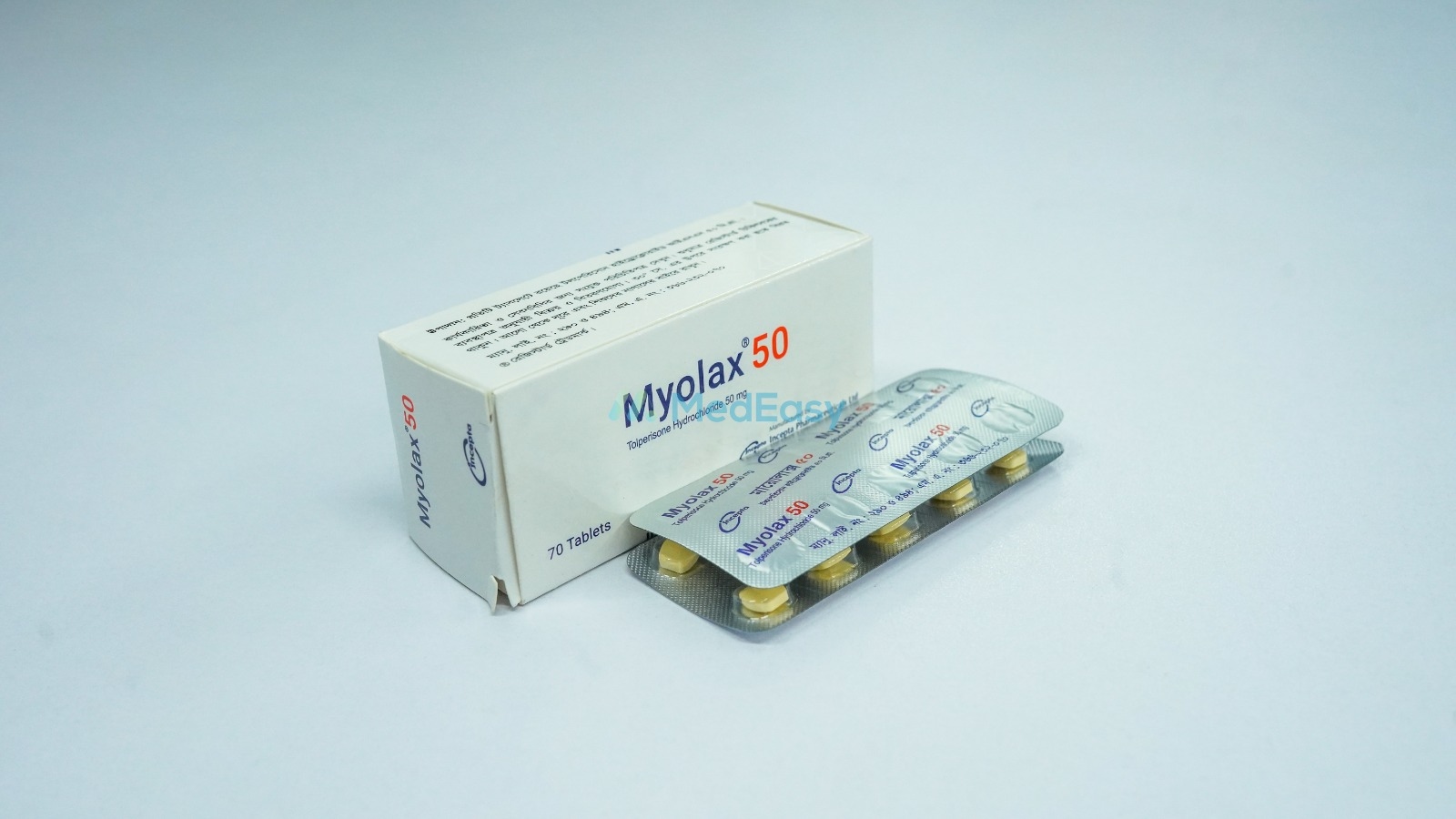
Myolax50 mg
Incepta Pharmaceuticals Ltd.
৳81.00
Add to cart


Myoxant is a centrally-acting skeletal muscle relaxant used to relieve painful muscle spasm and spasticity. Its use is classified below by strength of supporting evidence.
These uses are widely prescribed in South Asia, including Bangladesh, reflecting long-standing regional clinical practice. However, regulators in some regions (e.g., the European Medicines Agency) concluded that evidence for indications outside post-stroke spasticity is comparatively weaker, so Myoxant should be used for the shortest effective duration and only when a physician judges it clinically appropriate.
Only a qualified physician should decide whether Myoxant is appropriate for a given patient.
Each tablet of Tolperisone Hydrochloride generally contains Tolperisone Hydrochloride as the active ingredient, commonly available in strengths of 50 mg and 150 mg for oral use. Exact strength, excipients, and available dosage forms vary by manufacturer; refer to the product label of the specific formulation dispensed.
Myoxant is a centrally-acting muscle relaxant, chemically related to local anaesthetics such as lidocaine, used to treat painful, disabling muscle spasm and increased muscle tone (spasticity). Unlike some other centrally-acting muscle relaxants, Myoxant is notable for producing comparatively less sedation at therapeutic doses, a distinguishing feature often cited in the literature, although individual response varies and some patients may still experience drowsiness.
Myoxant is available as oral tablets and is used under medical supervision as part of a broader treatment plan that may include physiotherapy and analgesics.
Myoxant belongs to the therapeutic class of centrally-acting skeletal muscle relaxants (myotonolytics).
Tolperisone Hydrochloride acts primarily in the central nervous system, at the level of the brainstem reticular formation and spinal cord. It has a membrane-stabilizing action, chemically related to local anaesthetics such as lidocaine, and is thought to reduce pathologically increased muscle tone by blocking voltage-gated sodium and calcium channels, which dampens the excessive firing of mono- and polysynaptic spinal reflexes responsible for spasm and spasticity, without significantly depressing normal voluntary motor function.
After oral administration, Tolperisone Hydrochloride is absorbed relatively rapidly, with peak plasma concentration reached within roughly 0.5–1.5 hours. It undergoes extensive first-pass hepatic metabolism, and its metabolites are eliminated mainly via the kidneys. Because of this, dose adjustment is required in patients with significant renal or hepatic impairment (see Use in Special Populations).
| Indication | Typical Adult Dose |
|---|---|
| Painful muscle spasm / spasticity (general) | 50–150 mg two to three times daily by mouth; the physician may titrate the dose based on response and tolerability, generally not exceeding 900 mg/day in divided doses. |
| Post-stroke spasticity (adults) | Dose individualized by the treating physician; typically started at the lower end of the range above and adjusted according to response. |
Data on pediatric use of Myoxant are limited (see Pediatric Uses). Where used in children in regions where this is part of local practice, dosing is weight-based and must be individualized and supervised by a pediatrician; Myoxant should not be given to children without direct medical guidance.
Because Myoxant is metabolized by the liver and eliminated by the kidneys, a lower starting dose and careful titration are recommended in patients with significant renal or hepatic impairment; consult a physician for individualized dosing.
Tablets are usually taken orally after meals, swallowed whole with water. See the Administration field for further practical guidance.
Myoxant tablets are usually taken orally, after meals, swallowed whole with a glass of water without crushing or chewing (unless the product label states otherwise). Doses should be spaced evenly through the day as directed by the physician. If a dose is missed, take it as soon as remembered unless it is close to the time of the next dose, in which case skip the missed dose — do not double the next dose.
Myoxant has a relatively low potential for clinically significant drug interactions compared with some other central muscle relaxants, but the following should be noted:
Always inform the physician about all medicines, supplements, and herbal products being used before starting Myoxant.
Tolperisone Hydrochloride is contraindicated in:
Most people tolerate Myoxant well, but side effects can occur.
| Frequency | Side Effects |
|---|---|
| Common | Nausea, dyspepsia, dry mouth, headache, mild muscle weakness, low blood pressure, fatigue |
| Uncommon | Vomiting, abdominal discomfort, dizziness |
| Rare but serious | Hypersensitivity/allergic reactions ranging from skin rash, itching, urticaria, and angioedema to severe anaphylactic reactions (flushing, wheezing, difficulty breathing or swallowing, rapid heartbeat, collapse) — see Precautions and Warnings. |
Patients should seek immediate medical attention if signs of a serious allergic reaction occur while taking Myoxant.
Pregnancy: Data on the use of Myoxant in pregnant women are limited/insufficient. As a precaution, Myoxant should be used during pregnancy only if clearly needed and if the potential benefit justifies the potential risk to the fetus; consult a physician before use.
Lactation: It is not known whether Myoxant or its metabolites pass into human breast milk. Because safety data are insufficient, a decision on whether to continue breastfeeding or the medicine should be made with a physician, taking into account the benefit of the medicine to the mother.
Hypersensitivity/anaphylaxis signal: Regulatory safety reviews, including by the European Medicines Agency, have specifically noted that a notable proportion of reported adverse reactions with Myoxant are hypersensitivity reactions, some serious (including anaphylaxis), occurring even in patients with no prior history of allergy and sometimes after the first dose. Patients taking Myoxant should be counselled to stop the medicine and seek urgent medical care if they develop rash, itching, swelling, wheezing, breathing difficulty, or fainting.
Driving and operating machinery: Although Myoxant is associated with comparatively less sedation than some other centrally-acting muscle relaxants, individual response varies and some patients may experience dizziness or drowsiness; caution is advised before driving or operating machinery until the individual response to Myoxant is known.
Renal/hepatic impairment: Use with caution and reduced/adjusted dosing in patients with significant renal or hepatic impairment (see Dosage and Administration).
Duration of use: Long-term safety data for extended use of Myoxant are limited; treatment should generally be for the shortest period needed, with periodic medical review if prolonged use is required (see Duration of Treatment).
Reported symptoms of Myoxant overdose may include muscle weakness, low blood pressure, drowsiness, nausea/vomiting, and in severe cases, respiratory difficulty or seizures; rare fatalities have been reported in intentional overdose. There is no specific antidote. If overdose of Myoxant is suspected, seek immediate medical attention or contact emergency services/poison control; treatment is supportive and symptomatic under medical supervision. Do not attempt to manage a suspected overdose at home.
Store Myoxant at room temperature (below 30°C), away from light and moisture. Keep out of reach of children.
Safety and efficacy of Myoxant in children are not well established in most regulatory labeling; use in children should only occur under direct pediatric medical supervision where locally indicated (see Pediatric Uses).
No specific dose adjustment is generally required based on age alone, but elderly patients may be more sensitive to blood-pressure-lowering or sedative effects; start at the lower end of the dose range and monitor closely.
Use with caution; dose reduction may be needed (see Dosage and Administration).
Use with caution; dose reduction may be needed given hepatic metabolism of Myoxant.
See the Pregnancy and Lactation section.
Because long-term safety data for Myoxant are limited, it is generally used for short to medium-term relief of acute painful muscle spasm, typically for a few days to a few weeks alongside physiotherapy and other measures. If symptoms persist or treatment is needed beyond a few weeks, the prescribing physician should periodically reassess the ongoing need for Myoxant.
Centrally-acting skeletal muscle relaxant (myotonolytic agent).
Tolperisone Hydrochloride acts centrally on the reticular formation of the brainstem and spinal cord, exerting a membrane-stabilizing effect related to local anaesthetics. It blocks voltage-gated sodium and calcium channels on nerve membranes, reducing pathologically increased excitability of mono- and polysynaptic reflex pathways that drive muscle spasm and spasticity, thereby lowering excessive muscle tone without markedly impairing normal voluntary muscle strength.
The safety and efficacy of Myoxant in children have not been firmly established in most regulatory reviews, and current European labeling limits oral Myoxant-containing medicines to adult use for post-stroke spasticity. In some regions, Myoxant has historically been used in children with weight-based dosing under specialist supervision for spasticity of neurological origin, but this is not universally supported by robust pediatric trial data. Myoxant should not be given to a child except on the specific advice and supervision of a pediatrician, who will weigh the potential benefit against the limited safety data available in this age group.
Q: What is Myoxant 50 mg Tablet used for?
A: Myoxant 50 mg Tablet is a centrally-acting muscle relaxant used to relieve painful muscle spasm and spasticity, most notably spasticity after stroke in adults, and painful spasm associated with spine disorders in regions where such use is part of local practice.
Q: Does Myoxant 50 mg Tablet cause drowsiness?
A: Myoxant 50 mg Tablet is associated with comparatively less sedation than some other muscle relaxants, but individual response varies — some people may still feel drowsy or dizzy. Avoid driving or operating machinery until you know how Myoxant 50 mg Tablet affects you.
Q: Can Myoxant 50 mg Tablet cause an allergic reaction?
A: Yes. Safety reviews have specifically highlighted that a meaningful proportion of reported reactions to Myoxant 50 mg Tablet are hypersensitivity reactions, which can rarely be severe (anaphylaxis) even without a prior allergy history. Stop the medicine and seek urgent medical care if you develop rash, swelling, wheezing, or breathing difficulty after taking Myoxant 50 mg Tablet.
Q: Who should not take Myoxant 50 mg Tablet?
A: People with a known hypersensitivity to Myoxant 50 mg Tablet or its ingredients, and people with myasthenia gravis, should not take Myoxant 50 mg Tablet. Tell your doctor about all your medical conditions before starting treatment.
Q: Is Myoxant 50 mg Tablet safe during pregnancy?
A: Data are limited. Myoxant 50 mg Tablet should be used in pregnancy only if clearly needed and if the potential benefit justifies the potential risk to the baby; always consult your physician first.
Q: How long can I take Myoxant 50 mg Tablet?
A: Because long-term safety data are limited, Myoxant 50 mg Tablet is usually prescribed for short to medium-term relief of muscle spasm. Your doctor will reassess whether you still need Myoxant 50 mg Tablet if treatment continues beyond a few weeks.
Disclaimer
The information provided is accurate to the best of our knowledge, but it does not replace professional medical advice. We cannot guarantee its completeness or accuracy, and the absence of specific information about a drug should not be taken as an endorsement. We are not responsible for any consequences arising from this information, so please consult a healthcare professional for any concerns or questions.