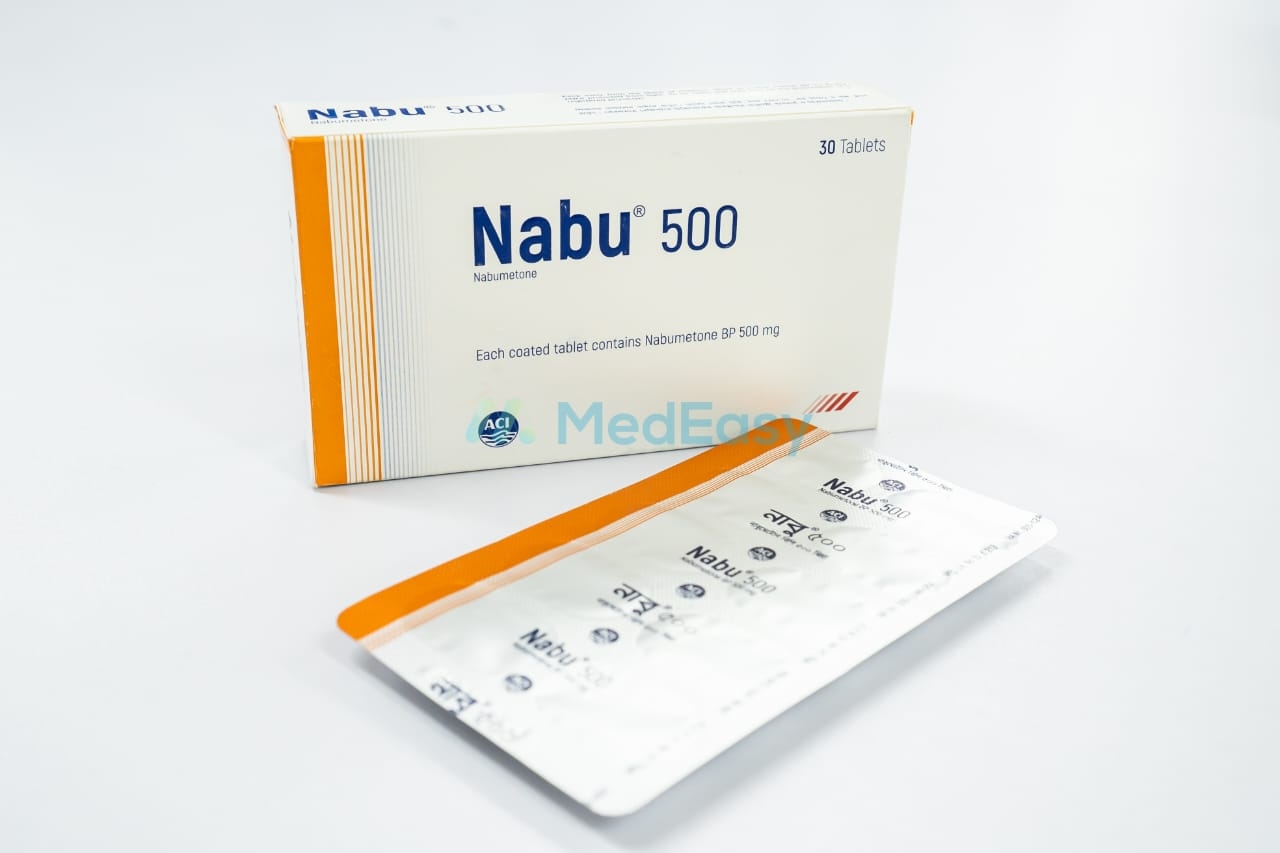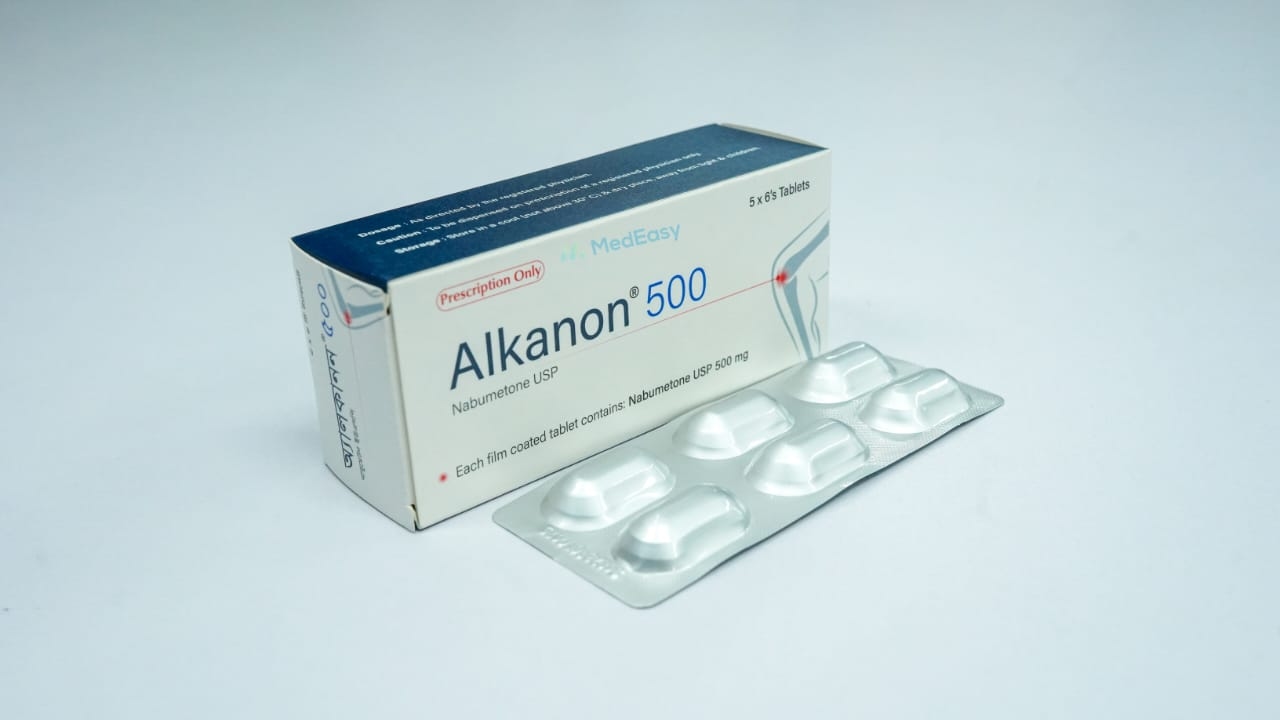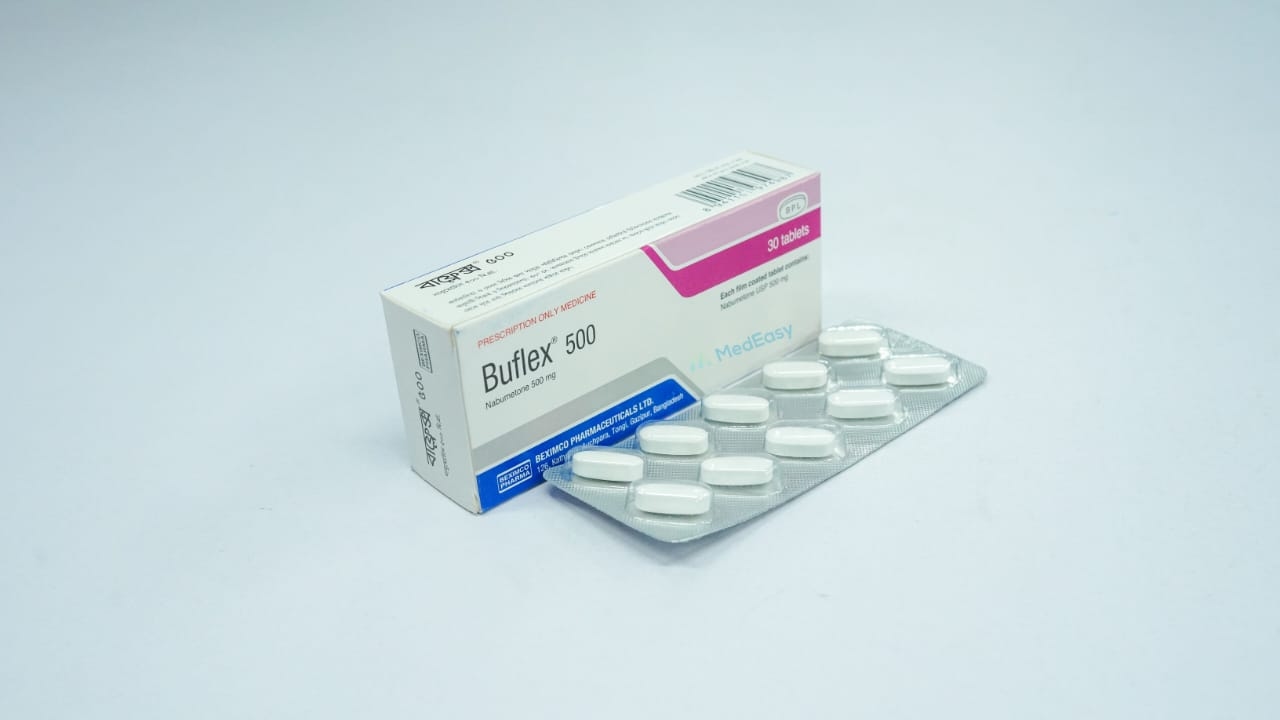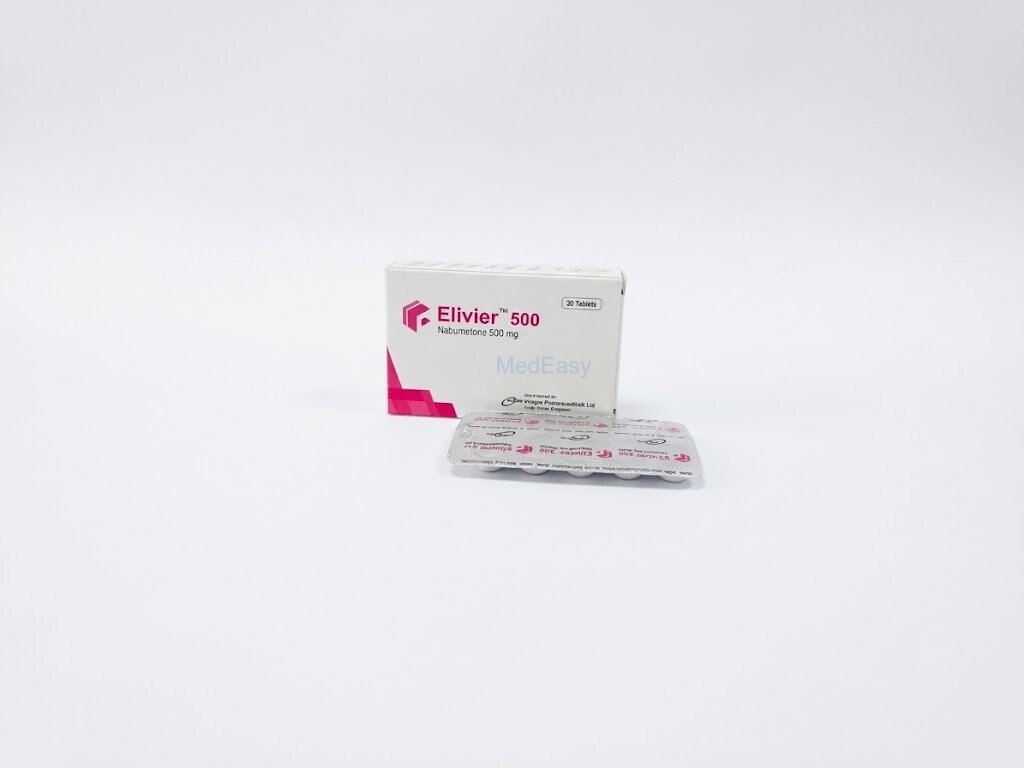
10% Off
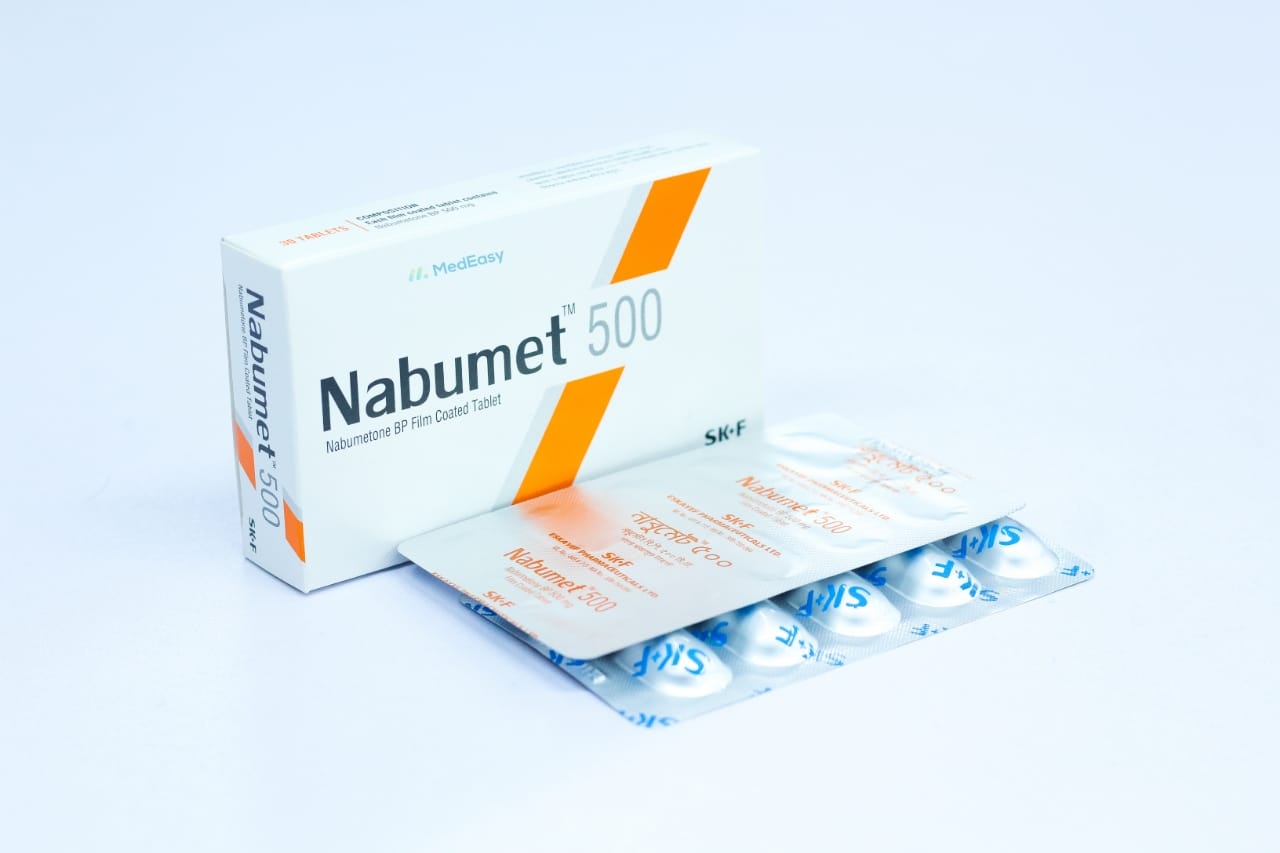
Nabumet500 mg
Eskayef Bangladesh Ltd.
৳135.00
Add to cart


Nabunil is a nonsteroidal anti-inflammatory drug (NSAID) with the following evidence-based indications:
As with all NSAIDs, Nabunil should be used at the lowest effective dose for the shortest duration consistent with individual treatment goals.
Each tablet of Nabumetone typically contains Nabumetone as the active ingredient, commonly available in strengths of 500 mg and 750 mg as film-coated oral tablets. Inactive ingredients vary by manufacturer and may include fillers, binders, and coating agents.
Nabunil is a non-acidic NSAID that is structurally unique among this drug class: it is administered as an inactive prodrug (a naphthylalkanone) which, after oral absorption, undergoes hepatic biotransformation to its major active metabolite, 6-methoxy-2-naphthylacetic acid (6-MNA), an acidic compound that provides the drug's anti-inflammatory, analgesic, and antipyretic effects.
Because the parent compound itself is non-acidic and does not undergo significant enterohepatic recirculation in its acidic form until after absorption, Nabunil is considered to have a somewhat more favorable direct gastric mucosal contact profile than some acidic NSAIDs; however, this does not eliminate the class-wide gastrointestinal and cardiovascular risks associated with NSAID use, which still apply once the active metabolite is systemically circulating and inhibiting prostaglandin synthesis. This distinction should not be interpreted as an overall safety advantage over other NSAIDs.
The active metabolite of Nabunil has a long elimination half-life, which allows for convenient once-daily or twice-daily dosing in many patients.
Nabunil belongs to the Non-Steroidal Anti-Inflammatory Drug (NSAID) class, specifically the naphthylalkanone subclass of non-acidic prodrug NSAIDs.
After absorption, Nabumetone is metabolized in the liver to its active metabolite, 6-methoxy-2-naphthylacetic acid (6-MNA). This active metabolite exerts anti-inflammatory, analgesic, and antipyretic effects primarily by non-selective inhibition of cyclooxygenase (COX-1 and COX-2) enzymes, which reduces the synthesis of prostaglandins involved in pain, inflammation, and fever.
| Indication | Recommended Dose |
|---|---|
| Osteoarthritis | Initial dose of 1000 mg orally once daily (with or without food); may be increased to 1500-2000 mg/day in divided doses (twice daily) if needed for adequate response |
| Rheumatoid arthritis | Initial dose of 1000 mg orally once daily; may be increased up to 2000 mg/day in divided doses based on clinical response |
| Lower body weight (under 50 kg) | Lower initial doses may be appropriate; use the lowest effective dose |
Maximum studied daily dose is 2000 mg. Use the lowest effective dose for the shortest duration consistent with treatment goals.
Dose adjustment (typically reduced initial and maximum daily dose) is recommended in patients with moderate-to-severe renal insufficiency; Nabunil is generally not recommended in patients with advanced renal disease. Consult a physician for individualized dosing.
Use with caution in patients with hepatic impairment, as metabolism of Nabunil to its active form may be reduced; dose adjustment or avoidance may be necessary in severe hepatic disease.
Safety and effectiveness of Nabunil in pediatric patients have not been established; not recommended for use in children.
Nabunil tablets should be taken orally, with or without food. Taking it with food or milk may help reduce stomach upset. Tablets should be swallowed whole and not crushed or chewed unless otherwise directed. Doses should be taken at consistent times each day as advised by a physician.
Nabunil has several clinically significant drug interactions:
Nabumetone is contraindicated in the following situations:
Side effects associated with Nabunil range from common and mild to rare but serious.
Patients should seek prompt medical attention for signs of GI bleeding (black or bloody stools, vomiting blood), chest pain, shortness of breath, slurred speech, unusual bruising/bleeding, jaundice, or severe skin reactions.
Nabunil should be avoided in pregnant women starting at approximately 30 weeks gestation (third trimester) because NSAIDs, including Nabunil, can cause premature closure of the fetal ductus arteriosus. Use between approximately 20 and 30 weeks gestation should be limited to the lowest effective dose for the shortest possible duration, as NSAID use during this period has been associated with fetal renal dysfunction leading to oligohydramnios, and in some cases neonatal renal impairment. Use earlier in pregnancy should occur only if clearly needed, and the potential benefit is judged by a physician to justify the potential risk to the fetus; consult a physician before use during pregnancy.
It is not known whether Nabunil or its active metabolite is excreted in human breast milk, although the active metabolite has been detected in the milk of lactating animals. Because of the potential for serious adverse effects in a nursing infant, a decision should be made whether to discontinue breastfeeding or discontinue Nabunil, taking into account the importance of the drug to the mother; consult a physician.
NSAIDs, including Nabunil, can increase the risk of serious cardiovascular thrombotic events, including myocardial infarction and stroke, which can be fatal. This risk may occur early in treatment and may increase with duration of use and in patients with existing cardiovascular disease or risk factors. Nabunil is contraindicated in the setting of CABG surgery.
NSAIDs, including Nabunil, can cause serious gastrointestinal adverse events, including bleeding, ulceration, and perforation of the stomach or intestines, which can be fatal. These events can occur at any time during use and without warning symptoms. Elderly patients and those with a prior history of peptic ulcer disease or GI bleeding are at greater risk.
Long-term use of Nabunil may cause renal papillary necrosis and other renal injury, particularly in patients with pre-existing renal impairment, heart failure, liver dysfunction, volume depletion, or those taking diuretics or ACE inhibitors/ARBs, and in the elderly.
Elevations of liver enzymes may occur; discontinue if signs of liver disease develop or if systemic manifestations occur (eosinophilia, rash, etc).
Nabunil can lead to new-onset hypertension or worsening of pre-existing hypertension, and fluid retention/edema; monitor blood pressure.
Nabunil should not be given to patients with the aspirin triad (asthma, nasal polyps, and aspirin/NSAID sensitivity) — see Contraindications.
NSAIDs, including Nabunil, can cause serious skin reactions such as exfoliative dermatitis, Stevens-Johnson syndrome, and toxic epidermal necrolysis, which can be fatal; discontinue at first appearance of skin rash or hypersensitivity signs.
Elderly patients are at greater risk for serious GI, cardiovascular, and renal adverse effects with Nabunil; use the lowest effective dose and monitor closely.
Like other NSAIDs, Nabunil may reduce fever and inflammation, potentially masking signs of an underlying infection.
Symptoms of Nabunil overdose may include lethargy, drowsiness, nausea, vomiting, and epigastric pain, and in more severe cases, gastrointestinal bleeding, hypertension, acute kidney injury, respiratory depression, or coma. There is no specific antidote for Nabunil overdose.
In case of a suspected overdose, seek immediate medical attention or contact a poison control center/emergency services right away. Treatment is supportive and symptomatic, and should be managed by qualified medical professionals; do not attempt specific home treatment.
Store at room temperature (below 30°C), away from light and moisture. Keep out of reach of children.
Safety and effectiveness of Nabunil in pediatric patients have not been established; use in children is not recommended.
No overall differences in effectiveness have been observed between elderly and younger patients treated with Nabunil; however, elderly patients are more likely to experience serious GI, cardiovascular, and renal adverse reactions. Use the lowest effective dose and monitor closely in this population.
Dose adjustment is recommended for moderate-to-severe renal insufficiency; not recommended in advanced renal disease. See Dosage and Administration.
Use with caution; metabolism to the active form may be reduced. See Dosage and Administration.
Duration of treatment with Nabunil should be individualized based on the condition being treated and clinical response. For chronic conditions such as osteoarthritis or rheumatoid arthritis, treatment may continue long-term under regular physician supervision with periodic reassessment. For acute pain conditions, treatment should generally be limited to the shortest duration needed to control symptoms, using the lowest effective dose to minimize cumulative risk of GI, cardiovascular, and renal adverse effects.
Nonsteroidal Anti-Inflammatory Drug (NSAID); Naphthylalkanone derivative (non-acidic prodrug NSAID)
Nabumetone is a prodrug that is converted in the liver to its active metabolite, 6-methoxy-2-naphthylacetic acid (6-MNA), which non-selectively inhibits cyclooxygenase (COX-1 and COX-2) enzymes, reducing prostaglandin synthesis and thereby producing anti-inflammatory, analgesic, and antipyretic effects.
Safety and effectiveness of Nabunil have not been established in pediatric patients. Nabunil is not recommended for use in children, and no approved pediatric dosing regimen exists. Alternative, pediatric-appropriate therapies should be considered under physician guidance.
Q: What is Nabunil 500 mg Tablet used for?
A: Nabunil 500 mg Tablet is a nonsteroidal anti-inflammatory drug (NSAID) primarily used to relieve the signs and symptoms of osteoarthritis and rheumatoid arthritis. It may also be used for other painful musculoskeletal conditions under physician guidance.
Q: How should I take Nabunil 500 mg Tablet?
A: Nabunil 500 mg Tablet is usually taken orally, once or twice daily, with or without food. The typical starting dose is 1000 mg once daily, which may be adjusted by your physician up to a maximum of 2000 mg/day based on your response. Always follow your physician's specific instructions.
Q: What are the main risks of taking Nabunil 500 mg Tablet?
A: Like other NSAIDs, Nabunil 500 mg Tablet carries a risk of serious gastrointestinal bleeding, ulceration, or perforation, which can occur without warning, and a risk of serious cardiovascular events such as heart attack or stroke, especially with long-term use or in patients with existing risk factors. It should be used at the lowest effective dose for the shortest necessary duration.
Q: Can I take Nabunil 500 mg Tablet during pregnancy?
A: Nabunil 500 mg Tablet should be avoided starting at approximately 30 weeks of pregnancy due to risk of premature closure of the fetal ductus arteriosus, and should be used with caution and only the lowest effective dose between 20-30 weeks. In earlier pregnancy, it should only be used if clearly needed and if the potential benefit justifies the potential risk to the fetus, as determined by a physician. Always consult your physician before using it during pregnancy.
Q: Who should not take Nabunil 500 mg Tablet?
A: Nabunil 500 mg Tablet should not be taken by people with known hypersensitivity to it, a history of asthma or allergic reactions triggered by aspirin or other NSAIDs, active gastrointestinal bleeding or ulcer disease, those undergoing or recently having had coronary artery bypass graft (CABG) surgery, or women in the third trimester of pregnancy.
Q: What should I do if I miss a dose or take too much Nabunil 500 mg Tablet?
A: If you miss a dose, take it as soon as you remember unless it is close to your next scheduled dose, in which case skip the missed dose - do not double up. If you suspect an overdose of Nabunil 500 mg Tablet, which can cause nausea, vomiting, stomach pain, or more severe effects, seek immediate medical attention or contact a poison control center right away.
Disclaimer
The information provided is accurate to the best of our knowledge, but it does not replace professional medical advice. We cannot guarantee its completeness or accuracy, and the absence of specific information about a drug should not be taken as an endorsement. We are not responsible for any consequences arising from this information, so please consult a healthcare professional for any concerns or questions.