
10% Off
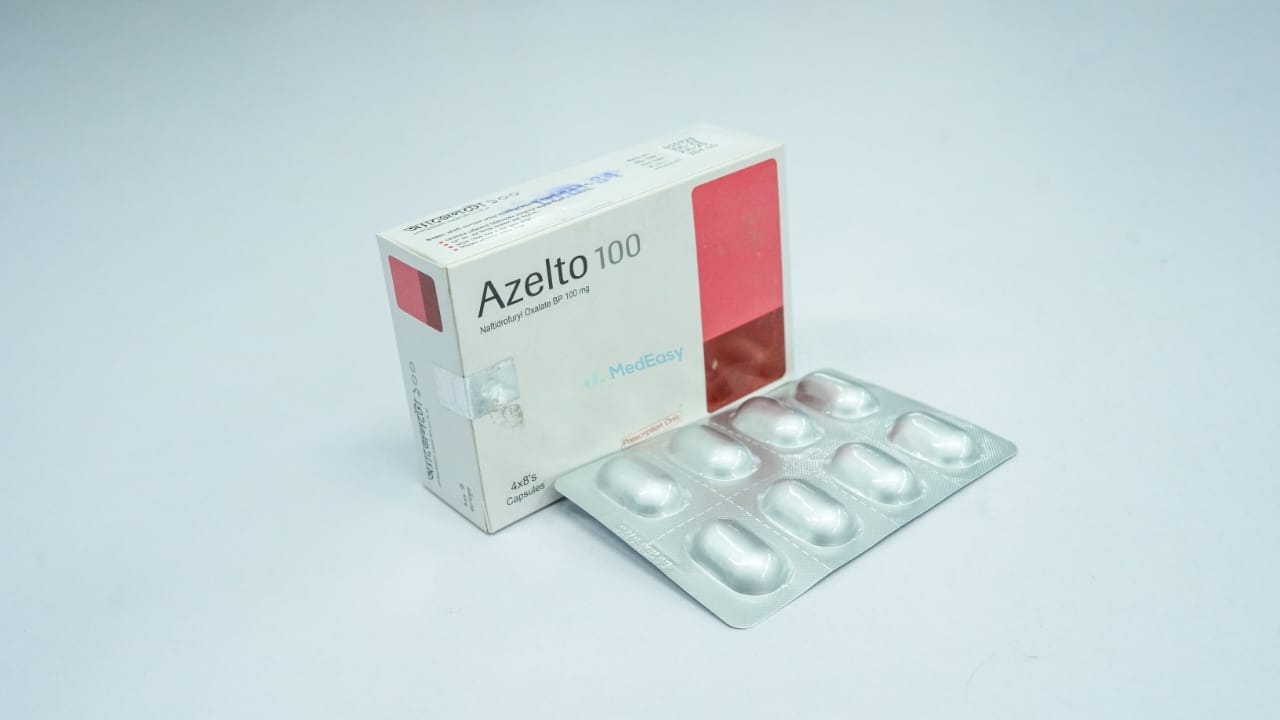
Azelto100 mg
Ziska Pharmaceuticals Ltd.
৳86.40
Add to cart
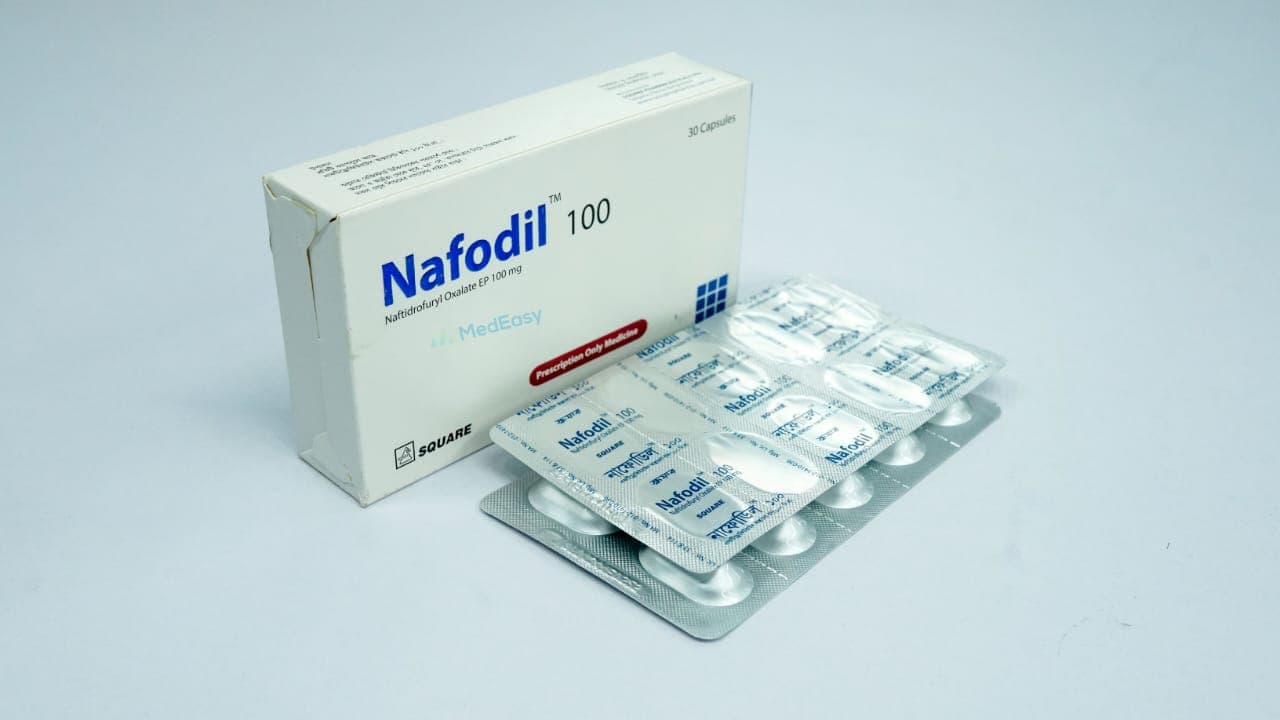

Nafodil is a peripheral vasoactive agent used mainly for symptomatic relief of circulatory disorders.
Nafodil is not a treatment for acute limb ischemia, critical limb ischemia, or established cardiovascular disease, and does not replace revascularization or standard secondary-prevention therapy when these are indicated.
Each capsule/tablet contains Naftidrofuryl Oxalate as the active ingredient, commonly available in strengths such as 100 mg and 200 mg for oral use. Exact strength, dosage form, and inactive ingredients vary by manufacturer and brand; refer to the specific product label for the confirmed composition.
Nafodil is a synthetic peripheral and cerebral vasodilator belonging to the naftidrofuryl class of vasoactive agents. It is used orally for the symptomatic management of circulatory disorders, most notably to improve pain-free and maximum walking distance in people with intermittent claudication caused by peripheral arterial disease.
Nafodil works at the level of the blood vessel wall and tissue metabolism rather than by simple mechanical dilation, and its clinical effect on walking distance, while statistically demonstrated in trials, is generally modest. It is intended to be used alongside, not instead of, standard measures such as supervised exercise and control of cardiovascular risk factors.
Peripheral and cerebral vasodilator — Nafodil belongs to the class of vasoactive agents used in peripheral vascular disease.
Naftidrofuryl Oxalate acts as a selective antagonist of 5-hydroxytryptamine type-2 (5-HT2) receptors, with inverse agonist activity at the 5-HT2A receptor subtype found on vascular smooth muscle and platelets. By blocking serotonin-mediated vasoconstriction, Naftidrofuryl Oxalate promotes vasodilation and improves blood flow in affected tissues.
Beyond its vascular effects, Naftidrofuryl Oxalate is also believed to improve cellular oxidative metabolism in ischemic tissue — increasing tissue resistance to hypoxia, improving red blood cell deformability, and mildly reducing platelet aggregation — which together are thought to contribute to improved tissue perfusion and exercise tolerance in intermittent claudication.
After oral administration, Naftidrofuryl Oxalate is absorbed with variable bioavailability, reaches peak plasma concentration within about 1 hour, is highly protein-bound (~80%), is metabolized in the liver, and has a relatively short elimination half-life (approximately 1–2 hours in healthy adults, prolonged in the elderly), which is why it is typically dosed multiple times per day.
| Indication | Typical adult dose | Notes |
|---|---|---|
| Intermittent claudication (peripheral arterial disease) | 100–200 mg orally, three times daily, with or immediately after meals | Clinical response should be reviewed after 3–6 months of treatment; continue only if there is a demonstrable improvement in walking distance or symptoms (see Duration of Treatment) |
| Cerebrovascular insufficiency (where used) | Typically 100–200 mg three times daily, per local product labeling | Use only on physician advice; evidence for benefit is limited |
Nafodil capsules/tablets should be swallowed whole with water and not chewed or crushed unless the product labeling states otherwise.
Take Nafodil by mouth, swallowing the capsule/tablet whole with a glass of water. Taking it with or immediately after food may reduce the chance of stomach upset. Take doses at evenly spaced intervals through the day as directed by the prescriber, and do not stop treatment abruptly without medical advice, especially before the response has been assessed.
Documented, clinically significant drug interactions with Nafodil are limited compared with many other vasoactive drugs, but the following should be considered:
Always inform the physician or pharmacist about all prescription, over-the-counter, and herbal products being used before starting Nafodil.
Naftidrofuryl Oxalate is contraindicated in:
Conditions requiring caution rather than absolute avoidance (e.g. mild hepatic impairment, renal impairment, pregnancy) are discussed under Precautions and Warnings and Pregnancy and Lactation, not here.
Most people tolerate Nafodil well. Reported side effects include:
This is not an exhaustive list. Report any unusual or persistent symptom to a physician.
Pregnancy: Data on the use of Nafodil in pregnant women are limited. As a precaution, Nafodil should be used during pregnancy only if clearly needed and if the potential benefit to the mother justifies the potential risk to the fetus. Consult a physician before use in pregnancy.
Lactation: It is not well established whether Nafodil or its metabolites pass into human breast milk. Because safety data in breastfeeding are limited, Nafodil should be used during breastfeeding only on medical advice, weighing the benefit of treatment against any potential risk to the infant.
Rare but serious cases of liver injury, including hepatitis and liver failure, have been reported with Nafodil. Patients should be advised to stop Nafodil and seek prompt medical attention if they notice symptoms suggestive of liver dysfunction, such as jaundice (yellowing of skin/eyes), dark urine, pale stools, unusual fatigue, loss of appetite, nausea, or right upper abdominal pain. Nafodil should not be restarted in a patient who has developed such symptoms while on treatment, and it is contraindicated in severe hepatic impairment (see Contraindications).
The symptomatic benefit of Nafodil in intermittent claudication is modest; it should be used as an adjunct to, not a substitute for, supervised exercise therapy and control of cardiovascular risk factors (smoking cessation, blood pressure, lipid, and glycemic control). Response should be reassessed periodically (see Duration of Treatment).
Mild gastrointestinal upset is relatively common; taking Nafodil with food can help reduce this.
Use with caution in patients with renal impairment or mild hepatic impairment, with clinical monitoring as appropriate.
Limited specific data exist on Nafodil overdose. In case of a suspected overdose, seek immediate medical attention or contact a poison control center/emergency services rather than attempting home treatment. Expected effects of overdose would generally relate to an extension of known side effects (e.g. gastrointestinal upset, hypotension). Management is supportive and symptomatic, and should be carried out by trained medical personnel; do not induce vomiting or attempt any specific antidote without professional medical guidance.
Store at room temperature (below 30°C), away from light and moisture. Keep out of reach of children.
Treatment with Nafodil for intermittent claudication should be reviewed after approximately 3 to 6 months. If there is no meaningful improvement in walking distance or claudication symptoms by this point, continuation should be reconsidered with the prescribing physician, since ongoing use without benefit is not justified. When used for other indications, duration should follow the prescriber's individualized assessment of ongoing benefit versus risk.
Peripheral vasodilators; 5-HT2 (serotonin) receptor antagonists — Naftidrofuryl Oxalate is classified within this pharmacological group.
Naftidrofuryl Oxalate selectively antagonizes 5-HT2 (serotonin type-2) receptors, particularly the 5-HT2A subtype, on vascular smooth muscle and platelets, reducing serotonin-mediated vasoconstriction and platelet aggregation while improving cellular oxidative metabolism in ischemic tissue — together promoting vasodilation and better tissue perfusion.
The safety and efficacy of Nafodil have not been established in children and adolescents. Nafodil is not recommended for use in the pediatric population, as peripheral arterial disease with intermittent claudication and the other indications for which Nafodil is used are conditions that occur almost exclusively in adults, particularly older adults.
Q: What is Nafodil 100 mg Capsule used for?
A: Nafodil 100 mg Capsule is mainly used to relieve symptoms of intermittent claudication (leg pain on walking) caused by peripheral arterial disease, and in some markets for symptomatic relief of cerebrovascular insufficiency. It is used alongside exercise and cardiovascular risk-factor control, not as a replacement for them.
Q: How should I take Nafodil 100 mg Capsule?
A: Nafodil 100 mg Capsule is usually taken by mouth, 100–200 mg three times daily, swallowed whole with water and preferably with or after food to reduce stomach upset. Follow your physician's exact instructions on dose and duration.
Q: How long does it take for Nafodil 100 mg Capsule to work, and how long should I take it?
A: Improvement in walking distance, if it occurs, is usually assessed after about 3 to 6 months of regular use. If there is no meaningful benefit by then, your physician may advise stopping Nafodil 100 mg Capsule, since continuing without benefit is not recommended.
Q: What are the main risks I should watch for with Nafodil 100 mg Capsule?
A: The most important warning with Nafodil 100 mg Capsule is rare but serious liver injury. Stop Nafodil 100 mg Capsule and seek medical attention immediately if you notice yellowing of the skin or eyes, dark urine, pale stools, unusual tiredness, loss of appetite, or pain in the upper right abdomen. More common but less serious effects include nausea, stomach discomfort, diarrhea, and skin rash.
Q: Can I take Nafodil 100 mg Capsule if I have liver problems?
A: Nafodil 100 mg Capsule is contraindicated in severe hepatic impairment or in anyone who has previously had liver injury from Nafodil 100 mg Capsule, and should be used cautiously with monitoring in milder liver impairment. Tell your physician about any liver condition before starting Nafodil 100 mg Capsule.
Q: Is Nafodil 100 mg Capsule safe in pregnancy or while breastfeeding?
A: Data are limited, so Nafodil 100 mg Capsule should only be used in pregnancy or while breastfeeding if a physician judges that the potential benefit outweighs the potential risk. Always consult your physician before using Nafodil 100 mg Capsule in these situations.
Disclaimer
The information provided is accurate to the best of our knowledge, but it does not replace professional medical advice. We cannot guarantee its completeness or accuracy, and the absence of specific information about a drug should not be taken as an endorsement. We are not responsible for any consequences arising from this information, so please consult a healthcare professional for any concerns or questions.
