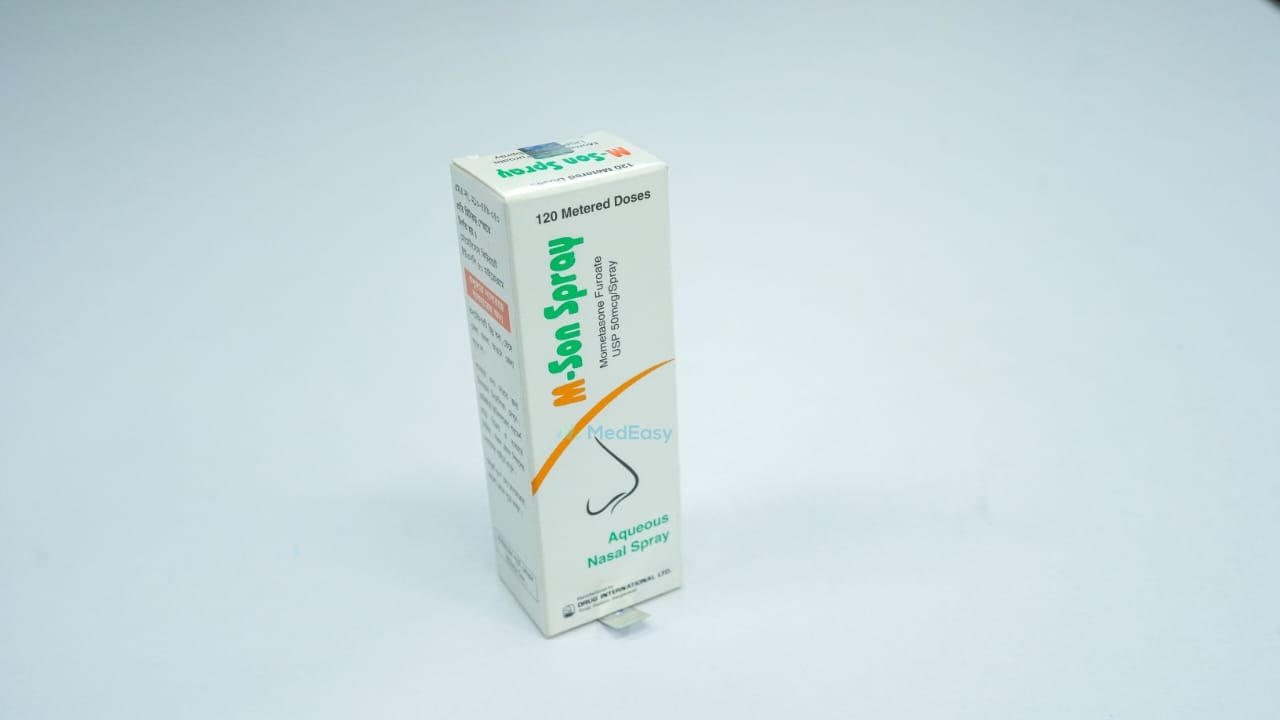
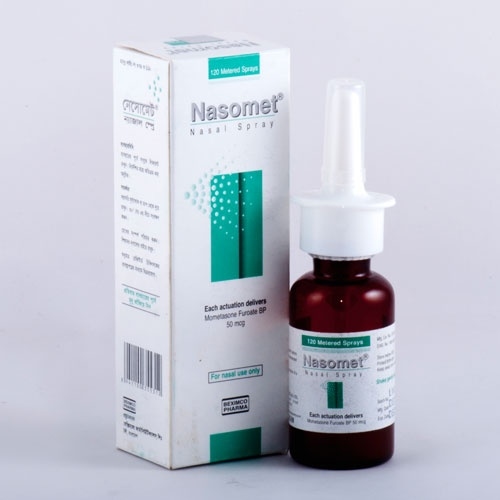
Product gallery

Nasonex50 mcg/spray


MRP 250.0010 % Off
Best PriceTk 225.00/120 metered sprays
1
Section

Medicine overview

Indications of Nasonex

Nasonex is a synthetic corticosteroid used topically, intranasally, and by oral inhalation depending on the formulation. Its approved and guideline-supported uses include:

Topical (cream, ointment, lotion) - FDA-approved

  • Relief of inflammatory and pruritic manifestations of corticosteroid-responsive dermatoses, including atopic dermatitis (eczema), psoriasis, and other forms of dermatitis, in patients 2 years of age and older.

Intranasal (nasal spray) - FDA-approved

  • Prophylaxis and treatment of nasal symptoms of seasonal and perennial allergic rhinitis in adults and children (age limits vary by product, generally 2 years and older for OTC formulations and 12 years and older for prescription strength).
  • Treatment of chronic rhinosinusitis with nasal polyps in adults 18 years of age and older.

Oral inhalation (dry powder inhaler) - FDA-approved

  • Maintenance treatment of asthma as prophylactic therapy in patients 4 years of age and older, including patients who require systemic corticosteroid therapy, where it also helps reduce or eliminate the need for oral corticosteroids.

Nasonex inhaled and intranasal forms are for maintenance/prophylactic use only and are not intended to relieve acute bronchospasm or acute nasal symptoms.

Composition

Each formulation of Mometasone Furoate contains mometasone furoate as the active pharmaceutical ingredient. Strengths vary by dosage form: topical cream/ointment/lotion typically 0.1% w/w; nasal spray typically 50 mcg per metered spray; dry powder inhaler typically 110 mcg or 220 mcg per actuation.

Description

Nasonex is a synthetic corticosteroid with potent anti-inflammatory, antipruritic, and vasoconstrictive properties. It is available in several dosage forms tailored to different routes of administration: a topical cream, ointment, and lotion for skin conditions; an aqueous nasal spray for allergic rhinitis; and a dry powder inhaler for maintenance treatment of asthma.

Depending on the formulation, Nasonex works locally at the site of application (skin, nasal mucosa, or airway) to reduce inflammation, with only minimal systemic absorption when used as directed.

Therapeutic Class

Nasonex belongs to the class of topical/inhaled/intranasal corticosteroids (glucocorticoids), classified as a medium-to-high potency synthetic corticosteroid depending on the formulation used.

Pharmacology

Mometasone Furoate is a synthetic corticosteroid that exerts its anti-inflammatory effect by binding to the glucocorticoid receptor. This binding induces glucocorticoid response element-mediated gene transcription, leading to:

  • Inhibition of the release of inflammatory mediators, including cytokines, prostaglandins, and leukotrienes.
  • Reduced migration of inflammatory cells (eosinophils, neutrophils, lymphocytes) to the site of inflammation.
  • Decreased vascular permeability and edema.

In topical use, this reduces inflammation, pruritus, and erythema in the skin. In intranasal use, it reduces nasal mucosal inflammation, congestion, and mucus secretion associated with allergic rhinitis. In inhaled use, it reduces airway inflammation and hyperresponsiveness underlying asthma.

Systemic bioavailability of Mometasone Furoate is very low across all formulations (nasal spray bioavailability is essentially undetectable in plasma; inhaled and topical forms also have minimal systemic absorption under recommended use), which limits systemic corticosteroid effects when used as directed.

Dosage & Administration of Nasonex

Topical (cream/ointment/lotion 0.1%)

PopulationDose
Adults and children ≥2 yearsApply a thin film to the affected skin area once daily; discontinue when control is achieved

Intranasal (nasal spray, 50 mcg/spray)

IndicationPopulationDose
Allergic rhinitisAdults and children ≥12 years2 sprays in each nostril once daily (200 mcg/day total)
Allergic rhinitis (OTC products)Children 2-11 years1 spray in each nostril once daily under adult supervision
Chronic rhinosinusitis with nasal polypsAdults ≥18 years2 sprays in each nostril twice daily (up to 400 mcg/day); some patients may respond to once-daily dosing

Oral inhalation (dry powder inhaler, 110/220 mcg per actuation)

PopulationPrior therapyStarting dose
Adults and adolescents ≥12 yearsPreviously on bronchodilators alone or inhaled corticosteroids220 mcg once daily in the evening (up to 220 mcg twice daily in more severe disease)
Adults and adolescents ≥12 yearsPreviously on oral corticosteroids220 mcg twice daily
Children 4-11 yearsAllergic asthma110 mcg once daily in the evening

Rinse the mouth after each inhaled dose without swallowing to reduce the risk of oral candidiasis. Shake nasal spray before use; prime the pump before first use or after periods of non-use per product labeling. Nasonex inhaler and nasal spray are not intended for relief of acute symptoms; a fast-acting bronchodilator should be used for acute asthma symptoms, not the inhaled form of Nasonex.

Administration of Nasonex

Topical: Apply a thin film to clean, dry affected skin; avoid occlusive dressings unless directed; avoid application to the face, groin, or axillae for prolonged periods; wash hands after application unless hands are the treated area.

Nasal spray: Shake gently before use, blow nose to clear nostrils, tilt head slightly forward, insert nozzle into nostril pointing away from the nasal septum, and spray while breathing in gently through the nose. Avoid spraying into eyes.

Inhaler: Exhale fully away from the device, place mouthpiece between lips, inhale forcefully and deeply, hold breath for about 10 seconds, then exhale slowly. Rinse mouth with water after use and spit out (do not swallow) to reduce risk of oral thrush and hoarseness.

Interaction of Nasonex

Strong CYP3A4 inhibitors (e.g., ketoconazole, itraconazole, ritonavir, clarithromycin) may increase systemic exposure to Nasonex by inhibiting its metabolism, raising the risk of systemic corticosteroid effects (e.g., adrenal suppression, Cushingoid features). Co-administration should be undertaken with caution, and patients should be monitored for signs of increased corticosteroid activity.

Concomitant use with other corticosteroids (systemic, topical, inhaled, or intranasal from other sources) may increase the risk of additive systemic corticosteroid effects, including HPA axis suppression; this should be considered when Nasonex is combined with other steroid-containing products.

Contraindications

Mometasone Furoate is contraindicated in patients with known hypersensitivity to mometasone furoate or to any component of the specific formulation.

The inhaled form is contraindicated for the primary treatment of status asthmaticus or other acute episodes of asthma requiring intensive measures, as it is not a bronchodilator and has no role in relieving acute bronchospasm.

Side Effects of Nasonex

Topical use

  • Burning, stinging, itching, or irritation at the application site
  • Skin atrophy, striae, and telangiectasia with prolonged or inappropriate use (e.g., under occlusion, on the face, or in skin folds)
  • Folliculitis, acneiform eruptions, hypopigmentation (uncommon)

Intranasal use

  • Headache
  • Nasal irritation, burning, or dryness
  • Epistaxis (nosebleed)
  • Pharyngitis, viral upper respiratory infection, cough
  • Rarely: nasal septal perforation, impaired wound healing

Inhaled use

  • Oropharyngeal (oral) candidiasis - reduce risk by rinsing the mouth with water after each dose
  • Hoarseness (dysphonia) and throat irritation
  • Headache, upper respiratory infection
  • Growth suppression has been reported in children on long-term, high-dose inhaled corticosteroid therapy; monitor growth periodically

Systemic corticosteroid effects (e.g., adrenal suppression, Cushingoid features) are rare with Nasonex at recommended doses but may occur with excessive or prolonged use, especially in combination with other corticosteroid sources.

Pregnancy & Lactation

Pregnancy: There are limited data on the use of Nasonex in pregnant women. Corticosteroids in general have been associated with fetal growth restriction in animal studies at high systemic exposures, although systemic absorption of Nasonex is low with topical, intranasal, and inhaled use when used as directed. Nasonex should be used during pregnancy only if the potential benefit justifies the potential risk to the fetus, and only under a physician's guidance, using the lowest effective dose for the shortest necessary duration.

Lactation: It is not known whether topically, intranasally, or orally inhaled Nasonex is excreted in human breast milk in clinically significant amounts. Because systemic absorption is generally low, risk to a breastfed infant is expected to be minimal, but caution is advised. Consult a physician before use while breastfeeding, and avoid applying topical formulations directly to the breast/nipple area before nursing.

Precautions & Warnings

Local effects: Topical Nasonex should not be used for prolonged periods on the face, groin, axillae, or under occlusive dressings due to increased risk of skin atrophy, striae, and telangiectasia. Nasal use may cause epistaxis, nasal ulceration, and rarely nasal septal perforation; avoid use in patients with recent nasal surgery or trauma until healing has occurred.

Not for acute symptoms: The inhaled form of Nasonex is a maintenance medication only and must not be used to treat acute bronchospasm or asthma attacks; patients should have a fast-acting rescue bronchodilator available.

Infections: Nasonex should not be used in the presence of untreated localized infection (bacterial, fungal, or viral) of the skin, nose, or respiratory tract unless the infection is being concurrently treated. Corticosteroids may mask signs of infection or reduce resistance to infection; caution is advised in patients exposed to chickenpox, measles, or with active or quiescent tuberculosis, and in those with ocular herpes simplex due to risk of corneal perforation.

HPA axis suppression: Prolonged use of Nasonex, particularly at higher than recommended doses or combined with other corticosteroids, may lead to hypothalamic-pituitary-adrenal (HPA) axis suppression, Cushingoid features, and reduced growth velocity in children. Use the lowest effective dose and monitor children on long-term therapy.

Ocular effects: Long-term intranasal or inhaled use has been associated with glaucoma and cataracts; patients with a history of increased intraocular pressure, glaucoma, or cataracts should use Nasonex with caution and undergo regular eye examinations.

Transferring from systemic corticosteroids: Patients transferring from systemic to inhaled/topical Nasonex require careful monitoring, as deaths from adrenal insufficiency have occurred during and after transfer.

Overdose Effects of Nasonex

Acute overdosage with Nasonex is unlikely to cause life-threatening symptoms due to its low systemic bioavailability. Chronic overdosage or excessive/prolonged use, especially of the topical, intranasal, or inhaled forms, may lead to signs of systemic corticosteroid excess (hypercorticism), including adrenal suppression and Cushingoid features.

If accidental ingestion of a large amount or symptoms of overdose occur, seek immediate medical attention or contact a poison control center. There is no specific antidote; treatment should be symptomatic and supportive, with gradual tapering if chronic excess is confirmed, under medical supervision.

Storage Conditions

Store at room temperature (below 30°C), away from light and moisture. Do not freeze nasal spray or inhaler formulations. Keep out of reach of children.

Use In Special Populations

Pediatric use: Topical Nasonex is approved for children 2 years of age and older; nasal spray is approved from 2-12 years depending on product/indication; the inhaler is approved for children 4 years and older for asthma maintenance. Safety and efficacy in younger children have not been established for products where a minimum age is specified. Growth velocity should be monitored periodically in children receiving long-term therapy with any formulation.

Geriatric use: Clinical studies of Nasonex have not identified differences in response between elderly and younger patients; however, greater sensitivity in some older individuals cannot be ruled out, and dose selection should be cautious.

Hepatic impairment: Plasma concentrations of Nasonex may increase with worsening hepatic impairment following systemic absorption; use with caution and monitor for systemic corticosteroid effects in patients with significant liver disease.

Renal impairment: No specific dose adjustment has been established; Nasonex has not been extensively studied in renal impairment, but systemic exposure is expected to remain low with recommended use.

Duration Of Treatment

Duration of Nasonex therapy depends on the condition being treated: topical use for skin conditions is generally limited to the shortest duration needed to control symptoms (often 2-4 weeks, reassessing before continuing); intranasal use for allergic rhinitis may continue throughout the allergy season or as directed; inhaled use for asthma is intended for long-term maintenance therapy, continued as prescribed by a physician even when symptoms improve, with periodic reassessment of the need for continued therapy and dose.

Drug Classes

Corticosteroid (topical, intranasal, and inhaled glucocorticoid)

Mode Of Action

Mometasone Furoate binds to the intracellular glucocorticoid receptor, modulating gene transcription to suppress the synthesis and release of pro-inflammatory mediators (cytokines, prostaglandins, leukotrienes) and inhibit inflammatory cell migration and activation, thereby reducing local inflammation, edema, and pruritus at the site of application (skin, nasal mucosa, or airway).

Pediatric Uses

Nasonex is approved for pediatric use with formulation-specific age limits: topical cream/ointment/lotion in children 2 years and older for corticosteroid-responsive dermatoses; nasal spray in children as young as 2 years (OTC allergic rhinitis products) or 12 years (prescription-strength/nasal polyp indications), depending on the specific product; and the inhaled form in children 4 years and older for asthma maintenance. Safety and efficacy have not been established below these age thresholds. Because children may be more susceptible to systemic effects of corticosteroids, including growth suppression and HPA axis suppression, the lowest effective dose should be used, and growth should be monitored periodically during long-term treatment.

Frequently Asked Questions

Q: What conditions is Nasonex 50 mcg/spray Nasal Spray used for?

A: Depending on the formulation, Nasonex 50 mcg/spray Nasal Spray is used topically for inflammatory skin conditions such as eczema, psoriasis, and dermatitis; as a nasal spray for allergic rhinitis and nasal polyps; and as an inhaler for the long-term maintenance treatment of asthma.

Q: Can Nasonex 50 mcg/spray Nasal Spray be used to treat a sudden asthma attack?

A: No. The inhaled form of Nasonex 50 mcg/spray Nasal Spray is a maintenance medication only and does not relieve acute bronchospasm. A separate fast-acting rescue inhaler should be used for sudden asthma symptoms, and a physician should be consulted if rescue inhaler use increases.

Q: Is it safe to use Nasonex 50 mcg/spray Nasal Spray during pregnancy or while breastfeeding?

A: Nasonex 50 mcg/spray Nasal Spray should be used during pregnancy or breastfeeding only if clearly needed and if the potential benefit justifies the potential risk to the fetus or infant, at the lowest effective dose, and only under a physician's guidance, as safety data in humans are limited.

Q: What are the common side effects of Nasonex 50 mcg/spray Nasal Spray?

A: Common side effects vary by formulation and include local irritation, burning, or stinging at the application site; headache and nosebleeds with nasal spray use; and oral thrush (candidiasis) or hoarseness with inhaler use. Rinsing the mouth after inhaler use reduces the risk of oral thrush.

Q: Can I stop using Nasonex 50 mcg/spray Nasal Spray suddenly?

A: Long-term or high-dose use of Nasonex 50 mcg/spray Nasal Spray should not be stopped abruptly without medical advice, as this may unmask underlying adrenal suppression; any change in dose or discontinuation should be guided by a physician, especially after prolonged use.

Q: Who should not use Nasonex 50 mcg/spray Nasal Spray?

A: Nasonex 50 mcg/spray Nasal Spray should not be used by anyone with a known hypersensitivity to Nasonex 50 mcg/spray Nasal Spray or to any ingredient in the specific product, and the inhaled form should not be used to treat acute asthma attacks or status asthmaticus.

Disclaimer

The information provided is accurate to the best of our knowledge, but it does not replace professional medical advice. We cannot guarantee its completeness or accuracy, and the absence of specific information about a drug should not be taken as an endorsement. We are not responsible for any consequences arising from this information, so please consult a healthcare professional for any concerns or questions.

Doctor
Cart
Account