

8% Off
N-Mycin5%
Aristopharma Ltd.
৳92.00
Add to cart
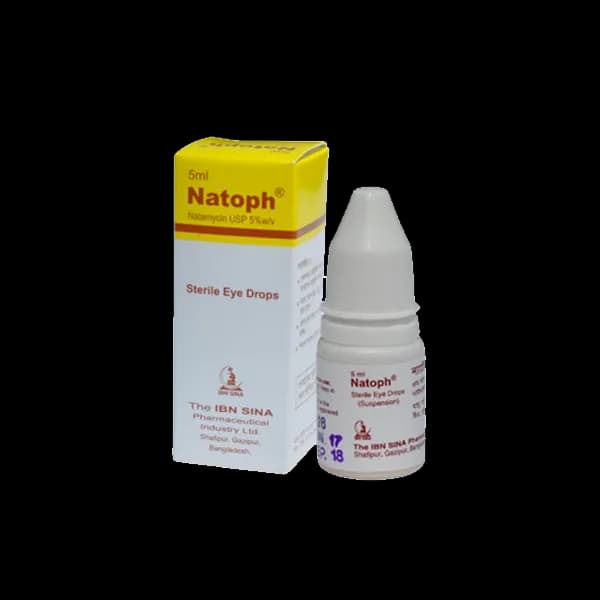

Natoph ophthalmic suspension is an antifungal medicine used to treat eye infections caused by susceptible fungi. Its evidence-based uses include:
Natoph is also used industrially as a food-grade preservative on cheese and cured meat surfaces to inhibit mold growth; this food-preservative use is a separate application from its medical use as an ophthalmic antifungal and is not a use covered by this medicine information.
Each mL of Natamycin ophthalmic suspension contains Natamycin 50 mg (5% w/v) as the active ingredient, in a sterile, preserved aqueous suspension for topical application to the eye. Refer to the specific product package insert for the complete list of inactive/preservative ingredients.
Natoph is a polyene macrolide antifungal antibiotic derived from Streptomyces natalensis. In ophthalmology, it is formulated as a sterile 5% suspension for topical instillation into the eye and is used to treat fungal infections of the cornea, conjunctiva, and eyelids.
Natoph ophthalmic suspension is a yellow topical eye preparation that must be shaken well before each use because it is a suspension, not a solution. It is active against a broad range of yeasts and filamentous fungi commonly implicated in ocular fungal infections, including Fusarium, Aspergillus, Cephalosporium, and Candida species.
Ophthalmic antifungal agent (polyene antibiotic class)
Natamycin is a tetraene polyene antifungal that acts by binding to sterol components (primarily ergosterol) in the fungal cell membrane. This binding alters membrane permeability, causing leakage of essential intracellular components (potassium, other ions, and metabolites), which leads to disruption of fungal cell metabolism and ultimately fungal cell death (fungicidal action).
Natamycin exhibits activity against a wide range of yeasts and filamentous fungi, including Fusarium solani (a common cause of fungal keratitis), Aspergillus, Penicillium, Candida, and Cephalosporium species. Following topical ocular administration, Natamycin penetrates the corneal epithelium, but penetration into the deeper corneal stroma and the anterior chamber is limited, which is why deep or severe infections may require additional systemic therapy.
| Phase | Adult dose |
|---|---|
| Initial therapy | 1 drop of Natoph ophthalmic suspension instilled into the conjunctival sac every 1-2 hours |
| After 3-4 days | Frequency may be reduced to 1 drop 6-8 times daily |
| Total duration | Usually 14-21 days, or continued until active fungal keratitis has resolved (as judged by the treating ophthalmologist) |
| Tapering | A gradual reduction in dosing over 4-7 day intervals may help confirm elimination of the organism before stopping therapy |
Usually a lower frequency of 4-6 applications of Natoph ophthalmic suspension per day is adequate; the exact schedule should be individualized by the prescribing physician based on clinical response.
The same dosing principles used in adults are generally applied under specialist ophthalmologic supervision, as a specific pediatric dosing schedule for Natoph has not been separately established; safety and efficacy in children have not been formally established in controlled trials (see Use in Special Populations).
No dose adjustment is required for renal or hepatic impairment, since Natoph ophthalmic suspension has negligible systemic absorption after topical ocular use.
Natoph ophthalmic suspension is for topical use in the eye only; it must never be injected or taken by mouth. Shake well before use, avoid touching the dropper tip to the eye, and follow the physician's instructions on frequency and duration exactly. See Dosage and Administration for step-by-step instillation instructions.
Because Natoph ophthalmic suspension has minimal to negligible systemic absorption when used as directed, clinically significant systemic drug interactions are not well established.
Natamycin ophthalmic suspension is contraindicated in patients with known hypersensitivity to Natamycin or to any component of the formulation. There are no other well-established absolute contraindications to topical ophthalmic Natamycin.
The most commonly reported side effects of Natoph ophthalmic suspension are local and generally mild:
Less commonly, allergic reactions, corneal opacity, or changes in vision have been reported after use of Natoph; rare systemic reactions such as chest discomfort or difficulty breathing have been reported post-marketing but are not clearly established to be caused by the topical drug given its minimal systemic absorption. Patients should notify their physician if any side effect is severe or persistent.
Pregnancy: Adequate and well-controlled studies of Natoph ophthalmic suspension in pregnant women have not been conducted, and animal reproduction studies are also lacking. Natoph should be used during pregnancy only if clearly needed, and only if the potential benefit to the mother justifies the potential unknown risk to the fetus; use should be under the direction of a physician.
Lactation: It is not known whether Natoph is excreted in human breast milk after ophthalmic use. Because systemic absorption after topical ocular administration is minimal, risk to a nursing infant is expected to be low, but caution should still be exercised, and a physician should be consulted before use of Natoph while breastfeeding.
For topical ophthalmic use only. Natoph suspension must not be injected subconjunctivally or introduced into the anterior chamber of the eye.
Topical ocular overdose of Natoph is unlikely to cause serious systemic toxicity given its minimal systemic absorption, but excess or overly frequent instillation may increase local irritation, redness, or discomfort. If Natoph is accidentally ingested or a significantly excessive amount is instilled, or if severe irritation, allergic reaction, or any concerning symptoms occur, seek immediate medical attention or contact a poison control center/emergency services rather than attempting home treatment.
Store Natoph ophthalmic suspension between 2°C and 24°C (36°F-75°F). Do not freeze. Protect the bottle from light and excessive heat, and keep tightly closed. Keep out of reach of children.
Pediatric use: Safety and efficacy of Natoph ophthalmic suspension in children have not been formally established in controlled clinical trials, although it is used clinically in pediatric fungal keratitis under ophthalmologic supervision using adult-derived dosing principles.
Elderly: No specific dose adjustment of Natoph is required in elderly patients; use as directed by the physician.
Renal/hepatic impairment: No dose adjustment is needed, as systemic absorption of Natoph after topical ocular use is negligible.
Pregnancy/lactation: See Pregnancy and Lactation section for cautious use guidance.
Treatment duration with Natoph ophthalmic suspension for fungal keratitis is typically 14 to 21 days, and therapy should continue until active infection has resolved, as determined by the treating ophthalmologist through clinical examination. For fungal blepharitis or conjunctivitis, duration is individualized based on clinical response. Patients should not stop Natoph early even if symptoms improve, and follow-up examinations are important to confirm cure before discontinuation.
Polyene antifungal antibiotic; ophthalmic anti-infective
Natamycin binds to ergosterol and related sterols in the fungal cell membrane, forming pores that increase membrane permeability. This causes leakage of intracellular potassium and other essential components, disrupting fungal cell metabolism and resulting in fungicidal activity against susceptible yeasts and filamentous fungi.
C
Safety and efficacy of Natoph ophthalmic suspension have not been formally established in pediatric controlled trials. However, Natoph is used in clinical practice to treat fungal keratitis, blepharitis, and conjunctivitis in children under the direct supervision of an ophthalmologist, generally following the same dosing frequency principles used in adults, adjusted to clinical response. Parents/caregivers should use Natoph in children only as specifically directed by the treating physician.
Q: What is Natoph 5% Ophthalmic Suspension eye drop used for?
A: Natoph 5% Ophthalmic Suspension ophthalmic suspension is used to treat fungal infections of the eye, most commonly fungal keratitis (corneal infection) and also fungal blepharitis and conjunctivitis, caused by susceptible fungi such as Fusarium, Aspergillus, and Candida species.
Q: How long does it take for Natoph 5% Ophthalmic Suspension to work?
A: Improvement is usually assessed over the first 7-10 days of Natoph 5% Ophthalmic Suspension therapy. If there is no improvement in that time, your ophthalmologist may re-evaluate the diagnosis or add other treatment. Full courses of Natoph 5% Ophthalmic Suspension for fungal keratitis often last 14-21 days.
Q: Can I stop using Natoph 5% Ophthalmic Suspension once my eye feels better?
A: No. You should complete the full prescribed course of Natoph 5% Ophthalmic Suspension exactly as directed by your physician, even if your symptoms improve early. Stopping Natoph 5% Ophthalmic Suspension too soon can allow the fungal infection to relapse or become harder to treat.
Q: Can I wear contact lenses while using Natoph 5% Ophthalmic Suspension?
A: No, contact lenses should not be worn during active treatment of a fungal eye infection with Natoph 5% Ophthalmic Suspension, as they can interfere with corneal healing and may worsen irritation.
Q: Is Natoph 5% Ophthalmic Suspension safe during pregnancy and breastfeeding?
A: Natoph 5% Ophthalmic Suspension has not been well studied in pregnant or breastfeeding women. It should be used during pregnancy only if clearly needed and only under a physician's guidance, weighing potential benefit against unknown risk to the baby. Because systemic absorption from the eye is minimal, risk during breastfeeding is expected to be low, but a physician should still be consulted before using Natoph 5% Ophthalmic Suspension while nursing.
Q: What should I do if I miss a dose or accidentally use too much Natoph 5% Ophthalmic Suspension?
A: If you miss a dose of Natoph 5% Ophthalmic Suspension, apply it as soon as you remember unless it is nearly time for the next dose. Do not double up doses. If you accidentally use significantly more Natoph 5% Ophthalmic Suspension than prescribed, or if it is swallowed, or if you notice severe irritation or an allergic reaction, seek immediate medical attention or contact a poison control center rather than treating it at home.
Disclaimer
The information provided is accurate to the best of our knowledge, but it does not replace professional medical advice. We cannot guarantee its completeness or accuracy, and the absence of specific information about a drug should not be taken as an endorsement. We are not responsible for any consequences arising from this information, so please consult a healthcare professional for any concerns or questions.
