
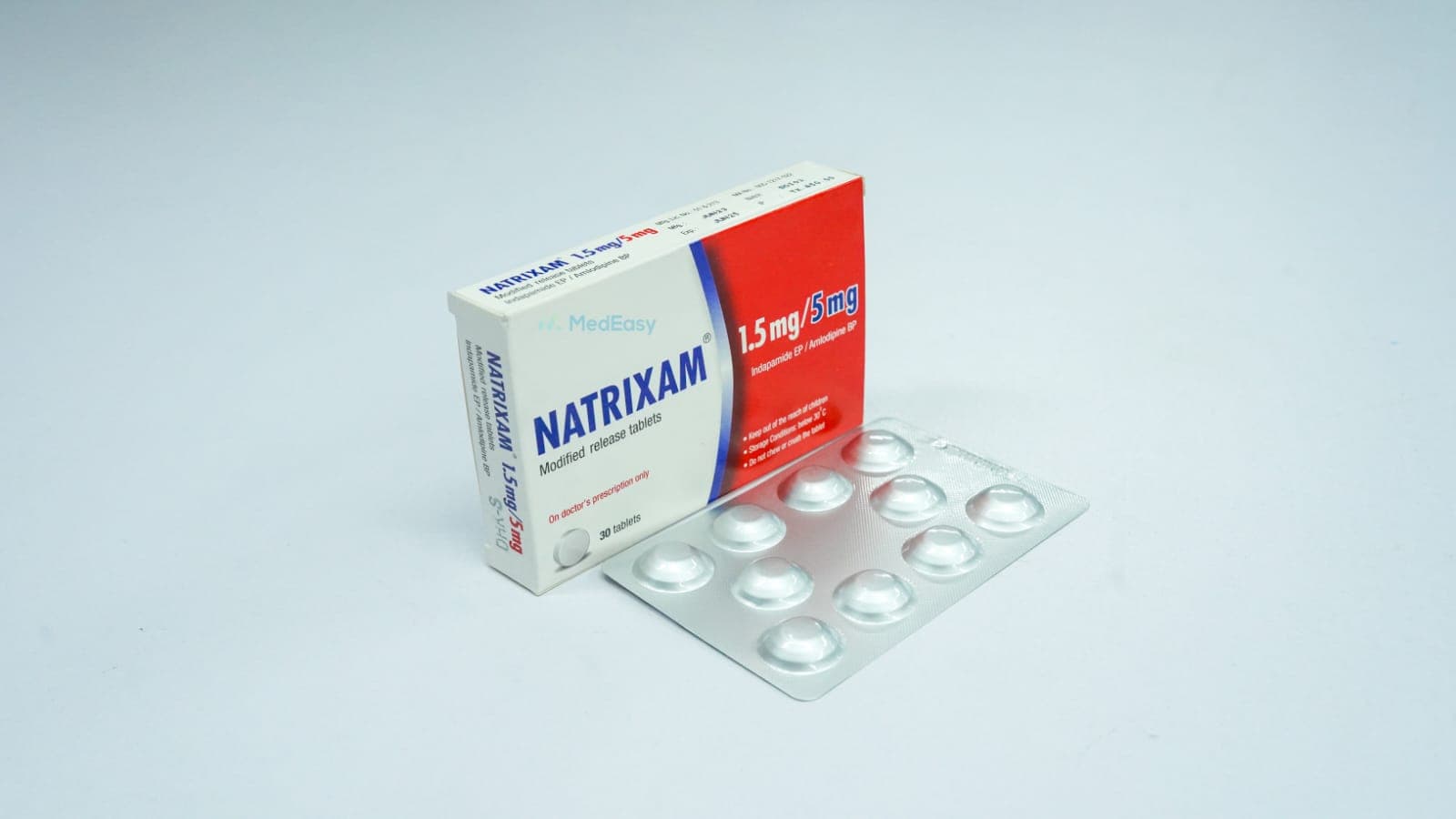

Medicine overview
Indications of Natrixam
Natrixam is a fixed-dose combination indicated for the treatment of essential hypertension. It combines a thiazide-like diuretic (indapamide) with a dihydropyridine calcium channel blocker (amlodipine), two agents with complementary mechanisms of blood pressure lowering.
- Established use: As substitution therapy in patients whose blood pressure is already adequately controlled with indapamide and amlodipine given concurrently as separate tablets at the same dose strengths.
- Guideline-supported use: As combination therapy for essential hypertension not adequately controlled on monotherapy with either indapamide or amlodipine alone, when a physician determines that combination treatment is appropriate.
- Not indicated: Natrixam is not intended for initial titration of therapy; the dose of each component should first be individually titrated before switching to this fixed-dose combination.
Composition
Each tablet of Indapamide + Amlodipine contains two active ingredients:
- Indapamide (as sustained-release or immediate-release form, commonly 1.5 mg) — a thiazide-like (indoline) diuretic.
- Amlodipine (as amlodipine besylate/besilate, commonly 5 mg or 10 mg) — a dihydropyridine calcium channel blocker.
Strengths and exact formulation vary by manufacturer; refer to the specific product label for the precise composition of the brand dispensed.
Description
Natrixam is an oral fixed-dose antihypertensive combination product. Indapamide is a sulfonamide-derived, thiazide-like diuretic that promotes sodium and water excretion and also exerts a direct vasodilatory effect at therapeutic doses. Amlodipine is a long-acting dihydropyridine calcium channel blocker that relaxes vascular smooth muscle, reducing peripheral vascular resistance.
By combining two agents that lower blood pressure through different, complementary mechanisms, Natrixam provides more effective blood pressure control than either agent alone in patients who require combination therapy, while allowing single-tablet dosing to support adherence.
Therapeutic Class
Natrixam belongs to the therapeutic class of antihypertensive combination agents, specifically combining:
- A thiazide-like diuretic (indapamide)
- A dihydropyridine calcium channel blocker (amlodipine)
Pharmacology
Indapamide + Amlodipine combines two antihypertensive agents with distinct mechanisms of action:
Indapamide
Indapamide inhibits sodium reabsorption at the cortical diluting segment of the distal convoluted tubule by blocking the Na⁺/Cl⁻ cotransporter, increasing urinary excretion of sodium, chloride, and water. At the doses used for hypertension, indapamide also has a direct vasodilatory effect, including reduced vascular smooth muscle reactivity to vasoconstrictors, which contributes to its blood-pressure-lowering effect independent of its diuretic action.
Amlodipine
Amlodipine is a dihydropyridine calcium channel blocker that inhibits the transmembrane influx of calcium ions into vascular smooth muscle and cardiac muscle. Its principal action in hypertension is peripheral arterial vasodilation, which reduces total peripheral resistance and blood pressure with a relatively low incidence of reflex tachycardia due to its slow onset of action.
Used together in Indapamide + Amlodipine, the diuretic and vasodilatory calcium-channel-blocking effects act synergistically to produce a greater antihypertensive effect than either component alone.
Dosage & Administration of Natrixam
Adult Dose (Hypertension)
| Indication | Typical Dose |
|---|---|
| Substitution therapy in patients already controlled on individual components | One tablet once daily of the strength matching the individually-titrated doses of indapamide and amlodipine |
| Combination therapy after monotherapy titration | One tablet once daily, typically taken in the morning, once the individual component doses have been established by the prescriber |
Administration
- Take once daily, preferably in the morning, with or without food.
- Swallow the tablet whole with a glass of water; do not crush or chew a sustained-release indapamide component unless the specific product is confirmed to be immediate-release.
- Take at approximately the same time each day for consistent blood pressure control.
Renal Impairment
Natrixam is contraindicated in severe renal impairment (see Contraindications). In mild-to-moderate renal impairment, use with caution and monitor renal function and electrolytes.
Hepatic Impairment
Natrixam is contraindicated in severe hepatic impairment or hepatic encephalopathy (see Contraindications). Amlodipine should be initiated at the lower end of the dosing range in hepatic impairment; a physician should assess whether the fixed-dose combination is appropriate.
Elderly
No dose adjustment of the combination is generally required in the elderly, but they are at greater risk of electrolyte disturbances and should be monitored closely; see Use in Special Populations.
Administration of Natrixam
Natrixam should be taken orally, once daily, preferably in the morning, with or without food, swallowed whole with water. It should be taken at the same time each day to maintain consistent blood levels and blood pressure control.
Interaction of Natrixam
Natrixam carries the interaction profiles of both indapamide and amlodipine. Clinically significant interactions include:
- Lithium: Thiazide-like diuretics such as the indapamide component reduce renal lithium clearance, increasing the risk of lithium toxicity. Concomitant use is generally not recommended; if unavoidable, lithium levels should be monitored closely.
- Potassium-sparing diuretics, potassium supplements, or drugs that increase potassium (e.g., ACE inhibitors, ARBs): May reduce the risk of hypokalemia from indapamide but increase the risk of hyperkalemia, particularly in renal impairment.
- Other drugs that lower potassium or cause QT prolongation (e.g., certain antiarrhythmics, some antipsychotics): Indapamide-induced hypokalemia can increase the risk of torsades de pointes when combined with QT-prolonging drugs.
- NSAIDs: May reduce the antihypertensive and diuretic effect of indapamide and increase the risk of renal impairment, especially in volume-depleted patients.
- CYP3A4 inhibitors (e.g., ketoconazole, itraconazole, ritonavir, clarithromycin): May increase amlodipine plasma concentrations, increasing the risk of hypotension and edema.
- CYP3A4 inducers (e.g., rifampicin, carbamazepine, phenytoin): May reduce amlodipine plasma concentrations and antihypertensive effect.
- Other antihypertensives, alcohol: Additive blood-pressure-lowering and hypotensive effect.
- Simvastatin: Amlodipine can increase simvastatin exposure; simvastatin dose should generally not exceed 20 mg daily when co-administered with amlodipine.
Contraindications
Indapamide + Amlodipine is contraindicated in patients with:
- Known hypersensitivity to indapamide, other sulfonamide-derived drugs, amlodipine, other dihydropyridine calcium channel blockers, or any excipient of the product.
- Severe renal impairment or anuria.
- Severe hepatic impairment or hepatic encephalopathy.
- Severe hypotension.
- Cardiogenic shock.
- Unstable angina (except Prinzmetal's angina).
- Significant (hemodynamically relevant) aortic stenosis.
Side Effects of Natrixam
Side effects of Natrixam reflect those reported with each component.
Common (Amlodipine-related)
- Peripheral edema (ankle swelling)
- Headache
- Flushing
- Dizziness
- Palpitations
- Fatigue
Common (Indapamide-related)
- Electrolyte disturbances, particularly hypokalemia and hyponatremia (see Precautions and Warnings)
- Hyperuricemia
- Mild gastrointestinal upset (nausea, constipation)
- Dizziness, headache
- Photosensitivity reactions (see Precautions and Warnings)
Less Common / Serious
- Hypotension, especially after the first dose or with volume depletion
- Skin rash, urticaria
- Cardiac arrhythmia related to electrolyte imbalance
- Rarely: angioedema, severe skin reactions, blood dyscrasias, hepatic or renal dysfunction
Patients should seek prompt medical attention for signs of severe allergic reaction, irregular heartbeat, severe dizziness, or unusual muscle weakness/cramping (possible electrolyte disturbance).
Pregnancy & Lactation
Pregnancy: Natrixam is not recommended during pregnancy. Diuretics such as indapamide are generally avoided in pregnancy as they do not prevent and may reduce placental perfusion, and calcium channel blockers should be used only if clearly needed. Use in pregnancy only if the potential benefit justifies the potential risk to the fetus, and only under close physician supervision; if pregnancy is confirmed, treatment should be reassessed promptly.
Lactation: It is not known whether indapamide or amlodipine (or both) pass into human breast milk in clinically significant amounts. Because of the potential for adverse effects in a nursing infant, Natrixam should be used during breastfeeding only if clearly needed and after consulting a physician, who may recommend an alternative agent with a better-established lactation safety profile.
Precautions & Warnings
The following precautions apply to the use of Natrixam:
- Electrolyte disturbances: Indapamide can cause hypokalemia and hyponatremia, particularly in the elderly, malnourished, or those on multiple diuretics. Serum electrolytes should be monitored periodically, especially at the start of treatment.
- QT prolongation risk: Hypokalemia associated with indapamide increases the risk of QT prolongation and torsades de pointes, particularly when combined with other QT-prolonging drugs; correct hypokalemia before and during treatment.
- Peripheral edema: Amlodipine commonly causes dose-related ankle/peripheral edema; this is generally not associated with fluid retention and usually does not require diuretic dose adjustment.
- Photosensitivity: Indapamide has been associated with photosensitivity reactions; patients should limit sun/UV exposure and stop treatment if reactions occur.
- Renal function: Use with caution in mild-to-moderate renal impairment; monitor renal function and electrolytes regularly.
- Hepatic impairment: Use with caution in hepatic impairment (short of the contraindicated severe impairment/encephalopathy); thiazide-like diuretics can precipitate hepatic encephalopathy in susceptible patients.
- Lithium: Concomitant use with lithium is generally not recommended due to increased risk of lithium toxicity (see Interactions).
- Hyperparathyroidism/hypercalcemia: Thiazide-like diuretics can reduce urinary calcium excretion; discontinue before testing for parathyroid function.
- Not for initial therapy: This fixed-dose combination should not be used to initiate treatment; component doses should be individually titrated first.
- Driving/operating machinery: Dizziness or fatigue may occur, particularly when starting treatment; caution is advised until individual response is known.
Overdose Effects of Natrixam
Overdose of Natrixam may present with pronounced hypotension, dizziness, electrolyte disturbances (hypokalemia, hyponatremia), and marked peripheral vasodilation from the amlodipine component, which can lead to prolonged and potentially profound systemic hypotension and reflex tachycardia. In case of suspected overdose, seek immediate medical attention or contact a poison control center/emergency services right away. Do not attempt to manage an overdose at home; treatment is supportive and should be provided in a hospital setting, including monitoring of cardiac and renal function, blood pressure, and serum electrolytes.
Storage Conditions
Store at room temperature (below 30°C), away from light and moisture. Keep out of reach of children.
Use In Special Populations
Elderly
Elderly patients may be started on Natrixam once individual component doses are established, but they are at increased risk of electrolyte disturbances, symptomatic hypotension, and falls; closer monitoring of blood pressure, renal function, and electrolytes is advised.
Renal Impairment
Contraindicated in severe renal impairment/anuria; use with caution and monitor closely in mild-to-moderate impairment (see Dosage and Administration and Contraindications).
Hepatic Impairment
Contraindicated in severe hepatic impairment or hepatic encephalopathy; use with caution otherwise (see Dosage and Administration and Contraindications).
Pediatric Use
Safety and efficacy of Natrixam in children and adolescents have not been established; its use is not recommended in this population.
Pregnancy and Lactation
See Pregnancy and Lactation section.
Duration Of Treatment
Natrixam is intended for long-term, ongoing management of hypertension as part of chronic therapy. It is not a short-course treatment. Duration and continued need for therapy should be reassessed periodically by the prescribing physician based on blood pressure control, tolerability, and laboratory monitoring (renal function, electrolytes).
Drug Classes
Thiazide-like diuretic + Dihydropyridine calcium channel blocker (fixed-dose antihypertensive combination)
Mode Of Action
Indapamide + Amlodipine lowers blood pressure through two complementary mechanisms: indapamide increases renal excretion of sodium, chloride, and water by inhibiting the Na⁺/Cl⁻ cotransporter in the distal convoluted tubule and also produces direct arterial vasodilation; amlodipine blocks L-type calcium channels in vascular smooth muscle, reducing calcium influx and causing arterial vasodilation. Together, these actions reduce peripheral vascular resistance and circulating volume, producing a greater antihypertensive effect than either agent alone.
Pediatric Uses
The safety and efficacy of Natrixam have not been established in children and adolescents (below 18 years of age). Its use in this population is not recommended. Hypertension in pediatric patients should be managed under specialist pediatric guidance using agents with established pediatric safety and dosing data.
Frequently Asked Questions
Q: What is Natrixam 1.5 mg/5 mg Tablet used for?
A: Natrixam 1.5 mg/5 mg Tablet is a fixed-dose combination tablet used to treat high blood pressure (hypertension) that is not adequately controlled by either component alone, or to replace separate indapamide and amlodipine tablets in patients already stabilized on those same doses.
Q: Can I take Natrixam 1.5 mg/5 mg Tablet as my first blood pressure medicine?
A: No. Natrixam 1.5 mg/5 mg Tablet is not intended for starting treatment. Your doctor should first individually adjust the doses of indapamide and amlodipine before switching you to this combined tablet.
Q: What are the most common side effects of Natrixam 1.5 mg/5 mg Tablet?
A: The most common side effects include swelling of the ankles or feet, headache, flushing, dizziness, and changes in blood salt (electrolyte) levels such as low potassium or sodium. Contact your doctor if you notice muscle cramps, unusual tiredness, or an irregular heartbeat.
Q: Who should not take Natrixam 1.5 mg/5 mg Tablet?
A: Natrixam 1.5 mg/5 mg Tablet should not be used by people who are allergic to indapamide, sulfonamide-derived drugs, amlodipine, or other similar calcium channel blockers, or who have severe kidney failure/anuria, severe liver disease with hepatic encephalopathy, severe low blood pressure, cardiogenic shock, unstable angina, or significant aortic valve narrowing.
Q: Is Natrixam 1.5 mg/5 mg Tablet safe during pregnancy or breastfeeding?
A: Natrixam 1.5 mg/5 mg Tablet is not recommended during pregnancy and should be used in breastfeeding only if clearly needed, because diuretics and calcium channel blockers may affect the fetus or nursing infant. Always consult your physician before use if you are pregnant, planning pregnancy, or breastfeeding.
Q: What should I do if I miss a dose or take too much Natrixam 1.5 mg/5 mg Tablet?
A: If you miss a dose, take it as soon as you remember unless it is almost time for the next dose; do not double up. If you or someone else has taken too much Natrixam 1.5 mg/5 mg Tablet and shows signs of severe dizziness, fainting, or very low blood pressure, seek immediate medical attention or contact emergency services/poison control right away.
Disclaimer
The information provided is accurate to the best of our knowledge, but it does not replace professional medical advice. We cannot guarantee its completeness or accuracy, and the absence of specific information about a drug should not be taken as an endorsement. We are not responsible for any consequences arising from this information, so please consult a healthcare professional for any concerns or questions.
