8% Off
Endosis2 mg
Eskayef Bangladesh Ltd.
৳460.00
Add to cart


Neogest (2 mg oral tablet) is indicated for the treatment of endometriosis, specifically for the relief of endometriosis-associated pelvic pain. It is approved in many countries (including markets in Europe, Japan, Canada, and Bangladesh) as a stand-alone progestin therapy for this indication.
Neogest is also used, in combination with an estrogen (estradiol valerate), as an active ingredient of certain combined oral contraceptive products. In that combined-hormone context it is used for pregnancy prevention and for management of heavy menstrual bleeding without organic cause; this monograph, however, describes Neogest used alone (monotherapy) for endometriosis.
Neogest monotherapy is sometimes used off-label, at the discretion of a gynecologist, for adenomyosis-related pain and for long-term suppression of endometriosis recurrence after surgery, although it is not formally approved for these indications in most labeling.
Each film-coated tablet contains Dienogest 2 mg as the active ingredient, along with pharmaceutically inert excipients such as lactose monohydrate, potato starch, povidone, magnesium stearate, hypromellose, and talc, which may vary by manufacturer.
Neogest is a synthetic progestogen (progestin) derived from 19-nortestosterone but pharmacologically distinct from older nortestosterone derivatives because it also carries pronounced anti-androgenic and anti-proliferative endometrial activity similar to natural progesterone. It is chemically designated as a 17α-cyanomethyl-19-nortestosterone derivative and is administered orally.
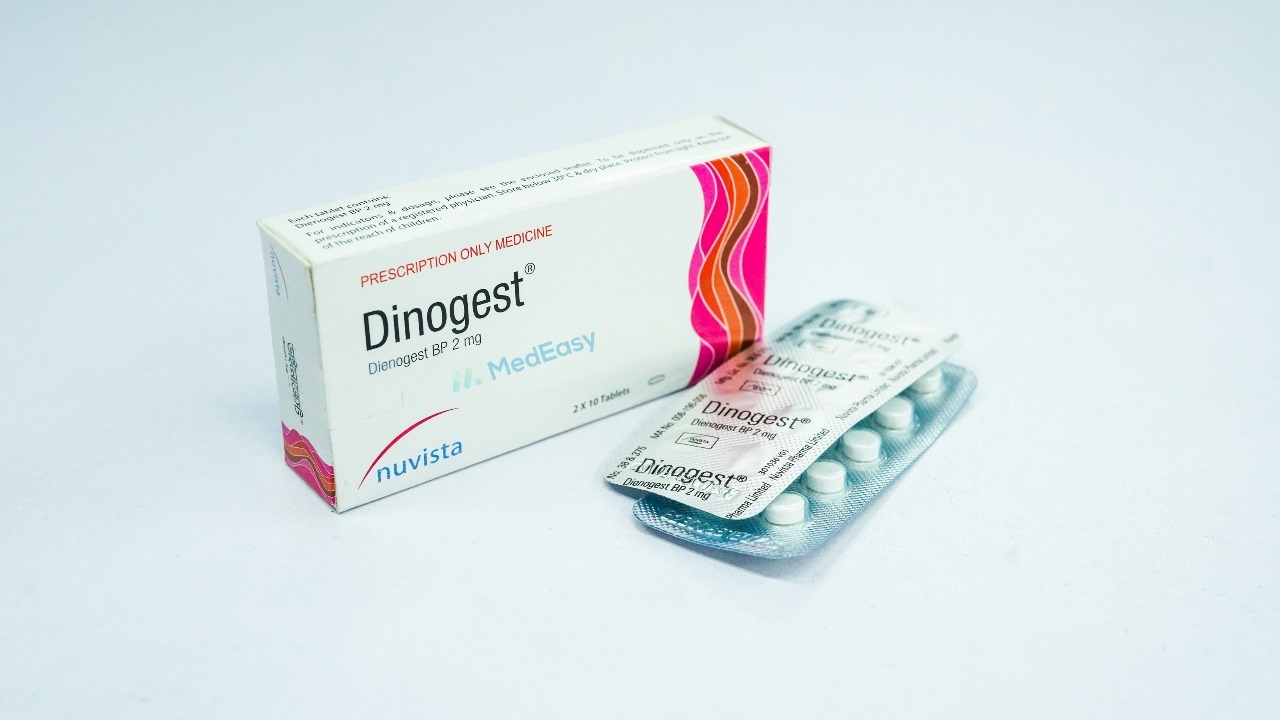
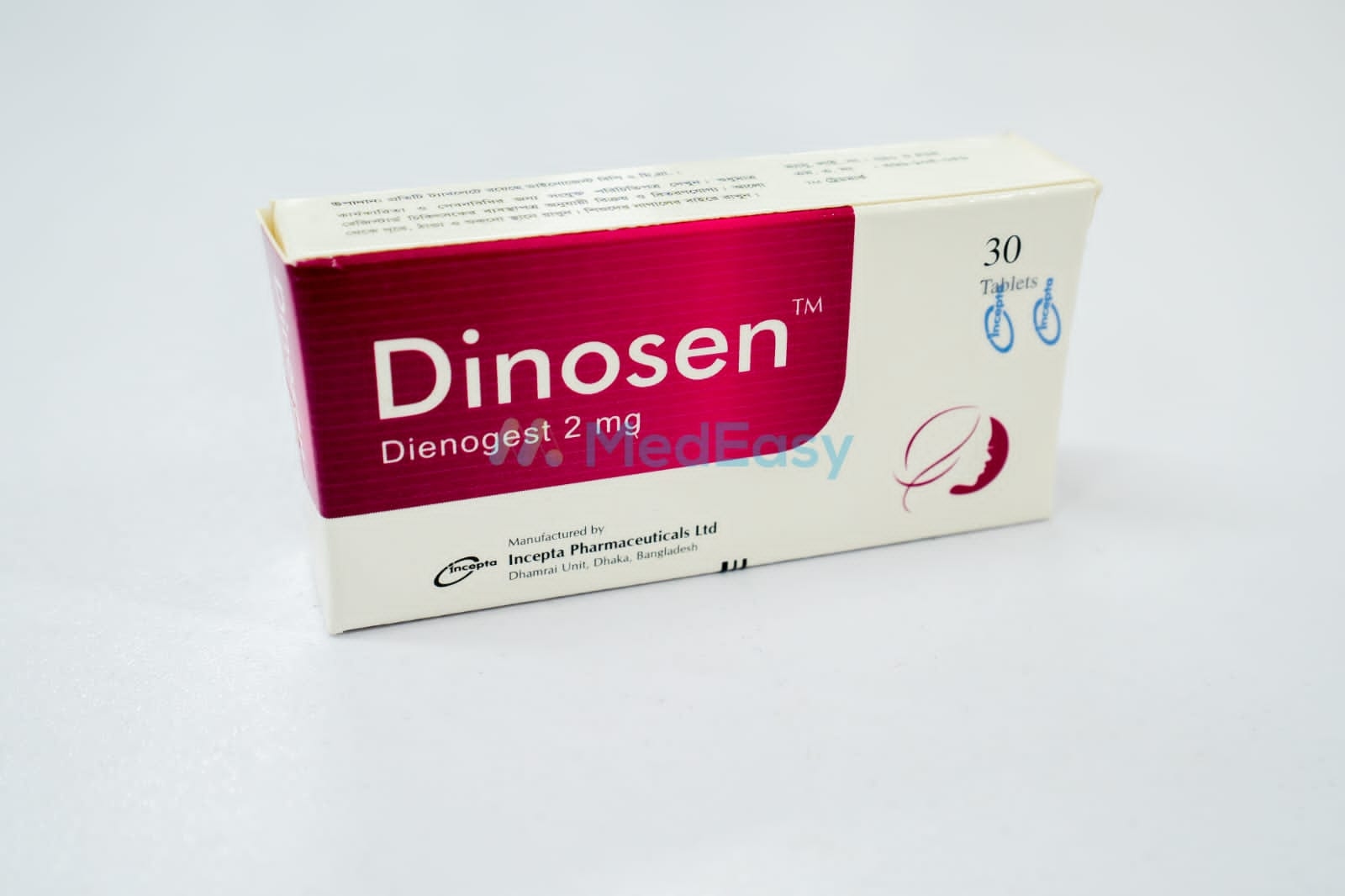
Marketed as a 2 mg once-daily tablet, Neogest is used clinically to reduce the growth of endometrial tissue and relieve the chronic pelvic pain associated with endometriosis.
Neogest belongs to the therapeutic class of progestins (progestogens), specifically a hybrid nortestosterone-derivative progestin with anti-androgenic and anti-endometriotic properties. It is classified under hormonal agents used in the management of endometriosis (ATC group: G03DB08).
Dienogest is a highly selective progesterone-receptor agonist with strong endometrial (progestogenic) activity, moderate anti-androgenic activity, and no significant estrogenic, androgenic, glucocorticoid, or mineralocorticoid activity. At the tissue level, Dienogest causes decidualization followed by atrophy of endometriotic tissue, reduces local production of prostaglandins and inflammatory mediators, and induces a hypoestrogenic, hypergestagenic hormonal milieu that suppresses the growth and activity of ectopic endometrial implants.
At the 2 mg/day dose used for endometriosis, Dienogest only partially and inconsistently suppresses ovarian estradiol production and ovulation; its clinical effect is achieved mainly through a direct, peripheral action on endometriotic tissue rather than strong central (pituitary-ovarian) suppression.
Dienogest is rapidly and almost completely absorbed after oral administration, with peak plasma concentration reached within about 1.5–4 hours and an absolute bioavailability of approximately 91%. It is metabolized predominantly via hepatic CYP3A4-mediated hydroxylation, and metabolites are excreted mainly in urine, with a terminal elimination half-life of approximately 9–10 hours.
| Indication | Recommended Dose of Neogest |
|---|---|
| Endometriosis-associated pelvic pain (adult) | 2 mg orally, once daily, continuously (no tablet-free interval), taken at approximately the same time each day |
| Adolescents (post-menarche) | Use only under specialist supervision; safety/efficacy data are more limited than in adults (see Use in Special Populations) |
Neogest is administered orally, once daily, at approximately the same time each day, with or without food, and swallowed whole with a glass of water. It is taken continuously (not cyclically), and treatment can be started on any day. See Dosage and Administration for missed-dose guidance.
Since Neogest at the endometriosis dose is not a reliable contraceptive, drug interactions that reduce hormonal contraceptive efficacy are less relevant to pregnancy prevention with this product; however, patients relying on hormonal contraception concurrently should discuss interacting medicines with their physician.
Dienogest is contraindicated in patients with any of the following:
Patients should report persistent, severe, or worsening symptoms — particularly signs suggestive of a blood clot (leg swelling/pain, chest pain, sudden breathlessness) or depression — to their physician promptly.
Neogest is contraindicated in known or suspected pregnancy; it has no indication during pregnancy and epidemiological data on exposed pregnancies are limited. If pregnancy occurs or is suspected during treatment, Neogest should be discontinued immediately and a physician consulted.
Small amounts of Neogest are excreted into breast milk. Because data on effects in nursing infants are limited, use of Neogest during breastfeeding is generally not recommended; a physician should weigh the mother's clinical need for treatment against potential infant exposure, and non-hormonal alternatives should be considered where feasible.
There is limited clinical experience with acute overdose of Neogest. Based on its pharmacological profile, an overdose is not expected to cause serious or life-threatening toxicity, though symptoms such as nausea, vomiting, or irregular vaginal bleeding could theoretically occur. There is no specific antidote. If an overdose of Neogest is suspected, seek immediate medical attention or contact a poison control center; treatment should be supportive and symptomatic, guided by a physician.
Store at room temperature (below 30°C), away from light and moisture. Keep out of reach of children.
The safety and efficacy of Neogest have not been established in girls who have not yet menstruated (pre-menarche). In adolescents who have started menstruating, use should be individualized and supervised by a specialist, as clinical experience is more limited than in adult women.
Neogest is not indicated for use in postmenopausal women, as endometriosis is a condition of the reproductive years; there is no relevant use of Neogest in this population.
Neogest is contraindicated in patients with severe hepatic disease or liver tumors, and should be used cautiously, with monitoring, in mild hepatic impairment (see Contraindications and Precautions).
Formal dose-adjustment studies in renal impairment are limited; Neogest should be used with caution and physician oversight in patients with significant renal impairment.
The duration of treatment with Neogest is determined by the prescribing physician based on symptom relief, tolerability, and treatment goals. Clinical trials supporting its use in endometriosis have evaluated continuous treatment for up to 15 months to 2 years, but many patients continue long-term therapy under medical supervision as long as benefit outweighs risk. Treatment should be reassessed periodically by a physician.
Dienogest is classified as a progestin (progestogen), specifically a nortestosterone-derivative progestin with anti-androgenic and anti-endometriotic activity, within the broader class of hormonal agents used to treat endometriosis.
Dienogest acts primarily as a selective agonist at the progesterone receptor. It produces decidualization and subsequent atrophy of both eutopic and ectopic (endometriotic) endometrial tissue, suppresses local prostaglandin and inflammatory mediator production, and creates a hypoestrogenic, hypergestagenic hormonal environment. Unlike combined hormonal contraceptives, Dienogest at the 2 mg/day endometriosis dose exerts its principal therapeutic effect through this direct, peripheral action on endometrial/endometriotic tissue rather than through consistent central suppression of ovulation.
The safety and efficacy of Neogest have not been formally established in children who have not begun menstruating. In postmenarchal adolescents with symptomatic endometriosis, Neogest may be used under close specialist supervision, but clinical trial experience in this age group is limited compared with adult women, so a conservative, individualized approach is recommended, with attention to growth, bone health, and mood monitoring.
Q: What is Neogest 2 mg Tablet used for?
A: Neogest 2 mg Tablet is used to treat endometriosis, specifically to relieve the pelvic pain caused by this condition, by reducing the growth and activity of endometrial tissue outside the uterus.
Q: How should I take Neogest 2 mg Tablet?
A: Neogest 2 mg Tablet is taken as one 2 mg tablet by mouth once daily, at about the same time each day, continuously without a break, with or without food.
Q: Can Neogest 2 mg Tablet be used as birth control?
A: No. At the dose used for endometriosis, Neogest 2 mg Tablet does not reliably prevent ovulation and should not be relied on as a contraceptive. If you need to prevent pregnancy, use a non-hormonal method such as condoms alongside Neogest 2 mg Tablet, unless your doctor has prescribed a different combination product specifically for contraception.
Q: Is it safe to take Neogest 2 mg Tablet during pregnancy or while breastfeeding?
A: Neogest 2 mg Tablet must not be used during known or suspected pregnancy and should be stopped immediately if pregnancy occurs. It is generally not recommended while breastfeeding because small amounts pass into breast milk and infant safety data are limited; discuss any need for treatment with your physician, who will weigh the benefits against potential risks.
Q: What are the common side effects of Neogest 2 mg Tablet?
A: The most common effects are irregular vaginal bleeding or spotting (especially in the first few months), headache, breast tenderness, mood changes, acne, and weight changes. Most of these improve with continued use, but you should tell your doctor if they are severe or persistent.
Q: Who should not take Neogest 2 mg Tablet?
A: Neogest 2 mg Tablet should not be used by anyone who is pregnant, has an active or past blood clot (venous thromboembolism), has active or past heart attack or stroke, has severe liver disease or liver tumors, has undiagnosed vaginal bleeding, has a hormone-sensitive cancer such as breast cancer, or is allergic to Neogest 2 mg Tablet.
Disclaimer
The information provided is accurate to the best of our knowledge, but it does not replace professional medical advice. We cannot guarantee its completeness or accuracy, and the absence of specific information about a drug should not be taken as an endorsement. We are not responsible for any consequences arising from this information, so please consult a healthcare professional for any concerns or questions.