10% Off
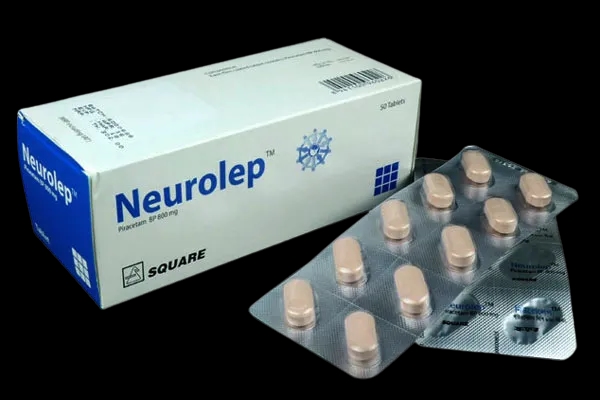
Neurolep800 mg
Square Pharmaceuticals PLC.
৳54.36
Add to cart


Neuratam is a cyclic GABA-derivative (pyrrolidone derivative) nootropic agent used for the following indications, classified by strength of evidence:
Neuratam is not approved by the US FDA for any indication; it is marketed as a prescription medicine in Bangladesh, Europe, and various Asian markets for the indications above.
Piracetam is available in several dosage forms and strengths for oral and parenteral use, including:
Exact available strengths and forms vary by manufacturer; confirm the specific product's composition before dispensing.
Neuratam is a cyclic derivative of the neurotransmitter gamma-aminobutyric acid (GABA) and is the prototype member of the pyrrolidone (racetam) class of nootropic agents. Unlike sedatives or psychostimulants, Neuratam is described as having no significant sedative, stimulant, or vasodilatory action of its own, but is thought to influence neuronal, vascular, and cognitive functions through effects on neuronal membrane fluidity, synaptic plasticity, and cerebral microcirculation.
Neuratam has been used clinically since the 1970s, mainly in Europe and Asia, and is not approved for marketing in the United States.
Neuratam belongs to the nootropic agents class, specifically the pyrrolidone (racetam) derivatives, a group of cyclic GABA analogues.
The precise mechanism of action of Piracetam is not fully established. Proposed mechanisms include:
Piracetam is well absorbed orally with an oral bioavailability close to 100%, does not undergo significant hepatic metabolism, and is eliminated almost entirely unchanged by renal excretion, with an elimination half-life of approximately 4-5 hours in adults with normal renal function.
| Indication | Adult Dose | Pediatric Dose |
|---|---|---|
| Cortical myoclonus (adjunct) | Initial 7.2 g/day orally in 2-3 divided doses, increased by 4.8 g/day every 3-4 days up to a usual maintenance range of 16.8-24 g/day, given together with other antimyoclonic therapy | Weight-based dosing under specialist supervision; not established for general use outside myoclonus management |
| Vertigo/dizziness (adjunct) | Typically 2.4-4.8 g/day orally in divided doses; reassess benefit after 8 weeks | Not established |
| Adjunct in dyslexia (regional use) | Not applicable (adult use) | Typically 3.2 g/day in divided doses in children 8 years and above, combined with educational/speech therapy, in markets where approved; specialist guidance required |
Neuratam injection (IV/IM) may be used when oral therapy is not feasible, at doses equivalent to the oral regimen, under medical supervision.
Dosing of Neuratam must be reduced in patients with renal impairment (see Use in Special Populations); doses should always be individualized and directed by the prescribing physician.
Neuratam tablets and oral solution may be taken with or without food; taking with food may reduce the mild gastrointestinal upset some patients experience. Tablets should be swallowed with a glass of water and not crushed or chewed unless the product is specifically designed for that use. Neuratam injection is administered by slow intravenous or intramuscular route by a healthcare professional. Do not stop or change the dose of Neuratam without consulting the prescribing physician, particularly in myoclonus, where abrupt discontinuation may provoke rebound symptoms (see Precautions and Warnings).
Neuratam has the following clinically significant drug interactions:
Inform the prescribing physician of all other medicines, supplements, and herbal products being used before starting Neuratam.
Piracetam is contraindicated in:
The most commonly reported adverse effects of Neuratam include:
Less common effects include drowsiness, dizziness, headache, and in patients treated for myoclonus, dose-related hyperkinesia or ataxia. Rare effects include skin rash or hypersensitivity reactions. Contact your physician if any side effect is severe or persistent.
Neuratam crosses the placental barrier, and data on use in human pregnancy are limited. Neuratam should be used during pregnancy only if clearly needed and if the potential benefit justifies the potential risk to the fetus; consult a physician before use. Neuratam is excreted into breast milk; breastfeeding is generally not recommended during treatment with Neuratam unless considered essential by the treating physician, who should weigh the benefits of treatment against potential risk to the infant.
Use Neuratam with caution in the following situations:
Limited data are available on Neuratam overdose. Reported symptoms with very high doses include diarrhea, abdominal pain, and agitation. In case of suspected overdose of Neuratam, seek immediate medical attention or contact a poison control center. Treatment is supportive and symptomatic; since Neuratam is renally cleared, hemodialysis may be considered to enhance elimination in severe cases, particularly in patients with renal impairment.
Store Neuratam at room temperature (below 30°C), away from light and moisture. Keep out of reach of children.
| Population | Guidance |
|---|---|
| Renal impairment | Neuratam dosing must be reduced according to creatinine clearance (CrCl): mild impairment (CrCl 50-79 mL/min) - reduce to two-thirds of normal dose; moderate impairment (CrCl 30-49 mL/min) - reduce to one-third of normal dose; severe impairment (CrCl 20-29 mL/min) - reduce to one-sixth of normal dose given once daily; CrCl below 20 mL/min - contraindicated. |
| Hepatic impairment | No dose adjustment of Neuratam is considered necessary based on hepatic function alone, as Neuratam does not undergo significant hepatic metabolism; however, dosing should still follow renal function guidance. |
| Elderly | Use standard dosing adjusted for age-related decline in renal function; monitor renal function periodically during long-term therapy. |
| Pediatric | Use of Neuratam in children should be under specialist supervision for approved indications (e.g., myoclonus, dyslexia adjunct in select markets); safety and efficacy for general cognitive use in children are not established. |
For cortical myoclonus, Neuratam is typically continued long-term as part of ongoing antimyoclonic therapy, with periodic reassessment of dose and benefit by the treating physician. For vertigo or other adjunct indications, treatment with Neuratam is usually reassessed after approximately 8 weeks to determine whether continued therapy is beneficial. Duration should always be determined by the prescribing physician based on individual response.
Nootropic agents; Pyrrolidone (racetam) derivatives; Cyclic GABA derivatives
Piracetam's exact mechanism of action is not completely understood. It is believed to act by modulating neuronal AMPA-glutamate receptor function, enhancing neuronal membrane fluidity, and improving mitochondrial energy metabolism, without exerting classical sedative, stimulant, or vasodilator activity. Piracetam also reduces platelet and erythrocyte aggregation, which may improve microcirculatory blood flow. See Pharmacology for further detail.
The use of Neuratam in children is limited to specific, specialist-supervised indications. Neuratam may be used as adjunct therapy for cortical myoclonus in children, with weight-based dosing determined by the treating specialist. In some regional markets, Neuratam is also used as an adjunct in children aged 8 years and above with dyslexia, combined with educational/speech therapy. Safety and efficacy of Neuratam for general cognitive enhancement or other unapproved uses in children have not been established, and such use is not recommended.
Q: What is Neuratam 800 mg Tablet used for?
A: Neuratam 800 mg Tablet is mainly used as an adjunct treatment for cortical myoclonus, and in some countries as an adjunct for vertigo/dizziness or, in children, as an adjunct in dyslexia therapy, alongside other appropriate treatment.
Q: Is Neuratam 800 mg Tablet a stimulant or sedative?
A: No. Neuratam 800 mg Tablet is described as having no significant sedative or stimulant effect of its own; it is classified as a nootropic (cognition-related) agent with a different mechanism of action.
Q: Can I stop taking Neuratam 800 mg Tablet suddenly?
A: No, if you are being treated for myoclonus, Neuratam 800 mg Tablet should be stopped gradually under medical supervision, as sudden discontinuation can cause rebound myoclonus/seizures. Always consult your physician before stopping.
Q: Is Neuratam 800 mg Tablet safe during pregnancy?
A: Neuratam 800 mg Tablet crosses the placenta and safety data in human pregnancy are limited. Neuratam 800 mg Tablet should be used in pregnancy only if clearly needed and if benefits outweigh potential risks to the fetus; always consult your physician.
Q: Does Neuratam 800 mg Tablet need dose adjustment for kidney problems?
A: Yes. Neuratam 800 mg Tablet is eliminated almost entirely by the kidneys, so the dose must be reduced in patients with renal impairment, and Neuratam 800 mg Tablet is contraindicated in severe renal impairment (creatinine clearance below about 20 mL/min).
Q: What should I do if I miss a dose or take too much Neuratam 800 mg Tablet?
A: If you miss a dose, take it as soon as you remember unless it is close to the next dose. If you suspect an overdose of Neuratam 800 mg Tablet, seek immediate medical attention or contact a poison control center right away.
Disclaimer
The information provided is accurate to the best of our knowledge, but it does not replace professional medical advice. We cannot guarantee its completeness or accuracy, and the absence of specific information about a drug should not be taken as an endorsement. We are not responsible for any consequences arising from this information, so please consult a healthcare professional for any concerns or questions.