5% Off
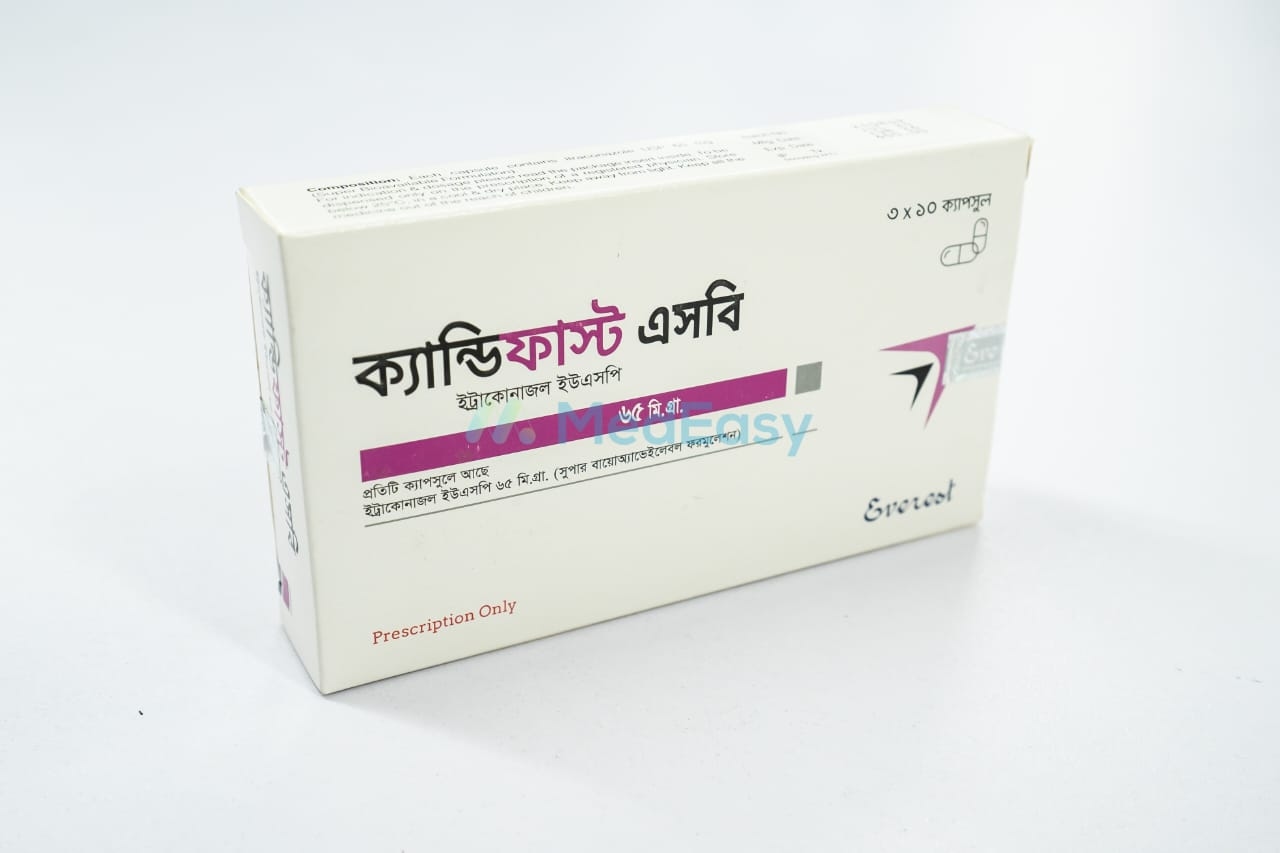
Candifast SB65 mg
Everest Pharmaceuticals Ltd.
৳190.00
Add to cart

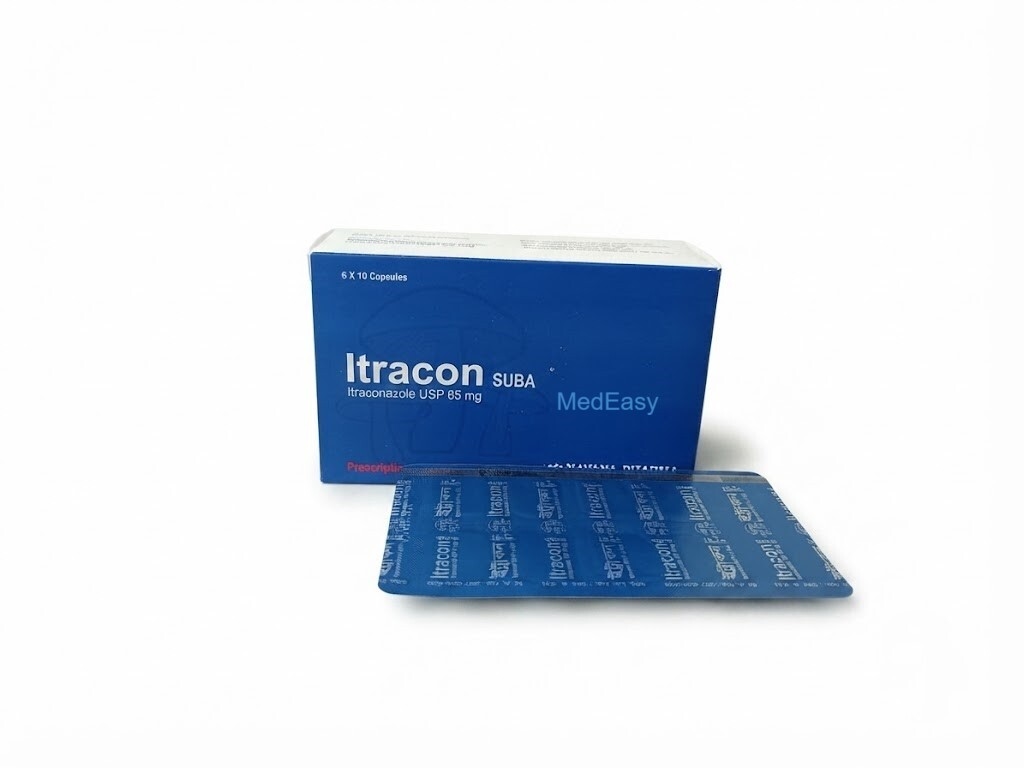
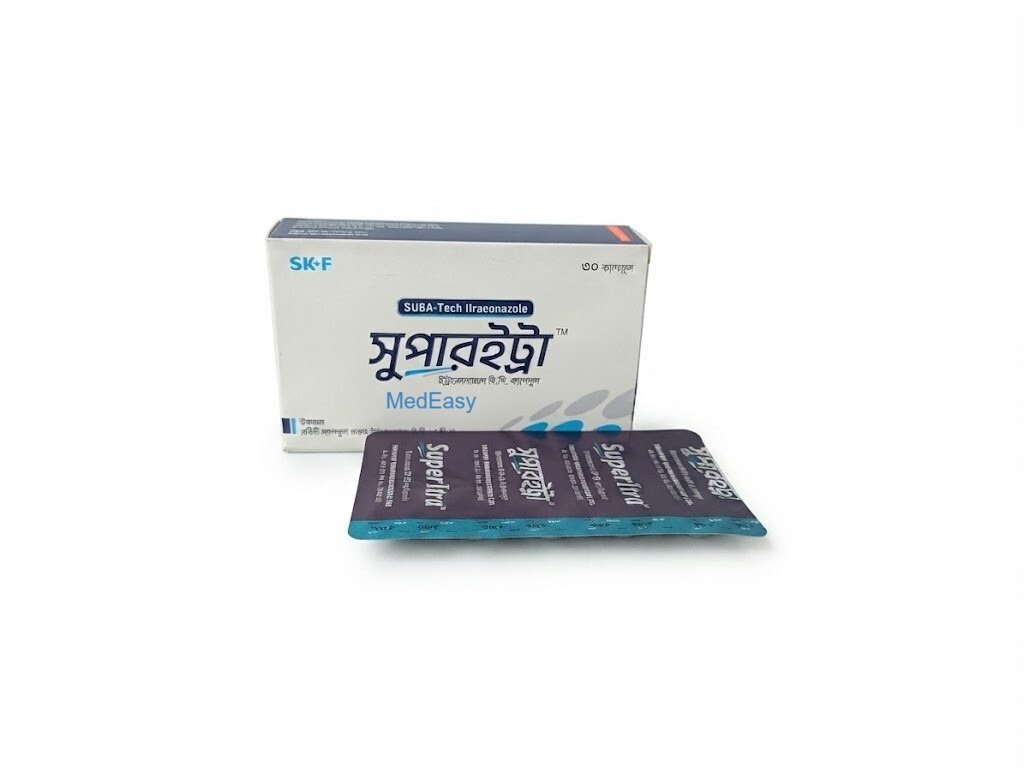
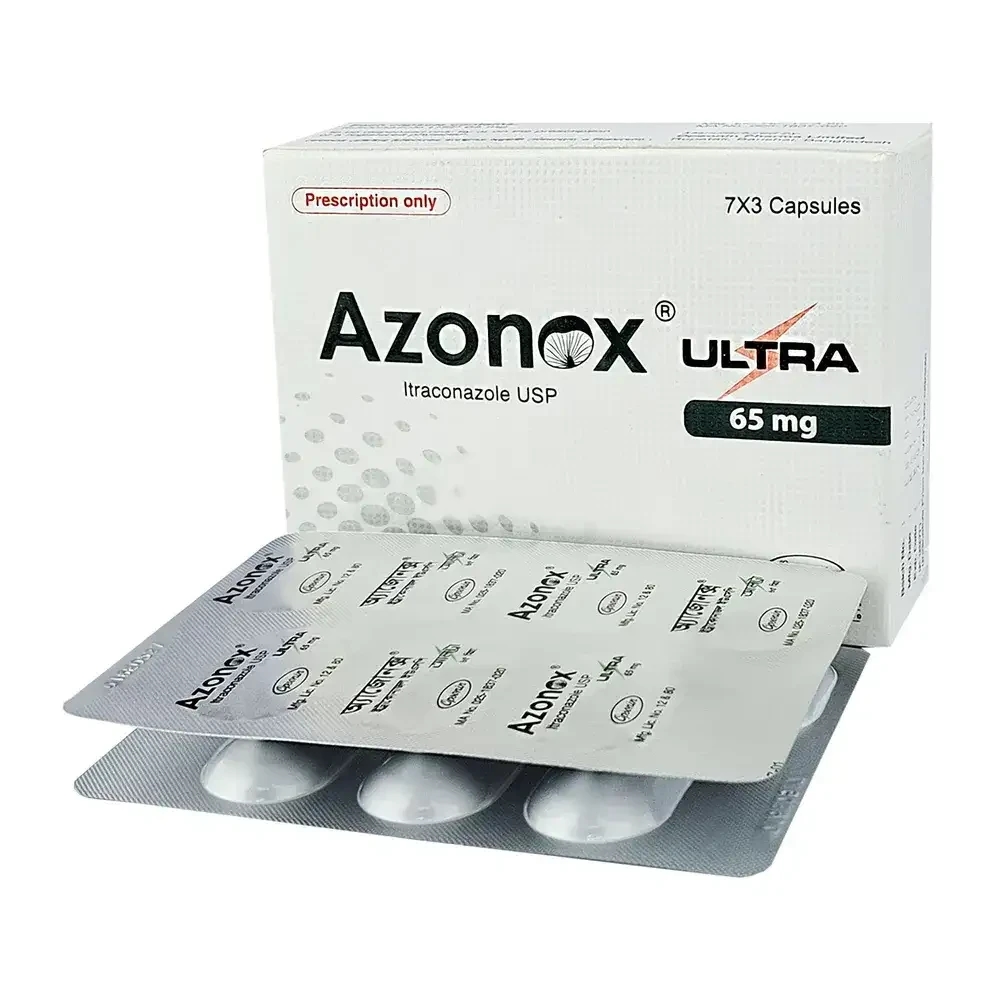
Nocandia SB 65 mg Capsule is available on MedEasy for ৳180.00 per 10's Strip, with home delivery anywhere in Bangladesh. It is manufactured by Incepta Pharmaceuticals Ltd. Its generic name is Itraconazole.

Nocandia SB is a broad-spectrum triazole antifungal used to treat a range of fungal infections. Its approved and guideline-supported uses include:
The specific organism, infection site, and formulation determine the appropriate regimen; a physician's assessment, often supported by laboratory confirmation, is required before starting Nocandia SB.
Each capsule of Itraconazole typically contains 100 mg of itraconazole as drug-coated sugar spheres in a hard gelatin capsule. Itraconazole oral solution typically contains 10 mg/mL solubilized with hydroxypropyl-β-cyclodextrin. Tablet (200 mg) and SUBA (Super Bioavailability) capsule formulations (50 mg or 65 mg) are available in some markets. Different formulations of Itraconazole are not bioequivalent and must not be interchanged without medical advice; always confirm strength and formulation with the dispensing pharmacist.
Nocandia SB is a synthetic triazole antifungal agent used to treat a wide range of superficial and systemic fungal infections. It works by inhibiting a fungal enzyme required to build the fungal cell membrane, stopping fungal growth. Nocandia SB is available as oral capsules and an oral solution, which differ in how they should be taken with regard to food. Treatment courses range from a single day (for some vaginal infections) to several months (for nail or deep tissue infections), and the drug carries a boxed warning about its effect on heart muscle function, so it is not suitable for everyone.
Systemic Antifungal - Triazole Derivative
Itraconazole is a triazole antifungal that inhibits fungal cytochrome P450-dependent 14α-demethylase, an enzyme that converts lanosterol to ergosterol. Ergosterol is essential to the fungal cell membrane; its depletion, together with accumulation of toxic sterol precursors, disrupts membrane structure and function and inhibits fungal growth (fungistatic, and fungicidal against some organisms at higher concentrations).
Pharmacokinetics: Absorption of the capsule formulation is enhanced by food and an acidic gastric environment, whereas the oral solution is better absorbed on an empty stomach due to its cyclodextrin carrier. Itraconazole is highly protein-bound (>99%), extensively metabolized in the liver by CYP3A4 to an active metabolite (hydroxy-itraconazole), and has a long elimination half-life that increases with continued dosing due to saturable metabolism. It penetrates poorly into cerebrospinal fluid but achieves high concentrations in skin, nails, and adipose tissue.
Dosing of Nocandia SB depends on the infection being treated, its severity, and the formulation used. The following is a general guide; the treating physician's prescription should always be followed.
| Indication | Typical Adult Dose | Typical Duration |
|---|---|---|
| Blastomycosis, histoplasmosis | 200 mg once or twice daily | At least 3 months, guided by response |
| Invasive aspergillosis (2nd-line) | 200 mg twice daily | Per specialist guidance |
| Onychomycosis - toenails | 200 mg once daily (continuous), or pulse dosing | ~12 weeks continuous, or pulse courses |
| Onychomycosis - fingernails only | 200 mg twice daily for 1 week, repeated after a 3-week gap | Two pulse cycles |
| Oropharyngeal candidiasis | 100-200 mg once daily (oral solution) | 1-2 weeks |
| Esophageal candidiasis | 100-200 mg once daily (oral solution) | At least 3 weeks, continued 2 weeks after symptoms resolve |
| Vulvovaginal candidiasis | 200 mg twice daily for one day | Single day |
| Tinea corporis/cruris | 100 mg once daily | ~2 weeks |
| Pityriasis versicolor | 200 mg once daily | 7 days |
See Administration for guidance on taking capsules versus oral solution correctly. In patients with reduced kidney or liver function, dosing may need adjustment - see Use in Special Populations. The full prescribed course of Nocandia SB should be completed even if symptoms improve early, and doses should not be skipped, doubled, or shared with another person without medical advice.
Nocandia SB capsules should be swallowed whole (not chewed) immediately after a full meal, since food and gastric acidity are needed for reliable absorption; taking capsules on an empty stomach can markedly reduce drug levels. In contrast, Nocandia SB oral solution should be taken without food, and for oropharyngeal candidiasis should be swished in the mouth before swallowing. Capsules and oral solution are not interchangeable milligram-for-milligram. Because capsule absorption requires stomach acid, drugs that reduce gastric acid (proton pump inhibitors, H2-blockers, antacids) can significantly lower Nocandia SB levels - see Interactions for guidance on spacing these medicines apart. Take doses at the same time each day and complete the full prescribed course.
Nocandia SB and its major metabolite are potent inhibitors of CYP3A4 and P-glycoprotein, giving it a large potential for drug interactions.
This is not an exhaustive list. Give a physician or pharmacist a full list of current medicines before starting Nocandia SB.
Itraconazole is contraindicated in the following situations:
Most people tolerate Nocandia SB well, but side effects can occur.
Report any severe, persistent, or worsening side effect to a physician promptly.
Pregnancy: Nocandia SB should generally be avoided during pregnancy due to a theoretical risk of fetal harm seen in animal studies, and it is not recommended for non-life-threatening indications (such as onychomycosis or pityriasis versicolor) in pregnant women or women planning pregnancy. It should be used during pregnancy only for potentially life-threatening fungal infections, and only if the anticipated benefit to the mother clearly justifies the potential risk to the fetus, under close physician supervision. Women of childbearing potential should use effective contraception during treatment and for a period after stopping Nocandia SB, as advised by their physician, given its long elimination half-life.
Lactation: Nocandia SB passes into breast milk in small amounts. Breastfeeding is generally not recommended during treatment unless a physician determines the benefit to the mother outweighs the potential risk to the nursing infant. Consult a physician before breastfeeding while taking Nocandia SB.
Nocandia SB has a negative inotropic effect on the heart. It should not be used to treat onychomycosis in patients with evidence of ventricular dysfunction, such as congestive heart failure (CHF) or a history of CHF (see Contraindications). For more serious, potentially life-threatening indications, the benefits and risks should be individually assessed, particularly in patients with heart failure risk factors; if signs or symptoms of heart failure develop during treatment, Nocandia SB should be discontinued and the patient reassessed.
Rare cases of serious hepatotoxicity, including liver failure and death, have been reported with Nocandia SB, some occurring within the first month of treatment. Liver function tests are recommended before starting treatment and periodically during longer courses, especially in patients with pre-existing liver disease or abnormal liver enzymes. Seek immediate medical attention for signs of liver injury (see Side Effects).
Nocandia SB capsules require gastric acid and food for adequate absorption, while the oral solution is absorbed better on an empty stomach; the two formulations are not interchangeable milligram-for-milligram (see Administration).
Nocandia SB is a potent CYP3A4 inhibitor with numerous contraindicated and cautioned interactions (see Interactions). A full medication review is essential before starting therapy.
Transient or permanent hearing loss and peripheral neuropathy have been reported, particularly with prolonged treatment; report any hearing changes or numbness/tingling to a physician.
Take Nocandia SB exactly as prescribed by your physician; do not stop, extend, skip doses, or share this medicine with others without medical advice, as incomplete or inappropriate courses may promote resistant fungal infections and treatment failure.
Reported overdose experience with Nocandia SB is limited, and symptoms would be expected to resemble an exaggeration of known side effects (e.g. nausea, vomiting, abdominal discomfort). There is no specific antidote. In case of a suspected overdose, seek immediate medical attention or contact a poison control center right away; do not attempt home treatment. Supportive care, including monitoring of vital signs and liver/cardiac function, may be provided under medical supervision; Nocandia SB is not significantly removed by hemodialysis.
Store at room temperature (below 30°C), away from light and moisture. Keep the container tightly closed and out of reach of children. Do not use after the expiry date printed on the pack.
Use Nocandia SB with caution in patients with renal impairment; oral formulations may generally be used with monitoring, while injectable forms (where available) are typically avoided in significant renal impairment.
Use with caution in patients with liver disease; Nocandia SB is extensively metabolized by the liver, and dose adjustment or closer monitoring of liver function may be needed. It is contraindicated in severe pre-existing liver disease unless potential benefit outweighs risk.
Data in elderly patients are limited; use with caution given the higher likelihood of cardiac disease, polypharmacy, and reduced organ function in this age group, and monitor closely for interactions and cardiac symptoms.
Nocandia SB absorption may be reduced in immunocompromised patients (e.g. HIV/AIDS, neutropenia, chemotherapy), and monitoring of clinical response is warranted.
Duration of Nocandia SB therapy is highly indication-specific: as short as a single day for vulvovaginal candidiasis, one to two weeks for oropharyngeal candidiasis or tinea versicolor, two to four weeks for skin dermatophyte infections, around three months (or pulsed courses) for nail infections, and three months or longer, guided by clinical and laboratory response, for systemic infections such as blastomycosis or histoplasmosis. The physician determines the exact duration; treatment should not be stopped early even if symptoms improve, and should not be extended beyond the prescribed course without medical advice.
Antifungals > Azole Antifungals > Triazole Antifungals (second-generation triazole, related to fluconazole but with a broader spectrum including Aspergillus species)
Itraconazole works by binding to and inhibiting fungal cytochrome P450 14α-demethylase (lanosterol demethylase), the enzyme fungi need to convert lanosterol into ergosterol, the main sterol of the fungal cell membrane. By blocking this step, Itraconazole depletes ergosterol and causes accumulation of abnormal sterols in the membrane, increasing membrane permeability and disrupting membrane structure and enzyme function, ultimately inhibiting fungal growth and replication. Itraconazole has much lower affinity for human cytochrome P450 enzymes than for the fungal enzyme, underlying its selective antifungal activity, though it still meaningfully inhibits human CYP3A4, which is the basis for its many drug interactions.
C
The safety and efficacy of Nocandia SB have not been formally established for most indications in pediatric patients, and it should generally be used in children only when the treating physician judges the potential benefit to outweigh the risk, typically for serious or systemic fungal infections where alternatives are unsuitable. When used, pediatric dosing is generally weight-based (commonly around 3-5 mg/kg/day, adjusted by indication and formulation) and should be individualized and closely supervised by a pediatrician or specialist, with attention to liver function and potential drug interactions. Nocandia SB is not generally recommended for cosmetic indications (e.g. mild nail infections) in children given limited safety data. Parents/caregivers should not adjust the dose or duration without medical advice.
Q: What is Nocandia SB 65 mg Capsule used for?
A: Nocandia SB 65 mg Capsule is an antifungal medicine used to treat a wide range of fungal infections, including nail infections (onychomycosis), skin infections such as ringworm and tinea versicolor, oral/esophageal thrush, and more serious systemic fungal infections like histoplasmosis, blastomycosis, and aspergillosis. Your physician will select the dose and duration appropriate for your specific infection.
Q: How should I take Nocandia SB 65 mg Capsule capsules?
A: Nocandia SB 65 mg Capsule capsules should be swallowed whole immediately after a full meal, since food and stomach acid help the body absorb the medicine properly; taking it on an empty stomach can significantly reduce its effectiveness. The oral solution, by contrast, is usually taken without food. Always follow your physician's or pharmacist's specific instructions for the formulation you have been prescribed.
Q: Can I take Nocandia SB 65 mg Capsule if I have heart problems?
A: Nocandia SB 65 mg Capsule carries a boxed warning because it can have a negative effect on heart muscle function. It should not be used to treat nail infections in anyone with current or past congestive heart failure or other evidence of ventricular dysfunction. For more serious, potentially life-threatening infections, your physician will carefully weigh the risks and benefits and monitor you closely if you have any heart condition. Always tell your physician about any history of heart disease before starting this medicine.
Q: What medicines should I avoid while taking Nocandia SB 65 mg Capsule?
A: Nocandia SB 65 mg Capsule strongly interacts with many other drugs because it blocks a liver enzyme (CYP3A4) that breaks many medicines down. Drugs that must not be combined with Nocandia SB 65 mg Capsule include certain statins (like simvastatin and lovastatin), certain heart rhythm medicines (such as quinidine and dofetilide), ergot medicines, oral midazolam or triazolam, and cisapride or pimozide, among others, because combining them can cause serious or life-threatening reactions. Always give your physician and pharmacist a complete list of all medicines, supplements, and herbal products you take before starting Nocandia SB 65 mg Capsule.
Q: Is Nocandia SB 65 mg Capsule safe during pregnancy or breastfeeding?
A: Nocandia SB 65 mg Capsule is generally avoided during pregnancy, especially for non-serious infections, because of potential risk to the fetus; it should only be used in pregnancy for potentially life-threatening infections when the benefit clearly outweighs the risk, as decided by a physician. Breastfeeding is generally not recommended during treatment since small amounts of the drug pass into breast milk. Discuss your specific situation with your physician before use.
Q: What should I do if I miss a dose or think I've taken too much Nocandia SB 65 mg Capsule?
A: If you miss a dose of Nocandia SB 65 mg Capsule, take it as soon as you remember unless it is almost time for your next dose - do not double up. If you suspect you or someone else has taken too much Nocandia SB 65 mg Capsule, seek immediate medical attention or contact a poison control center; do not wait for symptoms to appear before getting help.
Disclaimer
The information provided is accurate to the best of our knowledge, but it does not replace professional medical advice. We cannot guarantee its completeness or accuracy, and the absence of specific information about a drug should not be taken as an endorsement. We are not responsible for any consequences arising from this information, so please consult a healthcare professional for any concerns or questions.