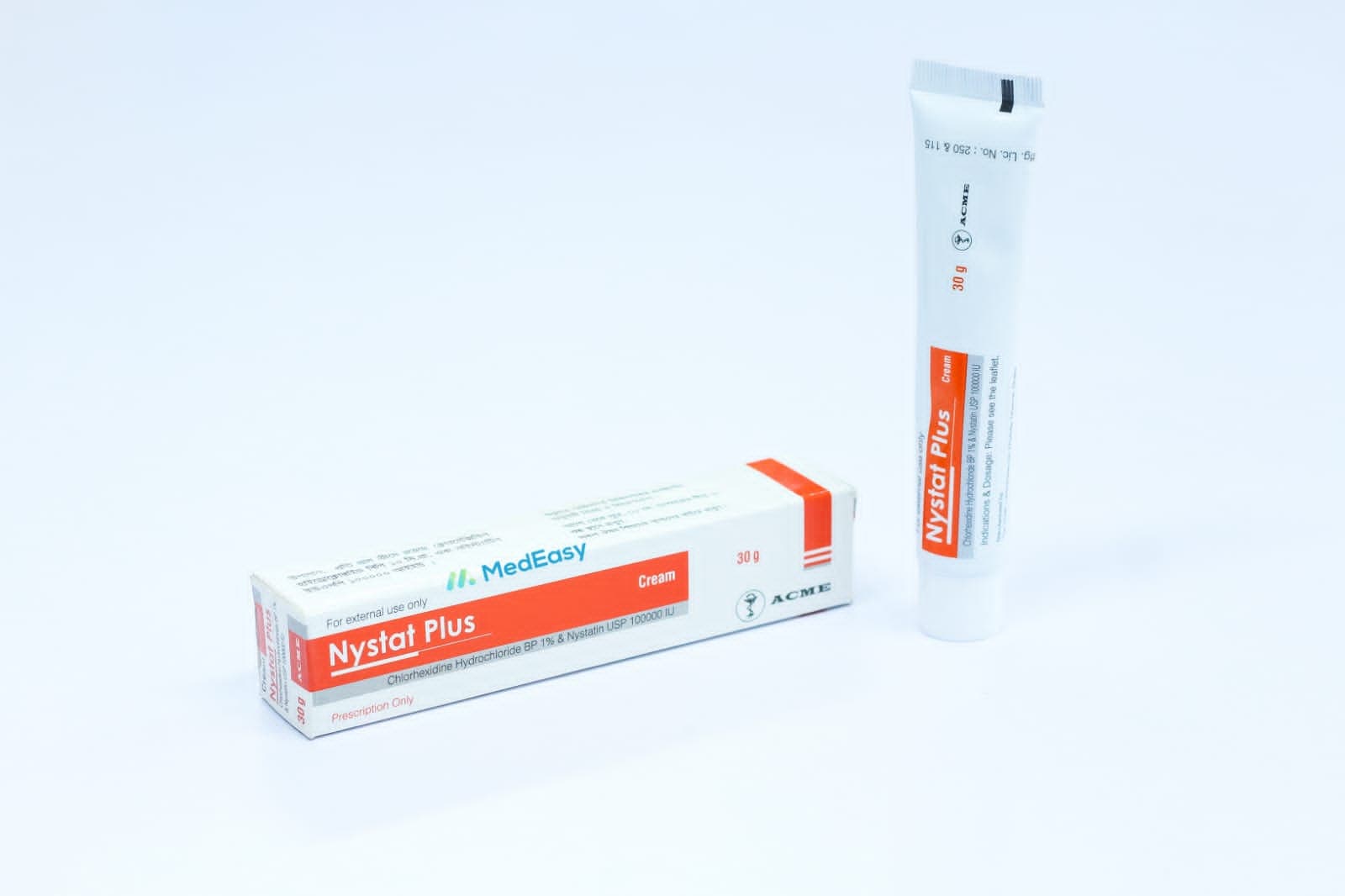
Product gallery
MRP 120.0010% Off
Best PriceTk 108.00/30 gm tube
1
Section

Medicine overview

Indications of Nystat Plus

Nystat Plus is a combination oral antiseptic-antifungal preparation used for the prevention and treatment of oral fungal infections and to support general oral hygiene. It combines chlorhexidine, a broad-spectrum antiseptic, with nystatin, an antifungal agent effective against Candida species.

  • Established use: Treatment of oral candidiasis (oral thrush), including denture-associated stomatitis and angular cheilitis caused by Candida overgrowth.
  • Established use: Prevention of oral candidiasis in patients at increased risk, such as denture wearers, infants, and immunocompromised or debilitated patients.
  • Adjunct use: Supportive oral hygiene care to reduce oral microbial load in patients with poor oral hygiene, on antibiotic or corticosteroid therapy, or with reduced salivary flow, where fungal overgrowth risk is elevated.
  • Adjunct use: As part of a comprehensive denture-hygiene regimen (used alongside denture disinfection) in patients with denture stomatitis.

Nystat Plus is not intended for treatment of systemic or invasive fungal infections, which require systemic antifungal therapy.

Composition

Each application/dose of Chlorhexidine hydrochloride + Nystatin oral gel/preparation contains Chlorhexidine hydrochloride (an antiseptic agent) and Nystatin (a polyene antifungal agent) as the active ingredients, in a base suitable for topical application to the oral mucosa.

Description

Nystat Plus is a fixed-dose combination topical oral preparation that pairs the antiseptic action of chlorhexidine with the antifungal action of nystatin. Chlorhexidine is a cationic bisbiguanide antiseptic with broad-spectrum activity against gram-positive and gram-negative bacteria and some fungi, commonly used in oral hygiene products. Nystatin is a polyene antifungal derived from Streptomyces noursei that is active against Candida albicans and other Candida species. Together, Nystat Plus provides dual antiseptic and antifungal coverage for the oral cavity, and is used topically for prevention and treatment of oral candidiasis and to support oral hygiene, particularly in patients at higher risk of oral fungal overgrowth.

Therapeutic Class

Nystat Plus belongs to the therapeutic class of topical oral antiseptic-antifungal combinations, used in dentistry and oral medicine for local antimicrobial and antifungal control.

Pharmacology

Chlorhexidine hydrochloride + Nystatin combines two complementary mechanisms of action:

  • Chlorhexidine: A cationic antiseptic that binds to and disrupts the negatively charged bacterial and fungal cell membranes, increasing membrane permeability and causing leakage of intracellular components. At higher concentrations it is bactericidal/fungicidal; at lower concentrations it is bacteriostatic. It also binds to oral mucosal and dental surfaces, providing prolonged antimicrobial substantivity.
  • Nystatin: A polyene antifungal that binds to ergosterol in the fungal cell membrane, forming pores that increase membrane permeability, leading to leakage of intracellular potassium and other cellular contents and subsequent fungal cell death. It is active against Candida albicans and most other Candida species. Nystatin is not absorbed to a clinically significant extent from the gastrointestinal tract, skin, or mucous membranes, so its action in oral use is essentially local (topical).

Used together in Chlorhexidine hydrochloride + Nystatin, these two agents provide broad local antiseptic coverage plus targeted antifungal activity against Candida, which is useful in mixed bacterial-fungal oral conditions and in preventing fungal overgrowth during antiseptic use.

Dosage & Administration of Nystat Plus

IndicationRecommended Use
Oral candidiasis (treatment)Apply Nystat Plus gel to the affected areas of the oral mucosa, typically 2-4 times daily after meals and at bedtime, or as directed by the physician/dentist, for the full recommended course (commonly 7-14 days), continuing for a few days after symptoms resolve to reduce recurrence.
Prevention of oral candidiasis (e.g., denture wearers, at-risk patients)Apply a thin layer to the oral mucosa and/or denture-bearing surfaces once or twice daily, or as directed by the physician/dentist.
Oral hygiene supportApply as part of a daily oral care routine as directed, in conjunction with routine dental hygiene measures.

Exact frequency, quantity, and duration should be individualized by the prescribing physician or dentist based on severity and response. Complete the full recommended treatment course of Nystat Plus even if symptoms improve early, to reduce the risk of recurrence of fungal infection.

Administration of Nystat Plus

Nystat Plus is for topical use in the oral cavity only. Apply with a clean fingertip or applicator to the affected areas after brushing/oral cleaning and preferably after meals, allowing the gel to remain in contact with the mucosa rather than rinsing immediately. Avoid eating or drinking for a short period after application when possible. Do not swallow more than an incidental amount. Not for injection, ophthalmic, or systemic use.

Interaction of Nystat Plus

Concurrent use of other oral antiseptic products (e.g., other chlorhexidine-containing mouth rinses) with Nystat Plus may increase the risk of additive local effects such as staining or taste alteration and generally provides no added benefit; spacing or avoiding duplicate antiseptic products is advisable. Anionic compounds found in some conventional toothpastes (e.g., sodium lauryl sulfate) can inactivate chlorhexidine; if used near toothbrushing, allow an interval between brushing and application of Nystat Plus. No clinically significant systemic drug interactions are established for nystatin, as it is not appreciably absorbed with topical/oral local use.

Contraindications

Chlorhexidine hydrochloride + Nystatin is contraindicated in patients with known hypersensitivity to chlorhexidine, nystatin, or any other component of the formulation.

Side Effects of Nystat Plus

  • Temporary staining of teeth, tongue, and oral restorations with regular chlorhexidine use (usually reversible with discontinuation or professional cleaning).
  • Altered or diminished taste sensation, which is typically reversible.
  • Local irritation, mild burning sensation, or dryness of the oral mucosa.
  • Increased supragingival calculus (tartar) formation with prolonged chlorhexidine use.
  • Mild, transient gastrointestinal upset if inadvertently swallowed in more than incidental amounts.
  • Rare hypersensitivity reactions, including allergic stomatitis or, very rarely, more severe allergic reactions.

If irritation worsens, or oral symptoms fail to improve or worsen during treatment with Nystat Plus, discontinue use and seek medical or dental evaluation.

Pregnancy & Lactation

Data on the use of Nystat Plus during pregnancy and lactation are limited. Because nystatin is not appreciably absorbed systemically with topical oral use and topical chlorhexidine is used at low local concentrations, significant systemic exposure is not expected; however, as a general precaution, Nystat Plus should be used during pregnancy and breastfeeding only if clearly needed and if the potential benefit justifies the potential risk. A physician or dentist should be consulted before use in pregnant or breastfeeding women.

Precautions & Warnings

  • For topical use in the oral cavity only; avoid swallowing more than an incidental amount, and avoid contact with the eyes and ears.
  • Regular use of chlorhexidine-containing products can cause reversible staining of teeth, tongue, and restorations, and can alter taste sensation; see Side Effects.
  • Use Nystat Plus for the full recommended treatment course, even if symptoms improve early, to reduce the risk of recurrence of the fungal infection.
  • Discontinue use and seek medical or dental evaluation if oral irritation worsens, or if symptoms of infection fail to improve or worsen during treatment.
  • In denture wearers, dentures should also be properly cleaned and disinfected as part of a comprehensive approach to treating oral candidiasis, since dentures can harbor Candida and contribute to reinfection.
  • Use with caution in patients with known sensitivity to antiseptic mouth products; discontinue if signs of hypersensitivity occur.

Overdose Effects of Nystat Plus

Significant systemic toxicity from Nystat Plus is unlikely with normal topical oral use, as absorption from the oral mucosa is minimal for both components. If a large amount is accidentally swallowed, mild gastrointestinal upset (nausea, vomiting, or stomach discomfort) may occur. In case of accidental ingestion of a large amount, or if any concerning symptoms develop, seek immediate medical attention or contact a poison control center; do not attempt specific home treatment beyond general supportive measures.

Storage Conditions

Store at room temperature (below 30°C), away from light and moisture. Keep out of reach of children.

Use In Special Populations

Renal/hepatic impairment: No dose adjustment is generally required for Nystat Plus given its topical, locally acting nature and minimal systemic absorption; however, use as directed by a physician.

Elderly: Commonly used in elderly denture wearers for prevention and treatment of denture-associated oral candidiasis; no specific dose adjustment is required, but attention to overall oral hygiene and denture care is important.

Immunocompromised patients: May be used as part of a broader management plan for oral candidiasis, but immunocompromised or debilitated patients with extensive or recurrent infection should be evaluated by a physician, as more intensive or systemic antifungal therapy may be required.

Duration Of Treatment

Duration of treatment with Nystat Plus is typically 7-14 days for active oral candidiasis, or as directed by the physician/dentist, continuing treatment for a few days beyond clinical resolution of symptoms to reduce the risk of recurrence. For preventive/oral hygiene use, duration is individualized based on ongoing risk factors (e.g., for as long as dentures are worn or immunosuppression persists).

Drug Classes

Chlorhexidine hydrochloride + Nystatin belongs to the combined drug classes of topical antiseptics (chlorhexidine, a bisbiguanide antiseptic) and antifungal agents (nystatin, a polyene antifungal).

Mode Of Action

Chlorhexidine hydrochloride + Nystatin acts through two mechanisms: chlorhexidine disrupts microbial cell membranes by binding to negatively charged surface components, causing membrane permeabilization and leakage of cell contents, giving broad-spectrum antiseptic activity; nystatin binds to ergosterol in the fungal cell membrane, creating pores that cause leakage of intracellular potassium and other constituents, leading to fungal cell death, giving targeted antifungal activity against Candida species.

Pediatric Uses

Nystat Plus may be used in infants and children for treatment or prevention of oral candidiasis (thrush), including in infants, under medical or dental supervision, using an appropriately small amount applied to the affected areas. Safety and efficacy of specific dosing regimens in neonates and young infants should be guided by a physician, as swallowing behavior and inability to expectorate may warrant more careful, minimal-quantity application. Caregivers should be advised on correct application technique to avoid excessive ingestion.

Frequently Asked Questions

Q: What is Nystat Plus 1% + 100000 IU Cream used for?

A: Nystat Plus 1% + 100000 IU Cream is used for the prevention and treatment of oral fungal infections such as oral thrush (oral candidiasis) and to support general oral hygiene, particularly in people at higher risk of oral fungal overgrowth, such as denture wearers and immunocompromised patients.

Q: How should I use Nystat Plus 1% + 100000 IU Cream?

A: Apply a thin layer of Nystat Plus 1% + 100000 IU Cream gel to the affected areas of the mouth as directed by your physician or dentist, usually 2-4 times daily after meals. Complete the full recommended course even if your symptoms improve early, to reduce the chance of the infection returning.

Q: Can Nystat Plus 1% + 100000 IU Cream cause staining of teeth?

A: Yes, regular use of chlorhexidine-containing products, including Nystat Plus 1% + 100000 IU Cream, can cause temporary staining of the teeth, tongue, and dental restorations, and can alter taste sensation. These effects are usually reversible after stopping treatment or with professional dental cleaning.

Q: Is Nystat Plus 1% + 100000 IU Cream safe during pregnancy or breastfeeding?

A: Data are limited, and while systemic absorption is minimal with topical oral use, Nystat Plus 1% + 100000 IU Cream should be used during pregnancy or breastfeeding only if clearly needed and if the potential benefit outweighs any potential risk. Please consult your physician or dentist before use.

Q: Can Nystat Plus 1% + 100000 IU Cream be used in infants?

A: Nystat Plus 1% + 100000 IU Cream may be used in infants for oral thrush under medical or dental supervision, with a small amount applied carefully to the affected areas. Always follow your physician's guidance regarding dose and application in infants.

Q: What should I do if I accidentally swallow Nystat Plus 1% + 100000 IU Cream?

A: Swallowing a small, incidental amount is unlikely to cause harm since both components have minimal systemic absorption. If a large amount is swallowed or you notice concerning symptoms, seek immediate medical attention or contact a poison control center.

Disclaimer

The information provided is accurate to the best of our knowledge, but it does not replace professional medical advice. We cannot guarantee its completeness or accuracy, and the absence of specific information about a drug should not be taken as an endorsement. We are not responsible for any consequences arising from this information, so please consult a healthcare professional for any concerns or questions.

Doctor
Cart
Account