
10% Off
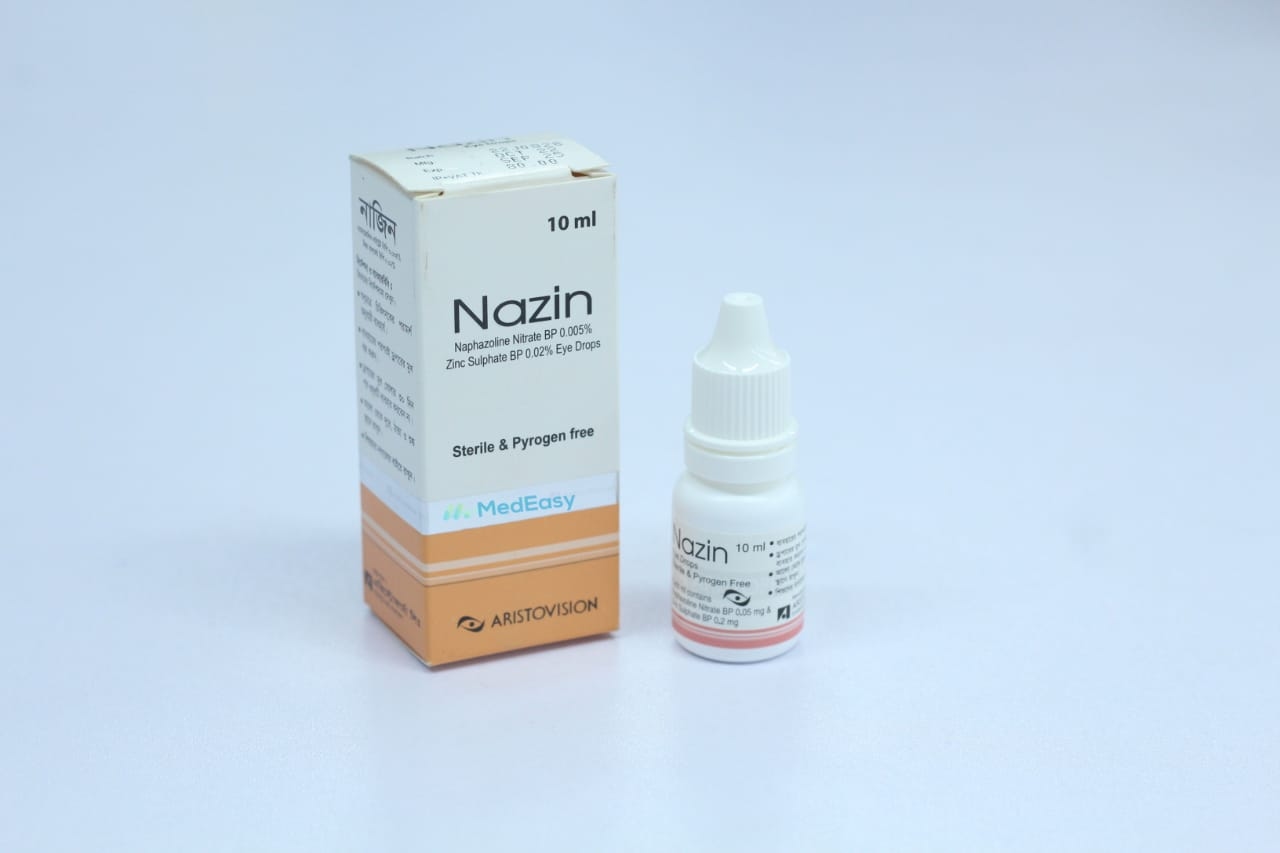
Nazin0.005%+0.0
Aristopharma Ltd.
৳99.00
Add to cart


Oculogen is an over-the-counter (OTC) ophthalmic combination product used for the short-term, symptomatic relief of minor eye redness and irritation. It is not intended to treat the underlying cause of eye redness (such as bacterial infection) and provides temporary symptom relief only.
If redness, irritation, or pain persists beyond 72 hours, worsens, or is accompanied by eye pain or vision changes, a physician should be consulted, as this may indicate a condition Oculogen is not intended to treat.
Naphazoline + Zinc Sulfate is a fixed-dose ophthalmic combination containing two active ingredients:
The exact strength and inactive ingredients (e.g., buffers, preservatives such as benzalkonium chloride, lubricating agents) vary by manufacturer and formulation; the product label of the specific pack should always be checked for exact composition.
Oculogen is a topical ophthalmic (eye) preparation available as sterile eye drops. It combines an alpha-adrenergic agonist decongestant (naphazoline) with a mild astringent (zinc sulfate) to relieve the appearance and discomfort of red, minor-irritated eyes.
Oculogen is available without a prescription in most markets and is intended for short-term, as-needed use rather than continuous long-term therapy.
Ophthalmic decongestant–astringent combination; Oculogen belongs to the class of topical ocular vasoconstrictors (imidazoline derivatives) combined with an astringent agent, used in over-the-counter eye redness/irritation relief products.
Naphazoline + Zinc Sulfate combines two complementary mechanisms:
After topical ocular administration, systemic absorption of naphazoline is normally low but can be clinically significant with overuse, punctal occlusion is not typically practiced by patients, or in young children, where absorption relative to body size is proportionally greater and systemic sympathomimetic/CNS effects have been reported. Onset of decongestant action is rapid (within minutes) and effects are generally short-lived, which is why frequent reapplication is often desired by users — a pattern that itself increases the risk of rebound redness (see Precautions and Warnings).
| Population | Recommended use |
|---|---|
| Adults and children 6 years and older | Instill 1–2 drops of Oculogen into the affected eye(s) up to 4 times daily, as needed, for minor eye redness/irritation. |
| Children under 6 years | Consult a physician before use; safety and dosing have not been well established in this age group (see Use in Special Populations). |
Oculogen is intended for short-term use only. If symptoms persist for more than 72 hours or worsen, discontinue use and consult a physician (see Duration of Treatment).
Clinically significant interactions with Oculogen are primarily related to its sympathomimetic (naphazoline) component:
Patients on antihypertensive therapy, beta-blockers, or other cardiovascular medications should use Oculogen with caution and inform their physician, due to the potential for systemic sympathomimetic absorption (see Precautions and Warnings).
Naphazoline + Zinc Sulfate should not be used in these situations under any circumstances; other cautions (e.g., cardiovascular disease, young children, prolonged use) are addressed under Precautions and Warnings, as they are relative rather than absolute contraindications.
Patients should discontinue Oculogen and seek medical advice if eye pain, vision changes, continued redness/irritation, or signs of an allergic reaction (swelling, rash, itching beyond the treated area) occur.
Pregnancy: There are no well-controlled studies establishing the safety of Oculogen in human pregnancy. Although systemic absorption from topical ocular use is generally low, Oculogen should be used during pregnancy only if clearly needed and if the potential benefit justifies the potential risk to the fetus. A physician should be consulted before use during pregnancy.
Lactation: It is not known whether the components of Oculogen are excreted in human breast milk in clinically significant amounts. Because many drugs are excreted in breast milk, caution is advised and a physician or pharmacist should be consulted before using Oculogen while breastfeeding.
Accidental ingestion of Oculogen, particularly by young children, can cause serious systemic effects because of the sympathomimetic (naphazoline) component. Reported symptoms of overdose/ingestion include marked drowsiness or sedation, CNS (central nervous system) depression, low body temperature (hypothermia), slow heart rate (bradycardia), low blood pressure, sweating, and in severe cases, coma.
If Oculogen is swallowed or significant overdose/misuse is suspected, seek immediate medical attention or contact a poison control center / emergency services right away. Do not attempt home treatment for a suspected ingestion; take the product container with you or have the label information available when seeking help.
Store at room temperature (below 30°C), away from light and moisture. Keep the bottle tightly closed when not in use. Keep out of reach of children. Discard the bottle if the solution becomes discolored or cloudy, and discard any opened bottle after the period specified on the label (commonly within 1–3 months of opening) even if solution remains.
Use of Oculogen in children under 6 years of age is not recommended without physician guidance; safety and effective dosing have not been well established in this age group, and young children are at greater risk of systemic sympathomimetic effects from accidental ingestion or overuse (see Pediatric Uses and Overdose Effects).
No specific dose adjustment is established for elderly patients; however, elderly patients are more likely to have cardiovascular disease, hypertension, or narrow-angle glaucoma, so Oculogen should be used with caution and only after appropriate assessment in this group (see Contraindications and Precautions and Warnings).
No specific dose adjustment data exist for hepatic or renal impairment, as systemic exposure from correctly used topical ocular Oculogen is expected to be minimal; nonetheless, caution is reasonable given the sympathomimetic component.
Oculogen is intended for short-term, intermittent, as-needed use only — not for continuous daily use over extended periods. If symptoms of eye redness or irritation persist for more than 72 hours despite use, worsen, or recur soon after stopping the drops, discontinue Oculogen and consult a physician, as continued use beyond this period increases the risk of rebound redness and may mask an underlying condition needing different treatment.
Naphazoline + Zinc Sulfate falls under the drug classes: ophthalmic decongestants (topical ocular vasoconstrictors), imidazoline-derivative alpha-adrenergic agonists (naphazoline component), and ophthalmic astringents (zinc sulfate component).
Naphazoline + Zinc Sulfate works through two complementary local actions on the eye: naphazoline, an alpha-adrenergic agonist, constricts small conjunctival blood vessels to reduce redness, while zinc sulfate acts as an astringent that precipitates surface proteins and helps clear mucus, giving a soothing effect on irritated conjunctival tissue.
Oculogen is generally labeled for use in adults and children 6 years of age and older, at 1–2 drops in the affected eye(s) up to 4 times daily as needed. For children under 6 years, safety and efficacy have not been established, and a physician should be consulted before use, since young children absorb proportionally more of the sympathomimetic (naphazoline) component relative to body weight and are more susceptible to systemic effects such as CNS depression, bradycardia, and hypothermia if the product is ingested or overused. Oculogen should always be kept out of the reach of children to prevent accidental ingestion.
Q: What is Oculogen 0.005%+0.02% Ophthalmic Solution used for?
A: Oculogen 0.005%+0.02% Ophthalmic Solution is an over-the-counter eye drop used for short-term relief of minor eye redness and irritation caused by things like dust, smoke, wind, allergens (pollen, pet dander), swimming, or eye strain. It relieves symptoms but does not treat underlying eye infections.
Q: How often can I use Oculogen 0.005%+0.02% Ophthalmic Solution?
A: Typically, 1–2 drops are instilled in the affected eye(s) up to 4 times a day, as needed, for adults and children 6 years and older. Do not use more often than directed on the label, and do not use for more than 72 hours without consulting a physician.
Q: Can I use Oculogen 0.005%+0.02% Ophthalmic Solution while wearing contact lenses?
A: Most Oculogen 0.005%+0.02% Ophthalmic Solution products are not intended for use with contact lenses in place. Remove your contact lenses before instilling the drops, and wait as directed on the label (commonly at least 15 minutes) before reinserting them, unless your physician advises otherwise.
Q: Is it safe to use Oculogen 0.005%+0.02% Ophthalmic Solution for a long time?
A: No. Oculogen 0.005%+0.02% Ophthalmic Solution is intended for short-term, as-needed use only. Using it too frequently or for prolonged periods can cause rebound redness (the eye becomes redder once the effect wears off), which can lead to a cycle of overuse. If your symptoms persist beyond 72 hours or keep coming back, stop using Oculogen 0.005%+0.02% Ophthalmic Solution and see a physician.
Q: Can children use Oculogen 0.005%+0.02% Ophthalmic Solution?
A: Oculogen 0.005%+0.02% Ophthalmic Solution may be used in children 6 years and older at the standard dose. It should not be used in children under 6 years without a physician's advice, as safety in this age group is not well established and young children are more vulnerable to systemic side effects if the product is ingested or overused. Keep the product out of reach of children.
Q: What should I do if Oculogen 0.005%+0.02% Ophthalmic Solution is accidentally swallowed?
A: Accidental ingestion of Oculogen 0.005%+0.02% Ophthalmic Solution, especially by a young child, can cause serious effects such as drowsiness, low body temperature, slow heart rate, and low blood pressure. Seek immediate medical attention or contact a poison control center right away if this happens; do not wait for symptoms to appear.
Disclaimer
The information provided is accurate to the best of our knowledge, but it does not replace professional medical advice. We cannot guarantee its completeness or accuracy, and the absence of specific information about a drug should not be taken as an endorsement. We are not responsible for any consequences arising from this information, so please consult a healthcare professional for any concerns or questions.
